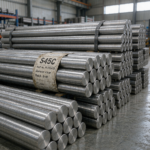
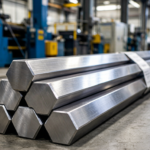
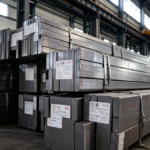
Carbon steel drill rod is ground-and-polished round bar supplied in close tolerance and annealed condition, ready to be machined and heat treated into drills, reamers, taps, punches, dies and precision pins. Supplied per AISI/SAE W1 (water-hardening) chemistry under ASTM A686, or as ground bar in 1045/CK45 for lower-duty tooling, drill rod is the starting stock every toolroom keeps on the shelf. As a factory-direct supplier we offer the standard inch and metric size range with h8-class ground tolerance, protective packaging and full MTC documentation.
Product Overview
| Item | Specification |
|---|---|
| Product name | Carbon steel drill rod (ground & polished round bar) |
| Standard grade | AISI/SAE W1 (ASTM A686); 1045 / CK45 on request |
| Carbon content (W1) | 0.70 – 1.50% C by analysis class (W1 general purpose: 0.90 – 1.20% typical) |
| Diameter range | 1.5 mm – 100 mm (1/16″ – 4″) |
| Standard lengths | 36″ (914 mm) and 1 m; custom lengths cut to order |
| Diameter tolerance | h8 ground (−0.000/−0.022 mm at 10 mm); h9/h10 for annealed rough stock |
| Surface finish | Ground and polished, Ra ≤ 0.4 μm |
| Delivery condition | Spheroidized annealed, max hardness ~200 HB |
| Straightness | ≤ 0.5 mm/m; precision 0.2 mm/m on request |
Chemical Composition (W1 per ASTM A686)
| Element | Range (%) |
|---|---|
| Carbon | 0.70 – 1.50 (analysis guaranteed per class) |
| Manganese | 0.10 – 0.40 |
| Silicon | 0.10 – 0.40 |
| Chromium (residual) | ≤ 0.15 |
| Nickel (residual) | ≤ 0.20 |
| Copper (residual) | ≤ 0.20 |
| Phosphorus / Sulfur max | 0.025 / 0.025 |
Available Grades
- W1 (water-hardening, ASTM A686): classic drill rod for water-quench tools; highest surface hardness attainable (HRC 63-65) with shallow hardening — ideal where a hard case and tough core are wanted.
- O1 (oil-hardening): offered on request for tools where distortion control in quench matters more than maximum hardness.
- 1045 / CK45 ground bar: economical ground stock for dowels, guides and light-duty punches that need only induction hardening.
- 1045 + chrome plated: for linear guide pins requiring corrosion resistance.
Heat Treatment Guide (W1)
Drill rod ships annealed so the toolroom machines it first and hardens after. Recommended W1 heat treatment:
| Step | Parameter |
|---|---|
| Preheat | 540 – 650 °C, soak 10-20 min |
| Austenitize | 760 – 790 °C (thin sections), 800 – 820 °C (heavy sections) |
| Quench | Water or brine, aggressive agitation |
| Temper | 150 – 300 °C, 1 hour minimum |
| As-quenched hardness | HRC 63 – 65 |
| Tempered hardness | HRC 50 – 62 depending on temper temperature |
Because W1 hardens shallowly (about 3-6 mm effective depth), large cross-sections keep a tough core — a feature, not a defect, for tools that must resist shock. For parts requiring uniform through-hardness above 25 mm, specify O1 or an alloy grade instead.
Manufacturing Standards
Our drill rod is produced from billet-cast, rolled bar stock: spheroidize annealing to full spheroidal carbide structure (verified by metallography), centerless grinding to h8 tolerance, polish, and 100% eddy-current surface inspection for laps and seams. Material is supplied with EN 10204 3.1 MTC traceable to heat number, and machining allowances can be discussed for non-standard diameters. Tolerance and condition can be certified against ASTM A686 (W1) or to customer drawing for ground bar (1045/CK45 to EN 10083-2 chemistry).
Applications
- Small twist drills, step drills and gun drills (small diameters).
- Reamers, taps, threading dies.
- Punches, stakes, drifts and template pins.
- Gauges, measuring pins and dowel stock.
- Axes, chisels and cold chisel stock (medium carbon W1 classes).
- Maintenance toolrooms: universal “make-a-tool-today” stock.
Quality Assurance
Each order is verified for: chemical composition (ladle + product analysis), spheroidized microstructure and annealed hardness, diameter tolerance by calibrated micrometer sampling, straightness, and surface integrity by eddy current testing. Carbon analysis is the critical check for W1 — the grade is sold by guaranteed carbon analysis class, so the MTC must show actual carbon content, not just a range. Third-party inspection (SGS/BV) is available before shipment, and we can supply hardness/microstructure sample coupons with the shipment for your toolroom verification.
Packaging and Shipping
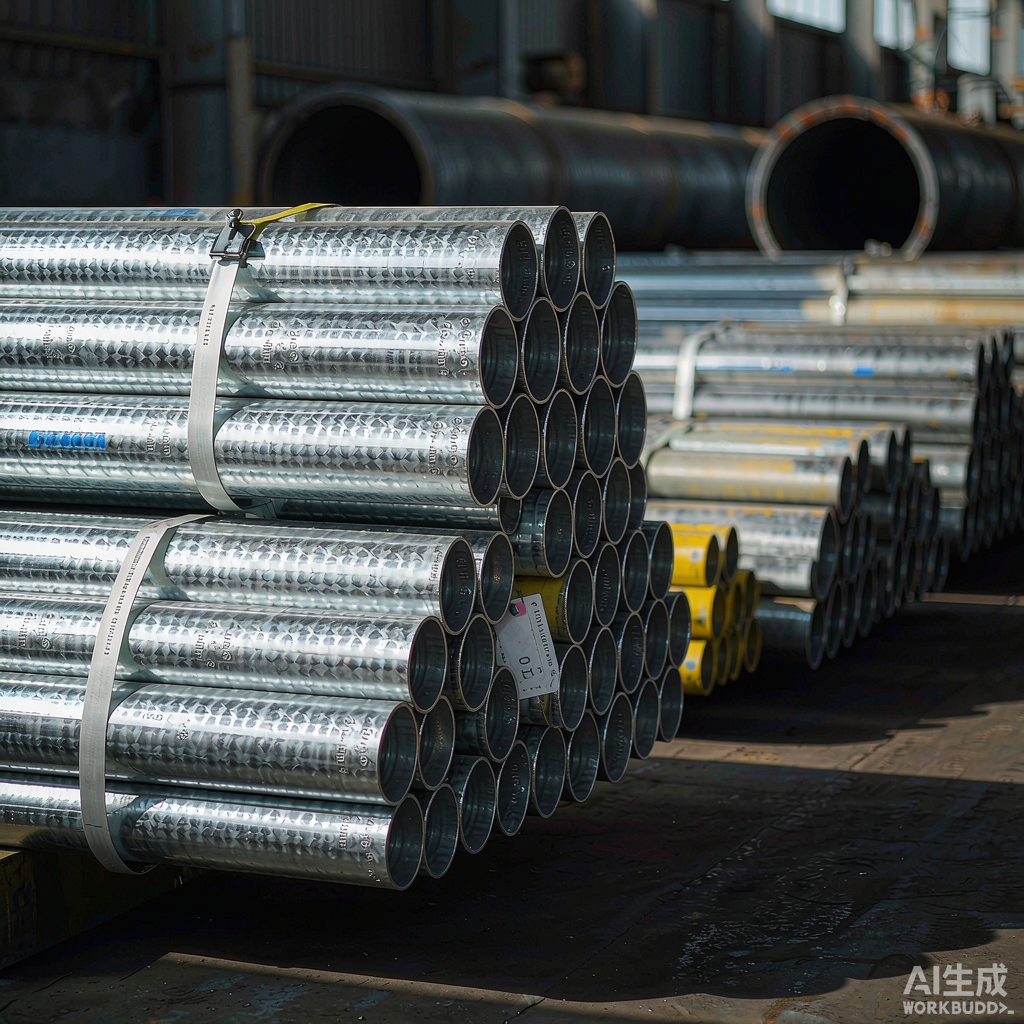
Rods are bundled in 50-100 piece bundles with VCI anti-rust paper and plastic caps, packed in wooden crates or cartons; small diameters ship in protective tubes to prevent tip damage and bending. Each bundle is labeled with grade, diameter, length and heat number. Standard export terms FOB/CFR/CIF from major Chinese ports; typical delivery 2-4 weeks for stock sizes.
Size List Highlights (Standard Stock)
| Metric (mm) | Inch (in) | Weight (kg/pc, 914 mm) |
|---|---|---|
| 2.0 | 5/64 | 0.023 |
| 3.0 | 1/8 | 0.051 |
| 4.0 | 5/32 | 0.090 |
| 6.0 | 1/4 | 0.203 |
| 8.0 | 5/16 | 0.361 |
| 10.0 | 3/8 | 0.564 |
| 13.0 | 1/2 | 0.954 |
| 16.0 | 5/8 | 1.444 |
| 20.0 | 3/4 | 2.257 |
| 25.0 | 1 | 3.526 |
Ordering Information: What We Need From You
To quote and produce accurately, send us: grade (W1 carbon class, or 1045/CK45), diameter and length (inch or metric), tolerance class required (h8 ground standard), quantity in pieces or kilograms, and any special requirements — cut-to-length, chamfered ends, stamped size marking on each piece, or sample coupons. For OEM tool programs we can hold size-list standing orders with scheduled releases, so your toolroom never waits on raw stock. Quotations are issued within 24 hours with firm validity, and stock sizes typically ship within one week of order confirmation.
Frequently Asked Questions
Which carbon class of W1 should I choose?
0.70-0.90% C classes give the toughest (shock-resistant) tools — chisels, stakes, screwdriver stock. 0.95-1.20% is the general-purpose toolroom range for drills, reamers and taps. Above 1.20% C, hardness maximizes but toughness drops; reserve it for drawing dies and burnishing tools.
Can I induction harden drill rod instead of water quenching?
Yes for surface-hardened parts like guide pins and punches — induction hardening 1045/CK45 drill rod stock to HRC 55+ with a tough core is a common production shortcut where full-through hardness is unnecessary.
How do I prevent quench cracking in W1?
Avoid sharp corners and abrupt section changes in your design, quench in warm water (30-40 °C) or brine with vigorous agitation, and temper immediately — within an hour of quenching — at the lowest temperature that gives the hardness you need.
Do you stamp the size on each rod?
Yes — size and grade can be laser-marked or stamp-marked on one end of every rod at no extra cost on orders above 500 pieces. Toolrooms that sort mixed crates by marking report significant time savings; the marking stays legible through oiling and normal handling.
Why Buy From Us
- Complete inch and metric size list from 1.5 to 100 mm from working stock.
- True h8 ground tolerance with polished finish — ready for the toolroom.
- Guaranteed carbon analysis classes with 3.1 MTC per heat.
- Cut-to-length service and custom diameters/lengths on production orders.
- Factory-direct pricing with no minimum order drama on standard sizes.
W1 Drill Rod vs Alternative Tool Steels: Where It Fits
Drill rod W1 is not the only toolroom round stock — but it is the cheapest per point of hardness, which is why it dominates small-tool production. Compare the options:
| Grade | Quench | Max hardness | Distortion risk | Relative price |
|---|---|---|---|---|
| W1 (drill rod) | Water | HRC 65 | High — aggressive quench | 1.0× |
| O1 | Oil | HRC 62 | Low | 1.4× |
| A2 | Air | HRC 60 | Minimal | 2.0× |
| 1045/CK45 ground | Induction | HRC 55–58 case | Low | 0.8× |
The selection logic: if the tool is small, simple in section, and needs maximum hardness, W1 water quench is unbeatable on cost. If the tool has sharp corners or mixed sections and cracking in quench would scrap expensive machining, pay for O1. If dimensional stability rules (gauges), air-hardening A2 is worth the premium. And for guide pins and light punches that only need a hard skin, ground 1045 induction hardened is the volume-production answer. Many workshops stock W1 for everything and switch grades only when a design proves distortion-sensitive — a defensible strategy given W1’s price.
Tolerance, Surface and Straightness: The Details That Matter in a Toolroom
Drill rod earns its price premium over ordinary bright bar in three measurable properties. Diameter tolerance: h8 ground (e.g. 10.000/9.978 mm) means a bushing or collet machined to drawing fits every bar in the bundle — critical when 200 punches must all run in the same guide. Surface integrity: laps and seams from rolling are the classic defect in low-cost bar; 100% eddy current surface inspection plus a polished finish means no hidden crack starters under your tool’s working surface. Straightness: a bowed rod is a scrapped punch; our 0.5 mm/m standard (0.2 mm/m precision option) keeps bar usable in guide bushings without straightening work that would otherwise eat your labor budget. When comparing quotations, ask each supplier for these three numbers in writing — the answers separate ground drill rod from repackaged bright bar faster than any certificate.
Storage and Corrosion Protection
High-carbon drill rod rusts faster than low-carbon stock, so storage discipline protects your inventory: keep VCI wrapping intact until use, store crates off concrete floors and away from exterior walls, and maintain workshop humidity below 60% where possible. For long-term stock in humid climates, a light oil film (rust-preventive oil, not cutting oil) plus paper wrap is the proven combination. Rods that develop light surface rust can be brought back with Scotch-Brite and oil — the ground diameter is unaffected — but deep rust pits in a stored bar should relegate it to rough stock, since pits become quench-crack initiators.
Custom Sizes and Production Orders
Beyond the stock list, we produce drill rod from 100 to 150 mm diameter on forged-and-ground basis with 4-6 week lead time, and we can supply square drill rod (common in vintage machinery repair) on production quantities. For tool manufacturers with repeat monthly demand, standing orders with rolling forecasts lock price and capacity; consignment stock programs place your size list in our warehouse with monthly consumption billing. Both programs include the same inspection regime as standard orders — the certificate package does not change with volume.
Need drill rod in W1 or ground 1045? Send your size list and quantity — we quote within 24 hours, factory direct, with MTC and export packaging included.