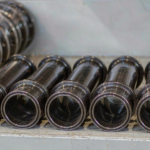
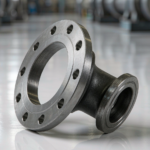
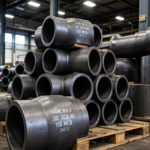
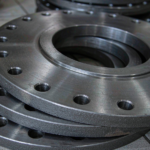
The carbon steel lap joint stub end is the half of a lap joint flange connection that does the sealing: a short length of pipe with a flared (lapped) flanged end, butt-welded to the line pipe, that mates with a loose backing flange. The combination gives the cheap corrosion-protected rotation benefits of a flanged joint at a fraction of the cost of solid flanges on alloy and lined systems — rotate the loose flange to align bolt holes, use carbon steel backing rings against alloy or lined stub ends, and exchange only the sealing face when a joint is rebuilt. We supply lap joint stub ends in ASTM B16.9 dimensions with lapped ends per ASME B16.5 for class-matched backing flanges, in sizes 1/2 to 24 inch and walls Sch 10 through Sch 160, in A234 WPB / A105 carbon steel, with beveled weld ends, EN 10204 3.1 certification and full dimensional inspection reports.
Product Overview
A lap joint stub end looks like a plain pipe nipple with one end forged into a wide flange disc. The butt-weld end joins to the pipe with a standard bevel weld; the other end is upset and machined into a circular lap whose gasket face geometry matches the lap joint flange’s raised face. Because the backing flange never contacts the process fluid, it can be ordinary carbon steel even when the stub end is stainless, lined or alloy — the classic money-saving arrangement on stainless and lined piping systems. And because the loose flange rotates freely around the stub end’s lap, bolt hole alignment is trivial: no more cutting a flange off because the holes missed by 20 degrees.
In carbon steel service, the stub end plus lap joint flange pair competes directly with the slip-on flange. The lap joint costs more in forged component terms but saves in three situations: where alignment adjustment matters (pumps, packings, tank nozzles); where the joint is opened frequently; and where the two sides of a joint are made of different materials. The gasket face is the machined lap itself, so the sealing surface quality of the lap — its flatness, finish and radius into the pipe — is what the joint’s leak-tightness lives on. That face is where our production effort goes, and it is the first thing our inspection report documents.
Specifications
| Parameter | Range / value |
|---|---|
| Dimensional standard | ASME B16.9 (stub end body); lap dimensions per ASME B16.5 Type A/B lap joint flange facing |
| Size range | NPS 1/2 – 24 (DN15 – DN600) |
| Wall (Sch) | Sch 10S/20/30/40/80/120/160, Std / XS |
| Material grades | ASTM A234 WPB (wrought), A105 (forged), A420 WPL6 (low temp); stainless and duplex on request |
| Lap face finish | Smooth finish per B16.5, Ra 3.2–6.3 μm typical; serrated on request |
| Weld end bevel | 37.5° per B16.25, land 1.6 ± 0.8 mm |
| Lap thickness tolerance | Per B16.9/B16.5 lap joint facing tables; min lap thickness = pipe wall nominal |
| Length | Standard lengths per B16.9 or cut to suit pipe routing |
| Class matching | Used with lap joint flanges (ASME B16.5, EN 1092-1 Type 02/05 backing) |
| Certificate | EN 10204 3.1 standard; 3.2 on request |
Dimensions — Common Sizes (B16.9, Sch 40 Reference)
| NPS (in) | OD (mm) | Lap Ø L (mm) | Radius R (mm) | Approx. weight Std (kg) |
|---|---|---|---|---|
| 1 | 33.4 | 50.8 | 2.0 | 0.6 |
| 2 | 60.3 | 76.2 | 6.4 | 1.5 |
| 4 | 114.3 | 139.7 | 7.9 | 4.0 |
| 6 | 168.3 | 196.9 | 8.7 | 7.6 |
| 8 | 219.1 | 247.7 | 9.5 | 11.9 |
| 12 | 323.9 | 355.6 | 11.2 | 22.6 |
| 16 | 406.4 | 441.3 | 11.2 | 33.0 |
| 24 | 610.0 | 650.9 | 12.7 | 64.0 |
Detailed dimension tables (all sizes, all walls) are issued with the offer; the values above are the reference points most buyers check first. Type A and Type B laps differ in the fillet radius and lap thickness details — Type B gives a heavier lap for severe service — so state the backing flange type on your enquiry and we will match the stub end to it.
Manufacturing Standards
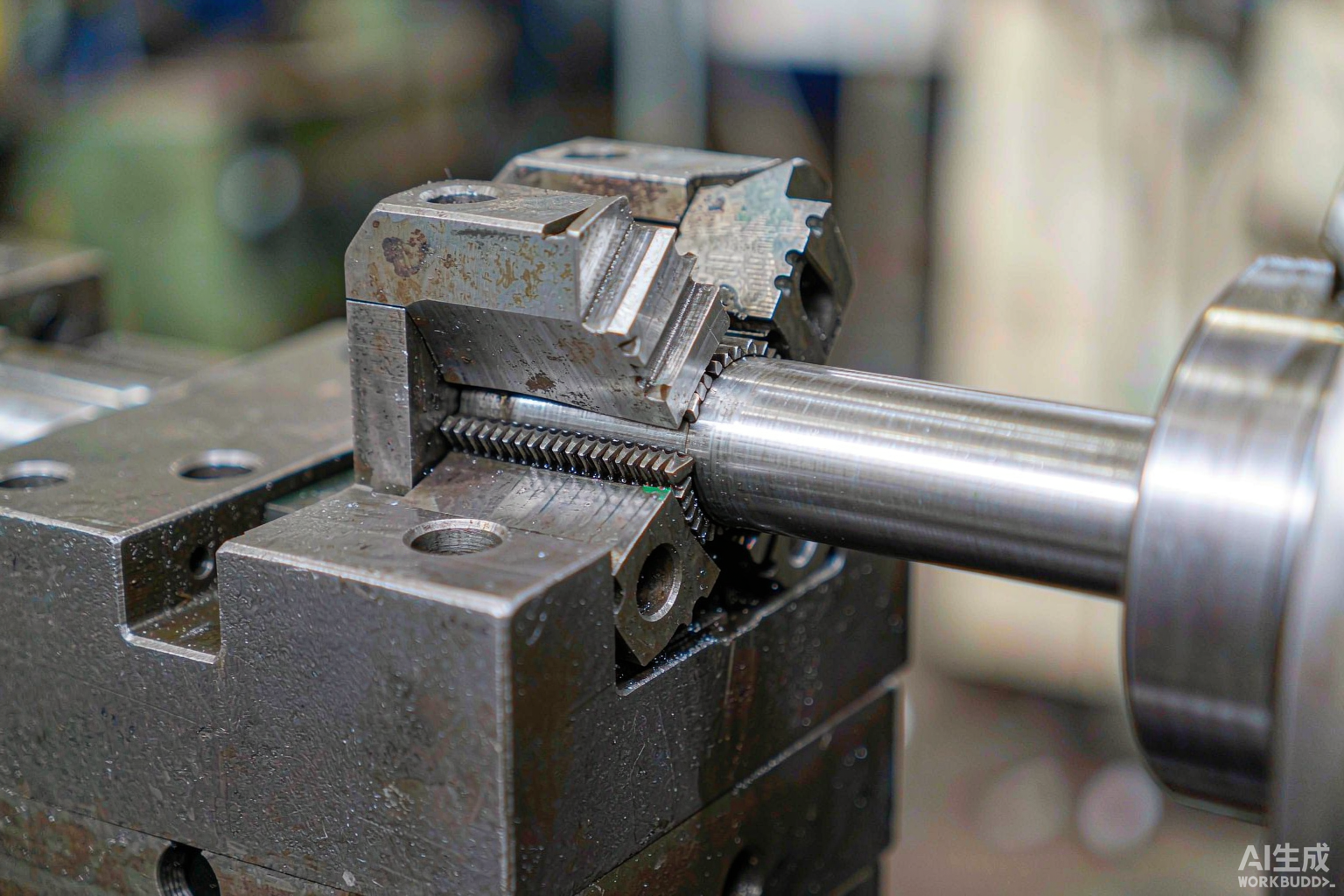
WPB stub ends are hot formed from seamless or welded pipe per A234/A234M, with the lap end hot upset and then machined; A105 versions are machined from closed die forgings. The manufacturing standard requires chemical and mechanical testing per heat, and for A234 WPB the grade’s mechanical floors (yield 240 MPa, tensile 415–585 MPa) apply to the finished fitting. Each fitting is hardness checked and marked per MSS SP-25 with the manufacturer’s mark, material grade, size, wall and heat number. Hydrostatic testing is not standard for fittings (they take the line test), but proof pressure testing on request is available, and dimensional inspection per B16.9 tolerances — lap OD, lap thickness, radius, bevel and overall length — is recorded on our inspection reports.
Applications
- Stainless and lined systems with carbon backing: the stub end carries the medium, the cheap carbon steel backing flange carries the bolts — the flagship lap joint economics.
- Pump and equipment connections: rotating loose flange absorbs bolt-hole misalignment on skid and pump connections.
- Frequently dismantled joints: filter housings, spool removal points, temporary equipment tie-ins.
- Tank truck and ISO container fittings: lap joints where alignment and quick assembly dominate.
- Galvanized and painted systems: backing flange galvanized, stub end painted or lined — no welded-on flange to damage the coating.
- Low temperature lines: A420 WPL6 stub ends with LF2 lap joint flanges down to −45 °C service.
Selection note: lap joints are not preferred where the joint sees high external bending loads on the lap or where vibration is severe, because the lap’s overhanging geometry is the weakest flange arrangement mechanically. For those positions a weld neck remains the engineering answer — we quote both when the service description suggests it.
Quality Assurance
- Heat chemistry and mechanical testing per A234/A105, results on EN 10204 3.1 certificate.
- Hardness test per fitting lot; A105 forgings per A961 marking and testing requirements.
- Dimensional inspection of lap diameter, lap thickness, face flatness, radius and bevel per B16.9/B16.5; report per shipment.
- Lap face surface finish checked with comparator or profilometer on machined lots.
- Visual and surface inspection per MSS SP-55; NDT (MT/PT on laps and weld ends) on request.
- Third-party inspection and EN 10204 3.2 available; dimensional witness arranged at the works.
Packaging and Shipping
Stub ends ship with the laps protected by face guards and rust-preventive coating on machined faces, packed in plywood cases or steel banded bundles by size with size/heat tags per fitting. Backing flanges, if ordered together, are packed separately so the faces cannot mark each other. ISPM 15 timber for all export packing. We ship FOB, CFR and CIF from Shanghai, Ningbo and Tianjin; stock sizes NPS 1–8 in Sch 40 typically dispatch in 7–15 days, made-to-order sizes and special walls in 25–45 days. Matched sets of stub end + loose flange are packed together when ordered as pairs, with the MTCs cross-referenced.
FAQ
What is the difference between Type A and Type B stub ends? The lap geometry. Type A matches the light lap of the standard B16.5 lap joint flange and suits normal duty; Type B has a thicker, heavier lap with a larger radius, matched to the heavy Type B backing flange, for severe vibration and higher loads. Match the stub end to the backing flange type on the drawing — mismatched pairs do not seal correctly and do not clamp properly.
What pressure rating does a stub end joint carry? The pressure capability comes from the pair — stub end plus backing flange — and follows the flange class rating (150, 300, 600…) provided the stub end wall matches the line pipe and the lap meets the B16.5 facing dimensions. The lap is the weak point relative to a solid flange hub, so high-pressure and high-temperature services default back to weld neck flanges; lap joints shine at class 150/300 on process and utility lines.
Which gasket on a lap joint? Any gasket that suits the raised face — spiral wound, sheet, or ring — because the sealing face is the machined lap, geometrically the same raised face as a standard flange. The finish of the lap controls the sealing; that is why our inspection report records the face finish on every machined lot.
Why is the lap joint flange looser than a weld neck? By design. The backing flange carries only bolt clamping through the lap, not pipe stress, so it can be cheap material and freely rotating. The trade-off is mechanical: the joint has less resistance to bending loads at the connection, which is why lap joints are avoided on the highest-load positions and embraced where alignment and dismantling dominate.
Should I order stub ends and backing flanges together? Ordering the matched pair avoids the classic site problem of a stub end whose lap does not fit the backing flange’s groove. We pack pairs together with cross-referenced MTCs and, on request, do a trial assembly at the works with photographs in the inspection report — five minutes of paperwork that prevents a week of site argument.
Do stub ends work with EN 1092-1 backing flanges? Yes. The B16.9 lap geometry is matched by EN 1092-1 Type 02 (plate) and Type 05 (loose) backing flanges in the PN ratings, and we routinely export mixed ASME/EN packages — B16.9 stub ends with EN 1092-1 backings for European projects. State both standards on the enquiry and the inspection report will record compliance against each.
Request a Quotation
Send us the size, schedule, material grade and quantity, plus the backing flange class and type if you need the matched pair, and we will confirm the dimensional standard compliance and quote with inspection report scope included. If your system mixes stainless stub ends with carbon backing, ask for the combined packing list — one shipment, one document set. Email our export team for a quotation within one working day.