Carbon Steel Pipe Clamp — Factory Direct Supplier | Huaxia-Steel
Carbon steel pipe clamps are mechanical supports used to secure, guide, or anchor piping to a structure. They are among the most widely specified pipe-support components in industrial plants, commercial buildings, water treatment facilities, and marine systems. A correctly selected clamp controls thermal movement, absorbs vibration, and transfers the weight of the pipe and its contents safely to the supporting steelwork. This page describes our range of carbon steel pipe clamps, including types, sizes, materials, standards, load data, and installation practice.
We manufacture two-bolt and three-bolt clamps, split clamps, saddle clamps, and heavy-duty anchor clamps in carbon steel with zinc, hot-dip galvanised, or painted finishes. Sizes cover nominal pipe diameters from 15 mm to 600 mm, with custom fabrication available for non-standard pipe outside diameters and special load requirements.
Product Overview
A pipe clamp is essentially a split ring or band that wraps around the pipe and connects to a supporting rod, bracket, or steel beam. The two halves are drawn together by bolts, creating a friction grip that resists axial and lateral movement. Unlike a welded attachment, a clamp can be installed without modifying the pipe, which preserves corrosion protection and allows the line to be repositioned or removed during maintenance.
The choice between a light-duty two-bolt clamp and a heavy-duty three-bolt or anchor design depends on the pipe diameter, the weight of the pipe plus contents, the thermal movement expected, and whether the point is a fixed anchor or a sliding guide. Our technical team can assist with this selection when the pipe material, insulation thickness, and operating temperature are provided.
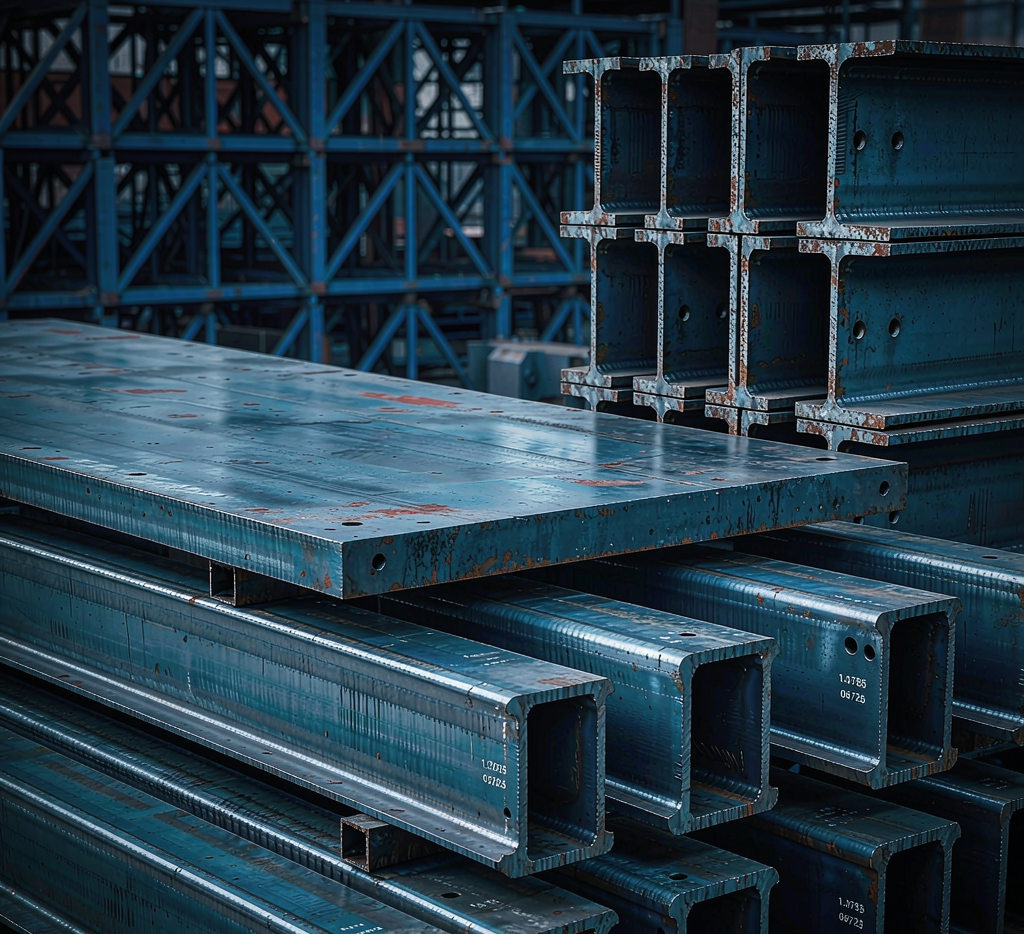
Types of Carbon Steel Pipe Clamps
| Type | Construction | Best for | Key feature |
|---|---|---|---|
| Two-bolt split clamp | Two pressed half-bands, two bolts | Light to medium duty pipe support | Economical, quick installation |
| Three-bolt clamp | Three-piece band with three bolts | Larger diameters, higher load | Even load distribution |
| Saddle / base clamp | Half band welded or bolted to a base plate | Resting support on steelwork | Direct mounting to beam or floor |
| Anchor clamp | Heavy band with lugs and welded attachments | Fixed points resisting axial thrust | High restraint and load capacity |
| Guide clamp | Band with sliding shoe or PTFE pad | Thermal expansion guide | Allows axial movement |
| Insulated clamp | Band with rubber or phenolic liner | Refrigerated or dissimilar-metal lines | Prevents galvanic corrosion and thermal bridging |
For most general piping, a two-bolt zinc-plated clamp is sufficient. High-temperature steam lines, large-diameter mains, and pipelines subject to water hammer need a heavier design with more bolts and a larger supporting rod. Insulated clamps are specified where the pipe carries a cold medium and the clamp would otherwise create a thermal bridge.
Sizes and Load Specification
| Nominal pipe size | Pipe OD | Bolt size | Recommended rod | Approx. weight | Indicative load |
|---|---|---|---|---|---|
| DN15 / 1/2 in | 21.3 mm | M8 | M8 | 0.10 kg | 0.5 kN |
| DN25 / 1 in | 33.7 mm | M8 | M8 | 0.16 kg | 0.8 kN |
| DN50 / 2 in | 60.3 mm | M10 | M10 | 0.35 kg | 1.5 kN |
| DN80 / 3 in | 88.9 mm | M10 | M10 | 0.60 kg | 2.2 kN |
| DN100 / 4 in | 114.3 mm | M12 | M12 | 1.00 kg | 3.5 kN |
| DN150 / 6 in | 168.3 mm | M12 | M12 | 1.70 kg | 5.0 kN |
| DN200 / 8 in | 219.1 mm | M16 | M16 | 3.20 kg | 8.0 kN |
| DN300 / 12 in | 323.9 mm | M16 | M20 | 5.80 kg | 14.0 kN |
| DN450 / 18 in | 457.2 mm | M20 | M24 | 10.5 kg | 24.0 kN |
| DN600 / 24 in | 610.0 mm | M24 | M30 | 18.0 kg | 38.0 kN |
Load figures are indicative for the clamp body only and assume correct bolt torque and a sound supporting structure. Actual allowable load must be checked against the governing piping code, the pipe wall thickness, the contents density, and the spacing between supports. For pressure piping designed to ASME B31.3 or EN 13480, the support design should be reviewed by a qualified piping engineer.
Dimensional Tolerances
- Band inside radius: matched to the nominal pipe outside diameter within plus/minus 1 mm.
- Band thickness: 3-10 mm depending on clamp class, verified by ultrasonic thickness gauge.
- Bolt hole diameter: nominal bolt size plus 1-2 mm, punched or drilled to a controlled tolerance.
- Hole centre distance: within plus/minus 0.5 mm to ensure correct fit-up.
- Weld quality: attachment welds inspected visually and, for heavy-duty types, by magnetic particle testing.
- Coating thickness: 45-85 micrometres typical for hot-dip galvanising.
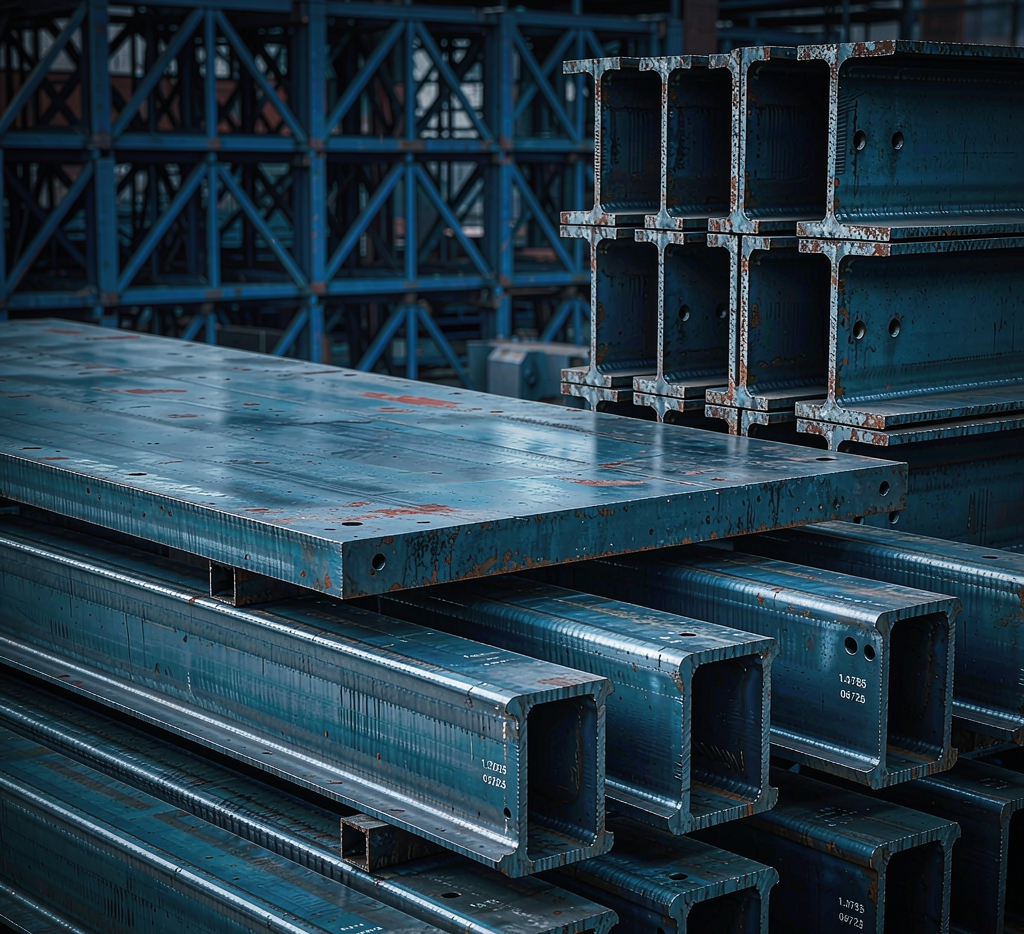
Available Materials and Finishes
| Material | Specification | Finish | Application |
|---|---|---|---|
| Low carbon steel | Q235 / AISI 1018 | Zinc plate | Indoor, dry, general services |
| Medium carbon steel | AISI 1045 / 45# | Hot-dip galvanised | Outdoor, water, marine atmosphere |
| Structural steel | Q355 / ASTM A36 | Painted or galvanised | Heavy-duty and large-diameter supports |
| Low alloy steel | AISI 4140 | Painted | High-temperature or high-load applications |
Hot-dip galvanising is the recommended finish for outdoor and marine installations because it protects both the band and the bolt threads. For indoor plant rooms, electro-zinc plating is usually adequate and less expensive. Where the pipe is stainless steel or aluminium, we can supply clamps with a rubber or phenolic liner to prevent galvanic corrosion at the contact point.
Manufacturing Standards
Pipe clamps are generally manufactured to recognised hardware and piping-support standards rather than a single product specification. Bolt and nut dimensions follow ISO 4014 / 4017 and ISO 4032 for metric assemblies, or ASTM A193 / A194 for high-temperature studs. Hot-dip galvanising is applied to ASTM A123 or ISO 1461. For pressure piping, the support arrangement itself falls under the applicable piping code such as ASME B31.1, ASME B31.3, or EN 13480.
Our fabrication follows a documented route: material verification, CNC punching or laser cutting of the band, forming in a press brake or rolling machine, welding of lugs and attachments, dimensional inspection, coating, and final assembly. Mill certificates to EN 10204 3.1 are available for the steel used in heavy-duty clamps, and third-party inspection can be arranged for project orders.
Selection and Installation Guidance
Begin by calculating the total vertical load at each support: the pipe weight, the weight of the fluid, the insulation, and any additional components such as valves or flanges. Divide by the number of supports and apply the safety factor required by the project specification. Then decide which points are anchors (no movement), which are guides (axial movement allowed), and which are simple rests.
- Confirm the pipe outside diameter, including insulation if the clamp is fitted outside it.
- Choose a clamp class whose allowable load exceeds the calculated support load.
- For anchor points, verify that the clamp and its welded attachment resist the expected axial thrust.
- Tighten bolts evenly on both sides so the band sits square to the pipe axis.
- Where thermal movement is expected, fit the guide clamp with the correct sliding clearance.
- Inspect after commissioning and at planned intervals for loosening, coating damage, or pipe deformation.
Applications
Carbon steel pipe clamps are installed in power plants, refineries, chemical processing facilities, water and wastewater treatment plants, HVAC systems, ship piping, fire protection systems, and municipal pipelines. They support everything from small instrument tubing to large-diameter process mains, and they are equally common on new construction and retrofit projects where welding to the pipe is not permitted.
In seismic zones and on lines subject to rapid valve closure, clamp spacing and anchor design become especially important. The clamp must restrain the pipe without concentrating stress at a single point, and the attachment to the structure must be capable of carrying the dynamic load. Project-specific engineering is recommended for these cases.
Quality Assurance
We verify incoming plate thickness and grade against the mill certificate before fabrication. Formed bands are checked against a template for the specified pipe diameter, because an out-of-round clamp will not develop the designed grip. Welded attachments are inspected for penetration and visible defects, and sample clamps from each production batch are assembled on a pipe of the correct diameter to confirm fit-up.
Coated clamps are inspected for uniform coverage, particularly around bolt holes and weld toes where coating can be thin. Coating thickness is measured with a magnetic gauge, and any damaged areas are touched up before packing. Inspection records are retained against the production lot and can be included in the shipment documentation.
Packaging and Shipment
Clamps are bundled by size and packed in cartons or wooden crates, with bolts and nuts bagged separately or fitted loosely to avoid damaging the coating. Large fabricated clamps are nested on pallets and secured with steel strapping. Labels show nominal pipe size, type, material, finish, and lot number for easy identification on site.
We ship from major Chinese ports with a full export document set including commercial invoice, packing list, and certificates. Mixed loads combining clamps with pipes, flanges, and fittings can be consolidated. Lead time for standard sizes is typically 10 to 20 days; custom diameters, special liners, or heavy fabrication require confirmation before order placement.
Frequently Asked Questions
What is the difference between an anchor clamp and a guide clamp?
An anchor clamp prevents movement in all directions and resists axial thrust. A guide clamp holds the pipe radially but allows axial sliding to accommodate thermal expansion.
Can pipe clamps be used on insulated pipe?
Yes. Either specify a clamp sized to the outside of the insulation, or use an insulated clamp with a liner that supports the pipe while limiting thermal bridging.
How many bolts does a pipe clamp need?
Two-bolt designs suit light and medium duty. Three-bolt or heavier designs are used for larger diameters and higher loads where more even distribution is needed.
Do you manufacture to a specified pipe outside diameter?
Yes. We can produce clamps to a given outside diameter or against a customer drawing, including non-standard sizes for retrofit projects.
What finish do you recommend for marine use?
Hot-dip galvanising to ASTM A123 or ISO 1461, preferably with a liner if the pipe material is dissimilar to carbon steel.
Request a Quote
We manufacture carbon steel pipe clamps in two-bolt, three-bolt, saddle, anchor, and guide designs with zinc or hot-dip galvanised finishes. Send your pipe outside diameter, support load, type, quantity, and destination port for a factory-direct quotation.
Contact our sales team at [email protected] with your grade, dimensions, quantity, and destination port. We reply with a mill-direct quotation, lead time, and full documentation within one business day.