Carbon Steel Slip-On Flange — Factory Direct Supplier | Huaxia-Steel
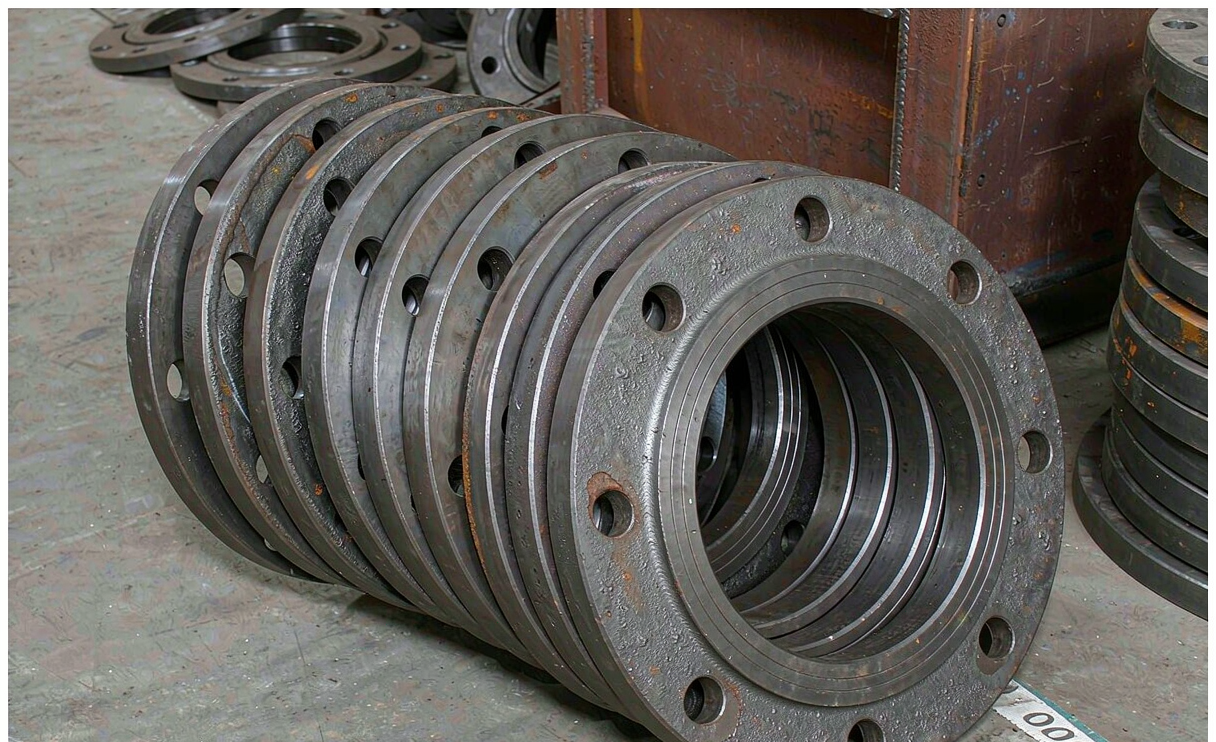
A carbon steel slip-on flange is a flat, circular fitting that slips over the pipe end and is welded in place with two fillet welds — one inside the bore and one outside at the hub. It is the most economical and easiest-to-install flange type, widely used in low- to medium-pressure pipelines, water treatment, HVAC, oil and gas, petrochemical and general industrial piping. Huaxia Steel supplies slip-on flanges to ASME B16.5, EN 1092-1, JIS B2220 and DIN standards in a full range of sizes and pressure classes.
Product Overview
Slip-on flanges are popular because they are thinner and cheaper than weld-neck flanges and do not require precise pipe-end preparation. They are ideal for applications where the piping system operates at moderate temperatures and pressures and where future replacement is unlikely. Because the pipe is welded both inside and outside, slip-on flanges offer good mechanical strength, though not as high as weld-neck flanges under cyclic loading.
Typical Specifications
| Parameter | Range / Value |
|---|---|
| Standard | ASME/ANSI B16.5, EN 1092-1, JIS B2220, DIN 2501, BS 4504 |
| Nominal size | 1/2″ – 60″ (DN15 – DN1500) |
| Pressure class | 150# – 2500# (PN6 – PN400) |
| Face type | Raised face (RF), flat face (FF), ring-type joint (RTJ) |
| Material grades | A105, A181, A350 LF2, Q235, S235JR, P245GH, P250GH |
| Coating | Black paint, anti-rust oil, galvanized, yellow or custom |
| Surface finish | Serrated or smooth flange face |
Dimensional Data (ASME B16.5 Class 150)
| NPS | OD (mm) | Thickness (mm) | PCD (mm) | No. of bolts | Bolt size |
|---|---|---|---|---|---|
| 1/2″ | 89 | 11.2 | 60.3 | 4 | 1/2″ |
| 1″ | 108 | 14.2 | 79.4 | 4 | 1/2″ |
| 2″ | 152 | 19.1 | 120.7 | 4 | 5/8″ |
| 4″ | 229 | 23.9 | 190.5 | 8 | 5/8″ |
| 6″ | 279 | 25.4 | 241.3 | 8 | 3/4″ |
| 8″ | 343 | 28.6 | 298.5 | 8 | 3/4″ |
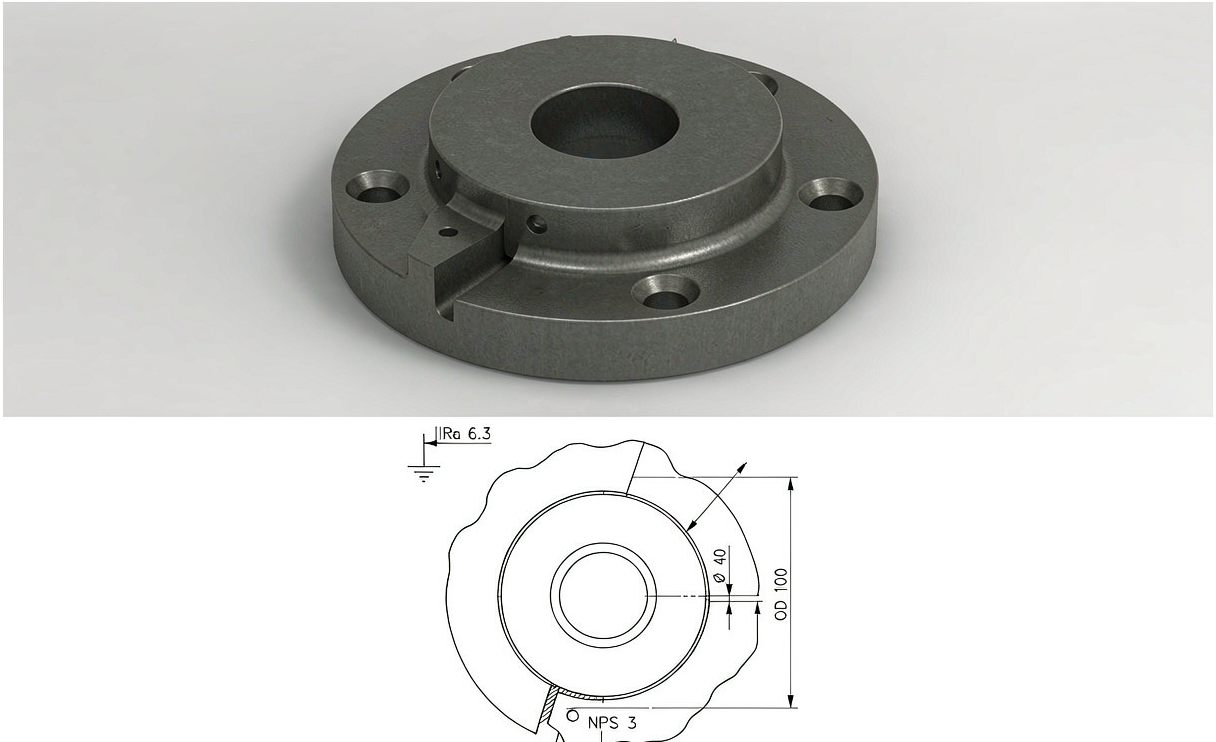
Carbon Steel Grades for Flanges
The material grade is selected based on pressure class, temperature and service environment. The most common carbon steel grades are listed below.
| Grade | Standard | Typical service |
|---|---|---|
| ASTM A105 | ASME B16.5 | General high-pressure carbon steel piping |
| ASTM A181 | ASME B16.5 | Non-critical, lower-strength applications |
| ASTM A350 LF2 | ASME B16.5 | Low-temperature service |
| Q235 / S235JR | EN / GB | Low-pressure water, air and structural lines |
| P245GH / P250GH | EN 1092-1 | Pressure equipment directive (PED) projects |
Applications
- Water treatment and distribution pipelines
- HVAC chilled water, hot water and steam lines
- Oil and gas low-pressure gathering lines
- Petrochemical process piping
- Fire protection and sprinkler systems
- General fabrication and structural piping
Welding and Installation
Slip-on flanges are installed by slipping the flange over the pipe until the pipe end reaches the flange hub. A fillet weld is then applied on the outside of the hub and another on the inside of the bore. Proper alignment is important because slip-on flanges do not have the long tapered neck of a weld-neck flange to absorb bending stresses. For high-pressure or cyclic-loading service, weld-neck flanges are preferred.
Quality Assurance
Each flange is inspected for dimensional accuracy, surface finish, marking, material traceability and bolt-hole alignment. Mill test certificates are supplied with heat number and chemical composition. We can provide third-party inspection by SGS, BV or Intertek, including ultrasonic testing and pressure testing where required.
Packaging and Shipping
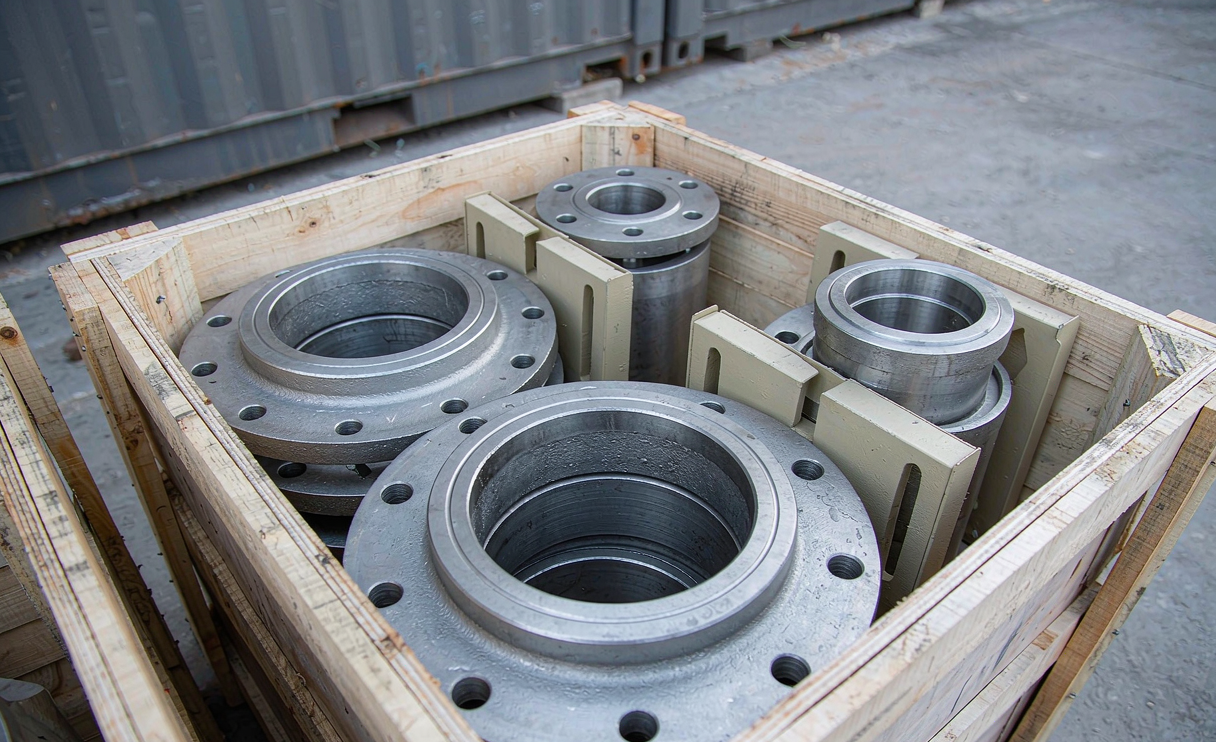
Slip-on flanges are packed in wooden crates or pallets by size and pressure class. Faces are protected with cardboard or plastic separators to prevent damage. Coatings are applied for corrosion protection during sea transit. Each package is labelled with standard, size, class, material grade, heat number and quantity.
Why Buy Carbon Steel Slip-On Flanges from Huaxia Steel
- Full range of ASME, EN, JIS and DIN standards
- Sizes from 1/2″ to 60″ and pressure classes 150# to 2500#
- A105, A350 LF2, Q235, S235JR, P245GH and other grades
- Raised face, flat face and RTJ face types
- Competitive mill-direct pricing with full traceability
Request a Quote
Send us the standard, size, pressure class, material grade, face type and quantity. We will confirm the best lead time and shipping option. Contact Huaxia Steel for carbon steel slip-on flange pricing today.
Manufacturing Process
Carbon steel slip-on flanges are forged or cut from plate. Forged flanges have better grain structure and mechanical properties. The flange is machined on CNC lathes and mills to achieve the specified OD, thickness, bolt-hole circle, bore and facing. Raised-face or flat-face finishing is done after machining, followed by marking, surface treatment and inspection.
- Forging or plate cutting
- Heat treatment when required
- Rough machining
- CNC finishing of faces and bore
- Drilling of bolt holes
- Surface coating and marking
- Dimensional and visual inspection
Inspection and Testing
Inspection covers OD, thickness, bolt-hole circle diameter, bore, face finish, surface defects and marking. Forged flanges may require ultrasonic testing. Pressure testing is done when specified by the purchase order. Chemical composition and mechanical properties are verified by mill test certificate.
Comparison: Slip-On vs Weld-Neck vs Blind Flange
| Type | Cost | Strength | Best for |
|---|---|---|---|
| Slip-on | Lowest | Moderate | Low-pressure, static service |
| Weld-neck | Higher | Highest | High-pressure, cyclic loading |
| Blind | Medium | High | Isolating pipe ends, hydrotest caps |
FAQ
When should I choose slip-on over weld-neck?
Choose slip-on for low- to medium-pressure systems where cost matters and the line is not subject to severe cyclic loading or thermal expansion. Use weld-neck for critical high-pressure service.
Do slip-on flanges need hub welding?
Yes. ASME B16.5 requires both an inside fillet weld at the bore and an outside fillet weld at the hub for proper strength.
Can slip-on flanges be used with metric pipe?
Yes, but the bore must be machined to match the actual pipe OD. Specify pipe OD clearly when ordering metric sizes.