Carbon Steel Spring Pin — Factory Direct Supplier | Huaxia-Steel
Carbon steel spring pins, also known as roll pins or tension pins, are hollow, slotted cylindrical fasteners that compress when driven into a hole and spring back to create a tight, vibration-resistant fit. Huaxia-Steel manufactures spring pins in metric and inch sizes, in both rolled (seamless-type) and split (cotter-style) forms, supplied factory-direct with full traceability. They are an economical, reliable alternative to solid dowel pins for location and light load-bearing applications.
Because a spring pin is compressed during insertion, it accommodates a range of hole tolerances and remains secure under vibration without the need for tight reaming. This makes it popular in machinery, automotive, and equipment assembly where reliable location at low cost is important. Correct sizing and material selection ensure a pin that holds firmly without overloading the hole.
Product Overview
We supply spring pins to ISO 13337 (spring-type straight pins, slotted), DIN 1481, and ANSI/ASME B18.8.2 standards. Metric diameters range from 1 mm to 20 mm and lengths from 4 mm to 100 mm or more; imperial sizes run from 1/16 inch to 3/4 inch. Two main forms are available: the rolled spring pin, formed from strip into a tube with an overlapping seam, and the split pin type with a gap along its length.
Materials are typically spring steel grades such as AISI 1065, 1070, or 1566, hardened and tempered to provide the elastic properties needed for repeated compression. Finishes include plain (oiled), zinc plated, and phosphate; stainless spring steel is available on request for corrosive environments.
Specifications
| Parameter | Range / Detail |
|---|---|
| Metric diameters | 1 mm to 20 mm |
| Imperial diameters | 1/16″ to 3/4″ |
| Lengths | 4 mm to 100 mm+, or cut to size |
| Types | Rolled (ISO 13337), split (DIN 1481), slotted |
| Materials | AISI 1065 / 1070 / 1566 spring steel |
| Hardness | HRC 42-53 (typical) |
| Finishes | Plain oiled, zinc plated, phosphate |
| Standards | ISO 13337, DIN 1481, ASME B18.8.2 |
Pin diameter is nominally slightly larger than the recommended hole so that the pin compresses on insertion. Hole preparation is important: a drilled hole with a smooth finish and correct diameter ensures consistent insertion force and holding power. We can advise on the recommended hole size for each pin diameter.
Available Grades and Materials
- AISI 1065 / 1070: high-carbon spring steel, hardened and tempered, the standard choice for general-purpose spring pins.
- AISI 1566: manganese spring steel with good hardenability for larger diameters.
- AISI 301 / 302 stainless: available for corrosion-resistant applications.
- Low-carbon variants: for applications where lower hardness and easier formability are preferred.
All spring pins are made from certified spring steel and supplied with material test certificates on request. Heat treatment is controlled to achieve the specified hardness and elastic recovery, and samples from each lot are tested.
Manufacturing Standards
Rolled spring pins are produced to ISO 13337 and DIN 1481, where the pin is formed from a strip with a longitudinal seam. Split spring pins (sometimes called split dowel pins) follow DIN 1481 with a visible gap. Imperial spring pins conform to ASME B18.8.2. The standards define diameter, length, and the permissible spring and compression characteristics.
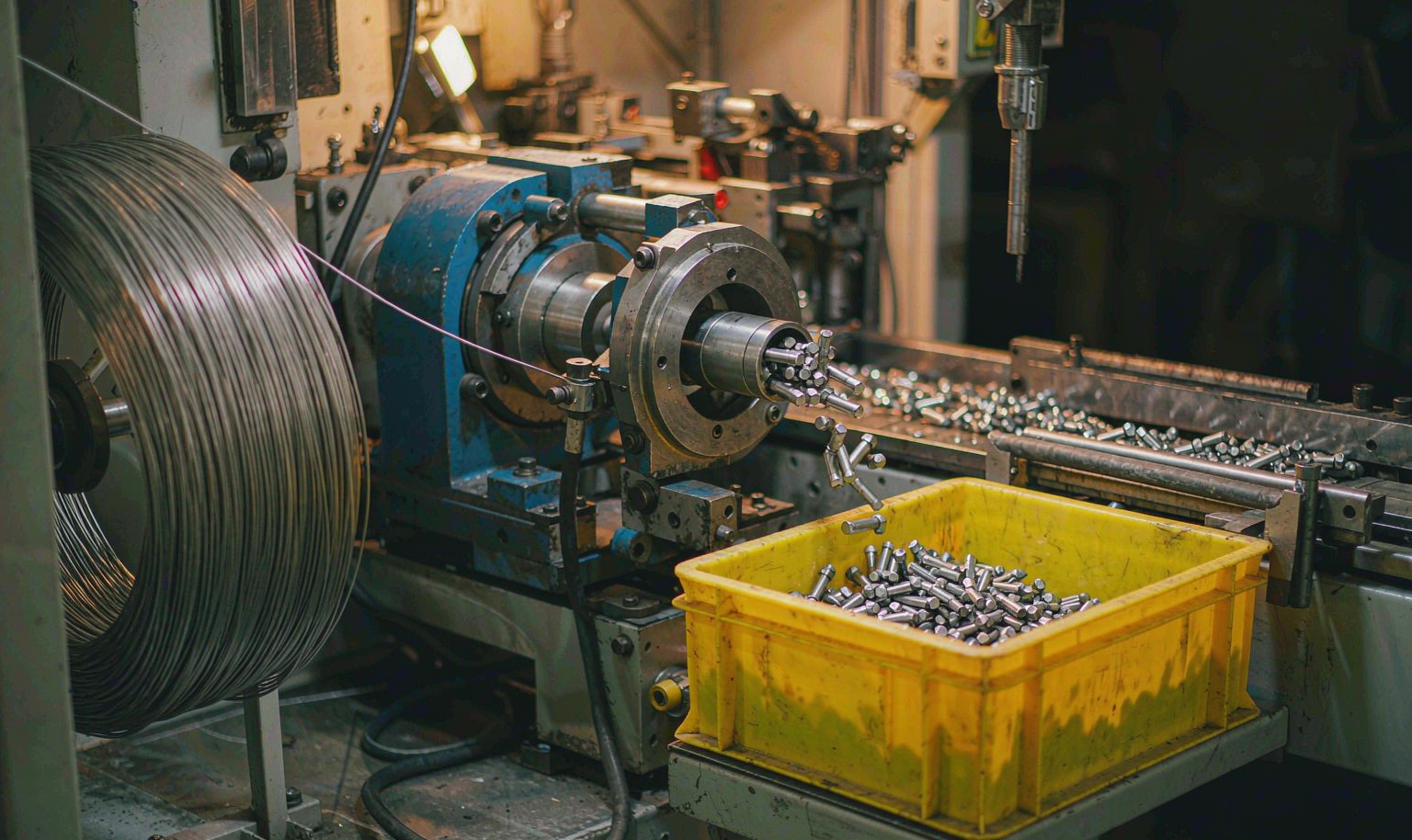
Manufacturing involves slitting and rolling steel strip to the required diameter, forming the seam or gap, heat treating to develop spring properties, and applying the finish. Ends are chamfered to ease insertion. Quality control focuses on diameter, spring rate, hardness, and seam integrity.
Applications
- Locating and retaining gears, pulleys, and collars on shafts.
- Hinge pins and pivot points in machinery and equipment.
- Automotive transmission and steering components.
- Jigs, fixtures, and tooling alignment.
- Electrical switchgear and appliance assemblies.
- General-purpose, vibration-resistant fixing where a solid pin would be costly.
Quality Assurance
We inspect spring pins for outside diameter, length, seam quality, and hardness. Compression and spring-back behaviour are sampled to confirm the pin grips correctly without permanent deformation. Surface finish and coating are checked, and hardness testing verifies the heat-treatment condition on samples from each lot.
Mill test certificates and hardness reports are available, and third-party inspection (SGS, BV, TUV) can be arranged for first orders or critical contracts. We maintain traceability from raw material to finished product.
Packaging and Shipping
Spring pins are packed in sealed plastic bags within labelled cartons, typically 25 kg per carton, with size and quantity clearly identified. Precision or small-diameter pins can be packed in compartmented boxes to prevent mixing. Cartons are palletized and stretch-wrapped for container shipment, with moisture protection where needed. Export marking and documentation are handled to customer specification, and spring pins can be consolidated with other fastener items.
Frequently Asked Questions
What is a spring pin used for?
A spring pin locates or retains parts on a shaft or in a bore. Its compressible design absorbs hole tolerance variation and resists loosening under vibration, making it a low-cost alternative to a solid dowel pin.
What hole size should I drill for a spring pin?
The hole is normally slightly smaller than the nominal pin diameter so the pin compresses on insertion. The exact recommendation depends on the pin diameter and standard; ask us for the hole chart for your size.
Can spring pins be reused?
Repeated removal can reduce the spring force and enlarge the seam, so reuse is generally discouraged for critical joints. Replace the pin after removal for consistent holding power.
What is the difference between rolled and split spring pins?
Rolled pins have an overlapping seam and provide uniform spring force around the circumference; split pins have a single gap and are simpler and often lower cost. Both are secure, but rolled pins suit precision applications better.
Do you supply stainless spring pins?
Yes. Stainless spring steel pins are available for corrosive environments, subject to size and quantity. Contact us with your requirements.
Spring Pin vs Dowel Pin vs Cotter Pin
Buyers often choose between several pin types. Each has distinct advantages, and understanding them prevents over- or under-specification.
| Pin type | Key feature | advantages | Typical use |
|---|---|---|---|
| Spring pin | Compresses to absorb tolerance | No reaming, vibration resistant | General location and retention |
| Solid dowel pin | Precise diameter, rigid | Highest positional accuracy | Precision alignment, jigs |
| Cotter pin | Split legs bent to lock | Cheap, disposable lock | Securing nuts and castellated fittings |
| Taper pin | Wedges tightly in tapered hole | Strong, removable | Heavy-duty shaft-hub fixing |
Spring pins are the most economical choice when you want a secure fit without the cost of precision reaming. Solid dowel pins are better when positional accuracy is critical. Cotter pins are locking devices rather than locating pins, and taper pins suit heavy loads where a wedge fit is acceptable.
Installation and Removal Best Practices
Drive a spring pin with a punch and hammer or an arbor press, applying force squarely along the pin axis. The hole should be clean, deburred, and correctly sized; a hole that is too small will cause excessive insertion force and may buckle the pin, while one that is too large will not grip. Chamfered pin ends make starting easier and reduce the chance of the pin folding.
For removal, use a pin punch slightly smaller than the pin bore and drive the pin out from the opposite end. Because removal can deform the seam and reduce spring force, replace the pin after disassembly in critical applications. Where a pin must be removed repeatedly, a solid dowel pin with a threaded extraction feature may be a better long-term choice.
Ordering Information Checklist
- Nominal diameter and length (metric or inch).
- Type: rolled spring pin, split pin, or slotted type.
- Material grade and hardness requirement.
- Finish: plain oiled, zinc plated, or phosphate.
- Governing standard (ISO 13337, DIN 1481, ASME B18.8.2).
- Quantity, packaging, and any certificate or inspection needs.
Tell us your pin size and application and we will confirm the recommended hole size and the most economical type for your volume. Huaxia-Steel stocks a wide range of spring pins and can produce custom sizes and materials to drawing.
Why Buyers Choose Huaxia-Steel
Our spring pins are made from certified spring steel, heat treated for consistent elastic recovery, and inspected for diameter, seam quality, and hardness. We stock the common metric and inch sizes and can advise on hole sizing and type selection for your application. With export-grade packing and the ability to consolidate with other fasteners, we make it economical to source all your pins from one supplier.
Every order is backed by responsive communication and a clear documentation package. Our sales team can help you confirm specifications, select the right grade or finish, and plan delivery to match your production schedule. For repeat customers we hold stock against blanket orders and offer priority scheduling. Contact us with your requirement and experience the advantage of buying factory direct.
Request a Quote
Looking for a dependable carbon steel spring pin supplier? Huaxia-Steel offers rolled and split spring pins in metric and inch sizes with certified spring steel and fast global delivery. Send us your diameter, length, and quantity for a factory-direct quote.
Contact our sales team at [email protected] with your specification, quantity, and destination port. We reply with a mill-direct quotation, lead time, and full documentation within one business day.