Carbon steel is one of the world’s most widely used engineering materials thanks to its exceptional strength, formability, and cost-effectiveness. However, its Achilles’ heel is corrosion resistance — untreated carbon steel rusts rapidly when exposed to moisture, chemicals, or atmospheric conditions. Selecting the right surface treatment is critical for extending service life, maintaining appearance, and meeting end-user specifications. This comprehensive guide covers the seven most important surface treatment methods for carbon steel products, helping importers and procurement professionals make informed decisions.

1. Hot-Dip Galvanizing (HDG)
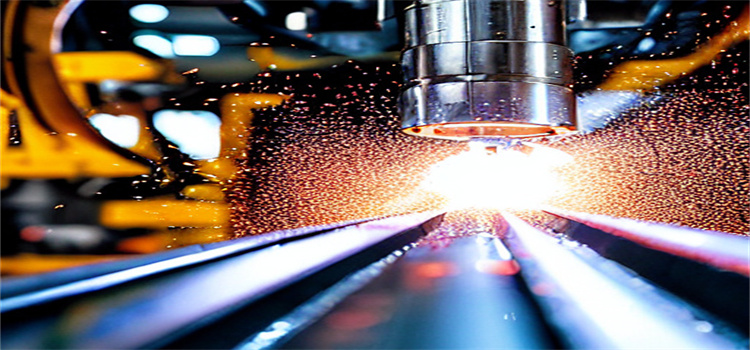
Hot-dip galvanizing is the most widely used corrosion protection method for structural carbon steel. The process involves immersing cleaned steel in a bath of molten zinc at approximately 450°C (842°F), forming a metallurgically bonded zinc-iron alloy coating. The resulting layers provide both barrier protection and cathodic (sacrificial) protection. When the coating is scratched, the surrounding zinc corrodes preferentially, protecting the exposed steel underneath.
Key Specifications
Industry standards governing hot-dip galvanizing include ASTM A123 (general products), ASTM A153 (small hardware), ISO 1461 (international), and EN ISO 1461 (European). Coating thickness typically ranges from 45 to 85 microns (3.2 to 6.0 mils) depending on steel thickness. For structural steel sections thicker than 6mm, a minimum of 85 microns is required per ASTM A123.
| Steel Thickness | Min Coating (ASTM A123) | Min Coating (ISO 1461) | Typical Service Life |
|---|---|---|---|
| < 1.6mm | 45 μm | 45 μm | 20-40 years (rural) |
| 1.6-3.0mm | 55 μm | 55 μm | 30-50 years (rural) |
| 3.0-6.0mm | 70 μm | 70 μm | 40-60 years (rural) |
| > 6.0mm | 85 μm | 85 μm | 50-75 years (rural) |
Advantages: Complete coverage including edges and cavities, self-healing at scratches, no maintenance required, long service life (50+ years in rural environments).
Limitations: Not suitable for high-temperature applications above 200°C, potential for hydrogen embrittlement in high-strength steels, dimensional changes may affect tight-tolerance parts, limited color options (silver-gray only unless duplex coating applied).
2. Powder Coating
Powder coating has become the dominant industrial finishing method for carbon steel products requiring both protection and aesthetic appeal. In this electrostatic process, dry powder particles (typically polyester, epoxy, or hybrid resins) are sprayed onto grounded steel parts using a corona charging gun. The coated parts then pass through a curing oven at 160-200°C, where the powder melts, flows, and crosslinks into a durable continuous film.
| Powder Type | Cure Temp | UV Resistance | Chemical Resistance | Cost Index |
|---|---|---|---|---|
| Epoxy | 160-190°C | Poor (chalking) | Excellent | Low |
| Polyester | 180-200°C | Excellent | Good | Medium |
| Epoxy-Polyester | 170-190°C | Good | Very Good | Medium |
| Polyurethane | 180-200°C | Very Good | Excellent | High |
| Fluoropolymer | 200-230°C | Superior (25+ yr) | Superior | Very High |
Standard film thickness for powder coating ranges from 60 to 120 microns. Testing per ASTM D3359 (cross-hatch adhesion) and ASTM B117 (salt spray resistance) is commonly specified. Pretreatment is critical — a zinc phosphate pretreatment layer (ASTM B633) significantly improves adhesion and corrosion performance.
3. Wet Paint Systems
Traditional liquid painting remains relevant for large structures, on-site applications, and repair work. Common paint systems for carbon steel include alkyd (economical, general-purpose), epoxy (high chemical resistance, industrial), polyurethane (UV-resistant topcoat), and zinc-rich primers (cathodic protection). A three-coat system — zinc-rich primer + epoxy intermediate + polyurethane topcoat — is the gold standard for offshore and marine environments (ISO 12944 C5-M classification).
Surface Preparation Standards
Proper surface preparation is the single most important factor in coating performance. The SSPC/NACE and ISO 8501 standards define blast cleaning grades:
- Sa 2.5 / SSPC-SP 10 (Near-White Blast): Removes all mill scale, rust, and paint. The minimum standard for high-performance coatings.
- Sa 3 / SSPC-SP 5 (White Metal Blast): Complete removal of all contaminants. Required for immersion service and critical applications.
- Sa 2 / SSPC-SP 6 (Commercial Blast): Removes most contaminants. Acceptable for non-critical atmospheric exposure.
- St 3 / SSPC-SP 3 (Power Tool Cleaning): Mechanical cleaning when blasting is impractical. Used for maintenance and repairs.
4. Phosphating (Conversion Coating)
Phosphating is a chemical conversion coating process that deposits a crystalline phosphate layer on the steel surface. While offering limited standalone corrosion protection, it serves as an excellent adhesion promoter for subsequent painting or powder coating. Three main types are used with carbon steel:
- Zinc Phosphate: Best overall performance, provides 500-1000 hours salt spray resistance when combined with topcoat. Standard for automotive and appliance applications.
- Iron Phosphate: Most economical, thinner coating (0.5-1.0 g/m²), suitable for indoor applications and as a paint base.
- Manganese Phosphate: High hardness and wear resistance, used for bearing surfaces, gears, and sliding components in mechanical assemblies.

5. Electroplating (Zinc / Nickel)
Electroplated zinc coatings are ideal for small to medium-sized precision carbon steel components such as fasteners, springs, brackets, and hardware. The electrodeposition process produces a thin, uniform, and aesthetically pleasing coating that maintains tight dimensional tolerances. Zinc plating thickness typically ranges from 5 to 25 microns, and trivalent chromium passivation (Cr3+) is increasingly specified to meet RoHS and ELV environmental requirements.
Zinc-nickel alloy electroplating (12-15% nickel content) provides superior corrosion protection — up to 1,000 hours in neutral salt spray (ASTM B117) without red rust — making it popular in automotive powertrain and under-hood applications.
6. Black Oxide (Bluing)
Black oxide is a chemical conversion coating that produces a decorative matte black finish while providing mild corrosion resistance when complemented with oil or wax sealants. The hot alkaline process (operating at 135-145°C) forms a magnetite (Fe₃O₄) layer approximately 1-2 microns thick. It is dimensionally neutral — adding virtually no measurable thickness — making it ideal for precision tools, firearm components, and machine parts.
7. Cost Comparison & Selection Guide
| Treatment | Cost/m² (USD) | Corrosion Life | Appearance | Best For |
|---|---|---|---|---|
| Hot-Dip Galvanizing | $3-8 | 50+ years | Silver-gray | Structural steel, outdoor |
| Powder Coating | $5-12 | 10-25 years | Any color | Consumer products, enclosures |
| Wet Paint (3-coat) | $10-20 | 15-25 years | Any color | Marine, offshore, bridges |
| Zinc Electroplating | $2-5 | 5-15 years | Bright silver/blue | Fasteners, small parts |
| Phosphating | $1-3 | 1-5 years (bare) | Gray/black | Paint pre-treatment |
| Black Oxide | $1-3 | 1-3 years (oiled) | Matte black | Tools, firearms, gears |

Frequently Asked Questions
Q: Can hot-dip galvanized steel be painted?
A: Yes, this is called a duplex coating system. The galvanized surface must be sweep-blasted (SSPC-SP 16) or chemically treated to ensure paint adhesion. Duplex systems can achieve 1.5-2x the service life of either coating alone.
Q: What surface treatment is best for carbon steel used in coastal environments?
A: For coastal/marine environments (high chloride exposure), a three-coat paint system meeting ISO 12944 C5-M is recommended. Hot-dip galvanizing with a minimum 85μm zinc coating also performs well. Avoid powder coating alone in highly corrosive marine atmospheres.
Q: How do I verify coating quality upon receipt?
A: Request coating thickness measurements (magnetic or eddy current gauge per ISO 2808), adhesion testing (cross-hatch per ASTM D3359 or pull-off per ASTM D4541), and visual inspection for defects. Mill certificates should include coating specification compliance.
Q: Does surface treatment affect the mechanical properties of carbon steel?
A: Hot-dip galvanizing at 450°C will not affect the mechanical properties of most structural carbon steels. However, for high-strength steels (yield strength > 1,100 MPa) and quenched-and-tempered grades, hydrogen embrittlement risk should be evaluated per ASTM F1940. Powder coating cure temperatures (160-200°C) are far below any tempering temperature.
Ready to source high-quality carbon steel products at competitive factory-direct prices? Contact Huaxia-Steel today for a free quotation and consultation. Our team provides full Mill Test Certificates (MTC), third-party inspection reports, and flexible shipping options worldwide.