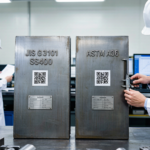
SS400 carbon steel plate is the most widely traded JIS structural steel plate in Asia — the Japanese-market equivalent of ASTM A36 and the go-to grade for general fabrication, structural frameworks, machine bases, storage tanks and shipbuilding internals. Defined by JIS G3101 with a guaranteed minimum tensile strength of 400 MPa, SS400 offers good weldability, predictable mechanical behavior and mill-direct pricing that undercuts equivalent European grades. We supply SS400 plates cut to length or full coil, with optional shot blasting, priming and third-party certification.
Product Overview
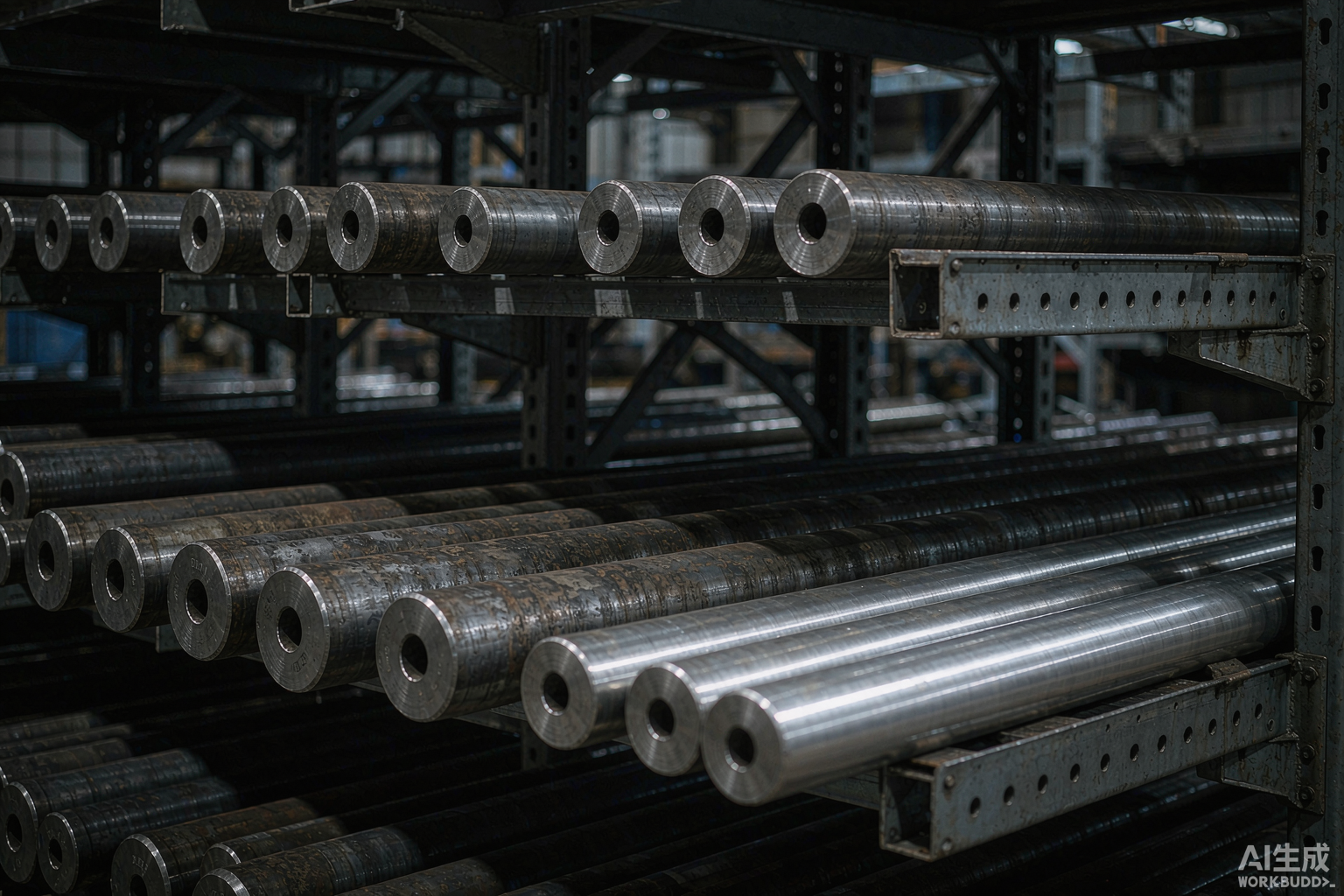
SS400 is a hot rolled general structural rolled steel under JIS G3101. Unlike ASTM A36, which specifies both yield and tensile strength and a detailed chemistry, SS400 is defined primarily by tensile strength (400-510 MPa) and elongation, with chemistry limits set loosely (P and S ≤ 0.050% each) and carbon content not specified — the mill controls carbon to meet mechanical properties. In practice SS400 plates run 0.14-0.22% C, giving excellent weldability with no preheat for standard thicknesses. Plates are produced on hot strip mills (up to about 25 mm, from coil) or plate mills (typically 6-200 mm), then sheared, flame-cut or plasma-cut to customer dimensions.
Specifications, Sizes and Tolerances
| Item | Range / Value |
|---|---|
| Standard | JIS G3101 SS400 (also supplied as SS330, SS490, SS540 on request) |
| Thickness | 1.2 mm (coil/sheet) – 300 mm (heavy plate) |
| Width | 1,000 / 1,220 / 1,500 / 1,800 / 2,000 / 2,200 / 2,500 mm; slit widths by request |
| Length | 2,000 – 12,000 mm, cut-to-length or mill edge coil |
| Thickness tolerance | JIS G3193 / G3194; typically ±0.3 mm to ±1.5 mm by thickness band, or ASTM A6 / EN 10029 by agreement |
| Width tolerance | +20/−0 mm standard; tighter by agreement |
| Length tolerance | +30/−0 mm standard; ±5 mm for precision cut-to-length |
| Flatness | ≤ 6 mm per meter standard; ≤ 3 mm/m for leveled plate |
| Surface | Mill scale as rolled; shot blasted Sa 2.0–2.5 and shop primed (20–25 µm) optional |
| Weight | 7.85 kg/m² per mm of thickness — e.g. 12 mm plate = 94.2 kg/m² |
Weight is straightforward: kg per plate = 7.85 × thickness (mm) × width (m) × length (m). A 2,000 × 6,000 mm sheet at 12 mm weighs 1,130 kg. For transport planning, a 20-foot container at 22-ton payload carries roughly 19-20 sheets of that size — useful when balancing container costs against plate thickness on export orders.
Mechanical Properties
| Thickness | Yield strength min (MPa) | Tensile strength (MPa) | Elongation min |
|---|---|---|---|
| ≤ 16 mm | 245 | 400–510 | 17% (No.5) / 21% (No.1A) |
| 16 – 40 mm | 235 | 400–510 | 21% (No.1A) |
| 40 – 100 mm | 215 | 400–510 | 23% (No.1A) |
| > 100 mm | 205 | 400–510 | 25% (No.1A) |
Note the yield strength step-down with thickness — the single most common cause of design mismatches when buyers substitute SS400 for A36 or S275JR. A 60 mm SS400 plate yields at 215 MPa, not 245 MPa; a designer using the ≤16 mm figure would overstress the section by roughly 14%. Always read the yield row matching your actual thickness.
Available Grades and Equivalents
| JIS | ASTM | EN | GB | Comment |
|---|---|---|---|---|
| SS330 | A283 Gr C (approx.) | S185 | Q195/Q215 | Lightest duty, lowest cost |
| SS400 | A36, A283 Gr D | S235JR / S275JR | Q235B/Q235C | The volume grade |
| SS490 | A572 Gr 50 (approx.) | S355JR | Q275/Q355B | Higher strength, check thickness rules |
| SS540 | A572 Gr 60 (approx.) | S355 (higher) | Q390 | Weldability needs review |
SS400 to A36 substitution is accepted in most fabrication shops, with two caveats: A36 specifies minimum yield 250 MPa across all thicknesses up to 200 mm (SS400 steps down), and A36 specifies carbon/chemistry limits that SS400 does not. Where project specifications require A36 explicitly, we can supply dual-certified material — ask for A36/SS400 dual MTC and we will confirm availability by thickness.
Manufacturing and Inspection Standards
- Product standard: JIS G3101 (Rolled steels for general structure); dimensions per JIS G3193 (plate), G3194 (hot rolled coil/sheet).
- Testing: JIS Z 2241 (tensile), JIS Z 2201 (specimen), JIS Z 2245 (Brinell hardness); one test per heat and per rolling lot.
- Chemistry: P ≤ 0.050%, S ≤ 0.050% per standard; heat analysis reported per heat on MTC.
- Supplementary: Charpy V-notch by agreement (SS400 is not impact-tested by default — specify SS400 with impact requirement if service is below 0 °C).
- Documentation: MTC per heat with heat number, thickness, chemistry and mechanical results; EN 10204 3.1 format available for European-bound orders.
- Inspection: optional UT per JIS G0901 or EN 10160 (S1/E1 classes) for plate intended for welded critical joints.
Applications
SS400 plate is used for: building frames, columns and beams fabricated from plate (built-up sections), base plates and machine foundations, storage tank shells (non-pressure), shipbuilding internals and hatch covers, truck and trailer frames, container floors, conveyor gantries, agricultural equipment frames, formwork and scaffolding plates, gussets and connection plates, and general repair plate stock. It is not intended for pressure vessels (use A516/Q345R), for high-impact cold service (use a notch-tough grade), or for wear duty (use NM400 or equivalent). Choosing the right family is the buyer’s first cost decision — SS400 is priced for general fabrication, and its limits should be respected.
Fabrication Guidance
Welding: SS400 welds readily with all common processes — SMAW (E6013/E7018), GMAW (ER70S-6), FCAW and SAW. Preheat is not normally required below 40 mm thickness at ambient above 0 °C; for restrained joints or thickness above 40 mm, apply 50-100 °C preheat. Carbon equivalent typically 0.32-0.42%, placing it comfortably weldable. Cold forming: minimum bend radii depend on thickness and rolling direction — for plate up to 20 mm, 1.0-1.5 × thickness transverse is typical. Machining and drilling: no special requirements; flame cutting, plasma and laser cutting all work well, and cut edges need only light grinding before welding. Painting: shot blast to Sa 2.5 before priming; shop primer at 20-25 µm if plates will be stored outdoors.
Quality Assurance
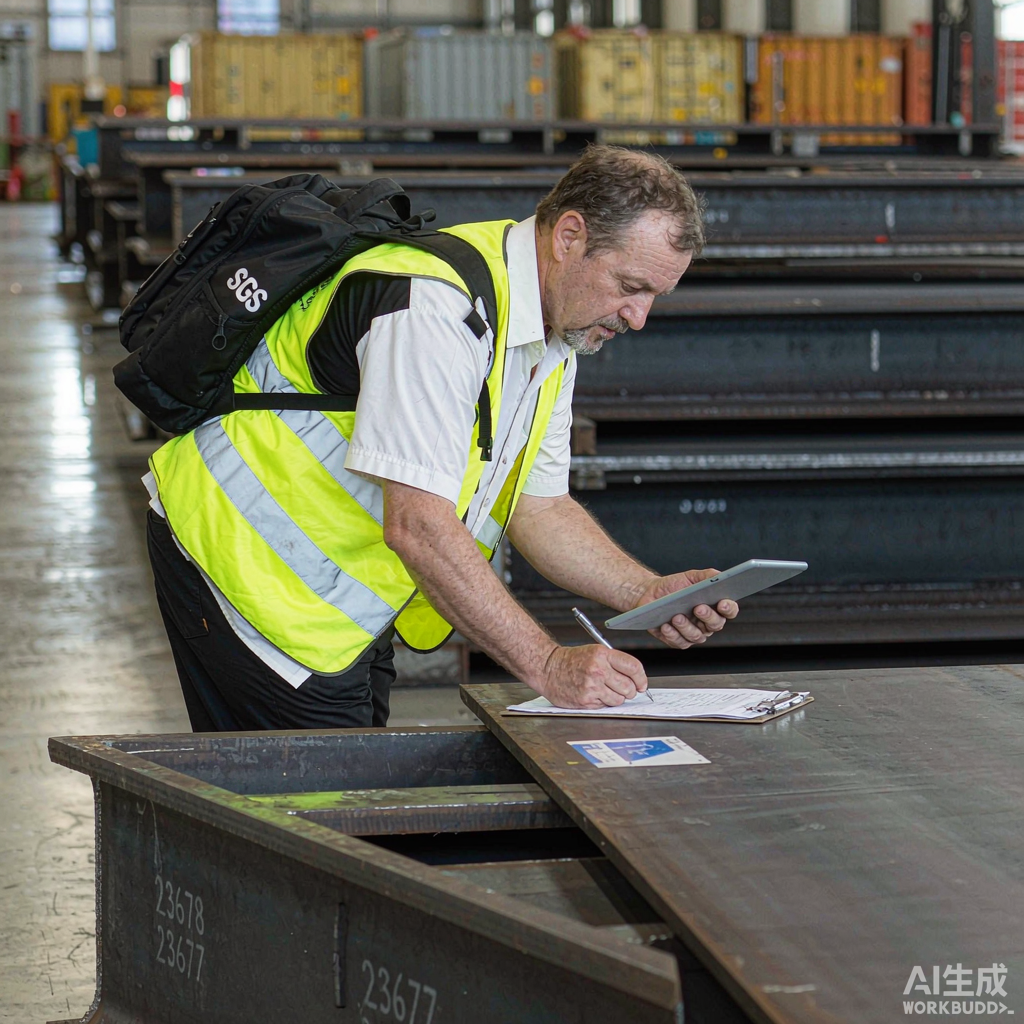
Plates are produced under ISO 9001 systems with heat-level traceability. Standard inspection includes thickness measurement across the plate, dimensional verification, surface inspection for laminations and roll marks, and tensile testing per heat per rolling lot. Optional testing: Charpy impact at specified temperature, through-thickness (Z-direction) testing by agreement for highly restrained joints, ultrasonic testing to EN 10160 or JIS G0901, and independent third-party inspection (SGS, BV, TUV, Intertek, DNV) including witnessed testing, dimensional survey and pre-shipment quantity verification. We provide MTC samples before order confirmation so your QA team can verify the certificate format matches your incoming inspection procedure.
Packaging and Shipping
Plates are bundled by size, strapped with steel banding on timber skids, with edge protectors and interlayer paper for thin gauge sheets. Shot-blasted and primed plates receive spacers to protect the coating. Loaded in 20’/40′ containers with dunnage and lashing, or shipped break-bulk for oversized plate (widths above 2,500 mm or lengths above 12 m). Each bundle carries a tag with grade, thickness, size, heat number and piece count. Typical lead time: 10-15 days for stock thicknesses from service centers, 20-30 days for mill production orders. MOQ: 5 tons per thickness, negotiable for mixed-size orders.
Comparison: SS400 vs Q235B vs A36 vs S275JR
| Grade | Yield min | Tensile | Chemistry specified? | Charpy required? | Typical price index |
|---|---|---|---|---|---|
| JIS SS400 | 245→205 MPa by thickness | 400–510 | P/S only | No | 100 (baseline) |
| GB Q235B | 235→185 MPa by thickness | 370–500 | C, Si, Mn, P, S | Optional (+C/+D) | 98–102 |
| ASTM A36 | 250 MPa (all ≤ 200 mm) | 400–550 | Yes, plus Mn, Si ranges | No (unless specified) | 104–110 |
| EN S275JR | 275→235 MPa by thickness | 430–580 | Yes | 27 J at 20 °C | 106–112 |
| EN S355JR | 355→295 MPa by thickness | 470–630 | Yes | 27 J at 20 °C | 112–120 |
Read the table as a substitution guide, not a ranking. If a drawing says A36 and you want to supply SS400, verify two things: the thickness-dependent yield (at 40 mm, A36 guarantees 250 MPa while SS400 guarantees 215 MPa — a 14% shortfall) and whether the project requires the chemistry limits A36 imposes. Where both are acceptable, SS400 typically saves 4-8% on material. Where the project requires Charpy certification, neither SS400 nor A36 qualifies by default; the correct move is Q235C/Q235D or S275JR/S355J2.
Cut-to-Length and Processing Service
Beyond mill-length plate we offer: cut-to-length from coil at ±2 mm, shear cutting up to 20 mm thickness, plasma and flame cutting to nested shapes with DXF import, drilling and countersinking for connection plates, bevel preparation for weld joints (30°, K or X configurations), shot blasting to Sa 2.5 and shop priming, and leveling to 3 mm/m for machining bases. Nesting optimization typically yields 4-9% material savings on shaped parts compared with buying full sheets — often more than the processing fee. Send a drawing or cut list and we return a nested layout with total weight and price, so the comparison against full-sheet buying is transparent before you commit.
Pricing Factors and Lead Time
SS400 plate pricing follows the hot rolled coil/plate index with thickness-based premiums: below 3 mm and above 40 mm carry the heaviest additions (each roughly 5-15% over the 6-20 mm baseline). Width above 2,000 mm, lengths above 12 m, and non-standard sizes priced from mill rolling schedules rather than stock, adding 10-20 days of lead time. Processing additions are modest: shot blasting and priming around USD 25-40 per ton, plasma cutting USD 15-30 per ton on nested parts. Typical lead times: 10-15 days ex-stock thicknesses, 20-30 days mill production, plus marine transit. MOQ is normally 5 tons per thickness for mill orders, with no practical minimum for cut parts from stock — which makes prototyping and phased project delivery straightforward. For regular programmes, consider a framework order: committing to a quarterly tonnage secures mill rolling slots and typically improves pricing by 3-6% compared with spot enquiries, and it stabilises delivery when mill schedules tighten.
Send us your SS400 plate thickness, width, length and quantity for a firm quotation within 24 hours — factory direct, with MTC per heat, optional shot blasting, priming and third-party inspection.