Z Purlin Carbon Steel Section — Cold-Formed Supplier | Huaxia-Steel
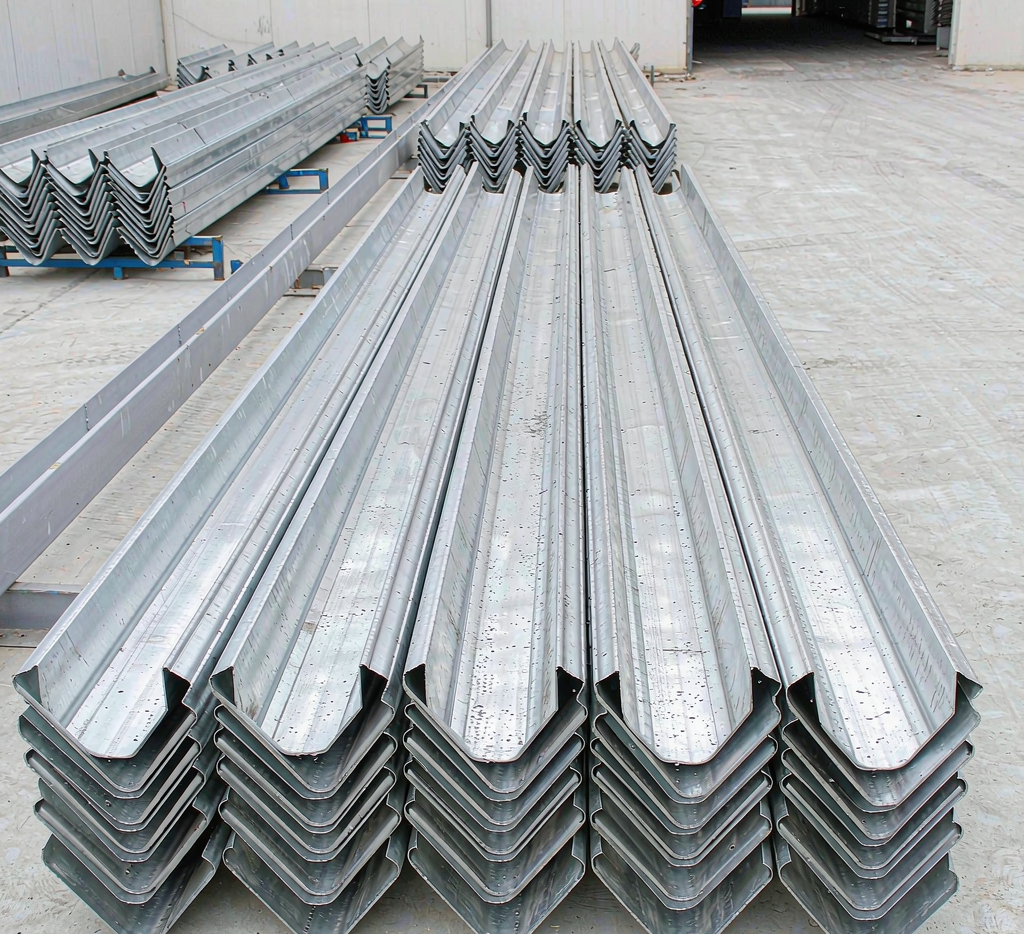
Huaxia-Steel manufactures Z-section (Z purlin) cold-formed carbon steel sections used as secondary roofing and wall members in pre-engineered steel buildings, warehouses and sheds. Our Z purlins are roll-formed from structural-grade strip, drilled or punched to your layout, and supplied galvanized or painted for corrosion protection on site. We work from your structural drawing to deliver ready-to-erect members, not just raw sections.
Product Overview
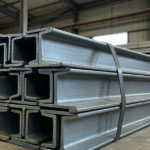
A Z purlin is a Z-shaped cold-formed section whose unequal lips let adjacent purlins overlap at splices, giving continuous span and simpler fixing than C-sections in long roofs. We produce depths from 100 mm to 300 mm in steel thickness 1.5–3.5 mm, to your hole pattern. The overlapping lip is what makes Z the default for long-span roofing where purlins must be joined rather than butted.
Specification Table
| Parameter | Range / value |
|---|---|
| Profile | Z-section (lipped) |
| Depth | 100 – 300 mm |
| Web thickness | 1.5 – 3.5 mm |
| Material | S350 / S450 / Q355 structural strip |
| Length | Up to 12 m |
| Holes | Punched per drawing |
| Coating | Z275 galvanized or paint |
Z vs C Section — Which to Choose
| Aspect | Z purlin | C purlin |
|---|---|---|
| Splice | Overlaps, continuous | Butt, needs plate |
| Best for | Long roofs, lattices | Walls, short spans |
| Material saving | Higher | Lower |
| Erection | Faster | Simpler |
Where the roof runs long and the purlins must splice, Z-sections save steel and labour. For walls and short bays, C-sections are often simpler. We supply both and can advise on the optimal mix for your building, including where to switch from Z to C to minimise waste.
Material Grades
We form Z purlins from high-tensile galvanized strip (S350GD / S450GD, equivalent to Q355) so the section stays light yet stiff. For internal or temporary structures, mild-steel strip is available on request. The high-tensile base means you can often drop a thickness compared with mild steel while keeping the same load capacity.
Manufacturing Standards
- Cold roll-formed per EN 10162 / customer drawing.
- Galvanized to Z275 (G90) or painted to spec.
- CNC punching for bolt holes and lap slots.
- Straightness and twist controlled to building-code limits.
Hole position is the detail that decides whether erection goes smoothly. We punch to your spacing and edge distance so the clips line up with the sheeting and the laps line up with the supports. Send the clip schedule and we will punch the first piece as a template for your approval before running the batch.
Typical Applications
- Roof and wall girts in PEB warehouses.
- Solar panel mounting sub-structures.
- Canopy and shed framing.
- Mezzanine and rack secondary members.
Quality Assurance
Coil certificates are retained and coil coating weight is verified. Finished sections are checked for hole position, twist and galvanizing thickness (minimum 20 µm per side for Z275). Third-party inspection is available, and we can supply a coil-to-section traceability record for projects that require it.
Packing and Shipping
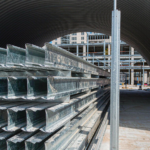
Purlins are stacked, separated by spacers, strapped in bundles with end labels showing profile and length, and loaded for container or flat-rack shipment. We match bundle weights to your crane capacity on site and tag each bundle with the erection zone so the yard can place it without re-sorting.
FAQ
Z or C for my roof?
Long roofs with splices favour Z; short walls favour C. Send the span and we will recommend the lighter option.
What coating do you recommend?
Z275 galvanized for most external work; painted only where appearance or extra life is required.
Can you punch my hole pattern?
Yes — send the drawing and we CNC-punch bolt holes and lap slots before dispatch.
Design Span Tables
For a quick check, a Z150×15 mm section at 1.5 m purlin spacing typically carries roof loads in the order of 0.5–0.7 kN/m² depending on the steel grade and the deflection limit; heavier Z200 sections extend that to longer spans and heavier cladding. Send us the spacing, the cladding weight and the local snow or wind load and we will confirm the section rather than leave it to guesswork on site.
Connection Hardware
Purlins connect to rafters with clips, sleeves or direct bolting. We supply matching clip plates punched to the rafter hole group, and we can pre-assemble sleeves for continuous runs so the erector simply bolts up. Specify the clip type and the bolt size on the order; getting the hardware right is what turns a pile of sections into a frame that goes up in a day.
Lead Time and Minimum Order
Standard depths and thicknesses in galvanized strip are rolled on a short cycle; bespoke depths or hole patterns need a setup run with a modest minimum. For repeat frames we keep your profile and hole pattern on file so re-orders are a straight re-run without re-proofing. Tell us the frame area and we will quote both stock and made-to-order options.
Site Handling and Erection
Bundle labels carry the zone and length so the yard places each bundle without resorting. Protect the galvanized surface during lifting with soft slings rather than bare chains, and store bundles clear of the ground on spacers so the coating is not scratched before it is fixed. Good site handling keeps the corrosion protection intact for the design life.
Enquiry Checklist
To quote, we need the profile and depth, the thickness, the total length and quantity, the grade, the finish (galvanized or painted), the hole pattern or clip schedule, and the incoterm and port. With that we return a firm price and lead time and, where useful, a suggested section for your span.
Comparing Z to RHS
A rectangular hollow section (RHS) is also used for roof and wall members and is stiffer for the weight, but it costs more and is harder to splice continuously than a Z-purlin. Choose Z for long running purlins where splicing matters, and RHS where a closed, neat section is worth the premium. We supply both and can show the weight and price difference for your span.
Deflection Limits
Purlins are usually governed by deflection rather than strength, so the span-to-depth ratio and the load decide the section more than the yield. A stiffer, slightly heavier Z often costs less overall than a thinner one that needs a mid-span brace. Give us the deflection limit from your design and we will size to it rather than to a generic table value.
Coating Life Expectancy
Z275 galvanizing typically gives decades of protection in normal atmospheric exposure and remains serviceable far longer than paint in coastal or industrial air. For aggressive sites we can specify a heavier coating or a painted-over-galvanized system. Match the coating to the environment so the frame reaches its design life without early re-coating.
Sustainability of Steel Sections
Cold-formed sections use high-tensile strip, so you get the capacity with less steel, and the section is fully recyclable at end of life. Choosing the lightest section that meets the load is both the cheaper and the lower-carbon option, so we size to the actual demand rather than a conservative default that wastes material.
Common Sizing Errors
The two frequent mistakes are over-specifying the thickness — adding cost and weight for capacity you will never use — and ignoring the deflection limit so the roof visibly sags between supports. Size to the actual load and the stated deflection, not to a round number, and you usually land on a lighter, cheaper section that still meets the design. Send us the numbers and we will show the lightest option that complies.
Camber and Sweep
Cold-formed sections can show camber (bow along the length) or sweep (bow along the flange), and the standard limits both. For roofs where the purlin reads true, ask for a camber check; excessive camber makes sheeting wave and lets water pond. We control camber in the roll tooling and can sort to tight limits for visible roofs.
Galvanizing After Punching
If you punch before galvanizing, the coating flows into the holes and may need a light chase; if you galvanize first, punch through the coating and the cut edge is bare until you touch it up. We recommend galvanizing after punching where the hole is structural, and we can over-size holes slightly so the coated, punched section still fits the bolt. State the sequence and we will plan it.
Transport and Site Storage
Band bundles so they do not shift in transit; loose purlins rub each other and the coating, and a shifted load is a handling hazard on the truck. We build bundles to a weight your crane can lift and tag them by zone so the yard places them without resorting.
Store sections off the ground on spacers; ground contact wicks moisture and stains galvanized surfaces within days. Keep bundles clear of the earth and, for long outdoor storage, shrink-wrap them so the coating lasts through the project rather than being replaced before erection.
Good transport and storage discipline is most of the battle for a clean, corrosion-free frame at the end. The small cost of spacers, wrapping and careful banding is trivial next to replacing rusted or bent members that miss the install window.
Get a Quote from Huaxia-Steel
Factory-direct carbon steel with MTC, third-party inspection, and fast export shipping. Tell us your grade, size, quantity and destination — we return a firm quote within 24 hours.