How to Verify Carbon Steel Mill Test Certificate (MTC) When Importing from China
How to Verify Carbon Steel Mill Test Certificate (MTC) When Importing from China
The Mill Test Certificate (MTC) is the single most important document in a carbon steel import transaction. It proves that the steel you ordered matches the chemical and mechanical specifications you paid for. Unfortunately, fake or altered MTCs are a known risk in the international steel trade. This guide teaches you how to verify an MTC before your shipment leaves the port.
1. What Is a Mill Test Certificate (MTC)?
An MTC is a document issued by the steel mill or an authorized third-party inspector that records the results of production tests for a specific heat (batch) of steel. It typically includes:
Using steel that does not match the specified grade can result in structural failure, customs rejection, insurance disputes, or project delays. In some jurisdictions, using uncertified steel in construction or pressure equipment is illegal.
3. Step-by-Step MTC Verification Checklist
Step 1: Check the Mill Name and Logo
Verify that the mill named on the MTC is a real, registered steel producer. Look up the mill’s official website and contact their export department to confirm the certificate format they use. Major Chinese mills include Baosteel, Shougang, Ansteel, HBIS, and Valin.
Step 2: Match the Heat Number
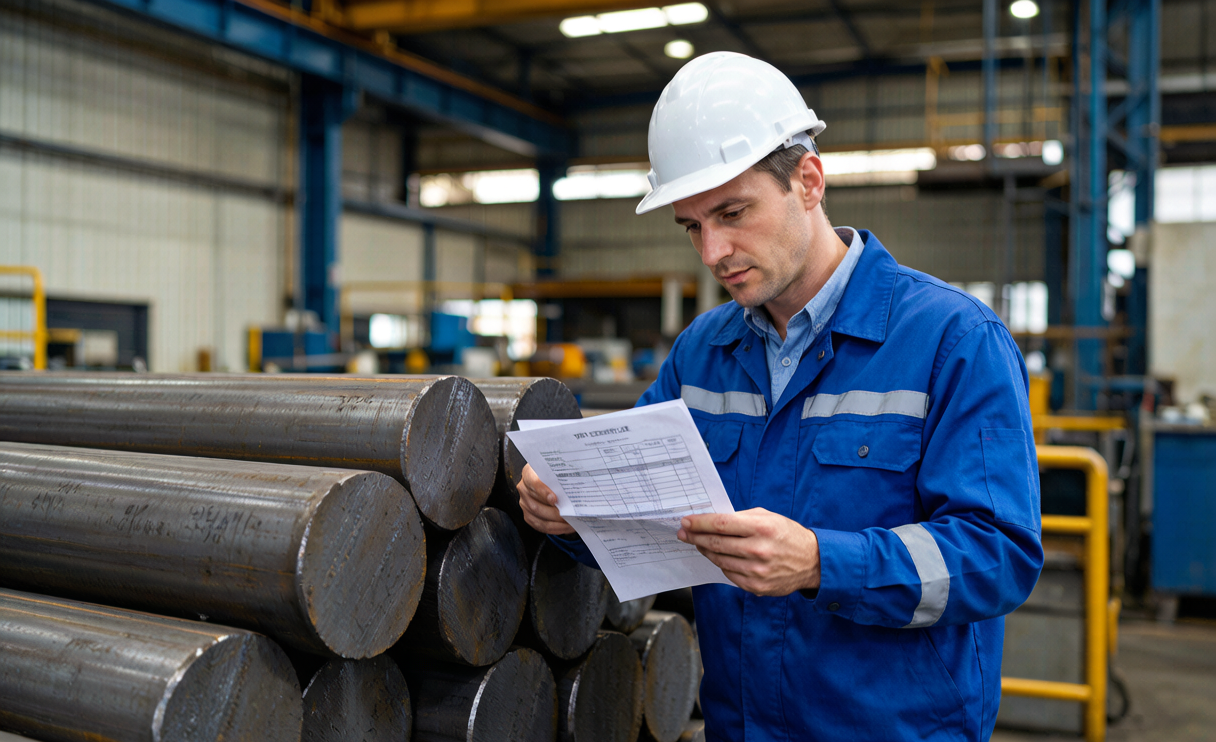
Every steel coil, plate, or bar is marked with a heat number. The MTC must reference the exact heat number stamped on the physical material. Use a third-party inspector to witness this check at the mill or warehouse.
Step 3: Cross-Check Chemical Composition
Compare the MTC chemical values against the standard’s maximum and minimum limits. For example, if you ordered ASTM A36, the carbon content should be ≤ 0.29%. If the MTC shows 0.35%, the material is out of spec.
Step 4: Verify Mechanical Properties
Check that yield strength, tensile strength, and elongation meet the standard’s requirements. If the MTC lists values that are suspiciously close to the minimum limits for every parameter, it may be fabricated.
Step 5: Confirm Standard and Grade
Ensure the MTC explicitly states the standard (e.g., ASTM A36, EN 10025 S235JR) and the grade. Vague descriptions like “carbon steel” are a red flag.
Step 6: Look for Third-Party Endorsement
MTCs verified by SGS, Bureau Veritas (BV), TÜV, or Intertek carry higher credibility. These agencies send inspectors to the mill to witness testing and sampling.
4. Red Flags on a Suspicious MTC
No mill logo or low-resolution stamp
Mismatched fonts or copy-paste signatures
Heat number not found in the mill’s system
Values that exactly match the standard minimum (too perfect)
Missing test dates or inspector names
Standard referenced in a way the real mill never uses
5. Using Third-Party Pre-Shipment Inspection
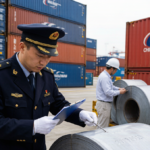
The safest verification method is to hire an independent inspector (SGS, BV, TÜV) to visit the mill before loading. The inspector will:
Witness mechanical and chemical testing
Check marking and packing against the contract
Issue an inspection report separate from the mill’s MTC
Huaxia-Steel includes third-party inspection as a standard option for every order.
6. Digital MTC Verification Trends
Some mills now offer QR codes or blockchain-registered certificates. Scanning the QR code should redirect to the mill’s official database showing the heat number, test results, and issue date. If the QR leads to a generic PDF or a dead link, be suspicious.
FAQ
Can a supplier refuse to provide an MTC?
Any legitimate supplier should provide an MTC without hesitation. Refusal is a major red flag and grounds for order cancellation.
Is an MTC the same as a material test report (MTR)?
Yes, MTC and MTR are often used interchangeably. Some industries prefer “MTR” for pressure vessel applications.
Do all countries require MTCs for steel imports?
Most developed countries require traceability documentation. The EU requires MTCs under the Construction Products Regulation (CPR). The US may require mill certification for federal projects.
What if the MTC is in Chinese only?
Request an English version. Reputable mills issue bilingual certificates for export orders. Huaxia-Steel provides fully translated, notarized MTCs for all shipments.
How much does third-party inspection cost?
SGS or BV inspection for a typical container shipment costs $300–$800 depending on location and scope. It is a small price for supply chain security.
Import Carbon Steel with Verified MTCs from Huaxia-Steel
Every order from Huaxia-Steel includes authentic mill test certificates, optional third-party inspection, and full traceability. Contact us today to discuss your specification and verification requirements.
If you require further information about our metal sheet products or architectural projects, please don’t hesitate to leave your contact details and message here.
Our team of experts will respond within 24 hours to continue the discussion and provide you with any additional information you requires.