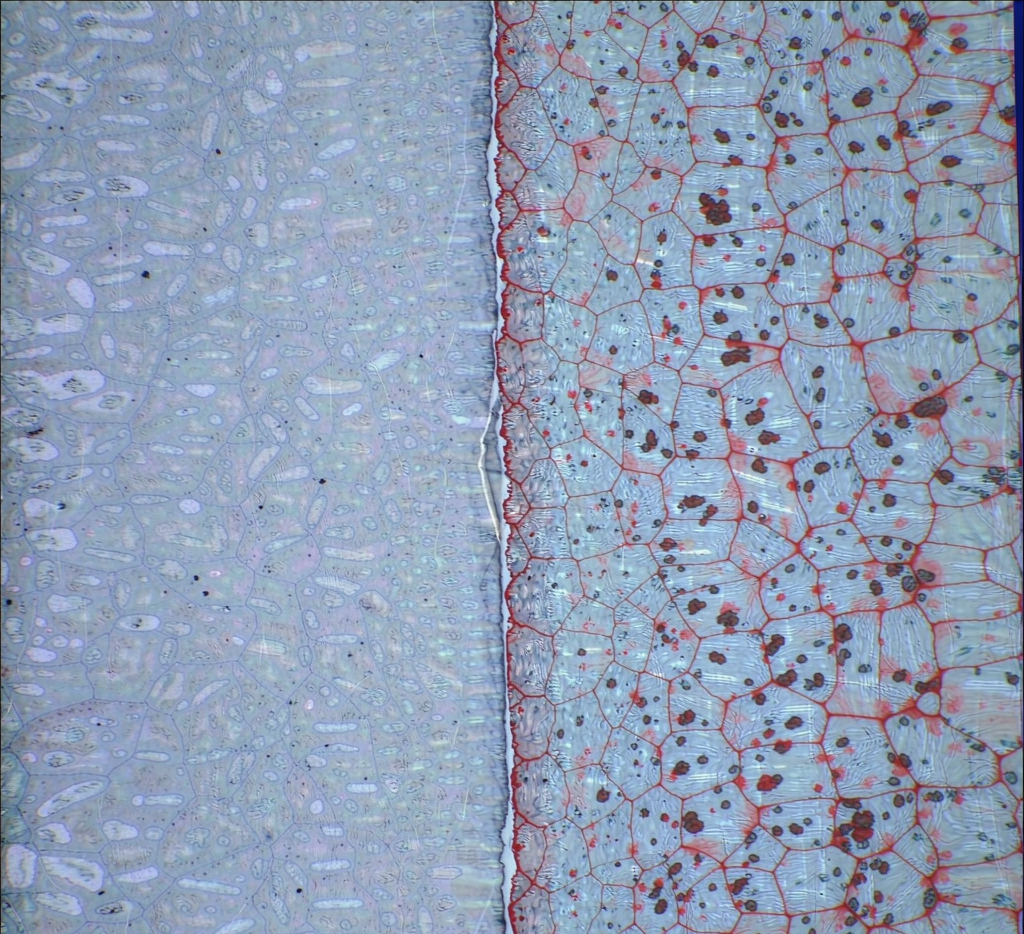
Carbon steel components often require a hard, wear-resistant surface while retaining a tough, ductile core. Two dominant case-hardening processes achieve this: carburizing and nitriding. Understanding their differences helps you select the right treatment for gears, shafts, bearings, and other mechanical parts.
1. Process Fundamentals and Temperature Ranges
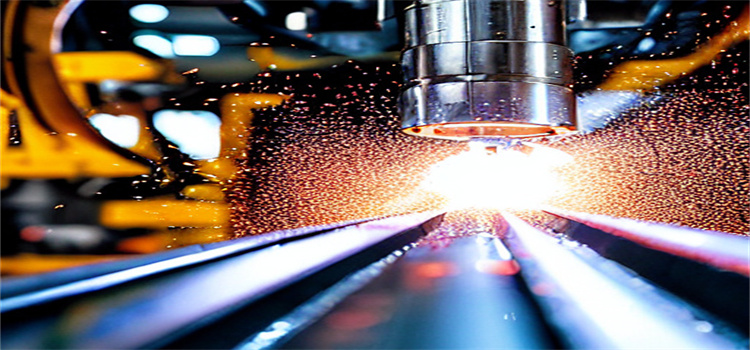
Carburizing introduces carbon into the surface layer of low-carbon steel (typically 0.10-0.25% C) by heating in a carbon-rich atmosphere at 850-950C. The high temperature allows carbon atoms to diffuse into austenite, creating a high-carbon case (0.7-1.0% C) upon quenching.
Nitriding diffuses nitrogen into the steel surface at much lower temperatures, typically 500-550C. This is a sub-critical process that does not require phase transformation. The nitrogen forms hard nitrides with alloying elements like aluminum, chromium, and molybdenum.
| Parameter | Carburizing | Nitriding |
|---|---|---|
| Process Temperature | 850-950C | 500-550C |
| Required Base Carbon | Low (0.10-0.25%) | Any (alloy steel preferred) |
| Case Depth | 0.5-3.0mm | 0.1-0.7mm |
| Post-Process Quench | Required | Not required |
| Distortion Risk | High | Very low |
2. Case Hardness and Depth Profiles
Carburizing produces a deep case with hardness of 58-64 HRC after quenching and tempering. The hardness gradient extends gradually from surface to core, providing excellent load-bearing capacity for heavy-duty gears and bearings.
Nitriding achieves surface hardness of 65-72 HRC equivalent (measured on Vickers scale as 700-1200 HV). The hardness is concentrated in a thin layer, making it ideal for components requiring wear resistance without heavy loading, such as valve stems, pump shafts, and precision screws.
3. Suitable Carbon Steel Grades
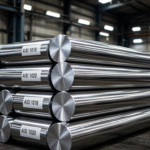
For carburizing, Huaxia-Steel recommends SAE 1018, SAE 1020, 20CrMnTi, or 20MnCr5. These low-carbon grades respond well to carbon enrichment and subsequent hardening.
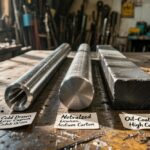
For nitriding, alloy grades containing Cr, Mo, and Al perform best. Common choices include 4140 (42CrMo4), 4340, and specialized nitriding steels like 38CrMoAl (Nitralloy 135M). Plain carbon steels can be nitrided but achieve lower surface hardness.
4. Dimensional Stability and Distortion Control
Nitriding’s low process temperature means minimal dimensional change. Components can be finish-machined before treatment and used as-is afterward. This eliminates costly grinding operations.
Carburizing requires quenching from high temperature, which introduces distortion. Parts must be machined with grind stock (0.15-0.50mm extra material) and finish-ground after heat treatment. For complex geometries, press quenching or salt bath marquenching reduces distortion.
5. Cost and Production Cycle Comparison
Carburizing is generally faster for thick cases (4-12 hours for 1mm depth) but requires more post-processing. Nitriding cycles are longer (20-60 hours for 0.3mm depth) but eliminate quenching and grinding costs.
For high-volume production of gears and shafts, gas carburizing with integral quench furnaces offers the lowest per-part cost. For precision components where dimensional tolerance is critical, nitriding provides better overall economics despite longer cycle times.
FAQ
Can plain carbon steel be nitrided effectively?
Yes, but results are modest. Plain carbon steels achieve 400-500 HV surface hardness after nitriding. For optimal results, alloy steels with 0.9-1.5% Al, 1.0-1.5% Cr, or 0.2-0.3% Mo are strongly recommended.
What is the maximum case depth achievable with carburizing?
Practical limits for gas carburizing are 3-4mm. For deeper cases (up to 10mm), vacuum carburizing or pack carburizing can be used, but cycle times extend to 24-48 hours.
Does carburizing require protective atmosphere control?
Yes. Carbon potential must be controlled within 0.05% accuracy using oxygen probes or infrared analyzers. Over-carburization causes brittle carbide networks; under-carburization produces insufficient hardness.
Which process offers better corrosion resistance?
Nitriding provides a thin white layer (compound zone) that improves corrosion resistance marginally. For significant corrosion protection, consider nitrocarburizing (Tufftriding) or applying PVD coatings after hardening.
Need case-hardened carbon steel components? Huaxia-Steel supplies precision-machined gears, shafts, and bearings with carburizing or nitriding treatment. We partner with certified heat treatment facilities and provide full metallurgical reports including case depth, hardness profiles, and microstructure photos.