Carbon Steel Nitriding: Process, Benefits and Limits
Nitriding is the surface hardening process that quietly outperforms its reputation. Ask a machinist about hardening carbon steel and you will hear about quench and temper or carburizing long before nitriding, yet nitriding solves a problem those processes handle badly: how to put a hard, wear-resistant skin on a finished part without the distortion and post-grinding that quenching demands. For carbon steel components — gears, wear plates, guides, crankshafts, extrusion screws, dies and mold parts — nitriding can be the difference between a part that lasts and one that scuffs in service.
This guide explains what nitriding does to carbon steel, the three main methods (gas, salt bath and plasma), why medium-carbon and alloy steels nitride better than plain mild steel, how case depth and hardness are controlled, what pre-treatment is required, how nitriding compares with carburizing and induction hardening, and which quality checks prove the process worked. It is written for buyers and process engineers who need to specify nitriding sensibly and read a heat-treat certificate with confidence.
What Nitriding Does to Carbon Steel
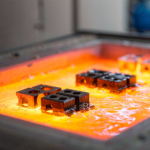
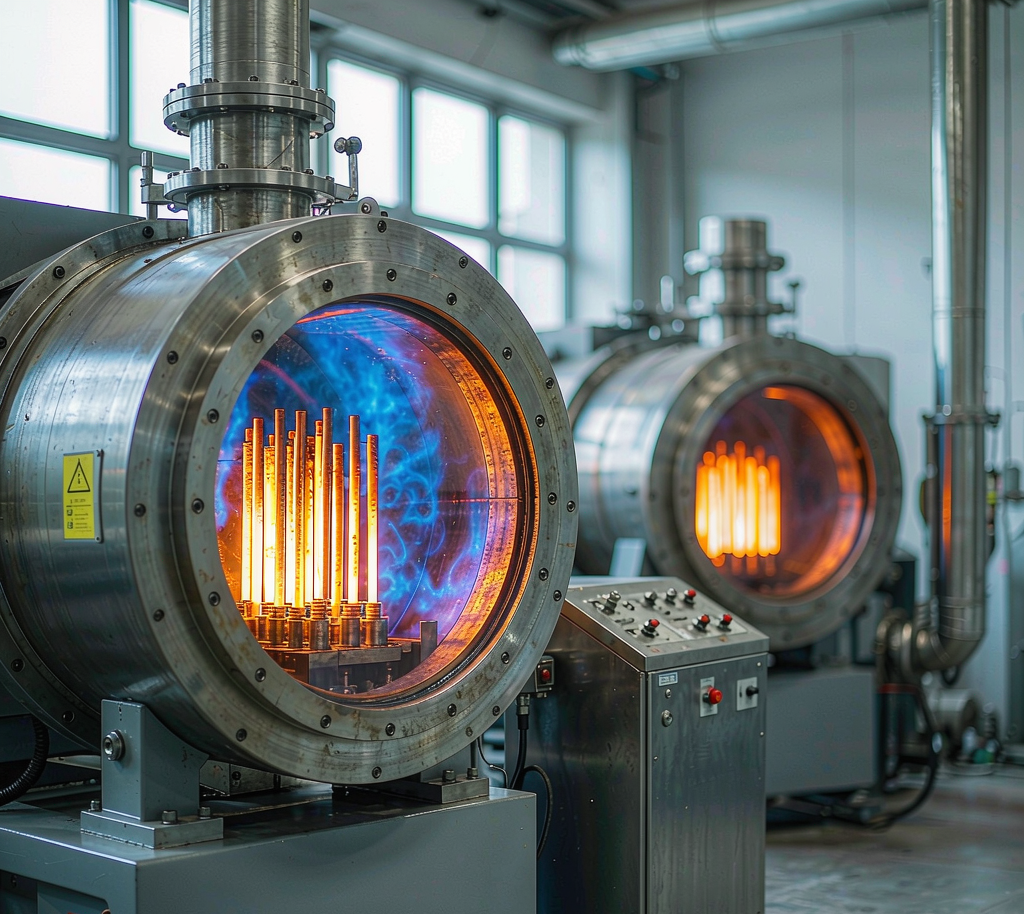
Nitriding diffuses nitrogen into the steel surface at a temperature below the transformation point, typically 500–570°C. Because the steel never becomes austenite, there is no martensitic transformation on cooling and therefore no quench distortion. The nitrogen reacts with iron and with alloying elements to form hard nitrides — iron nitride at the very surface and, crucially, fine chromium, aluminum, molybdenum and vanadium nitrides deeper in, which is where the real hardness comes from in alloy steels.
The result is a thin, very hard compound layer (the “white layer”) over a deeper diffusion zone that carries residual compressive stress. That compressive stress is a large part of nitriding’s value: it suppresses fatigue crack initiation and improves bending and contact fatigue life. A part that would fail from surface-initiated fatigue can gain a substantial life extension from a properly nitrided case, even when its bulk strength is unchanged.
Three Nitriding Methods Compared
Gas nitriding, salt-bath nitriding and plasma (ion) nitriding all deliver nitrogen to the surface but differ in control, speed, environmental profile and the kind of case they produce. Choosing the method is a process decision that should be made with the part’s duty in mind, not simply by whatever the local heat treater happens to run.
| Method | Temperature | Typical case depth | Strengths | Limitations |
|---|---|---|---|---|
| Gas nitriding | 500–540°C | 0.1–0.6 mm | Mature, precise control, no white layer option | Slow, long cycles, ammonia handling |
| Salt-bath nitriding | 520–580°C | 0.01–0.15 mm | Fast, uniform, good for small parts | Thin case, salt disposal, dimensional growth |
| Plasma (ion) nitriding | 400–560°C | 0.05–0.4 mm | Low distortion, masking by geometry, clean | Higher capex, batch geometry matters |
Gas nitriding is the classic route and offers the finest control over the white layer, including “controlled nitriding” cycles that suppress the brittle compound layer entirely when the part will be loaded in impact. Salt-bath nitriding (often called austenitic or liquid nitriding) is fast and suits small, high-volume parts but produces a thin case and can grow dimensions slightly. Plasma nitriding excels where distortion must be minimal and where selective hardening is wanted, because the part itself forms the cathode and unexposed surfaces barely nitride.
Why Medium-Carbon and Alloy Steels Nitride Better Than Mild Steel
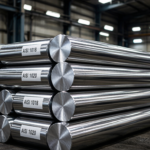
Here is the point most buyers miss: plain low-carbon steel such as 1018 or A36 nitrides poorly. With almost no chromium, aluminum or molybdenum to form hard alloy nitrides, mild steel produces a brittle iron-nitride case that is thin and easily spalled, and the diffusion zone gains little hardness. Nitriding a mild steel part is technically possible but rarely worth the cost, because the case does not deliver the wear or fatigue benefit that justifies the process.
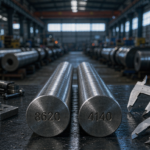
Medium-carbon steels like S45C or 1045 do better because their carbon supports nitride formation, and nitriding-grade alloy steels do best of all. Grades containing chromium and molybdenum — 4140, 42CrMo4, SCM440, and dedicated nitriding steels such as 31CrMoV9 or Nitralloy 135M — form a deep, hard diffusion zone with excellent case integrity. If a design calls for nitriding and the drawing says A36, the right conversation is about changing the base material, not about forcing a poor case onto a cheap steel.
Case Depth, Hardness and the White Layer
Case depth is specified as the depth at which hardness falls to a defined level above core, commonly 50 HV above core hardness, measured on a polished cross-section with a microhardness traverse. Typical engineering depths run 0.1–0.6 mm. Deeper is not automatically better: a case that is too deep for the section can embrittle the part, and a case that is too thin wears through quickly. The duty — sliding wear, rolling contact, or fatigue — sets the target.
Surface hardness depends on the base steel. Nitrided alloy steels commonly reach 900–1100 HV (roughly 65–70 HRC equivalent) at the surface, while nitrided medium-carbon steels land lower. The white layer is a double-edged feature: it offers excellent wear and corrosion resistance, but it is brittle and can crack under impact or high contact stress. Many specifications call for the white layer to be limited to a few micrometres, or removed by grinding or lapping on critical surfaces.
| Property | Typical range | Notes |
|---|---|---|
| Surface hardness | 700–1100 HV | Higher with Cr/Al/Mo alloying |
| Case depth | 0.1–0.6 mm | Set by duty and cycle time |
| White layer | 0–15 µm | Limit or remove for impact duty |
| Process temperature | 500–570°C | Below transformation, no quench |
| Distortion | Very low | Finish machine before nitriding |
Pre-Treatment: Stress Relief, Cleaning and Masking
Nitriding is normally the last operation before final assembly, so everything upstream must be right. The part should be stress relieved before rough machining and finish machined close to final size, because nitriding adds only micro-dimensional growth (typically 5–25 µm depending on case depth) and cannot correct size. Any surface that must stay soft or be machined afterwards — threads, keyways, bearing seats — is masked with a stop-off compound or copper plating.
Cleanliness is critical. Nitriding will not penetrate oil, scale, paint or rust, and contamination causes soft patches and uneven case. Parts are degreased and often given a light pickle or blast before charging. Sharp corners, deep grooves and thin sections concentrate nitrogen and stress, so design review before nitriding often saves a rejected batch: generous fillets and avoiding case on thin webs prevent the cracking that otherwise appears after the part is in service.
Process Parameters That Control the Result
In gas nitriding the controlling variables are temperature, time and the nitriding potential (the ammonia-to-hydrogen ratio, monitored as the KN value in modern controlled nitriding). Temperature sets the diffusion rate and therefore case depth for a given time; the nitriding potential controls how much of the case becomes compound layer versus diffusion zone. A well-run furnace logs these values through the cycle and demonstrates repeatability.
Plasma nitriding adds gas composition, pressure and power density to the control set, and because the process runs at lower temperature it further reduces distortion. Salt-bath nitriding is faster but less precisely controllable, and parts must be washed thoroughly afterwards to remove salt residue that would otherwise cause corrosion. In every method, the cooling rate after the hold matters for residual stress and should follow the heat treater’s qualified cycle rather than an ad-hoc ramp.
Nitriding vs Carburizing vs Induction Hardening
The three surface-hardening routes are often confused, and choosing the wrong one wastes money or creates distortion problems. Carburizing adds carbon at high temperature (900–950°C), requires a quench, and produces a deep, tough case on low-carbon steel — ideal for gears and parts that see both wear and shock, but with real distortion and the need to grind after hardening. Induction hardening heats and quenches a selected surface of a medium-carbon steel in seconds, giving a hard case with minimal overall distortion but a softer, less uniform case and a hard transition zone.
| Process | Temp | Base steel | Case character | Distortion |
|---|---|---|---|---|
| Nitriding | 500–570°C | Medium-C / alloy | Very hard, thin, no quench | Very low |
| Carburizing | 900–950°C | Low-C | Deep, tough, needs quench | Higher |
| Induction hardening | Localized, fast | Medium-C | Hard skin, sharp transition | Low-moderate |
Nitriding wins when the part is finish machined, distortion must be minimal, and the duty is wear or fatigue rather than heavy impact. Carburizing wins when a deep, tough case is needed and post-hardening grinding is acceptable. Induction hardening wins for high-volume localized hardening of medium-carbon parts. Specifying nitriding on a low-carbon part, or carburizing a part that must hold final dimensions without grinding, are the two most common mismatches, and both are avoidable with a short process review.
Distortion, Growth and Post-Process Machining
Because nitriding runs below the transformation temperature, distortion is minimal — but not zero. Parts relax residual stress from machining and grow slightly as nitrogen expands the surface lattice. Growth of 5–25 µm on diameter is normal and predictable, so tolerances on nitrided surfaces should account for it. Where a surface must remain precise after nitriding, the case is often ground or lapped, which also removes the brittle white layer on that face.
Designers should decide early which surfaces are functional and which are not. Masking threads and bores, allowing grinding stock on critical diameters, and avoiding nitriding on thin, unsupported sections all reduce rework. The recurring cost of a nitriding program is not the furnace time; it is the scrap and rework created when a part was designed without accounting for case growth and white-layer behaviour.
Quality Control and Acceptance Testing
A credible nitriding job is documented. The inspection package should include a microhardness traverse on a witness coupon or sectioned part showing case depth and surface hardness, a metallographic check of the white layer thickness and case microstructure, and a record of the furnace cycle (temperature, time, atmosphere or plasma parameters). Dimensional checks before and after confirm growth is within the predicted range.
- Surface hardness: microhardness (HV 0.3 or HV 1), several readings per zone.
- Case depth: traverse to the specified hardness-above-core criterion.
- White layer: metallographic measurement against the drawing limit.
- Case integrity: absence of a continuous brittle network or cracks.
- Process record: cycle log demonstrating the qualified parameters were met.
Applications Where Nitriding Pays
Nitriding earns its cost wherever a finished part needs wear resistance without distortion: gear teeth and splines, extrusion and injection screws, mold and die surfaces, guide rails and wear plates, crankshafts and camshafts, valve components, and precision spindles. It is also used to improve corrosion resistance modestly, though it is not a substitute for plating or coating in aggressive environments.
It is less suitable for parts that see severe impact or high contact stress on a brittle white layer, and for very large sections where the case depth cannot keep pace with the section. In those cases carburizing, induction hardening or an alloy change usually serves better. Matching the process to the duty, rather than defaulting to whichever method is familiar, is what separates a durable part from an expensive experiment.
Cost and Lead-Time Considerations
Nitriding cycles are long — often 20–60 hours or more for deeper cases — and furnace time dominates cost. Because it runs at low temperature with no quench, it avoids the straightening and grinding that quenching demands, which frequently offsets the furnace cost on precision parts. Salt-bath nitriding is cheaper per part for small components but limited to thin cases; plasma nitriding carries higher capital cost but can be economical where distortion-free results eliminate post-processing.
For export buyers, the practical advice is to specify the process, the case depth, the surface hardness and the white-layer limit on the drawing and purchase order, and to require the heat-treat certificate with the shipment. A supplier who cannot provide a cycle log or a hardness traverse is telling you the process is not controlled — and an uncontrolled nitriding job is worse than none, because it adds cost without adding reliable performance.
Frequently Asked Questions
Can you nitride plain low-carbon steel?
Technically yes, but the case is thin, brittle and low in hardness because there is little chromium or aluminum to form hard nitrides. Nitriding is worth doing on medium-carbon or alloy steels; on mild steel the cost rarely returns the benefit.
Does nitriding change part dimensions?
Only slightly — typically 5–25 µm of growth depending on case depth — and with very low distortion because there is no quench. Finish machine before nitriding and allow for the predicted growth on precision surfaces.
What is the white layer and should it be removed?
The white layer is the hard iron-nitride compound layer at the surface. It resists wear and corrosion but is brittle; for impact or high contact stress, specifications limit it to a few micrometres or remove it by grinding or lapping.
Is nitriding better than carburizing?
Neither is universally better. Nitriding suits finish-machined parts needing minimal distortion and wear or fatigue resistance. Carburizing suits parts needing a deep, tough case and where post-hardening grinding is acceptable.
Selecting Case Depth for the Duty
Case depth is the single most consequential nitriding decision, because it determines both wear life and cost — deeper cases mean longer furnace cycles and higher price. The right depth follows from the contact conditions: light sliding wear needs a shallow case, rolling contact and high load need a deeper one, and fatigue-critical parts benefit from a case deep enough to keep the peak stress below the brittle white layer.
A useful starting point is to relate case depth to the part’s loaded zone rather than to a habit. For small gears and pins, 0.1–0.3 mm is often adequate; for heavily loaded guides and dies, 0.3–0.6 mm is common; for very large sections, the case cannot economically keep pace and the design should be reconsidered. Over-specifying depth wastes furnace time and can embrittle thin sections, so the target belongs in a design review, not a default.
| Application | Typical case depth | Surface hardness target |
|---|---|---|
| Small pins, light sliding wear | 0.1–0.2 mm | 600–800 HV |
| Gears, splines, medium load | 0.2–0.4 mm | 700–1000 HV |
| Dies, guides, heavy sliding | 0.3–0.6 mm | 900–1100 HV |
| Fatigue-critical shafts | 0.2–0.5 mm | 700–950 HV |
Common Nitriding Defects and Their Causes
Most nitriding failures trace back to preparation, not to the furnace. Soft or patchy case usually means contamination — oil, scale, paint or rust — that blocked nitrogen absorption. Excessive white layer, which cracks and spalls under impact, comes from too high a nitriding potential or too long a cycle. Distortion beyond expectation usually reflects inadequate stress relief before machining, allowing residual stress to relax during the low-temperature hold.
Cracking at sharp corners and thin sections is a design-and-process interaction: nitrogen concentrates at geometric discontinuities, raising local stress until the brittle case fails. Generous fillets, avoiding case on thin webs, and masking critical features prevent most of it. A heat treater who asks about geometry and prior stress relief before quoting is showing you the process is under control; one who quotes a flat price per kilogram without questions is not.
- Soft patches: contamination or poor cleaning — improve degreasing and pre-blast.
- Excessive white layer: reduce nitriding potential or shorten cycle.
- Distortion: stress relieve before finish machining; control heating and cooling rates.
- Corner cracking: add fillets, mask thin sections, limit case at discontinuities.
- Uneven case: check furnace atmosphere uniformity and part loading/spacing.
Get a Quote from Huaxia-Steel
Factory-direct carbon steel with MTC, third-party inspection, and fast export shipping. Tell us your grade, size, quantity and destination — we return a firm quote within 24 hours.