ASTM A500 Grade B vs Grade C: Structural Tubing Comparison
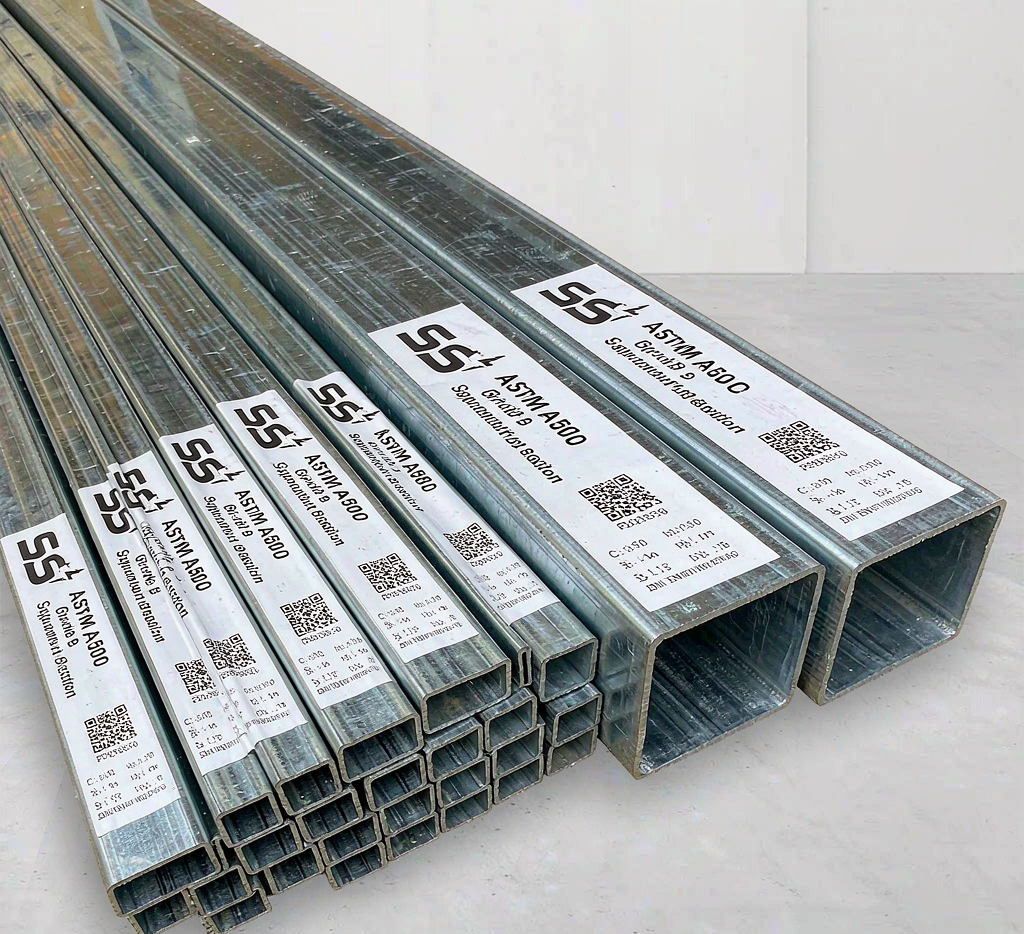
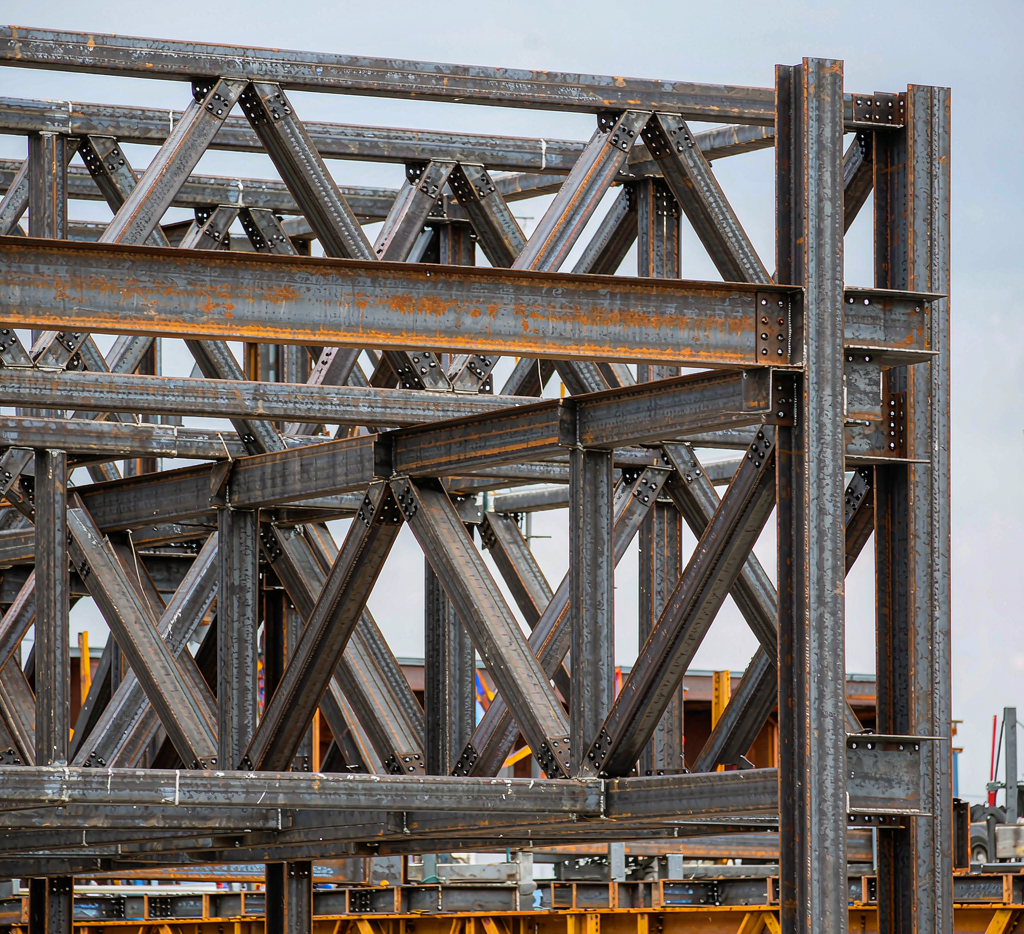
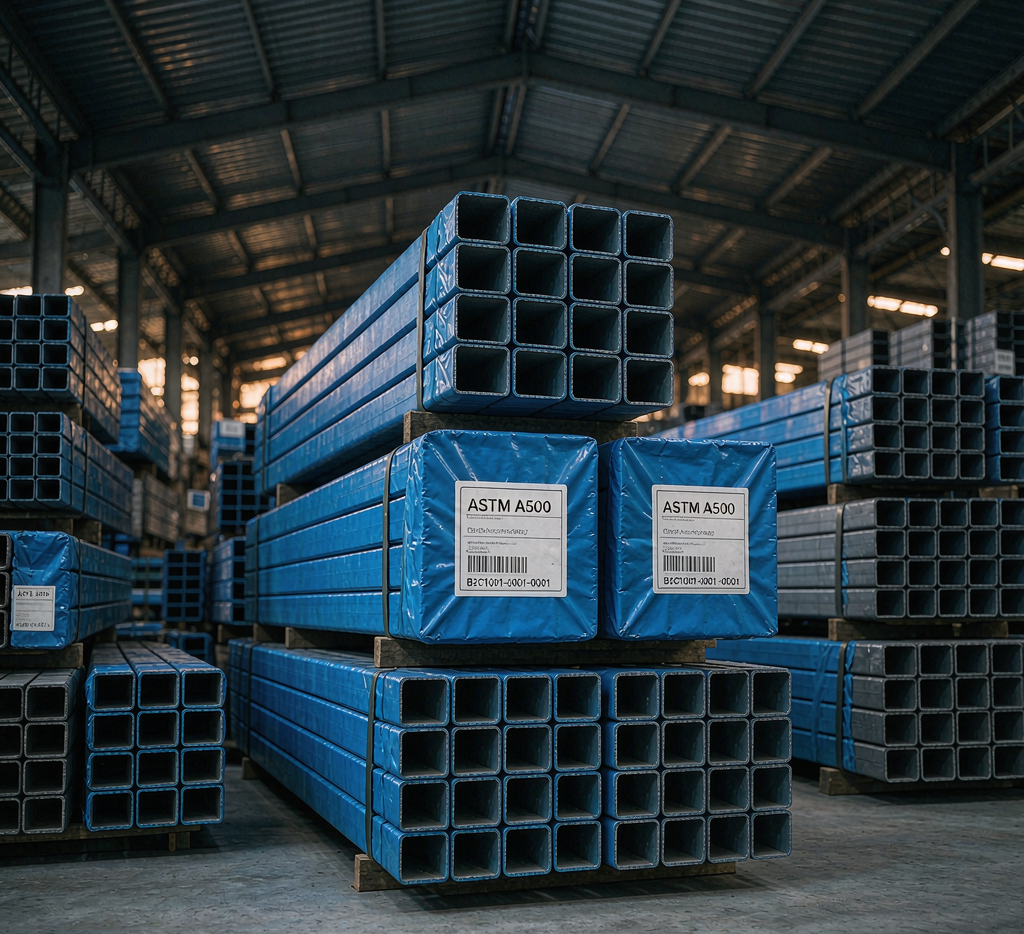
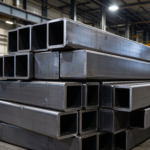
ASTM A500 is the North American standard for cold-formed welded and seamless carbon steel structural tubing in round, square, rectangular, and special shapes. It is the dominant specification for hollow structural sections (HSS) used in buildings, bridges, machinery frames, and infrastructure. Grade B and Grade C are the two most commonly specified strength levels. Understanding their differences helps structural engineers and buyers avoid over-specifying or under-specifying material for their projects.
1. Chemical Composition Requirements
Both grades share similar chemistry limits, with Grade C allowing slightly higher carbon and manganese to support its higher strength requirements. The chemistry is controlled to ensure weldability and forming behavior during cold forming.
Element
Grade B (max/typical %)
Grade C (max/typical %)
C (max)
0.26
0.23
Mn (max)
1.35
1.35
P (max)
0.035
0.035
S (max)
0.035
0.035
Cu (min, when specified)
0.20
0.20
Grade C actually has a slightly lower maximum carbon content than Grade B, which helps maintain weldability despite the higher strength requirement. Mn is the primary strengthening element used within the allowed range.
2. Mechanical Properties and Strength Levels
The most significant difference between Grade B and Grade C is minimum yield strength. Grade C requires higher yield and tensile strength, making it suitable for heavily loaded columns, braces, and moment-resisting frames.
Property
ASTM A500 Grade B
ASTM A500 Grade C
Yield Strength (min MPa)
290 (42 ksi)
317 (46 ksi)
Tensile Strength (min MPa)
400 (58 ksi)
427 (62 ksi)
Elongation in 2 in (%)
23 min
21 min
Round tubing typical use
Columns, beams, braces
High-load columns, crane booms
The 9% increase in yield strength from Grade B to Grade C allows engineers to reduce wall thickness or member size in some designs, provided buckling and deflection criteria are still met.
3. Shapes, Sizes, and Tolerances
ASTM A500 covers round, square, rectangular, and special-shape tubing with outside dimensions up to 64 inches (1,625 mm) for round tubing and perimeter up to 88 inches (2,235 mm) for shaped tubing. Wall thickness ranges from light gauge to heavy structural sections.
Tolerances for outside dimensions, wall thickness, length, straightness, and squareness are defined in the specification. Grade C tubing is often supplied with the same dimensional tolerances as Grade B, but buyers should confirm tolerances for critical fit-up applications.
4. Weldability and Fabrication
Both grades weld readily using common processes such as SMAW, GMAW, FCAW, and SAW. The low carbon equivalent minimizes hydrogen cracking risk. For field welding in cold weather, a modest preheat of 10-50C is good practice depending on wall thickness and restraint.
Because A500 tubing is cold-formed, the corner regions of square and rectangular sections experience cold work and may have higher hardness. Welding in corner regions should follow qualified procedures, and heat-affected zone toughness should be considered for seismic or low-temperature applications.
5. Applications and Grade Selection
ASTM A500 Grade B is typically used for:
Building columns and beams in commercial construction
Truck and trailer frames
Machinery guards and supports
Sign structures and light poles
General structural HSS applications
ASTM A500 Grade C is typically used for:
High-rise building columns
Heavy crane booms and lifting equipment
Bridges and long-span structures
Offshore platform framing
Applications where higher strength-to-weight ratio is critical
FAQ
Can Grade B and Grade C be used interchangeably?
Not without engineering review. Grade C provides higher strength but at slightly lower elongation. Substituting Grade B for Grade C may reduce load capacity. Substituting Grade C for Grade B is usually acceptable structurally but may increase cost.
Is ASTM A500 the same as ASTM A513?
No. A500 is for structural tubing with higher strength requirements. A513 covers mechanical tubing for applications requiring tighter dimensional tolerances and better surface finish, but generally lower strength.
Does A500 tubing require stress relieving after welding?
Stress relief is generally not required for A500 structural tubing unless specified by the design code or when welding thick-walled sections under high restraint. Refer to AWS D1.1 or the applicable building code.
What certificates does Huaxia-Steel provide for A500 tubing?
We provide mill test certificates per EN 10204 3.1 or 3.2, including chemical composition, mechanical properties, dimensional inspection, and ultrasonic testing when specified. Third-party inspection by SGS, BV, or TUV is available.
Procuring ASTM A500 Grade B or Grade C structural tubing? Contact Huaxia-Steel for round, square, and rectangular HSS with mill-direct pricing, custom cutting, and full certification packages for your construction project.
If you require further information about our metal sheet products or architectural projects, please don’t hesitate to leave your contact details and message here.
Our team of experts will respond within 24 hours to continue the discussion and provide you with any additional information you requires.