Introduction
S275JR and S355JR are the two most widely ordered structural carbon steel grades under EN 10025-2. On paper they differ mainly in yield strength — 275 MPa versus 355 MPa — but that single number drives real differences in section sizing, weld procedure, Charpy requirements, freight cost, and ultimately price. Buyers who treat them as interchangeable either overpay for strength they do not need, or under-specify a structure that fails design review.
This guide compares S275JR vs S355JR carbon steel across chemistry, mechanical properties, weldability, availability, and cost, and finishes with practical ordering advice from an exporter’s perspective.
Chemical Composition Comparison
Both grades are non-alloy structural steels supplied in the as-rolled condition. The table below shows ladle analysis limits per EN 10025-2:
| Element | S275JR (max %) | S355JR (max %) |
|---|---|---|
| C | 0.21 (t<16mm) / 0.22 | 0.24 (t<16mm) / 0.24 |
| Si | 0.40 | 0.55 |
| Mn | 1.40 | 1.60 |
| P | 0.035 | 0.035 |
| S | 0.035 | 0.035 |
| N | 0.012 | 0.012 |
| CEV (max) | 0.40 | 0.45 |
S355JR carries slightly higher carbon, silicon, and manganese ceilings, which is what gives it the higher strength. The carbon equivalent (CEV) ceiling of 0.45 for S355JR versus 0.40 for S275JR is the number welding engineers watch: for a given thickness, S355JR is marginally more susceptible to cold cracking, though both grades weld readily with standard preheat rules.
Mechanical Properties
| Property | S275JR | S355JR |
|---|---|---|
| Yield strength (t≤16mm) | 275 MPa min | 355 MPa min |
| Yield strength (16–40mm) | 265 MPa min | 345 MPa min |
| Tensile strength | 430–580 MPa | 470–630 MPa |
| Elongation A5 | ≥ 20% (t<40mm) | ≥ 20% (t<40mm) |
| Charpy V-notch | 27 J at +20°C (“JR”) | 27 J at +20°C (“JR”) |
| Density | 7.85 g/cm³ | 7.85 g/cm³ |
Note that both “JR” variants are tested at room temperature (+20°C). If your project needs low-temperature toughness, look at S275J0/S275J2 or S355J0/S355J2 instead — same strength levels, Charpy tested at 0°C, -20°C, or lower. Export mills in China routinely stock JR and J2 variants; J0 is available on longer lead times.
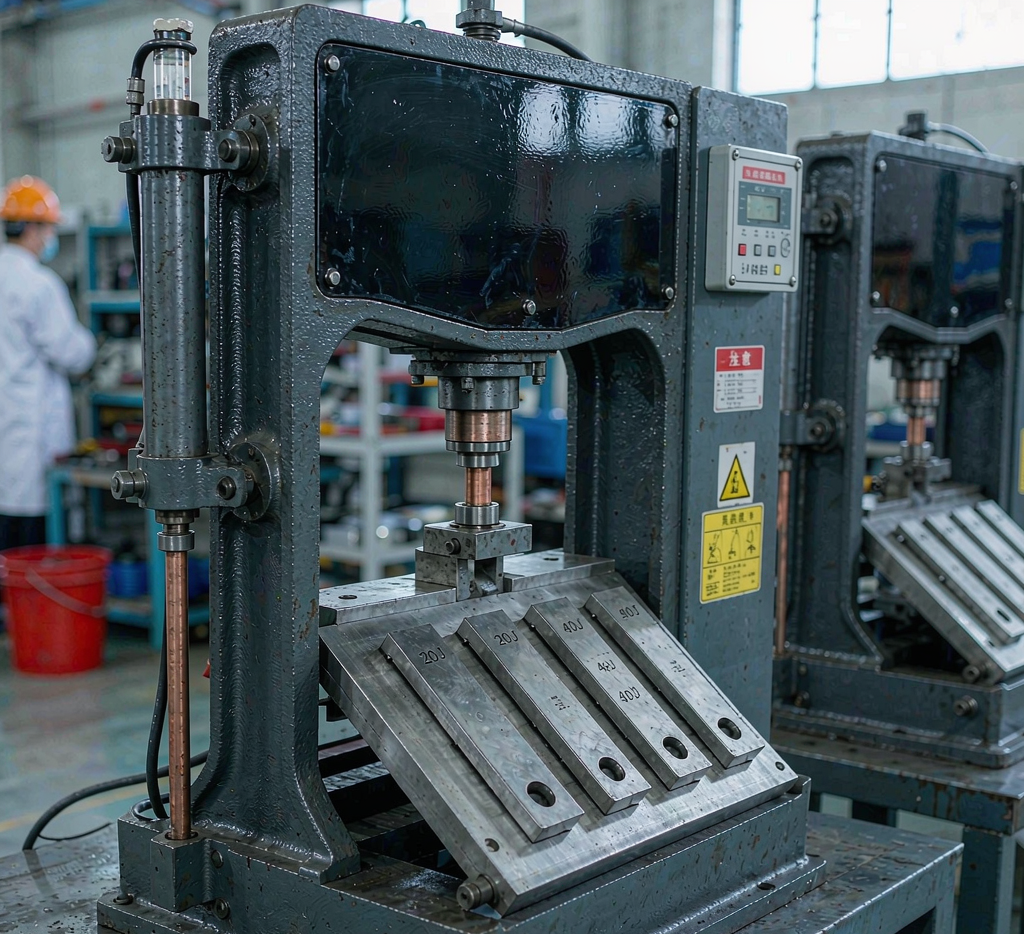
Strength vs Weight: What the 80 MPa Buys You
The 80 MPa yield gap sounds modest, but it allows designers to reduce section sizes or wall thicknesses by roughly 10–15% for strength-governed members. Three practical consequences:
- Weight saving: a beam line redesigned from S275JR to S355JR often drops 8–12% of steel tonnage. At current plate prices, the S355JR premium of $15–40/ton is easily recovered on weight-governed designs.
- No benefit for stiffness-governed members: deflection and buckling depend on E (identical, ~210 GPa) and geometry, not yield strength. Columns sized by slenderness or beams sized by deflection gain nothing from the upgrade.
- Stability rules: for sections governed by local buckling class checks, higher yield can push the section into a more restrictive class, sometimes negating part of the advantage.
Weldability Comparison
Both grades weld well with SMAW, GMAW, FCAW, and SAW using standard structural consumables (e.g., E7018 / ER70S-6 class fillers are more than adequate for S275JR; use E80-class matching fillers for full-strength S355JR joints).
| Thickness | S275JR preheat | S355JR preheat |
|---|---|---|
| ≤ 20 mm | None required (ambient >5°C) | None required (ambient >5°C) |
| 20–40 mm | Optional 50°C | 50–75°C recommended |
| 40–75 mm | 50–75°C | 75–100°C |
Hydrogen control matters more than grade selection: use low-hydrogen electrodes, dry them properly, and avoid welding on damp or galvanized surfaces without ventilation. For galvanized structures, both grades need the same zinc-removal and fume precautions.
Price Difference and Market Reality
As of 2026, Chinese export mills quote S355JR at roughly a 3–6% premium over S275JR for plates and sections, and 5–8% for hollow sections, reflecting the extra alloying and more frequent grade transitions in the rolling schedule. Two buyer traps to avoid:
- Mislabeling: some traders relabel S275JR (or even Q235B) as S355JR when S355JR stock is short. Always require an EN 10204 3.1 mill certificate with heat number traceability and verify the yield values fall in the 355+ range, not just “passed”.
- Over-buying: if your drawings specify S275JR, ordering S355JR “to be safe” only helps if fabricators honor the higher strength in weld maps — otherwise you paid for metal you never use.
Availability and Equivalent Grades
| EN Grade | China GB | US ASTM | Japan JIS |
|---|---|---|---|
| S275JR | Q275B (close) | A36 (different体系, close substitute) | SS400 (lower spec) |
| S355JR | Q355B (direct) | A572 Gr.50 (direct) | SM490 (close) |
S355JR has the cleaner substitution map: Q355B in China and A572 Gr.50 in the US are widely accepted equivalents, and mills produce both regularly. S275JR sits in an awkward middle band — many mills skip directly from Q235B to Q355B, so genuine S275JR-certified material can carry a longer lead time than S355JR in some product forms. Check with your supplier before defaulting to S275JR purely on price.
Which Grade Should You Order?
- Order S275JR when: drawings specify it; members are deflection- or stability-governed; the project is price-sensitive and weight-neutral; or connections and welds were designed around 275 MPa.
- Order S355JR when: drawings specify it; you want to cut tonnage on strength-governed members; the structure carries cranes, heavy mobile equipment, or fatigue-sensitive loads; or your fabricator stocks S355JR and substitution saves a rolling campaign.
- Never mix silently: replacing S355JR with S275JR requires the structural engineer’s written approval — many design offices will refuse unless utilization margins are generous.
Buying Checklist for Export Orders
- Confirm the exact EN 10025-2 designation including the impact suffix (JR/J0/J2) — pricing and lead time differ.
- Specify product standard and tolerance: EN 10029 for plates, EN 10056 for angles, EN 10210 (hot-finished) or EN 10219 (cold-formed) for hollow sections.
- Require EN 10204 3.1 MTC with heat numbers matching stencils on the material.
- Agree thickness tolerance class (e.g., EN 10029 Class B) before ordering — “normal” edge tolerance is not the same across mills.
- For welded fabrication abroad, request CEV values on the MTC to feed weld procedure qualification.
FAQ
1. Is S355JR stronger than S275JR in every respect?
In yield and tensile strength, yes. In stiffness, weldability, and density they are essentially identical. S355JR’s higher CEV means slightly more preheat care on thick sections.
2. Can I substitute Q355B for S355JR?
Chemically and mechanically they are near-identical, and most projects accept Q355B-certified material with a documented equivalence note. Confirm acceptance with your end client, especially for EU CE-marked work where EN-origin certification may be contractually required.
3. Does the “JR” suffix affect strength?
No — it only defines the Charpy test temperature (+20°C, 27 J minimum). Strength values are set by the number (275/355).
4. Which grade is easier to source in China?
S355JR is generally more available because Q355B production volume is enormous. Genuine S275JR-certified stock can take longer; plan lead times accordingly.
5. How much more does S355JR cost?
Typically 3–8% per ton depending on product form and mill scheduling. Run the weight-saving calculation before choosing on price alone.
Conclusion
S275JR vs S355JR is not a “better/worse” question — it is a design-utilization question. Match the grade to what your drawings and load cases actually need, verify certification with heat-number traceability, and use the 3–8% premium calculation rather than habit to decide. Huaxia-Steel supplies both grades in plates, sections, and hollow sections with full EN 10204 3.1 certification and export packing.
Need S275JR or S355JR quotation with real mill certificates? Send us your size list and destination port — we reply within 24 hours.