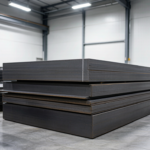
ASTM A36 vs S275JR Structural Carbon Steel Comparison
ASTM A36 vs S275JR Structural Carbon Steel Comparison
Two grades dominate the everyday structural carbon steel market: ASTM A36 in North America and S275JR in Europe. They look almost identical on a data sheet – both are weldable, hot-rolled, and used for buildings, bridges, and general fabrication – yet the two standards sit on different chemistry limits and use different testing assumptions. Substituting one for the other without checking can cause certification delays or non-conforming material at the destination port.
This guide compares ASTM A36 vs S275JR structural carbon steel across chemistry, mechanical values, weldability, design codes, pricing, and sourcing tips so you can write a clean RFQ for Chinese mills.
1. Where Each Standard Comes From
ASTM A36/A36M – The American Society for Testing and Materials specification for structural carbon steel plates, shapes, and bars of structural quality. Maximum thickness is 8 inches (200 mm) for plates and a similar limit for sections. Yield strength is 36 ksi (250 MPa) minimum.
S275JR (EN 10025-2) – The European standard for hot-rolled structural steel products. The “S” stands for structural, “275” is the minimum yield in MPa, and “JR” indicates a 27 J Charpy impact test at room temperature (+20 degrees C).
Both standards cover plates, hot-rolled sections, and bars. Both are accepted on most global construction sites when supported by a mill test certificate.
2. Chemical Composition Comparison
Element
ASTM A36 max %
S275JR max %
C
0.26
0.21
Mn (plate to 3/4 in)
no min
1.50
Si
0.40 (typically <0.15)
–
P
0.04
0.035
S
0.05
0.035
Cu
0.20 (when specified)
0.55
S275JR runs slightly cleaner on phosphorus and sulfur, which improves through-thickness ductility and weldability. ASTM A36 allows up to 0.26% carbon, so it is more sensitive to the heat input during welding in thick sections.
3. Mechanical Properties Side-by-Side
Property
ASTM A36
S275JR
Minimum yield strength
250 MPa (36 ksi)
275 MPa
Tensile strength
400-550 MPa (58-80 ksi)
410-560 MPa
Minimum elongation (200 mm)
20%
18% (thickness dependent)
Impact requirement
None (by default)
27 J at +20 degrees C
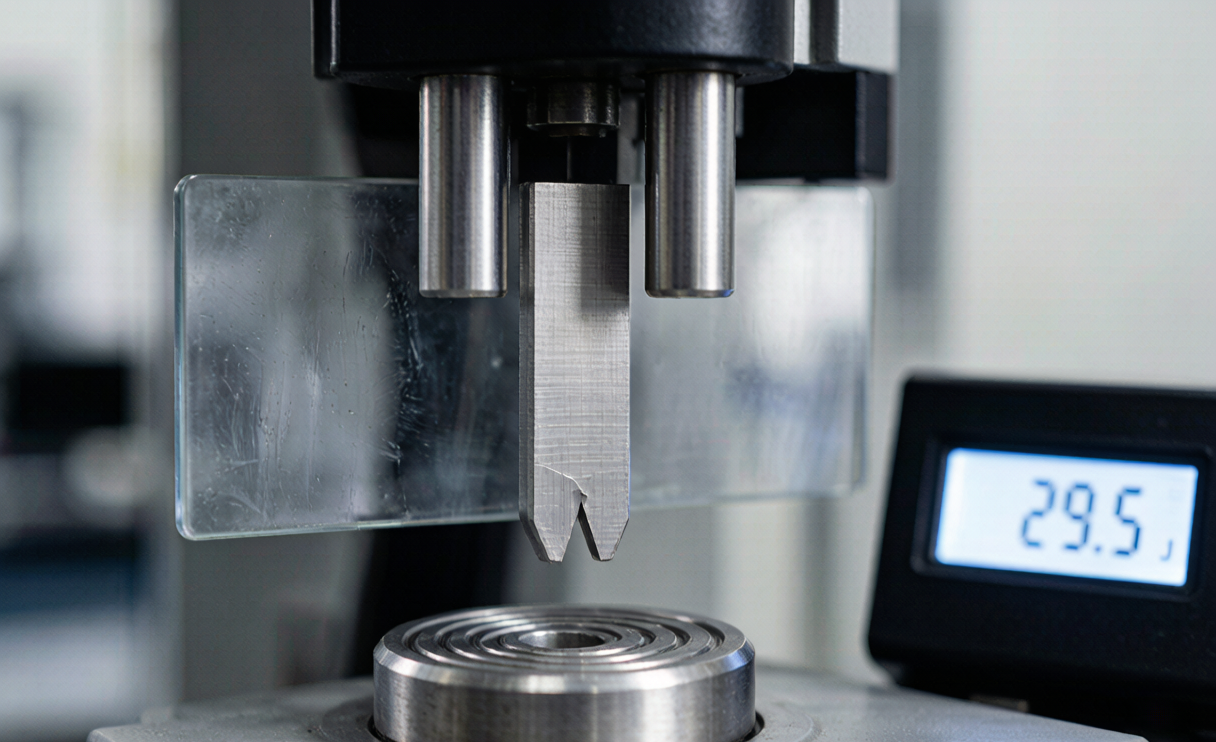
Yield strength is essentially the same in practice. The key difference is impact toughness. ASTM A36 does not require a Charpy test unless specified on the order; S275JR must pass 27 J at room temperature. For cold-climate or impact-loaded structures, S275JR (or its J0/J2 cousins) is the safer choice.
4. Weldability and Fabrication
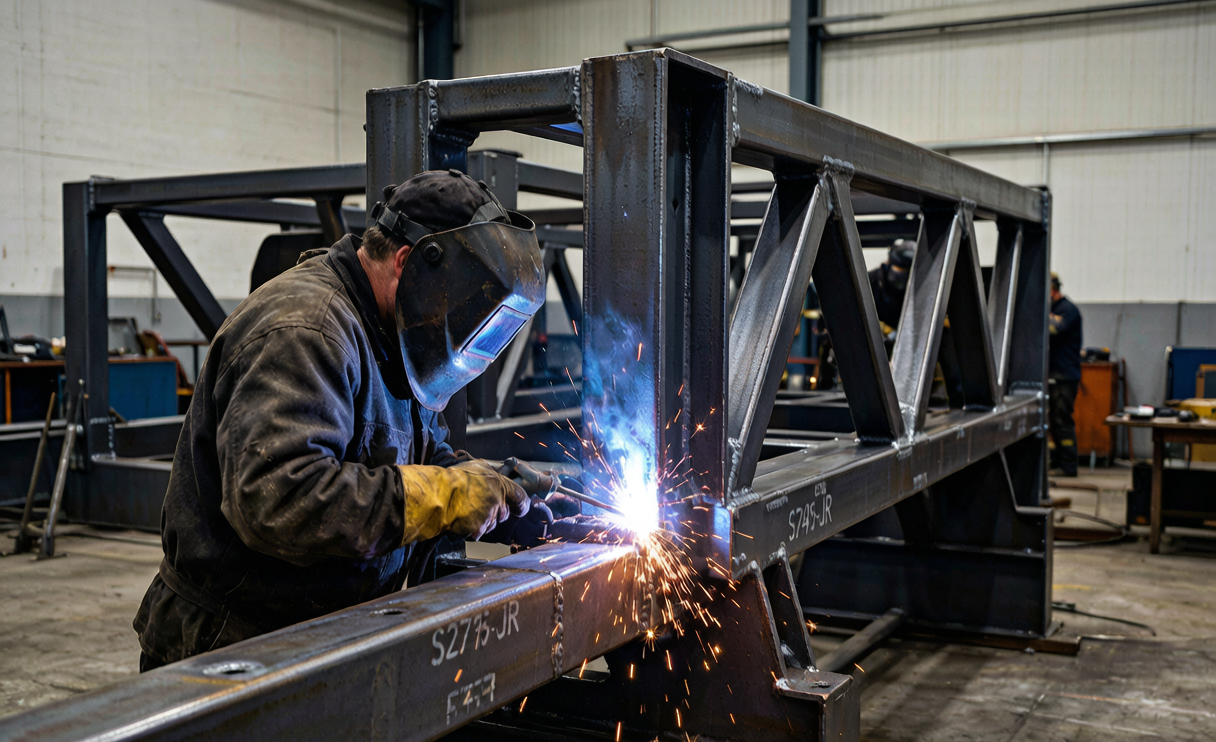
Both grades weld easily with conventional SMAW, GMAW, and FCAW processes. S275JR’s lower carbon and tighter sulfur/phosphorus limits make it slightly more forgiving on thick sections. For ASTM A36 plates above 25 mm thickness, many fabricators apply a 75-150 degrees C preheat when the ambient temperature is low.
Forming, bending, and punching performance is comparable. S275JR typically delivers a more consistent bend radius because European mills normalize rolling practice more tightly.
5. Cross-Reference and Equivalent Grades
Region
Closest to ASTM A36
Closest to S275JR
Europe (EN)
S235JR, S275JR
ASTM A36, A283 Grade C
JIS (Japan)
SS400, SM400A
SS400 (lower strength)
GB (China)
Q235B
Q275
ISO
ISO 630 Grade E250
ISO 630 Grade E275
Many Chinese mills dual-certify plate to ASTM A36 and EN 10025-2 S275JR when the chemistry falls inside both windows. This is often the easiest way to satisfy an international bid package.
6. Price and Availability in 2026
On Chinese export markets in mid-2026, A36 and S275JR plate are usually priced within USD 10-20 per tonne of each other. The tighter S275JR chemistry can carry a small premium in heavy plates (above 30 mm) because rolling mills must hold tighter process control. Both grades are widely available from mills such as Baosteel, Shougang, Rizhao, and Tangshan.
7. When to Choose Each Grade
Choose A36 when the project specification is US-based, no impact test is required, and the design code references ASME, AISC, or AASHTO.
Choose S275JR when the project follows Eurocode 3, when a Charpy test is mandated, or when shipping to a market that recognizes EN 10025.
Choose dual certification when you want to keep the option open for either client base.
8. RFQ Tips for Chinese Mills
To make sure your order does not come back as the wrong grade, list these items in your inquiry:
Standard and grade with year (for example, “ASTM A36/A36M-19” or “EN 10025-2 S275JR”).
Thickness range and tolerance class (ASTM A6 or EN 10029).
Charpy requirements if any, including test temperature and energy.
Mill test certificate type (EN 10204 3.1 or 3.2).
End use so the supplier can suggest the most economical equivalent.
FAQ
Can ASTM A36 be substituted for S275JR?
For many general applications, yes. Always confirm impact and tolerance requirements with the project engineer before substituting.
Which grade is stronger?
S275JR has a 25 MPa higher minimum yield (275 vs 250). In practice, actual mill values are close because of the rolling margin.
Do Chinese mills dual-certify to both standards?
Yes. Many suppliers issue dual certificates for plate, especially in 6-50 mm thickness. This avoids two separate inventory batches.
Is there a price premium for S275JR?
Typically USD 10-30 per tonne, mainly reflecting tighter chemistry and impact testing costs.
Conclusion
The ASTM A36 vs S275JR structural carbon steel decision is more about certification than chemistry. Both grades deliver similar strength and fabrication behavior. Pick A36 for US-codes jobs, S275JR for Eurocode and Charpy-required jobs, and ask the mill about dual certification if you want to cover both markets with one stock.
Need ASTM A36, S275JR, or dual-certified plate from China? Huaxia-Steel supplies EN 10025-2 and ASTM A36 plates and sections with mill certificates, third-party inspection, and export packing.
Related Images
Figure 2: ASTM A36 vs S275JR Structural Carbon Steel ComparisonFigure 3: ASTM A36 vs S275JR Structural Carbon Steel Comparison
If you require further information about our metal sheet products or architectural projects, please don’t hesitate to leave your contact details and message here.
Our team of experts will respond within 24 hours to continue the discussion and provide you with any additional information you requires.