S235JR vs S275JR: Key Differences, Prices & How to Choose
Every buyer who sources structural steel from China or Europe faces the same question early in the RFQ stage: S235JR or S275JR? Both are non-alloy structural steels under EN 10025-2, both weld and cut without drama, and the price gap between them is usually small. Yet choosing the wrong grade can mean an over-priced structure — or a failed design review. This guide compares the two grades across mechanical properties, chemistry, weldability, price and typical applications, so you can lock the right grade before your next order.
What S235JR and S275JR Actually Mean
Both designations follow the EN 10027 naming system, and each part of the name carries information:
S = structural steel.
235 / 275 = minimum yield strength in MPa at nominal thickness ≤ 16 mm.
JR = Charpy V-notch impact test at +20 °C with a minimum energy of 27 J.
So the difference starts in the name: S275JR guarantees roughly 17% higher yield strength than S235JR at the same thickness. Tensile ranges overlap (360–510 MPa for S235JR vs 410–560 MPa for S275JR), but the yield floor is what drives structural design, because most steel structures are governed by yielding rather than ultimate failure.
Mechanical Properties Compared
Property (≤16 mm)
S235JR
S275JR
Min. yield strength ReH
235 MPa
275 MPa
Tensile strength Rm
360–510 MPa
410–560 MPa
Min. elongation A (L0=5.65√S0)
26%
23%
Impact test temperature
+20 °C, ≥27 J
+20 °C, ≥27 J
Equivalent standards
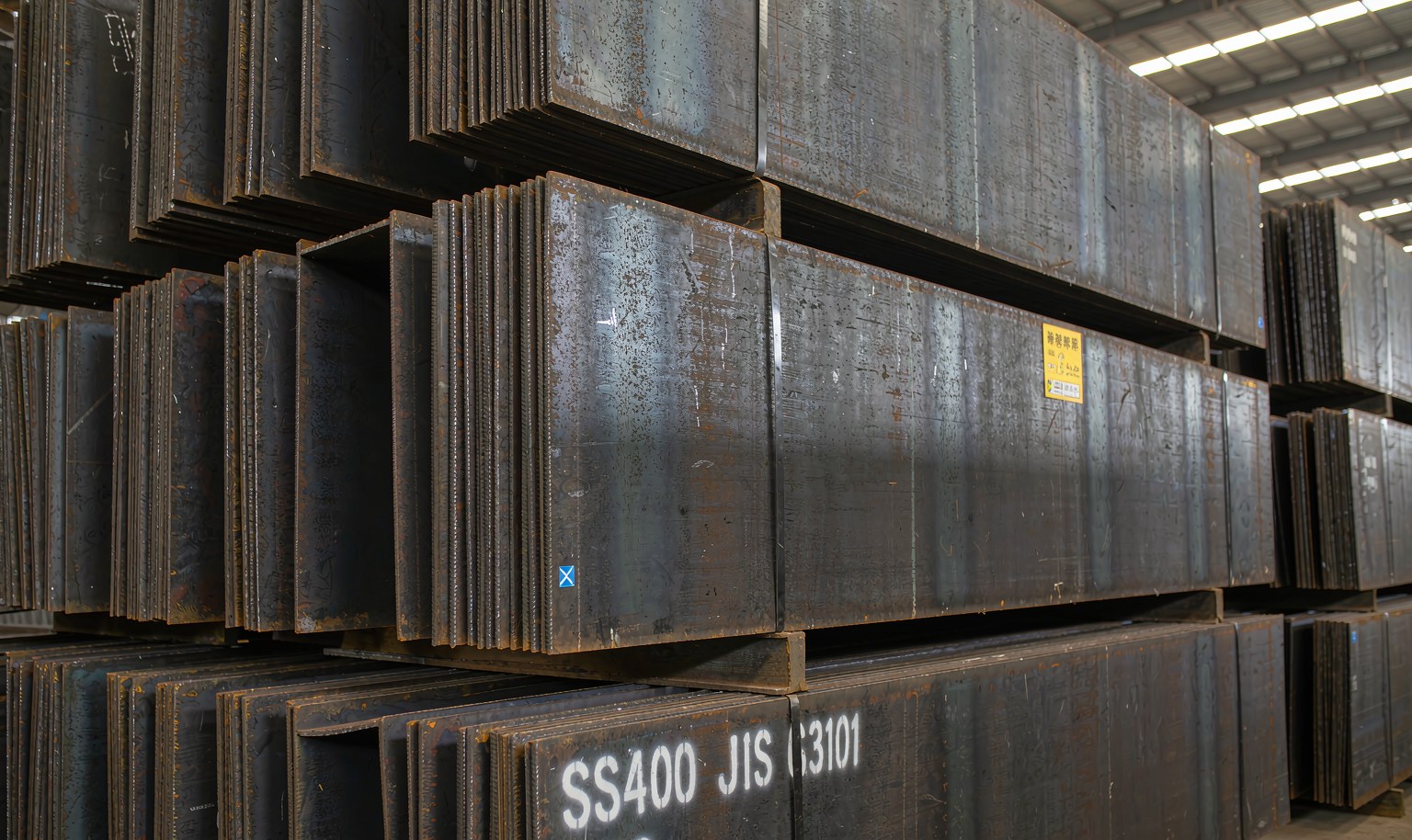
ASTM A36 (approx.), JIS SS400 (approx.)
ASTM A572 Gr.42 (approx.), JIS SS490 (approx.)
Two practical notes on this table. First, yield strength drops as thickness increases: for thicknesses over 40 mm, S235JR falls to 215 MPa and S275JR to 255 MPa, so always check the EN 10025-2 table for your actual plate or section thickness. Second, the “equivalent” ASTM and JIS grades are close but not identical — A36, for example, has a different chemistry window and a 36 ksi (250 MPa) yield floor. Never substitute grades without an engineer’s sign-off.
Chemical Composition Differences
Element (ladle, max %)
S235JR
S275JR
Carbon (C)
0.17
0.21
Manganese (Mn)
1.40
1.50
Silicon (Si)
0.35 (max)
0.35 (max)
Phosphorus (P)
0.035
0.035
Sulfur (S)
0.035
0.035
Nitrogen (N)
0.012
0.012
CEV (carbon equivalent, max)
0.35
0.40
S275JR carries slightly more carbon and manganese — that is how the mill reaches the higher yield floor with the same rolling schedule. The practical consequence shows up in welding: S275JR’s higher carbon equivalent (CEV 0.40 vs 0.35) means marginally higher hardenability in the heat-affected zone. In real projects this rarely changes the welding procedure for sections under 20 mm, but for thick plates or constrained welds, S275JR may require preheat at lower ambient temperatures where S235JR would not.
Weight-Saving Math: When S275JR Pays for Itself
Because design is yield-driven, moving from S235JR to S275JR can reduce member size. The theoretical steel-saving potential is roughly the yield ratio: 235/275 ≈ 0.85, so up to ~15% less steel mass where bending governs and deflection does not control the design. In practice, savings land between 5% and 12% once deflection, buckling and connection geometry are considered.
Example 1 — warehouse purlins: a 40 m span bay using S275JR C-purlins instead of S235JR often drops one gauge size, saving 2–4 kg/m. Over 10,000 m of purlins that is 20–40 tons of steel.
Example 2 — beam design: a simply supported floor beam sized by bending may go from IPE 300 (S235JR) to IPE 270 (S275JR), saving about 8% of beam weight.
Counter-example: for slender bracing members or long unbraced beams governed by deflection, the higher yield brings little benefit — the same section stays.
Price Difference: How Much More Does S275JR Cost?
On the export market, the mill premium for S275JR over S235JR is typically US $5–15 per ton for plates and sections, depending on the mill’s rolling program and current demand for each grade. Some mills produce both grades on the same order book and quote nearly identical prices; others treat S275JR as a niche item and add a surcharge.
Put in context: if the grade upgrade saves 8% of steel weight and steel is priced around US $550/ton FOB, the weight saving on a 100-ton order is worth about US $4,400 — far more than a US $10/ton premium, which totals only US $1,000. That is why many European-spec structures default to S275JR. When no weight saving is possible (deflection-governed designs), sticking with S235JR is the rational choice.
Weldability, Formability and Machining
Weldability: both grades weld excellently with all common processes (SMAW, GMAW, SAW). For S235JR no preheat is needed above roughly 20 mm thickness under normal conditions; S275JR follows the same rule with a small margin. Both accept standard EN ISO filler metals such as E42A/ER70S-6 class consumables matched to the lower-strength member in mixed joints.
Cold forming: S235JR bends and rolls slightly easier thanks to lower carbon. For tight-radius bending of thin sections (e.g., channel rings, pipe supports), S235JR reduces springback and cracking risk.
Machining: neither grade is a free-machining steel, but both drill, saw and turn predictably. S235JR’s lower carbon gives a marginally better chip formation.
Galvanizing and coating: both behave identically in hot-dip galvanizing and shop painting; no special surface preparation differences.
Typical Applications by Grade
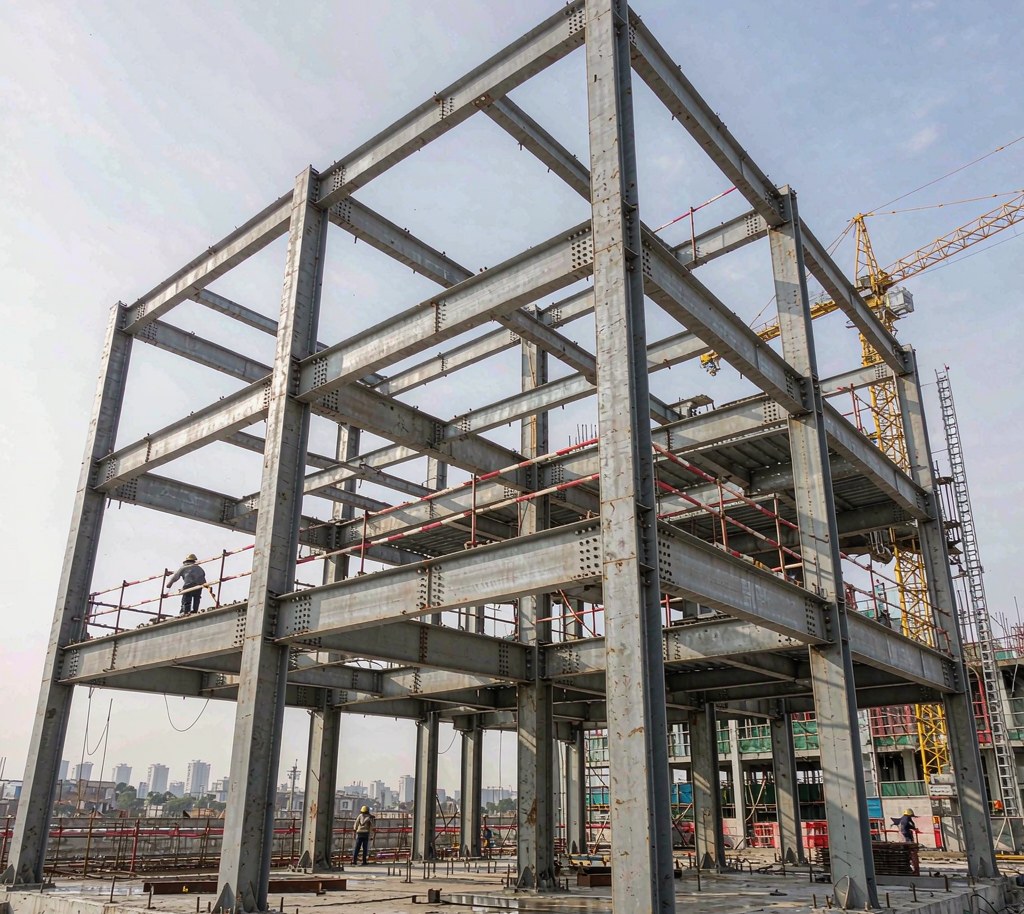
S235JR: light structural framing, mezzanines, handrails, fence posts, pipe supports, machinery bases, general fabrication where loads are modest — and any application where EN 1090 execution class EXC1–EXC2 applies.
S275JR: primary columns and rafters in steel buildings, crane runway beams, bridges and heavy racks, transport equipment frames, and members where the weight saving or higher load per section justifies the grade.
Regional habit also matters: many EU-driven projects specify S235JR by default for secondary steel and S275JR (or S355) for primary steel. Buyers in the Middle East and Southeast Asia frequently accept either, letting the fabricator optimize. Always confirm what the design drawings call out — substituting a grade without approval can void the design certificate.
Quality Checks Specific to Grade Selection
Whichever grade you order, protect yourself contractually with these items:
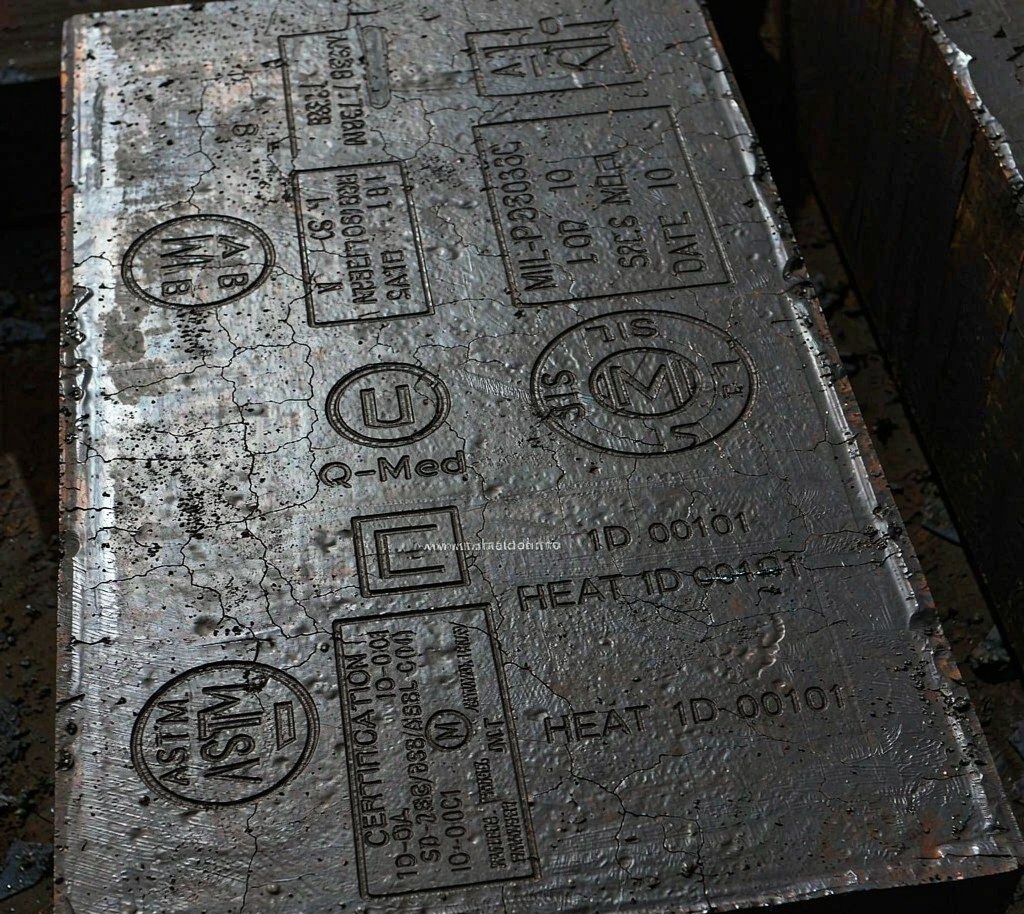
EN 10204 3.1 mill test certificate naming the exact grade, heat number and cast analysis — match heat numbers to stencils on the material.
Charpy impact records at +20 °C (the “JR” part) — some mills only test selected heats; make it a line item in the PO.
Thickness tolerance class per EN 10029 (Class A/B/C or ‘as rolled’) — tolerance class affects design weight and price per ton more than buyers expect.
Third-party inspection (SGS/BV/TUV) for orders above ~100 tons, verifying chemistry, dimensions, surface and marking before shipment.
Buyer FAQ: S235JR vs S275JR
1. Can I mix S235JR and S275JR in the same structure?
Yes, and it is common practice: primary members in S275JR, secondary steel in S235JR. Welding them together is straightforward when the consumable is matched to the lower-strength grade. Just keep clear traceability so the fabricator does not swap members.
2. Is S275JR the same as A36?
No. A36’s minimum yield is 250 MPa (between the two) and its chemistry and toughness requirements differ. A36 can often “pass” S235JR requirements, but the reverse is not guaranteed, and neither standard automatically supersedes the other. Treat them as approximate equivalents for budgeting only.
3. Which grade is better for galvanizing?
Both galvanize identically. Silicon content within the spec (≤0.35%) can affect coating thickness (Sandelin effect) in both grades; if appearance matters, ask the mill for low-silicon heats.
4. What about impact toughness in cold climates?
JR grades are tested only at +20 °C. For service below 0 °C, step up to J0 (0 °C) or J2 (−20 °C) variants — S355J2 is the usual cold-climate choice. Do not use JR grades for outdoor structures in continental winters.
5. Does the higher grade always cost more per ton?
Usually yes, but by a small margin ($5–15/ton). Because S275JR can shrink member sizes, the landed cost of the structure often drops even though the per-ton price rises.
Conclusion: A 3-Step Decision Rule
Use this simple rule on your next RFQ: (1) If the design is deflection- or stability-governed, order S235JR and save the premium. (2) If bending strength governs and sections can be downsized, order S275JR — the weight saving beats the price difference. (3) If drawings specify either grade explicitly, follow the drawings and spend your negotiation effort on thickness tolerance class, MTC scope and inspection, which move real money far more than the grade premium does.
Need a quote for S235JR or S275JR plates, sections and pipes? Huaxia-Steel supplies both grades with EN 10204 3.1 certificates, third-party inspection support and factory-direct pricing. Send us your bill of quantities and get a costed offer within 24 hours.
If you require further information about our metal sheet products or architectural projects, please don’t hesitate to leave your contact details and message here.
Our team of experts will respond within 24 hours to continue the discussion and provide you with any additional information you requires.