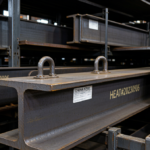
ASTM A992 has become the dominant material specification for wide-flange structural steel shapes in North America over the past two decades. Introduced in 1998 specifically to replace ASTM A36 for W-shapes, A992 delivers higher minimum yield strength, tighter chemistry controls for improved weldability, and more predictable mechanical behavior — all at a competitive price point that made rapid industry adoption possible. For international buyers sourcing beams and columns for commercial construction, infrastructure, and industrial building projects, understanding the ASTM A992 structural steel standard is absolutely essential for correct specification, code compliance, and successful project execution.
This comprehensive article breaks down A992’s chemistry limits, mechanical property requirements, size availability, shape coverage, and how it compares to the older A572 Grade 50 and A36 specifications. We also cover critical import considerations, mill qualification requirements, certification expectations, and common procurement pitfalls that international buyers encounter when sourcing A992-equivalent material from overseas suppliers.
1. Why Was ASTM A992 Created?
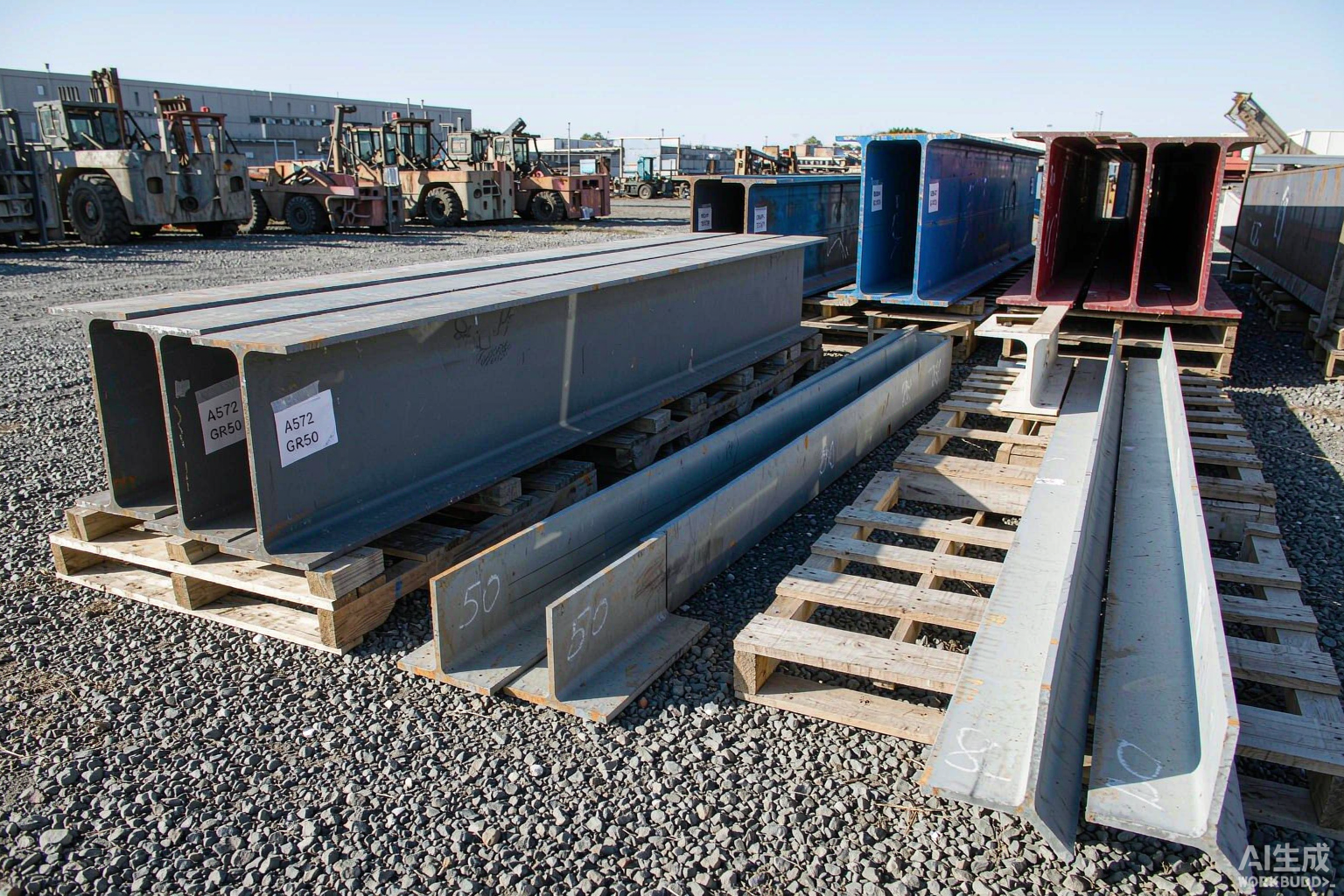
Before 1998, wide-flange beams (W-shapes) were specified under ASTM A36, which required only 250 MPa (36 ksi) minimum yield strength. As buildings grew taller, spans wider, and seismic design requirements more stringent, structural engineers needed higher strength material without sacrificing the ductility and weldability that make steel construction safe and economical. A572 Grade 50 offered 345 MPa yield strength but had permissive chemistry limits that sometimes caused unexpected welding problems in the field, particularly when sourced from mills with less rigorous process control.
ASTM A992 was developed through collaboration between steel producers, structural engineers, and the American Institute of Steel Construction as a hybrid solution: it matches A572 Grade 50’s 345 MPa yield strength while imposing the tighter chemistry controls historically associated with A36 — specifically limiting carbon equivalent to improve weldability and restricting maximum yield strength to prevent connection overloading. Today, virtually all domestic W-shapes produced in the United States are rolled to A992, and the specification has been formally adopted by AISC as the default material standard for steel building design in North America.
2. Chemical Composition Requirements
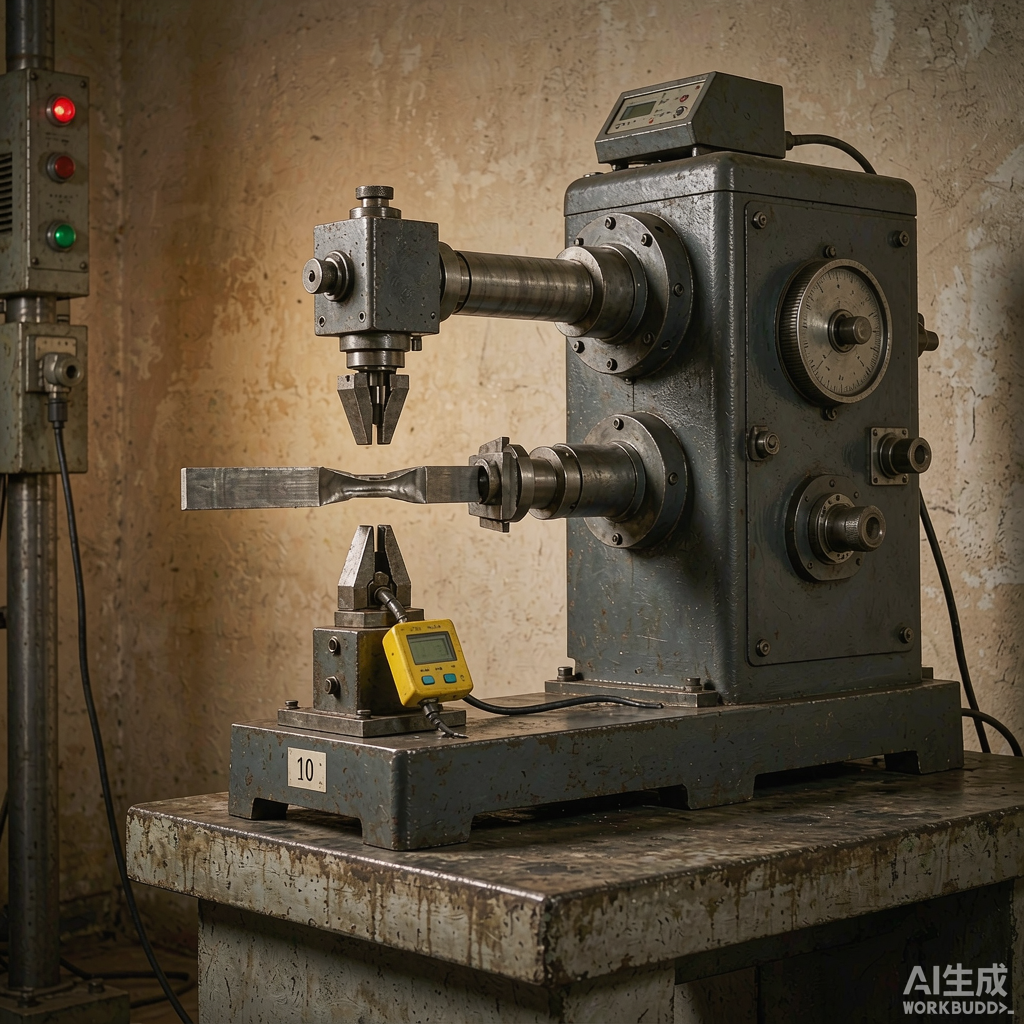
A992’s chemistry is carefully balanced to simultaneously deliver high strength, excellent toughness, and superior weldability. The maximum carbon equivalent limit is the single most important parameter for steel fabricators because it directly determines preheat requirements, welding procedure complexity, and susceptibility to hydrogen-induced cracking.
| Element | Maximum % (A992-11 and later editions) | Significance |
|---|---|---|
| Carbon (C) | 0.23 | Controls strength and weldability |
| Manganese (Mn) | 0.50-1.50 (varies by shape size) | Primary strengthening element |
| Phosphorus (P) | 0.035 | Kept low to prevent brittleness |
| Sulfur (S) | 0.045 | Low S improves ductility and formability |
| Silicon (Si) | 0.40 | Deoxidizer and mild strengthener |
| Vanadium (V) | 0.11 | Grain refiner and precipitation hardener |
| Columbium (Nb) | 0.05 | Alternative grain refiner |
| Copper (Cu) | 0.60 | Improves atmospheric corrosion resistance |
| Nickel (Ni) | 0.45 | Improves toughness at low temperatures |
| Chromium (Cr) | 0.35 | Hardenability and corrosion resistance |
| Molybdenum (Mo) | 0.15 | Improves elevated temperature strength |
| Carbon Equivalent (CE) | 0.47 maximum | Ensures good weldability |
The carbon equivalent limit of 0.47, calculated by the formula CE equals C plus Mn divided by 6 plus the sum of Cr, Mo, and V divided by 5 plus the sum of Ni and Cu divided by 15, ensures that most A992 sections can be welded without preheat at ambient temperatures above 0 degrees Celsius, provided the thickness remains under 38 mm. This is a major field advantage over older high-strength grades where CE values of 0.50-0.55 were common and preheat was frequently required even for moderate thicknesses.
3. Mechanical Properties and Yield Window
A992 maintains a uniquely narrow yield strength window that gives structural engineers predictable performance while allowing steel mills to produce efficiently without hitting an impossibly tight single target:
| Property | Requirement | Engineering Significance |
|---|---|---|
| Yield Strength (minimum) | 345 MPa (50 ksi) | Higher than A36; allows smaller sections |
| Yield Strength (maximum) | 448 MPa (65 ksi) | Prevents connection overloading |
| Tensile Strength (minimum) | 450 MPa (65 ksi) | Ensures adequate safety margin |
| Tensile-to-Yield Ratio (minimum) | 1.18 | Guarantees ductility and warning before failure |
| Elongation in 200 mm (minimum) | 18% | Adequate ductility for seismic design |
| Elongation in 50 mm (minimum) | 21% | Good formability for coping and welding |
The maximum yield limit is unique to A992 among common structural grades and serves an important structural safety purpose: it prevents over-strength members from overloading connections, bolts, and foundations that were designed assuming 50 ksi nominal material capacity. In seismic zones, this yield cap is particularly valuable because it ensures that ductile beam yielding occurs before brittle connection failure. The yield window also simplifies mill production — rolling mills do not need to hit an exact strength target, only to remain within the acceptable band.
4. Shape Coverage and Size Availability
ASTM A992 applies specifically to rolled structural steel shapes and does not extend to plates, bars, or hollow structural sections. The covered shapes include:
- Wide-flange beams (W-shapes) — from W4x13 through W44x335 and beyond, the most common structural beam in North American construction
- American Standard beams (S-shapes) — legacy shapes still used in renovation and industrial applications
- Channels (C and MC shapes) — for bracing, framing, and miscellaneous structural elements
- Angles (L-shapes) — both equal leg and unequal leg configurations for connections and bracing
- Tees (WT, ST, and MT shapes) — split from W, S, and M shapes for special applications
ASTM A992 does not cover plates, bars, or hollow structural sections (HSS). Plates for built-up beams and gusset plates are typically ordered to ASTM A572 Grade 50, A709 Grade 50, or A36 depending on the specific strength and toughness requirements. HSS tubes and boxes are covered by ASTM A500 Grade B or C, or A1085 for higher strength applications.
At Huaxia Steel, we stock A992-equivalent wide-flange beams in standard ASTM sizes from W150x13 to W1100x433, with standard lengths of 6 meters, 12 meters, and 18 meters. Non-standard lengths, cambering for long-span applications, and custom drilling for bolted connections are available on mill order with 4-6 week lead time.
5. A992 vs A572 Gr 50 vs A36: Detailed Comparison
| Feature | ASTM A36 | A572 Grade 50 | ASTM A992 |
|---|---|---|---|
| Minimum Yield Strength | 250 MPa (36 ksi) | 345 MPa (50 ksi) | 345 MPa (50 ksi) |
| Maximum Yield Strength | No specified limit | No specified limit | 448 MPa (65 ksi) |
| Minimum Tensile Strength | 400 MPa (58 ksi) | 450 MPa (65 ksi) | 450 MPa (65 ksi) |
| Carbon Equivalent Limit | No CE limit specified | No CE limit specified | 0.47 maximum |
| Primary Application | General structural shapes and plates | Plates, bars, and shapes | W-shapes (wide-flange beams) |
| Weldability Rating | Good | Variable depending on heat | Excellent due to CE cap |
| Seismic Design Suitability | Acceptable | Good | Preferred by AISC |
For new building projects designed under AISC 360 or AISC 341 seismic provisions, A992 is the default and preferred choice for beams and columns because the specifications assume A992 mechanical properties in their design tables and connection prequalifications. Substituting A572 Grade 50 or A36 requires explicit engineer approval, may trigger connection redesign, and can invalidate prequalified moment connection ratings.
6. Applications and Project Types
A992 dominates structural design across these major sectors:
- Commercial high-rise buildings — The higher strength-to-weight ratio allows engineers to reduce column sizes at upper floors, increasing rentable floor area and reducing foundation loads.
- Bridges and highway structures — A709 Grade 50W weathering steel is common for exposed bridge girders, but A992 is frequently used for non-weathering deck components and cross-frames.
- Industrial plants and warehouses — Long-span beams reduce the number of interior columns, improving layout flexibility for manufacturing lines and storage systems.
- Power plants and electrical substations — Seismic design benefits from predictable yield behavior, adequate ductility, and connection compatibility.
- Stadiums, arenas, and exhibition halls — Large clear spans demand high-strength, lightweight framing that A992 delivers efficiently.
- Data centers and mission-critical facilities — Vibration resistance and robust connection performance under dynamic loading.
7. Import and Procurement Considerations
International buyers sourcing A992 or A992-equivalent structural steel from Chinese and Asian mills should verify these critical points before placing orders:
- Mill qualification — Confirm the producing mill is on the AISC Quality Certification Program list or has equivalent ISO 9001 and mill-specific accreditation. Not all mills that claim A992 capability actually meet the full standard.
- Heat analysis versus product analysis — A992 requires heat analysis from the ladle. Product analysis tolerances apply if re-testing is requested from the finished product, but the primary compliance is based on heat chemistry.
- Charpy V-notch impact testing — Standard A992 does not require impact testing at the base specification level. If your project is located in a seismic zone, cold climate, or requires fracture-critical designation, specify supplemental requirement S5 for 20 Joules at 21 degrees Celsius, or S30 for zone-specific test temperatures.
- Marking and traceability — Each piece must carry the heat number, grade designation (A992), size, and mill identification permanently marked by paint stencil or die stamp. Verify the mill’s marking practice matches your project documentation requirements.
- Dimensional tolerance — ASTM A6 governs dimensional tolerances for structural shapes. Specify A6 tolerance class if tight tolerances are needed for pre-fabrication or bolted connection fit-up.
At Huaxia Steel, all A992-equivalent structural shapes are produced at ISO 9001-certified mills with AISC-recognized quality management systems. We provide Mill Test Certificates to EN 10204 3.1 as standard, complete with heat analysis, mechanical test results, and dimensional inspection reports. Third-party inspection by SGS, Bureau Veritas, or TUV-SUD is arranged at the loading port on request.
8. FAQ: ASTM A992 Structural Steel
Can A992 be used for plates and flat bars?
No. ASTM A992 applies only to structural shapes including W, S, C, MC, L, WT, ST, and MT shapes. For plates and bars, specify ASTM A572 Grade 50, A709 Grade 50, or A36 depending on the required strength, toughness, and corrosion resistance. Using A992 for plate would be a specification error that could trigger rejection by the engineer of record.
Is A992 exactly the same as Grade 50 steel?
A992 has the same 50 ksi minimum yield strength as A572 Grade 50, but it adds a maximum yield limit of 65 ksi and stricter carbon equivalent controls that improve weldability and connection behavior. Think of A992 as A572 Grade 50 with better weldability, more predictable strength, and design-code preferred status for W-shapes.
Does A992 require preheating before welding?
For thickness under 38 mm and ambient temperature above 0 degrees Celsius, preheat is generally not required due to the low carbon equivalent limit. For thicker sections, sub-zero temperatures, or high-restraint joints, follow AWS D1.1 preheat tables or your project’s qualified Welding Procedure Specification. The low CE of A992 significantly reduces preheat requirements compared to older grades.
What is the typical price premium over A36?
A992 typically commands a 5-10% premium over A36 for equivalent shapes. This premium is frequently offset by reduced steel tonnage because higher strength allows smaller sections for the same load, reduced fabrication labor due to fewer pieces, and faster erection because lighter pieces lift more quickly. On a total installed cost basis, A992 is often cheaper than A36 for high-rise and long-span projects.
Do you stock A992 beams for immediate shipment?
We maintain ready stock of common W-series beams in A992-equivalent grades at our Chinese port warehouses. For large projects requiring full bill-of-materials fulfillment, mill-direct rolling with 4-6 week lead time offers better unit pricing, complete size coverage, and heat lot traceability. Contact us for our current stock list and project pricing.
Additional Technical Considerations for International Buyers
International buyers sourcing carbon steel products from overseas suppliers face additional challenges beyond material specification. Understanding these factors helps ensure smooth procurement, customs clearance, and project acceptance.
Import duties and tariffs vary significantly by destination country and product form. Many countries impose anti-dumping duties on carbon steel pipe and plate from specific origins. Before placing an order, verify the Harmonized System (HS) code for your product and confirm current duty rates with your customs broker. Common HS codes include 7304 for seamless pipe, 7306 for welded pipe, and 7208 for hot-rolled plate.
Standards equivalence is another critical consideration. ASTM A53 Grade B is approximately equivalent to ISO 3183 Grade L245, API 5L Grade B, and DIN 1629 St37.0. However, equivalence is not identity — subtle differences in chemistry limits, testing requirements, and dimensional tolerances can affect compatibility with existing systems and code compliance. Always obtain a formal equivalence certificate from your supplier when substituting standards.
Third-party inspection is strongly recommended for first-time suppliers and large orders. Pre-shipment inspection by SGS, Bureau Veritas, or TUV provides independent verification of dimensions, mechanical properties, surface quality, and marking before the material leaves the mill. This prevents costly disputes and returns after the material arrives at your facility.
Packaging and shipping standards differ between domestic and export orders. Export-bound pipe requires seaworthy packaging with moisture barriers, end caps, and proper securing to prevent movement during ocean transit. Galvanized products need VCI paper interleaving to prevent white rust. Coated products require UV-resistant wrapping to prevent coating degradation.
Documentation completeness can make or break a customs clearance. The standard export package includes commercial invoice, packing list, bill of lading, certificate of origin, Mill Test Certificate, and sometimes a pre-shipment inspection certificate. Missing or incorrect documents cause demurrage, storage fees, and project delays. Confirm documentation requirements with your freight forwarder before shipment.
At Huaxia Steel, our export documentation team prepares complete customs packages for over 80 countries. We understand the specific requirements of Middle Eastern oil companies, European CE marking, North American AISC compliance, and African pre-shipment inspection programs. Our logistics partners handle FOB, CIF, DAP, and DDP deliveries with full cargo insurance and real-time tracking.
Quality Assurance and Testing Capabilities
Our quality management system is built on ISO 9001:2015 with additional certifications specific to product lines. All production facilities maintain in-house laboratories equipped for comprehensive material testing:
- Chemical analysis — Optical emission spectrometry (OES) and X-ray fluorescence (XRF) for rapid, accurate composition verification
- Mechanical testing — Universal testing machines for tensile, compression, and bend tests; Charpy impact testers for toughness evaluation
- Hardness testing — Brinell, Rockwell, and Vickers hardness testers for quality control and heat treatment verification
- Non-destructive testing — Ultrasonic testing (UT), magnetic particle inspection (MPI), dye penetrant inspection (DPI), and radiographic testing (RT)
- Dimensional inspection — CMM machines, laser micrometers, and automated gauge systems for precise measurement
- Metallography — Sample preparation, etching, and microscopic examination for grain size, inclusion rating, and phase analysis
Test reports are issued in English as standard and can be provided in Spanish, Arabic, Russian, or French on request. All test equipment is calibrated annually to national standards with traceable certificates.
Sustainability and Environmental Responsibility
Modern steel buyers increasingly consider environmental impact in their procurement decisions. Carbon steel is inherently sustainable — it is 100% recyclable without quality loss, and the global recycling rate for steel exceeds 85%. Our mill partners utilize electric arc furnace (EAF) production for certain product lines, which uses scrap steel as the primary raw material and reduces carbon emissions by up to 70% compared to traditional blast furnace production.
We are committed to reducing our environmental footprint through energy-efficient production, waste minimization, and water recycling programs. Our Environmental Management System is certified to ISO 14001:2015. We publish annual sustainability reports documenting our progress toward carbon reduction targets, and we participate in industry initiatives to develop low-carbon steel production technologies.
For buyers seeking green building credits, we provide Environmental Product Declarations (EPD) and recycled content certificates that contribute to LEED, BREEAM, and Green Star rating systems.