Carbon Steel Induction Hardening: Process and Benefits
When a carbon steel component needs a hard, wear-resistant surface but must keep a tough, ductile core, surface hardening is the answer. Among the available methods, carbon steel induction hardening has become the preferred choice for high-volume shafts, gears, pins and tools because it is fast, clean, repeatable and easy to automate. This article explains how induction hardening works, which carbon steel grades respond best, how case depth and hardness are controlled, how it compares with flame and furnace methods, and what quality steps protect your parts from cracking and distortion.

1. What Is Induction Hardening
Induction hardening is a heat-treatment process that uses a high-frequency alternating electromagnetic field to heat only the surface layer of a steel part above its austenitizing temperature, followed by rapid quenching (usually with water or polymer spray). The core stays cool and soft, so the part gains a hard “case” on the outside while retaining a tough “core” inside. Because only the skin is heated, energy use is low and distortion is minimal compared with through-hardening in a furnace. The result is a component that resists wear and fatigue at the surface yet absorbs shock in the centre.
2. How the Process Works
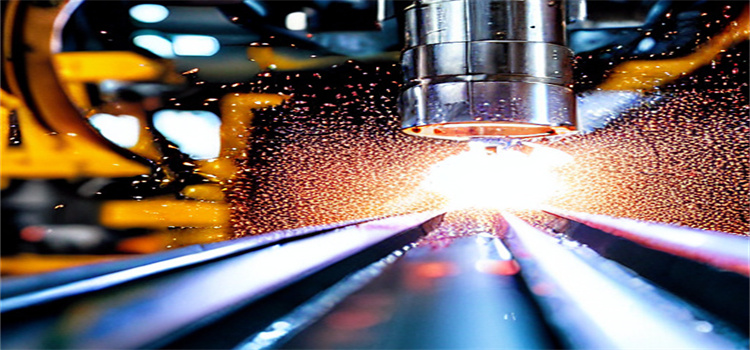
An induction coil carrying alternating current (typically 10 kHz to 1 MHz) generates a rapidly reversing magnetic field. When a conductive steel part is placed inside, induced eddy currents and hysteresis heating raise the surface temperature to roughly 800-900 °C within seconds. The “skin depth” – how deep the heat penetrates – shrinks as frequency rises, so higher frequencies harden thinner cases. The part is then quenched immediately, transforming the heated austenite into martensite, the hardest microstructure in carbon steel. A modern system couples the power supply, coil, handling fixture and quench ring into a single automated cell.
3. Best Carbon Steel Grades for Induction Hardening
Induction hardening only works on steel with enough carbon to form martensite. Very low-carbon steels (below about 0.30% C) harden poorly, while medium-carbon grades give the best balance of hardness and crack resistance.
| Grade | Carbon % | Typical surface hardness (HRC) | Common parts |
|---|---|---|---|
| AISI 1045 / C45 | 0.42-0.50 | 55-60 | Shafts, rolls, gears |
| AISI 1050 / C50 | 0.47-0.55 | 58-62 | Axles, pins |
| AISI 4140 | 0.38-0.43 | 50-55 | Heavy shafts, spindles |
| AISI 1018 (carburized first) | 0.15-0.20 | 45-55 | Wear pads, small pins |
4. Case Depth and Hardness Profiles
Effective case depth typically ranges from 0.5 mm to 5 mm depending on frequency, power and dwell time. A shallow case (0.8-1.5 mm) suits gears and bearings; a deeper case (3-5 mm) suits crankshafts and large shafts. The hardness profile should fall off smoothly from the surface to the core so there is no brittle step that could spall under load. Process parameters are locked in with a single qualifying part, then repeated identically for production, which is why induction hardening is ideal for automotive and bearing volumes.
5. Distortion and Cracking Control
Because only the skin is heated and quenched, induction-hardened parts warp far less than furnace-hardened ones, but residual stress remains. Good practice controls cracking through: correct carbon content, moderate quench severity (polymer instead of pure water for thin sections), and a low-temperature temper (150-200 °C) immediately after hardening to relieve stress without losing much hardness. Spin hardening and track hardening fixtures keep long parts straight during the cycle, and a stress-relief temper within hours prevents delayed cracking.
6. Scan Hardening vs Spin Hardening
Two common motion patterns dominate production. In scan hardening, the part or coil moves so a narrow heated band travels along the length – ideal for long shafts and bars. In spin (profile) hardening, the part rotates in a stationary coil shaped to the contour, hardening the whole profile at once – ideal for gears and cams. Choosing the right pattern controls uniformity and cycle time on the production line.
7. Induction vs Flame vs Furnace Hardening
| Method | Speed | Distortion | Automation | Best for |
|---|---|---|---|---|
| Induction | Very fast (sec) | Low | Excellent | High-volume precision parts |
| Flame | Fast | Medium | Moderate | Large, simple shapes |
| Furnace through-harden | Slow (hours) | High | Limited | Uniform full-hardness parts |
8. Energy, Cleanliness and Process Control Benefits
Induction heating wastes little energy because heat is generated inside the part, not transferred from a hot chamber. There are no combustion gases, so the shop stays clean, and the short cycle time means parts spend seconds at high temperature, reducing decarburization. Because the process is fully electronic, every coil current, frequency and quench parameter is logged, giving traceability that furnace batches cannot match.
9. Typical Applications
Induction hardening is everywhere in motion and power transmission: crankshafts, camshafts, axle shafts, gear teeth, ball-stud pins, drill collars, railroad rails and industrial rolls. Any component that sees rolling or sliding contact and must resist fatigue and wear is a candidate, especially where millions of identical parts are produced.
10. Quality Inspection
Suppliers verify the process with surface hardness testing (Rockwell C), case-depth measurement by cross-section micrograph or hardness traverse, magnetic particle inspection for cracks, and occasionally ultrasonic testing for subsurface defects. A documented process window and first-article approval keep every production part consistent with the qualified sample, and statistical process control charts catch drift before it becomes scrap.
11. Coil and Power Supply Selection
The induction coil is the heart of the process. Its shape matches the part contour, and its design sets the heating pattern. Low-frequency (10-50 kHz) power suits deep cases and large parts; high-frequency (200 kHz-1 MHz) suits thin cases and small features. Solid-state inverters have largely replaced old motor-generator sets, giving precise, programmable control of power and dwell that operators can store as recipes.
12. Common Defects and Troubleshooting
| Defect | Likely cause | Fix |
|---|---|---|
| Cracking | Too severe quench, high C | Use polymer quench, temper |
| Soft spots | Uneven coil coupling | Re-center part, adjust coil |
| Low hardness | Insufficient heat | Increase power/dwell |
| Distortion | Asymmetric heating | Spin or scan symmetrically |
13. When to Choose Induction Over Alternatives
Choose induction when you need high volume, tight repeatability, low distortion and clean operation. Choose flame hardening for very large or one-off parts where a coil is impractical. Choose furnace through-hardening when the entire cross-section must be hard rather than just the surface. Matching the method to the part is the key to a cost-effective heat-treat plan.
14. Setting the Process Window
A robust induction hardening window is defined by four parameters: frequency, power density, dwell time and quench rate. Frequency sets skin depth; power density and dwell set the peak temperature and how much of the cross-section reaches it; quench rate sets the martensite start. The qualified window is the range where every part meets case depth, surface hardness and core properties. Operators run at the centre of that window, not the edge, so normal variation stays in tolerance. First-article testing locks the window before production begins.
15. Environmental, Safety and Energy Considerations
Induction hardening is environmentally favourable: it heats only the part, wastes little energy, produces no combustion gases, and uses water or polymer quench that can be filtered and recycled. From a safety view, the main hazards are the high-frequency electrical field, hot quench fluid and steam, all managed by guarding, interlocks and local exhaust. Because cycle times are seconds, throughput per square metre of floor is high, lowering the energy per part compared with batch furnaces.
16. Selecting a Hardening Service Provider
If you outsource, evaluate the supplier on: frequency range and coil design capability, ability to run your part as a sample, documented process control and SPC, in-house hardness and crack inspection, and capacity for your volume. Ask for a first-article report with case-depth micrograph and hardness traverse. A capable provider becomes a process partner, not just a subcontractor, and protects your component quality.
17. Heat Treatment After Hardening
A low-temperature temper (commonly 150-200 °C for one to two hours) is applied after quenching to relieve residual stress and improve toughness marginally without losing significant hardness. For parts that will be machined after hardening, a sub-zero treatment or a higher temper may be used to stabilize dimensions. The exact temper is chosen to balance wear resistance against the risk of brittle failure in service.
18. Worked Example: Hardening a Drive Shaft
Consider a 40 mm diameter 1045 shaft needing a 1.5 mm case at 58 HRC. The process uses a medium frequency (around 30 kHz) to heat a 20 mm band, scans along the length in 40 seconds, and quenches with a polymer spray. After scanning, the shaft is tempered at 180 °C for 90 minutes. The result is a hard wear surface with a tough core that survives bending fatigue. This single example shows why induction is preferred for shafts: fast, repeatable, low distortion, and no furnace queue.
19. Induction vs Laser Hardening
Laser hardening is a newer surface-hardening method using a laser beam instead of an induction coil. It offers extremely precise, localized heating with almost no distortion and no quench fluid for some setups, but capital cost is high and throughput is lower for simple parts. Induction remains the volume leader for shafts, gears and rolls, while laser is chosen for delicate or hard-to-coil geometries. The two are complementary rather than competing.
20. Equipment Maintenance and Uptime
Reliable induction lines need regular care: cooling water quality control to prevent coil scaling, periodic coil inspection for cracks, capacitor and transformer checks, and quench-system filtration. A planned maintenance schedule keeps the process window stable and avoids scrap. Most downtime comes from neglected cooling or quench systems, not the power supply itself, so those deserve daily attention on a production floor.
21. Hardenability and the Jominy Test
Hardenability describes how deeply a steel can harden, and it is measured by the Jominy end-quench test. Medium-carbon grades like 1045 have moderate hardenability; adding alloying elements (as in 4140) raises it so thicker sections harden through. For induction, where only the surface needs martensite, even moderate hardenability is enough, but the Jominy curve still predicts whether the case will reach the target hardness. Requesting Jominy data on the bar certificate lets you predict induction results before production starts.
22. Selecting the Right Case Depth
Case depth should match the duty. Light-wear parts (guide rails, bushings) need only 0.5-1.0 mm; heavily loaded gears and shafts need 1.5-3.0 mm; large crankshafts may need up to 5 mm. Too shallow and the case spalls under load; too deep and distortion and cracking rise. The rule of thumb is to harden to about 10-15% of the section radius for rolling contact, then verify by a hardness traverse on a cross-section. Document the chosen depth as part of the process window.
23. Quality Plan Template
A practical induction hardening quality plan lists: grade and hardenability data, target surface hardness and case depth, frequency and power window, quench medium and pressure, temper parameters, and inspection method (Rockwell C plus micrograph or traverse). Combine this with first-article approval and periodic SPC, and you have a defensible system that keeps every production part within tolerance and gives auditors the traceability they expect.
24. Quench Media Selection
The quench medium controls cooling rate and therefore martensite formation and cracking risk. Water quenches fastest and is cheapest but can crack thin or complex parts; polymer (typically 5-20% concentration) slows cooling for a safer, still-hard result; oil is used where distortion must be minimal and the grade allows it. The choice is part of the qualified window: change the quench and you must re-qualify the process, because hardness and crack rate will change with it.
25. Hardness Testing Methods
Surface hardness is most often checked with a Rockwell C (HRC) tester on a ground flat; for very thin cases a Vickers (HV) microhardness traverse across the cross-section maps the profile from surface to core. Brinell is used for softer base material. The test method should be stated on the inspection report so results are comparable, and a calibrated machine with a recent certificate is essential for audit acceptance.
26. Operator Training and Qualification
Although induction is automated, the setup and oversight need skilled staff. Operators should understand power, frequency, coil coupling and quench interaction, and be trained to read SPC charts and respond to drift. Many shops require operators certified to a heat-treating standard and maintain training records as part of their quality system. Well-trained operators are the difference between a stable process and intermittent scrap.
27. Cost Comparison With Alternatives
Induction hardening carries higher equipment cost than a simple furnace but lower per-part cost at volume because cycle time is seconds and energy is used only where needed. Compared with flame hardening, induction is more repeatable and cleaner; compared with through-hardening, it avoids the distortion and re-machining that furnaces often require. For a production line, the total cost of ownership usually favours induction once volumes exceed a few thousand parts per year, and the consistency it brings reduces downstream scrap and warranty risk.
28. Summary
Carbon steel induction hardening is the efficient way to put a hard, wear-resistant case on a tough core. Success comes from choosing a grade with enough carbon, setting a documented process window, controlling quench and temper, and verifying with hardness and case-depth inspection. With those fundamentals in place, induction delivers fast, clean, repeatable results that are hard to match by any other surface-hardening route for high-volume components.
29. Process Glossary
Skin depth: the depth below the surface where induced current density falls to about 37% of its surface value; it shrinks as frequency rises. Austenitize: heating into the austenite phase field before quenching. Martensite: the hard, brittle microstructure formed by rapid quench. Case: the hardened surface layer. Core: the unhardened interior that stays tough. Stress-relief temper: a low-temperature heat treatment that relieves residual stress after quenching. Understanding these terms helps you read a process report and communicate precisely with a heat-treat supplier.
30. Application Deep Dive: Gears and Rolls
Gears benefit from induction hardening because only the tooth flank needs to be hard while the core stays tough to absorb shock loads; spin hardening a gear in seconds beats furnace hardening a whole wheel. Industrial rolls use a deep case on the working surface to resist pressing and wear while the shaft ends remain machinable. In both cases the short cycle, low distortion and repeatability of induction make it the economic and quality-leading choice, and the documented process window gives full traceability for safety-critical parts.
Frequently Asked Questions
Can low-carbon steel be induction hardened? Not directly; it lacks carbon for martensite. It must be carburized first, or you should switch to a medium-carbon grade.
Does induction hardening weaken the core? No. The core is never heated above transformation, so it keeps its original toughness.
Is tempering required? A low-temperature stress-relief temper is recommended to prevent cracking and stabilize dimensions.
How deep can the case be? Practically up to about 5 mm for static parts; deeper cases need long dwell times and high power.
Why choose induction over flame? Better repeatability, less distortion, cleaner operation and easy automation for high volumes.
Source Hardened Carbon Steel Components
Huaxia-Steel supplies medium-carbon bars and forgings in 1045, 1050 and 4140 ready for your induction hardening line, with chemistry and hardenability (Jominy) data on the mill certificate. Talk to our team about your grade, size and hardness requirements.