JIS vs ASTM vs DIN Carbon Steel Standards: Complete Cross-Reference Guide
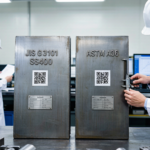
When sourcing carbon steel from global suppliers, one of the biggest challenges procurement professionals face is navigating the patchwork of national and international material standards. A single grade of carbon steel may be designated differently under JIS (Japan), ASTM (USA), DIN/EN (Europe), GB (China), and ISO standards — yet possess nearly identical chemical and mechanical properties. This cross-reference guide provides a comprehensive mapping of equivalent carbon steel grades across the major international standards, helping importers avoid costly specification mismatches and expedite their sourcing process.
1. Understanding the Standards Bodies
Standard
Organization
Region
Common Products Covered
ASTM / AISI
American Society for Testing and Materials
USA / International
Plates, pipes, bars, structural
JIS
Japanese Industrial Standards
Japan / Asia
All steel products
DIN / EN
Deutsches Institut für Normung / European Norm
Germany / Europe
All steel products
GB
Guobiao (National Standard)
China
All steel products
ISO
International Organization for Standardization
International
Cross-reference purpose
Each standards body has its own naming convention. ASTM uses a letter prefix indicating product type (A = ferrous metals) followed by a sequential number. AISI/SAE uses a 4-digit code where the first two digits indicate alloy type and the last two indicate carbon content. JIS uses an alphanumeric system with a material type prefix (e.g., S = steel, C = carbon). Understanding these naming systems is the first step to accurate cross-referencing.
2. Low Carbon Steel Grade Equivalents (C ≤ 0.25%)
Low carbon steels (also called mild steels) are the most commonly produced and traded grades worldwide. They offer good formability, weldability, and a favorable cost-to-strength ratio for structural and general engineering applications.
JIS
ASTM/AISI
DIN/EN
GB
Key Application
SS400
A36
S235JR (1.0038)
Q235B
General structure
SS330
A283 Gr.C
S185 (1.0035)
Q195
Light structure
SPHC
A569 / 1008
DD11 (1.0332)
08Al
Hot-rolled sheet
SPCC
A1008 / 1008
DC01 (1.0330)
Q195 / SPCC
Cold-rolled sheet
S20C
1020
C22 (1.0402)
20#
Machine parts
S15C
1015
C15 (1.0401)
15#
Carburized parts
Important note: While SS400 and ASTM A36 are often treated as equivalents, they differ in silicon content requirements. SS400 has no specified Si minimum, while A36 requires 0.15-0.40% Si for thicknesses over 20mm. For critical structural applications, always verify the specific chemical composition rather than relying on “equivalent” designations alone.
3. Medium Carbon Steel Grade Equivalents (C 0.25-0.55%)
Medium carbon steels offer an excellent balance of strength, toughness, and wear resistance. These grades are commonly heat-treated (quenched and tempered) to achieve specific mechanical properties for automotive, machinery, and tooling applications.
JIS
ASTM/AISI
DIN/EN
GB
Typical Hardness (HRC)
S45C
1045
C45 (1.0503)
45#
18-22 (annealed)
S50C
1050
C50 (1.0540)
50#
20-24 (annealed)
S55C
1055
C55 (1.0535)
55#
22-26 (annealed)
S35C
1035
C35 (1.0501)
35#
15-19 (annealed)
SCM435
4135
34CrMo4 (1.7220)
35CrMo
22-32 (Q&T)
SCM440
4140
42CrMo4 (1.7225)
42CrMo
28-36 (Q&T)
4. High Carbon Steel Grade Equivalents (C > 0.55%)
JIS
ASTM/AISI
DIN/EN
GB
Application
SK85
1080
C80U (1.1525)
T8A
Springs, cutting tools
SK95
1095
C100U (1.1545)
T10A
Knife blades, springs
SUP9
5160
55Cr3 (1.7176)
60CrMnA
Automotive leaf springs
SUP10
6150
50CrV4 (1.8159)
50CrVA
Heavy-duty springs
SK3
W1-10 (1.1520)
C105W1 (1.1545)
T10
Chisels, punches
5. Structural Steel Cross-Reference
Structural carbon steel grades are defined primarily by their minimum yield strength rather than chemical composition. The tensile properties and impact toughness are the critical specifications for structural applications.
JIS
ASTM
EN
GB
Yield Strength (min)
SS400
A36
S235JR
Q235B
235-250 MPa
SS490
A572 Gr.50
S355JR
Q345B
345-355 MPa
SM400A
A283 Gr.D
S275JR
Q275B
275 MPa
SM490A
—
S355J0
Q345C
345 MPa
SM520
A572 Gr.60
S420N
Q420
420 MPa
SM570
A572 Gr.65
S460N
Q460
460 MPa
6. Pipe & Tube Standards Cross-Reference
JIS Standard
ASTM Standard
Product Type
Common Grades
JIS G3452 (SGP)
ASTM A53 Gr.A
Carbon steel pipe (general)
SGP / A53 Gr.A
JIS G3454 (STPG370)
ASTM A106 Gr.A
Pressure pipe
STPG370 / A106 Gr.A
JIS G3456 (STPT370)
ASTM A106 Gr.B
High-temp pipe
STPT370 / A106 Gr.B
JIS G3461 (STB340)
ASTM A179
Boiler tube
STB340 / A179
JIS G3466 (STKR400)
ASTM A500 Gr.B
Structural tube
STKR400
JIS G3445 (STKM11A)
ASTM A513 Type 5
Mechanical tube
STKM11A / 1010
7. Key Differences to Watch When Cross-Referencing
Deoxidation Practice: ASTM standards often specify killed, semi-killed, or rimmed steel options, while JIS and EN standards may have different default practices. For structural applications, fully killed steel is generally preferred.
Impact Testing: EN standards frequently mandate Charpy V-notch impact testing at specified temperatures, while ASTM and JIS may make it optional. Always verify whether impact testing is required for your application.
Surface Quality: JIS G3191 and EN 10163 define different surface quality classes for hot-rolled products. Class A/B/C classifications do not directly map between standards.
Tolerances: Dimensional tolerances (thickness, width, flatness) vary between standards. ASTM A6/A6M, JIS G3193, and EN 10029 each have their own tolerance tables.
Certificate Requirements: EN 10204 defines certificate types (2.2, 3.1, 3.2), while ASTM uses the term ‘Mill Test Report’ (MTR). Always specify which certificate type you need when placing an order.
Frequently Asked Questions
Q: Are JIS and ASTM grades truly interchangeable? A: Many grades are functionally interchangeable for common applications, but critical differences in trace elements, deoxidation practice, and testing requirements may exist. Always review the full chemical and mechanical property specifications before substitution. For pressure vessel and safety-critical applications, engineering approval is mandatory.
Q: Can I specify both ASTM and JIS on my purchase order? A: Yes, dual-certified material is common in international trade. For example, “SS400 / A36 dual-certified” steel plate meets both JIS and ASTM requirements. However, ensure your supplier can provide test certificates demonstrating compliance with both standards.
Q: Which standard should I use when sourcing from China? A: Chinese mills commonly produce to ASTM, JIS, EN, or GB standards based on customer requirements. For export, ASTM and JIS are the most commonly requested standards. Most major Chinese mills can provide dual or triple-certified material upon request.
Q: How do I handle a dispute about grade equivalency? A: Third-party inspection with chemical analysis (OES spectrometry) and mechanical testing (tensile, impact) is the definitive way to verify material compliance. Major inspection companies like SGS, Bureau Veritas, and Intertek offer these services at reasonable cost.
Ready to source high-quality carbon steel products at competitive factory-direct prices? Contact Huaxia-Steel today for a free quotation and consultation. Our team provides full Mill Test Certificates (MTC), third-party inspection reports, and flexible shipping options worldwide.
If you require further information about our metal sheet products or architectural projects, please don’t hesitate to leave your contact details and message here.
Our team of experts will respond within 24 hours to continue the discussion and provide you with any additional information you requires.