When an engineering team prepares a bill of materials for a structural project, two grade names appear more than almost any others: ASTM A36 from the United States and S355JR from the European EN 10025 standard. Both are mild structural carbon steels, both are cheap, and both are available worldwide. Yet they are not interchangeable, and specifying the wrong one can trigger rejected shipments, failed welds, or compliance problems on a job site that follows a different design code. This guide compares A36 vs S355JR steel across chemistry, strength, weldability, toughness and cost so you can choose with confidence.
1. Specification Family at a Glance
The first thing to understand is that A36 and S355JR belong to two different standards systems. A36 is defined by ASTM International and is the workhorse structural steel of North America. S355JR is defined by the European standard EN 10025-2 and is the default structural steel across the EU, the Middle East, Africa and much of Asia. A fabricator in the United States will quote A36 by default; a fabricator in Germany or Dubai will quote S355JR.
| Attribute | ASTM A36 | EN 10025-2 S355JR |
|---|---|---|
| Originating standard | ASTM A36 / A36M | EN 10025-2 |
| Region of use | USA, Americas | EU, Middle East, Asia, Africa |
| Minimum yield strength | 250 MPa (36 ksi) | 355 MPa |
| Charpy impact requirement | None at room temp | 27 J at +20 °C (subgrade JR) |
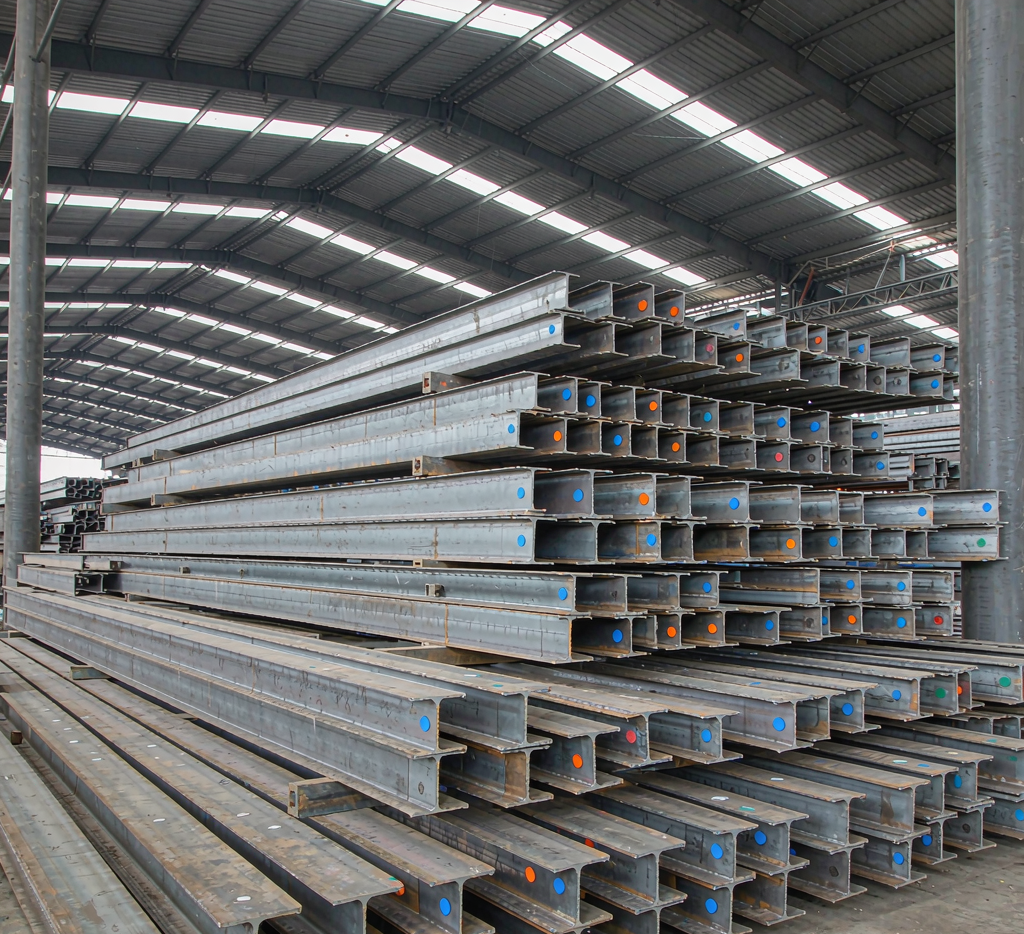
| Typical supply form | Plate, beam, channel, bar | Plate, section, bar |
2. Chemical Composition Difference
Both grades are weldable mild steels with low carbon content, but their chemistry limits differ. S355JR carries tighter controls on certain elements and allows a small alloying boost to reach its higher yield strength. The table below shows typical maximum limits; exact values depend on thickness.
| Element | A36 (max) | S355JR (max) |
|---|---|---|
| Carbon (C) | 0.26% | 0.24% (up to 0.22% for some thicknesses) |
| Manganese (Mn) | — | 1.60% |
| Silicon (Si) | 0.40% | 0.55% |
| Phosphorus (P) | 0.04% | 0.035% |
| Sulfur (S) | 0.05% | 0.035% |
| Copper (Cu, when specified) | 0.20% | 0.55% |
Note that A36 has no mandatory manganese minimum, while S355JR relies on manganese and silicon to lift yield strength. Both keep carbon low enough for straightforward welding without preheat in most thicknesses.
3. Yield and Tensile Strength
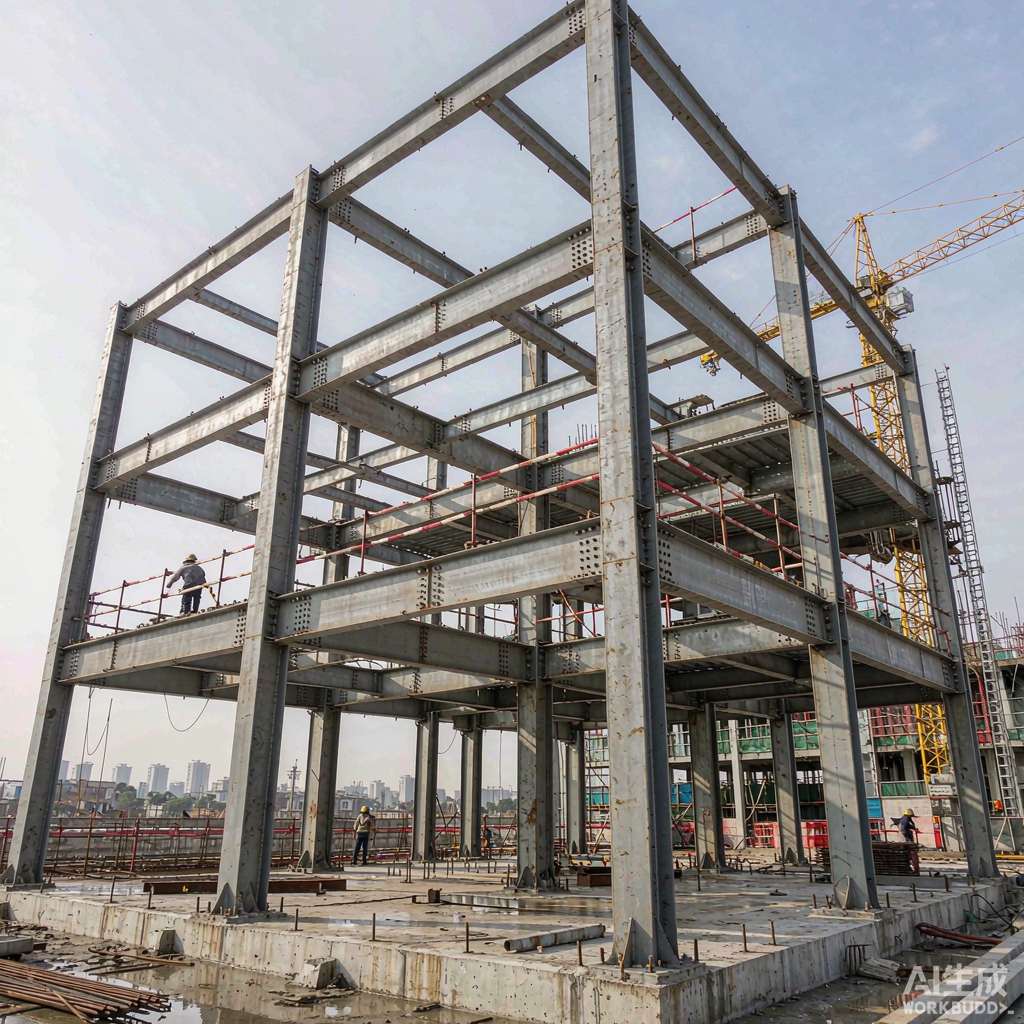
The headline difference is yield strength. S355JR delivers roughly 40% higher minimum yield than A36 (355 MPa vs 250 MPa). For a designer this means smaller sections, lighter structures and lower transport cost — provided the local code permits S355JR. Tensile strength overlaps: both grades sit around 400–550 MPa ultimate.
| Property | A36 | S355JR |
|---|---|---|
| Yield strength (thickness ≤16 mm) | 250 MPa | 355 MPa |
| Tensile strength | 400–550 MPa | 470–630 MPa |
| Elongation | 20%+ | 17%+ |
4. Weldability and Fabrication
Both grades are considered easily weldable with common processes (SMAW, GMAW, FCAW, SAW). Because carbon equivalents are low, preheat is rarely required below about 25 mm thickness. The main fabrication caution with S355JR is controlling heat input so the higher-strength zone is not softened near the weld. A36 is more forgiving and is the grade most North American welders cut, drill and bolt every day.
5. Impact Toughness and Low-Temperature Use
This is where the two diverge sharply. S355JR carries a mandatory Charpy V-notch impact requirement of 27 joules at +20 °C (the “JR” subgrade). A36 has no room-temperature impact requirement at all. If your structure faces low ambient temperatures, S355JR’s JR grade is still limited; you would step up to S355J0 (−20 °C) or S355J2 (−40 °C). For A36 in cold service, Charpy testing must be separately specified.
6. Cost and Availability
On a per-tonne basis the two grades trade at similar levels because both are commodity mild steels. A36 is usually the cheaper and faster option inside the Americas due to local mill capacity. S355JR is cheaper and more available inside the European and EN-following markets. The real cost difference appears in shipping and compliance: importing S355JR into the USA to meet an A36 job rarely makes sense, and vice versa.
7. When to Choose A36 vs S355JR
| Situation | Pick |
|---|---|
| Project designed to AISC / US building code | A36 |
| Project designed to Eurocode EN 1993 | S355JR |
| Maximize strength-to-weight, minimize steel tonnage | S355JR |
| General, non-critical structural framing in the Americas | A36 |
| Need guaranteed room-temperature impact toughness | S355JR (JR or higher) |
8. Equivalent Grades Across Other Standards
Because A36 and S355JR are so common, most other national standards carry near-equivalents. Knowing them helps when a project specifies one system but your nearest mill rolls another. The table below is a practical, not exact, cross-reference — always confirm chemistry and impact requirements before substituting.
| Standard | Near-equivalent to A36 | Near-equivalent to S355JR |
|---|---|---|
| JIS G3101 | SS400 | SM490 (closer to S355) |
| GB/T 700 | Q235B | Q355B |
| IS 2062 (India) | IS 2062 E250 | IS 2062 E350 |
| GOST 535 | St3sp | 09G2S |
9. Machining and Surface Treatment
Both grades machine readily, but S355JR’s higher strength means slightly more tool pressure and slower feeds than A36 for the same cut. For exposed structures, both can be primed, galvanized or painted; S355JR in thinner sections is sometimes specified with a weather-resistant variant when painting is to be avoided. Surface preparation to Sa 2.5 is recommended before any coating to guarantee adhesion.
10. Sourcing and Mill Certificates
When you buy either grade for structural use, insist on a mill test certificate (EN 10204 3.1 minimum, 3.2 with surveyor attendance for critical jobs). The certificate should show the actual heat analysis, yield and tensile results, and — for S355JR — the Charpy impact values. Reputable mills also tag every bundle with the heat number so a failed test can be traced to a specific cast.
11. Common Mistakes When Substituting
The three errors we see most: (1) assuming A36 and S355JR are “basically the same” and swapping them without re-checking section sizes; (2) forgetting that A36 has no impact test, so using it in cold climates where S355JR was specified creates a fracture risk; (3) mixing design codes — you cannot simply drop a Eurocode S355JR member into an AISC A36 design without re-analysis. When in doubt, ask the engineer of record to approve any grade change in writing.
12. Design Code Considerations
The choice between A36 and S355JR is rarely only about the steel; it is about the design code wrapped around it. A36 is used with the AISC Steel Construction Manual and US building codes, where member capacity is checked against A36’s 36 ksi yield. S355JR is used with Eurocode EN 1993, where partial safety factors and the higher 355 MPa yield change every member size. A structure designed in one system cannot simply swap steel for the other without re-running the entire design, because safety factors, deflection limits and connection designs all differ. This is why most import/export mismatches trace back to a code assumption rather than the material itself.
13. Sustainability and Recycling
Both A36 and S355JR are among the most recycled materials on the planet. Structural steel is typically made with a high scrap charge and is fully recyclable at end of life with no loss of properties, which supports green-building credits and circular-economy goals. Mills increasingly offer environmental product declarations and embodied-carbon data, and specifying locally available grade (A36 in the Americas, S355JR in Europe) reduces transport emissions. For projects chasing LEED or BREEAM points, the recyclability and regional sourcing of the chosen grade are part of the submission.
14. Price Drivers and Market Notes
The price of either grade tracks the global steel index, iron ore and scrap costs, and freight. A36 benefits from deep North American melt capacity, while S355JR benefits from European and Turkish production. During tight supply, S355JR can command a premium because of its impact-testing and tighter chemistry. Savvy buyers lock pricing with mill or stockist agreements and phase purchases to avoid peak seasons. Because the two grades are largely interchangeable in chemistry, arbitrage between them is possible when one region is oversupplied — provided the design code permits the substitution.
15. Final Recommendation
If your project follows US codes, specify A36 and enjoy the widest availability and lowest cost. If it follows Eurocode or you want to minimise steel tonnage and weight, S355JR is the stronger, leaner choice. Either way, document the grade, confirm the mill certificate, and never substitute without the engineer’s written approval. Correct specification at the start is far cheaper than rework after a rejected shipment.
16. A Worked Cost Comparison
To make the abstract comparison concrete, consider a 10-tonne structural frame. At a theoretical 355 MPa yield, S355JR needs roughly 30% less section area than A36 to carry the same load, so the frame might use 7 tonnes of S355JR instead of 10 tonnes of A36. If both steel grades cost the same per tonne, S355JR saves 3 tonnes of material, plus the freight, handling and painting tied to that weight. The saving shrinks if S355JR carries a regional premium, but in European and Middle Eastern markets where S355JR is the default, it is usually the cheaper total solution. The break-even is a calculation every estimator should run rather than assuming the familiar grade is cheapest.
17. Stock Availability by Region
Availability follows the local code. In the United States, A36 is on every service-center shelf in plates, beams, channels and bars, with next-day delivery common. In Europe and most of Asia, S355JR is the stock grade and A36 must be imported or substituted. This matters for lead time: specifying the off-system grade can add weeks and a freight cost. Smart buyers align the steel grade with the project’s geographic supply base unless the design absolutely requires otherwise, and they confirm mill lead times before freezing the bill of materials.
18. Welding Consumables for Each Grade
Welding A36 typically uses E70XX mild-steel electrodes and standard GMAW wires, which are cheap and universally available. Welding S355JR, with its higher strength, calls for matching-strength consumables and closer control of heat input and interpass temperature to preserve the heat-affected zone. Preheat is rarely needed below 25 mm for either, but S355JR’s tighter chemistry demands cleaner procedure records. The consumable cost difference is modest, but the documentation and qualification burden is higher for S355JR, which estimators should include.
19. Coating and Painting Preparation
Both grades accept the same surface-prep and coating systems, but their different strengths change the design thickness allowance. Because S355JR sections are lighter, any corrosion allowance eats a larger fraction of the section, so specifiers sometimes add a small thickness margin or a more robust coating. Blast cleaning to Sa 2.5 and a zinc-rich primer followed by a polyurethane topcoat is standard for exposed structural steel. Whichever grade you choose, tying the coating specification to the steel order early prevents a clash between the fabricator’s surface condition and the painter’s requirements.
20. Frequently Overlooked Specification Points
Beyond grade and yield, buyers forget to state impact temperature, certified-mill-test level, and traceability tags. A36 with a separately specified Charpy test can serve cold-climate jobs that otherwise default to S355JR. S355JR ordered without the subgrade letter (JR/J0/J2) leaves the impact level ambiguous. Writing the full designation — grade, subgrade, standard, certificate level — on every purchase order removes these ambiguities and is the single most effective way to avoid a rejected or non-compliant delivery.
21. Lead Time and Minimum Order Considerations
Beyond price and strength, lead time and minimum order quantity shape the practical choice. A36 from a local service center can ship in days, while importing S355JR into a non-EU market may mean mill lead times of several weeks and a container minimum. For small, urgent jobs A36’s shelf availability wins; for large, planned projects the material saving of S355JR justifies the wait. Buyers should weigh the whole supply chain — not just the steel price — when committing a grade, and should confirm mill lead times before freezing the design so the structure is not delayed by a late steel order.
22. Quick Decision Guide
Use this summary to choose quickly: if the job follows US codes and is non-critical, A36 is simplest and cheapest; if it follows Eurocode, needs less weight, or requires guaranteed room-temperature toughness, S355JR is correct. Always write the full grade, subgrade and certificate level on the order, and obtain the engineer’s written approval before any substitution. With those basics covered, either grade will perform reliably for decades of structural service, and the choice becomes a matter of code, weight and supply rather than quality.
23. Industry Trends in Structural Steel
Structural steel is shifting toward higher grades and lower embodied carbon. Mill-certified, traceable material is now expected on most commercial jobs, and digital material passports are emerging that carry the mill test data through the whole asset life. Both A36 and S355JR sit comfortably in this trend — they are recyclable, widely available and well documented — but specifiers increasingly choose the leaner S355JR where codes allow, to cut weight and emissions. Staying current with these trends helps buyers specify steel that meets both today’s codes and tomorrow’s sustainability mandates without rework.
24. How to Read a Mill Test Certificate
A mill test certificate is only useful if you read it. Check that the grade and standard on the certificate match the purchase order, that the heat number on the certificate matches the bundle tag, and that the reported yield, tensile and elongation meet the minimums. For S355JR, confirm the Charpy values and test temperature match the subgrade you ordered. A 3.2 certificate adds an independent surveyor’s sign-off. Treating the MTC as a checkable document rather than paperwork is the simplest way to catch non-compliant steel before it is built in.
25. Huaxia-Steel Supply Capability
Huaxia-Steel supplies both A36 and S355JR equivalent grades (including Q235B and Q355B) with full mill certification, cutting, drilling and export packing. Our mill-direct model removes distributor margins and lets us match exact sections to your bill of materials, with third-party inspection available on request. Whether your project follows AISC or Eurocode, we can align the steel grade, documentation and delivery to your market, helping you avoid the substitution and compliance pitfalls described above.
Frequently Asked Questions
Can A36 be substituted for S355JR?
Only with the responsible engineer’s approval. S355JR has a higher yield strength and a mandatory impact test; replacing it with A36 reduces capacity and removes the toughness guarantee, so section sizes usually must increase.
Which is better for welding?
Both weld easily. A36 is slightly more forgiving because it has no impact-grade constraint to protect, but either is fine with standard low-hydrogen practice.
Is S355JR stronger than A36?
Yes. S355JR’s minimum yield is 355 MPa versus A36’s 250 MPa, roughly 40% higher, which lets designers use lighter sections.
Do I need an MTC for both grades?
For structural use, a 3.1 or 3.2 mill test certificate is strongly recommended for both and is often contractually required, especially for S355JR exported under EN standards.
Get a Mill-Direct Quote on Carbon Steel
Huaxia-Steel supplies the full range of carbon steel products with mill test certificates, third-party inspection and worldwide export. Tell us your grade, size and quantity — we respond within one business day.