AISI 1020 vs 1045 Carbon Steel: Which Grade Fits Your Part?
AISI 1020 vs 1045 Carbon Steel: Which Grade Fits Your Part?
Choosing between AISI 1020 and AISI 1045 is one of the most common decisions in carbon steel sourcing. Both are plain carbon steels, both are widely stocked, and both machine reasonably well, yet they behave very differently once a part has to carry load, resist wear or survive heat treatment. Picking the wrong one either wastes money on properties you do not need or leaves you with a component that fails early in service.
This guide compares 1020 and 1045 across chemistry, mechanical properties, machinability, weldability, heat treatment, cost and typical applications. It ends with the exact wording to put on a purchase order so your mill or stockist ships the right grade the first time.
What Is AISI 1020 Carbon Steel?
AISI 1020 is a low-carbon steel with a nominal carbon content of 0.20 percent. The low carbon keeps it soft, tough and highly formable, with excellent weldability and a predictable response to case hardening. It is one of the default grades for structural, shafting and general engineering work where strength requirements are moderate and fabrication matters more than wear resistance.
Because 1020 contains so little carbon, it cannot be through-hardened to high hardness by quenching. Instead it is usually supplied as hot rolled, cold drawn or normalized, and when a wear-resistant surface is required it is carburized or carbonitrided to build a hard case over a tough, ductile core.
What Is AISI 1045 Carbon Steel?
AISI 1045 is a medium-carbon steel with roughly 0.45 percent carbon, placing it in the same family as EN C45 and JIS S45C. That extra carbon raises strength and hardness substantially and makes 1045 responsive to quenching and tempering, so it is a workhorse grade for shafts, gears, axles, pins and other load-bearing parts.
The trade-off is lower ductility and reduced weldability. 1045 can be welded, but it needs preheat, a controlled interpass temperature and often a post-weld stress relief to avoid cracking in the heat-affected zone. It also distorts more during heat treatment than 1020.
Chemical Composition: 1020 vs 1045
Element (%)
AISI 1020
AISI 1045
Carbon
0.18 – 0.23
0.43 – 0.50
Manganese
0.30 – 0.60
0.60 – 0.90
Phosphorus (max)
0.040
0.040
Sulfur (max)
0.050
0.050
Silicon
0.10 – 0.30
0.10 – 0.30
The only major difference is carbon. Both grades keep phosphorus and sulfur low to preserve toughness and machinability, and both are classified as plain carbon steels with no deliberate alloying additions. If a supplier offers a 1045 that is close to the top of the carbon range, expect higher hardness and lower toughness after quenching.
Mechanical Properties Compared
Property
AISI 1020 (hot rolled)
AISI 1045 (hot rolled)
Tensile strength
approx. 420 MPa
approx. 585 MPa
Yield strength
approx. 350 MPa
approx. 310 MPa
Elongation in 50 mm
approx. 25%
approx. 12%
Brinell hardness
approx. 120 HB
approx. 170 – 190 HB
Typical condition
Hot rolled / normalized
Hot rolled / normalized
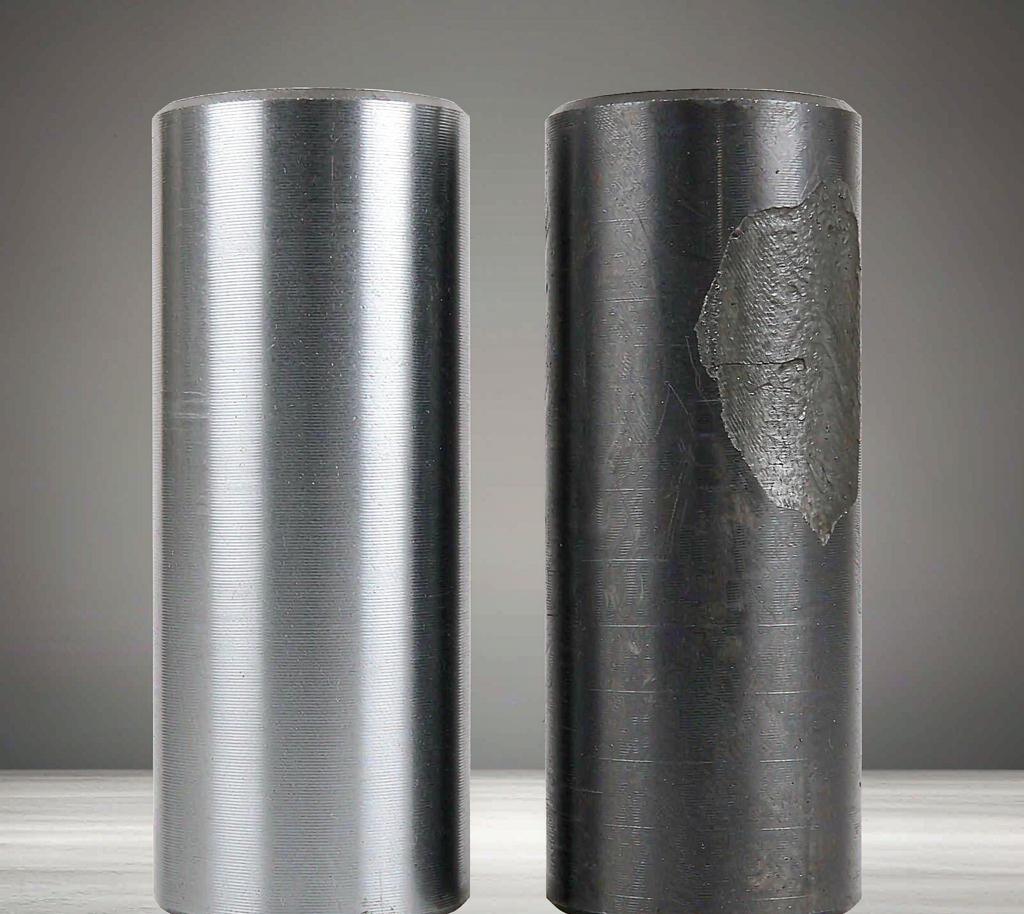
Hot-rolled 1045 is noticeably stronger and harder than 1020, however its yield-to-tensile ratio is higher and its elongation is roughly half, so it absorbs far less deformation before fracture. After quenching and tempering, 1045 can reach 300 to 350 HB and tensile strengths above 900 MPa, whereas 1020 only gains hardness through a shallow carburized case of typically 0.3 to 0.8 mm.
5 Key Differences That Decide Your Choice
Strength and hardness. 1045 is roughly 35 to 40 percent stronger in the as-rolled condition and can be hardened through the section; 1020 cannot.
Heat treatment response. 1045 responds to quench and temper; 1020 responds only to surface case hardening.
Machinability. 1020 cuts easily but can be gummy; 1045 in the annealed or normalized condition machines to a better finish and holds tight tolerances.
Weldability. 1020 welds with almost no precautions; 1045 needs preheat, controlled cooling and often stress relief.
Cost and availability. 1020 is usually cheaper per ton, while 1045 can save money downstream by eliminating a carburizing step.
In practice the decision usually comes down to one question: does the part need hardness through its full section, or only on the surface? If it needs through-hardness or high strength after heat treatment, choose 1045. If it needs to be formed, welded or carburized, choose 1020.
Machinability, Weldability and Heat Treatment
1020 machines cleanly and welds with almost no special precautions, which is why fabricators reach for it for brackets, frames and welded assemblies. Its main limitation is that it will not harden through, so it is a poor choice for high-wear surfaces unless you invest in carburizing or nitriding. Cold-drawn 1020 also offers good dimensional stability for shafting that will not be heat treated.
1045 machines well in the annealed or normalized condition and can take a mirror finish, but its higher carbon makes it more prone to cracking during welding and to distortion during heat treatment. When you need a hard, wear-resistant surface with a tough core, quench-and-temper 1045 is the economical answer, and induction hardening can raise surface hardness to 50 HRC or more on selected areas.
A simple rule of thumb: if the drawing calls for a welded assembly or a formed bracket, 1020 is usually correct. If the drawing calls for a machined part that must be hardened, ground or carry heavy alternating loads, 1045 is usually correct. Where the part is both welded and highly loaded, consider a low-alloy grade such as 4140 rather than forcing either plain carbon steel into a role it handles poorly.
Cost, Availability and Lead Time
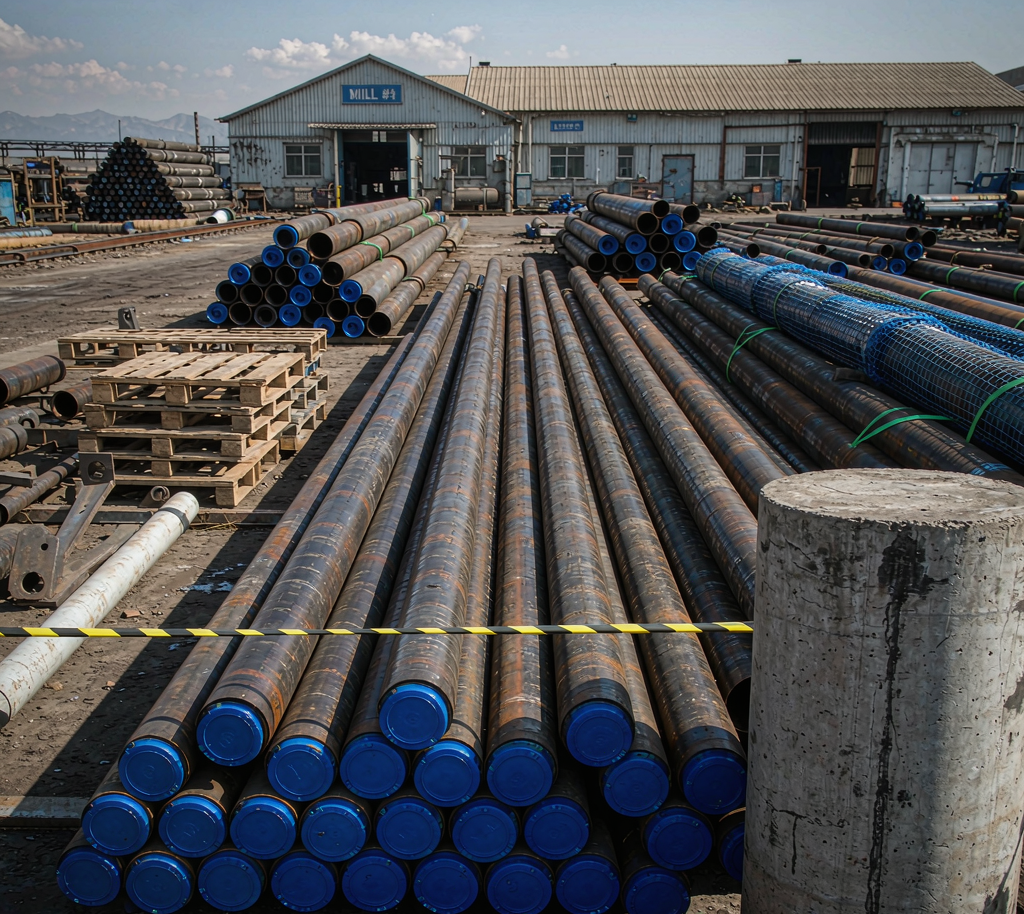
1020 and 1045 are both commodity grades stocked by most service centers in round bar, flat bar, plate and tubing, so availability is rarely the deciding factor. Per-ton pricing is usually close, with 1045 carrying a modest premium because of its higher carbon and tighter processing. The real cost difference appears downstream: if 1045 lets you skip a carburizing step, it often wins on total landed cost even at a higher bar price.
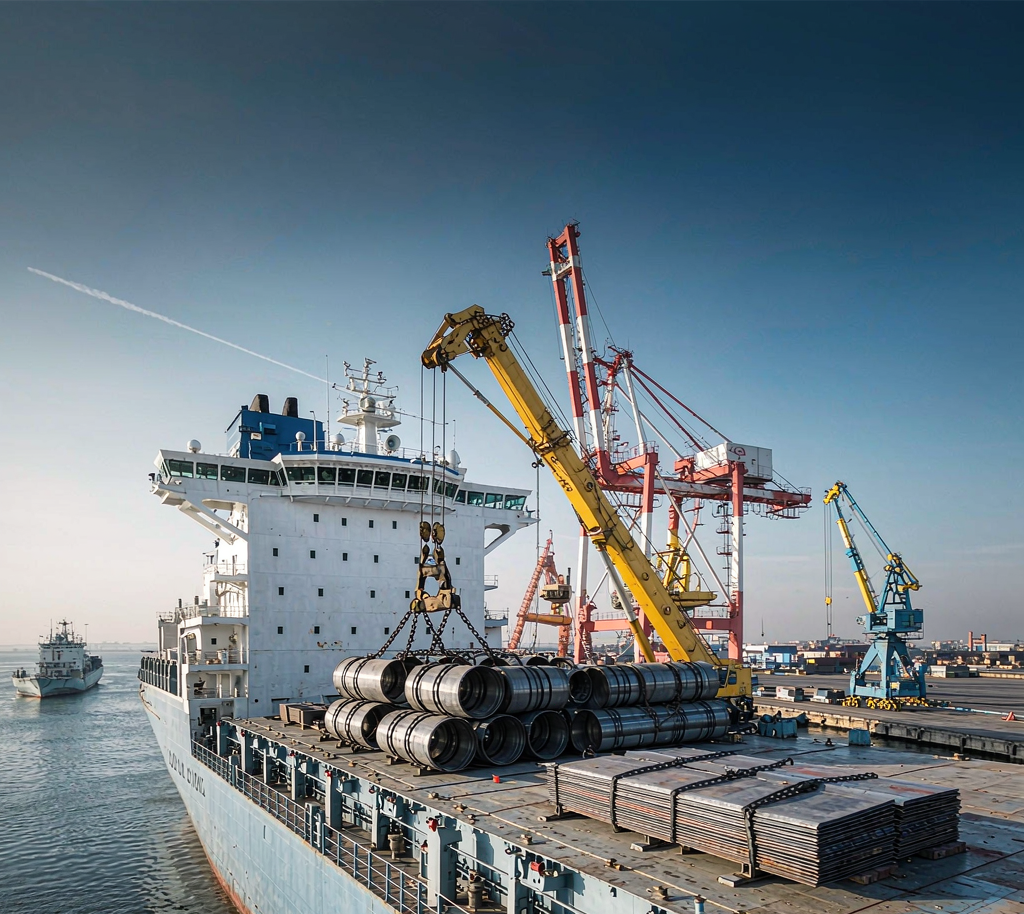
Lead time depends on form and size. Common diameters in both grades ship from stock within days, while large forgings, cut-to-length plate and non-standard sizes typically run two to four weeks from a mill. For export orders, add transit time and confirm whether your supplier quotes EXW, FOB or CIF before comparing prices.
How to Specify 1020 vs 1045 on a Purchase Order
State the grade and standard clearly, for example AISI/SAE 1020 or 1045, or ASTM A29 chemistry if you are buying bar stock.
Specify product form, dimensions, length and tolerances so the supplier cannot substitute a near size.
State the condition required: hot rolled, cold drawn, normalized, annealed, or quenched and tempered.
Require a mill test certificate with heat number and chemistry for every lot.
Define a hardness or mechanical property target if the part is safety-related, and agree the test method in advance.
A purchase order that lists only a grade name invites substitution, because 1020 and 1045 are sometimes offered in adjacent conditions that look identical on the shelf. Adding condition, tolerance and certification removes that ambiguity and protects you in a claim.
Frequently Asked Questions
Is 1045 stronger than 1020?
Yes. Hot-rolled 1045 is roughly 35 to 40 percent stronger than 1020, and after quenching and tempering the gap widens to more than double. 1020 only approaches 1045 hardness through a carburized case, not through its full section.
Can AISI 1020 be hardened?
1020 cannot be through-hardened by quenching because of its low carbon. It can be case hardened by carburizing or carbonitriding to produce a hard surface layer over a soft, tough core, which is the usual route for wear parts made from 1020.
Which grade welds better, 1020 or 1045?
1020 welds far more easily. 1045 requires preheat, controlled cooling and often a post-weld stress relief, and even then the heat-affected zone is more crack-sensitive. If welding is central to the design, 1020 or a low-carbon alternative is the safer choice.
Is AISI 1045 the same as C45?
They are close equivalents. AISI 1045 and EN C45 both target about 0.45 percent carbon, but the standards differ slightly in chemistry limits and testing. For most applications they are interchangeable, but always confirm the governing standard on the certificate.
Hardness After Quenching and Tempering
The practical difference between the two grades is most obvious after heat treatment. Because 1020 has too little carbon to form martensite, quenching it produces little or no hardness increase, and any hardening must come from a carburized case. AISI 1045, with its 0.45 percent carbon, forms martensite readily and can be quenched and tempered to a wide range of hardness levels simply by changing the tempering temperature.
Tempering temperature (1045)
Typical hardness
Approx. tensile strength
As quenched
55 – 60 HRC
brittle, not used as-is
200 C
50 – 55 HRC
1700 – 1900 MPa
400 C
40 – 45 HRC
1300 – 1500 MPa
550 C
30 – 35 HRC
1000 – 1100 MPa
650 C
22 – 26 HRC
800 – 900 MPa
This flexibility is why 1045 dominates shafting and power-transmission parts. A designer can specify a hardness that balances wear resistance against toughness and fatigue life, then verify it on the certificate. With 1020, the only hardness lever is case depth and case hardness, and the core stays soft no matter what.
Carburizing vs Through-Hardening: Which Costs Less?
A common mistake is to assume 1020 is always the cheaper option. It is cheaper per kilogram, but if the part needs a hard surface, 1020 must be carburized, which adds furnace time, atmosphere control, post-hardening and often straightening. For a small part in high volume, that extra processing can easily exceed the price difference between the two bars.
Through-hardening 1045 is a simpler route: austenitize, quench, temper, and the part is done. The trade-off is that 1045 is more prone to distortion and cracking, so complex shapes may need fixture quenching or a slower quench oil. For simple shafts and pins, the total cost of 1045 quenched and tempered is frequently lower than carburized 1020.
Where 1020 wins economically is in parts that need only a thin wear surface over a very tough core, such as bushings, chain pins and small gears that see impact. There the combination of a hard case and a soft core is a functional requirement, not just a cost decision, and carburizing is the correct process rather than a compromise.
Case Depth and Wear Life in 1020 Parts
When 1020 is carburized, case depth is usually specified between 0.3 and 0.8 mm for small and medium parts, and up to 1.5 mm for larger components. Too shallow a case wears through quickly under high contact stress; too deep a case leaves too little tough core and can cause the case to spall under impact. The right depth depends on the load, the contact geometry and the expected service life.
Wear life is not only about hardness. Residual austenite, surface carbon content and the tempering after carburizing all affect performance. A 1020 part with a 0.5 mm case at 58 HRC and a well-tempered core will typically outlast a 1045 part that was over-hardened and under-tempered, even though the 1045 is harder on paper.
Common Substitution Risks When Buying
The two grades are sometimes substituted because they look identical in the warehouse. A 1020 bar and a 1045 bar of the same diameter have the same surface finish after cold drawing, and nothing on the bar identifies the grade unless it is colour-coded or tagged. That is why the mill certificate and heat number matter more than the appearance.
Wrong grade supplied. A 1045 bar delivered in place of 1020 will machine harder, weld poorly and may crack if the fabricator follows a 1020 welding procedure.
Wrong condition supplied. Annealed 1045 substituted for normalized 1045 will be softer than specified and may not meet hardness after heat treatment.
Chemistry at the limit. A 1045 at 0.50 percent carbon behaves differently from one at 0.43 percent, so the certificate carbon value should be checked against the drawing.
For safety-related parts, a positive material identification check by spectrometer at goods-in is a cheap way to confirm the grade before it enters production. For non-critical parts, a certificate review plus a hardness spot check is usually sufficient.
Worked Example: Gear Shaft in 1020 vs 1045
Consider a gear shaft of 40 mm diameter that must carry a bending load and run in a bearing. If the design calls for a hard bearing journal and a tough shaft, a 1045 quenched and tempered to 28 to 32 HRC gives a good balance, and the journals can be induction hardened locally to 50 HRC or more. The shaft is machined once, heat treated and ground, with no carburizing step.
If the same shaft were made from 1020, it would need carburizing to harden the journals, followed by a core refine and a final grind. The core would remain soft, which is fine for toughness but limits the bending strength unless the section is increased. In most cases the 1045 route is simpler and cheaper for this geometry.
The exception is a shaft that must absorb shock loads or be welded to a flange. There, the soft core and excellent weldability of 1020 can justify the extra carburizing step, and the design should be adjusted for the lower core strength. The lesson is that the grade choice follows from the function, not from the price per kilogram.
Surface Finish and Machining Allowance
Both grades machine to a good surface finish, but the finish you can achieve depends on the condition you buy. Cold-drawn 1020 and 1045 bars have a smooth, accurate surface that reduces machining allowance and improves concentricity, while hot-rolled bars carry mill scale and need more material removed. For precision shafts, cold-drawn stock is often worth the premium because it cuts cycle time.
When ordering bar for machining, specify the machining allowance and whether the surface is to be descaled or bright. A hot-rolled bar with scale can hide surface defects that only appear after the first cut, so buyers of critical parts often request peeled or turned bar. The grade sets the properties, but the condition sets the cost and the risk.
Quick Selection Summary
If you only remember one thing, remember this: 1020 is chosen for formability, weldability and a tough core with a hard case; 1045 is chosen for through-hardness, higher strength and machined load-bearing parts. Both are commodity grades, so the decision is about function and total processing cost, not about scarcity or price per ton.
For a drawing that specifies a welded bracket, a formed panel or a carburized bushing, 1020 is the safe default. For a drawing that specifies a quenched and tempered shaft, a gear blank or a pin that must resist wear through its section, 1045 is the safe default. When the requirement falls between the two, a low-alloy grade is usually a better answer than stretching either plain carbon steel.
Get a Quote from Huaxia-Steel
Factory-direct carbon steel with MTR, third-party inspection and fast export shipping. Send your grade, size, quantity and destination — we return a firm quote within 24 hours.
If you require further information about our metal sheet products or architectural projects, please don’t hesitate to leave your contact details and message here.
Our team of experts will respond within 24 hours to continue the discussion and provide you with any additional information you requires.