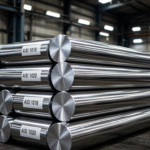
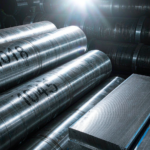
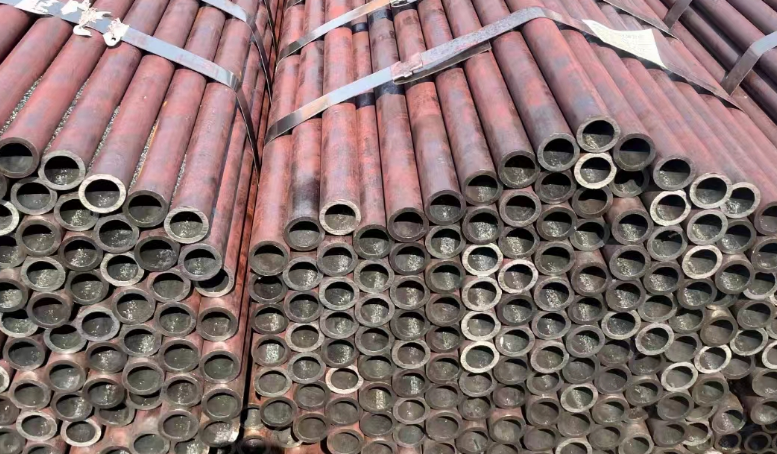
Choosing between AISI 1020, AISI 1045 and AISI 1018 carbon steel can directly affect part performance, machining cost and delivery time. These three grades are among the most widely ordered low- to medium-carbon steels for shafts, bolts, brackets, and machined components. This guide compares their chemical composition, mechanical properties, hardness, machinability, weldability and typical price range so you can specify the right material with confidence.
1. Chemical Composition and Carbon Content
The main difference between these grades is carbon content. AISI 1018 contains approximately 0.14–0.20% carbon, AISI 1020 contains 0.18–0.23% carbon, and AISI 1045 contains 0.43–0.50% carbon. Higher carbon increases strength and hardness but reduces ductility and weldability.
Grade
C (%)
Mn (%)
P max
S max
AISI 1018
0.14–0.20
0.60–0.90
0.040
0.050
AISI 1020
0.18–0.23
0.30–0.60
0.040
0.050
AISI 1045
0.43–0.50
0.60–0.90
0.040
0.050
2. Mechanical Properties and Hardness
AISI 1045 offers the highest tensile strength, typically 570–700 MPa in the hot-rolled condition, while AISI 1020 and 1018 are softer at around 420–490 MPa. Hardness follows the same trend: 1045 reaches 170–210 HB, whereas 1020 and 1018 sit around 120–160 HB in the normalized state.
AISI 1018: Good balance of strength and ductility, ideal for carburized parts.
AISI 1020: Slightly higher strength than 1018, widely used for cold-formed and welded parts.
AISI 1045: Higher strength and wear resistance, suitable for axles, gears and hydraulic shafts.
3. Machinability and Weldability
AISI 1018 and 1020 machine easily. Their lower carbon content produces smaller chips, longer tool life and better surface finish. AISI 1045 is tougher on tools and often requires slower cutting speeds or heat treatment before precision machining. For welding, 1018 and 1020 are readily weldable with standard electrodes. AISI 1045 can be welded but requires preheating and controlled cooling to avoid cracking in the heat-affected zone.
4. Typical Applications
AISI 1018 is common in pins, studs, couplings and low-stress machinery parts. AISI 1020 appears in structural tubing, automotive brackets, and general engineering parts. AISI 1045 is preferred for stronger components such as crankshafts, hydraulic rams, pump shafts, and sprockets where hardness and fatigue resistance matter.
5. Price and Availability from Chinese Mills
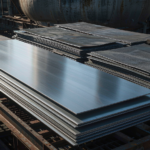
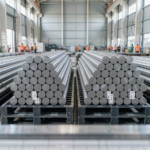
Chinese mills produce all three grades in round bar, square bar, flat bar, and plate formats. AISI 1045 generally commands a 5–12% premium over 1020 and 1018 due to higher alloy cost and slower rolling. Lead times for standard sizes are typically 15–25 days ex-mill, with export-ready packing and mill test certificates available.
6. Which Grade Should You Choose?
Select AISI 1018 or 1020 when weldability, formability and cost are the priorities. Choose AISI 1045 when the part needs higher strength, hardness or wear resistance and you can accept additional machining or heat-treatment steps. If your drawing calls for carburizing or induction hardening, 1018 and 1020 respond better to case-hardening processes.
Frequently Asked Questions
Is AISI 1045 stronger than AISI 1020?
Yes. AISI 1045 has roughly 30–40% higher tensile strength and hardness than AISI 1020 due to its higher carbon content.
Can AISI 1020 be heat treated?
It can be normalized or annealed, but it is not ideal for through-hardening. Case hardening is possible if a hard surface is required.
Which grade is best for machining?
AISI 1018 and 1020 offer the best machinability. AISI 1045 machines satisfactorily but wears tools faster.
Are these grades equivalent to Chinese Q235 or 45# steel?
AISI 1020 is close to Chinese 20# steel. AISI 1045 is close to Chinese 45# steel. Q235 is more similar to ASTM A36 or European S235JR.
Do Chinese suppliers provide AISI material certificates?
Yes. Reputable suppliers issue mill test certificates with chemical analysis, mechanical test results and heat numbers.
Ready to Source Carbon Steel?
Get a Quote — contact Huaxia-Steel today for factory-direct pricing, mill test certificates, and reliable export delivery.
If you require further information about our metal sheet products or architectural projects, please don’t hesitate to leave your contact details and message here.
Our team of experts will respond within 24 hours to continue the discussion and provide you with any additional information you requires.