ASTM A210 Grade A1 vs Grade C vs ASTM A192 Carbon Steel Boiler Tube Specification Comparison
When procurement teams source seamless carbon steel tubes for boilers, superheaters and heat exchangers, ASTM A210 and ASTM A192 are the two dominant specifications that appear on mill certificates and RFQ packages. Although both standards cover seamless medium-carbon steel tubes for high-pressure service, they differ in chemistry limits, mechanical-property grades, heat-treatment requirements and typical wall-thickness ranges. Choosing the wrong grade can lead to tube rupture under cyclic thermal loading, weld cracking during header attachment or unnecessary cost inflation from over-specification.
This article provides a head-to-head comparison of ASTM A210 Grade A1, ASTM A210 Grade C and ASTM A192 seamless boiler tubes. We examine chemical composition, tensile and hardness requirements, heat-treatment state, dimensional tolerances, hydrostatic-test pressures and procurement best practices. Whether you are buying tubes for a coal-fired power plant, a waste-heat recovery boiler or a petrochemical steam generator, the selection rules in this guide will help you match the right grade to the right service condition.
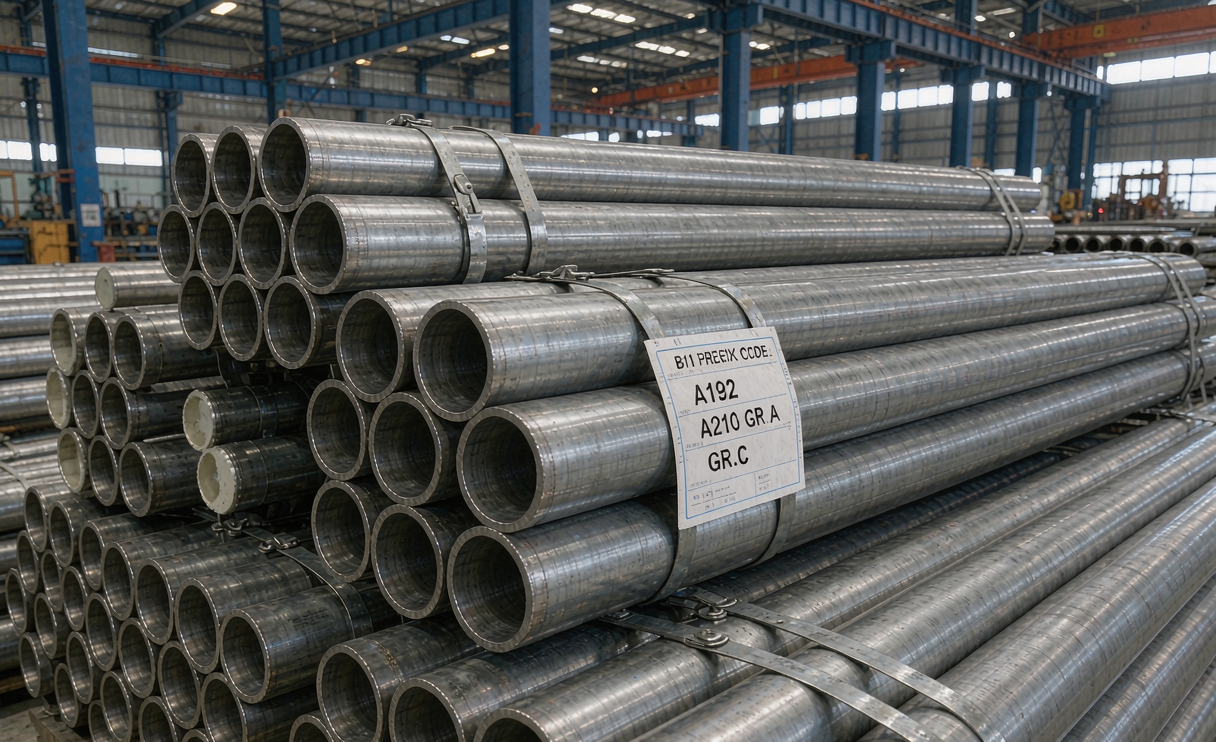
1. Scope and Design Philosophy of ASTM A210 and A192
ASTM A210 / A210M covers seamless medium-carbon steel boiler and superheater tubes. The standard is intended for tubes exposed to high temperatures and moderate pressures inside boiler water-walls, economisers and low-temperature superheaters. A210 tubes are normally supplied in the hot-finished or cold-finished condition and are expected to withstand internal pressures typical of drum-type boilers up to about 9.8 MPa (1,420 psi) design pressure.
ASTM A192 / A192M covers seamless carbon steel boiler tubes for high-pressure service. The carbon content is pushed slightly higher than A210, and the standard mandates a minimum tensile strength of 325 MPa (47 ksi) with a narrower scatter band. A192 is the default choice for high-pressure water-tube boilers, including once-through supercritical units where tube metal temperatures can exceed 540°C (1,004°F) and internal pressures reach 25 MPa (3,625 psi) or more.
Both specifications require seamless manufacture — either by hot piercing and rolling or by cold drawing with subsequent heat treatment. Welded tubes are not permitted under either standard. Buyers should note that A210 and A192 tubes are not interchangeable in ASME Boiler and Pressure Vessel Code (BPVC) Section I applications unless the specific grade is explicitly listed in the allowable-stress tables of ASME II-D.
2. Chemical Composition Comparison
The chemistry windows of A210 Grade A1, A210 Grade C and A192 overlap but are not identical. Small differences in carbon, manganese and silicon ranges affect weldability, oxidation resistance and creep strength at elevated temperature.
| Element | A210 Grade A1 | A210 Grade C | A192 |
|---|---|---|---|
| Carbon (C) % max | 0.27 | 0.35 | 0.06–0.18 |
| Manganese (Mn) % | 0.93 max | 0.29–1.06 | 0.27–0.63 |
| Phosphorus (P) % max | 0.035 | 0.035 | 0.035 |
| Sulfur (S) % max | 0.035 | 0.035 | 0.035 |
| Silicon (Si) % min | 0.10 | 0.10 | 0.25 min |
Key takeaway: A192 has the tightest carbon window (0.06–0.18 %) and the highest minimum silicon (0.25 %), which gives it better oxidation resistance in high-temperature steam. A210 Grade C permits up to 0.35 % carbon, providing higher strength but slightly reduced weldability. A210 Grade A1 sits in the middle with a 0.27 % carbon cap and a broad manganese tolerance.
Procurement teams should always verify the heat-analysis certificate against the ladle analysis. Re-melting and re-casting practices in Chinese EAF mills can push carbon toward the upper limit, especially for Grade C orders. If tubes will be welded to headers or steam drums, specify a carbon equivalent (CE) limit of 0.43 % max in the purchase order to avoid hydrogen-induced cracking in the heat-affected zone.
3. Mechanical Properties and Hardness Requirements
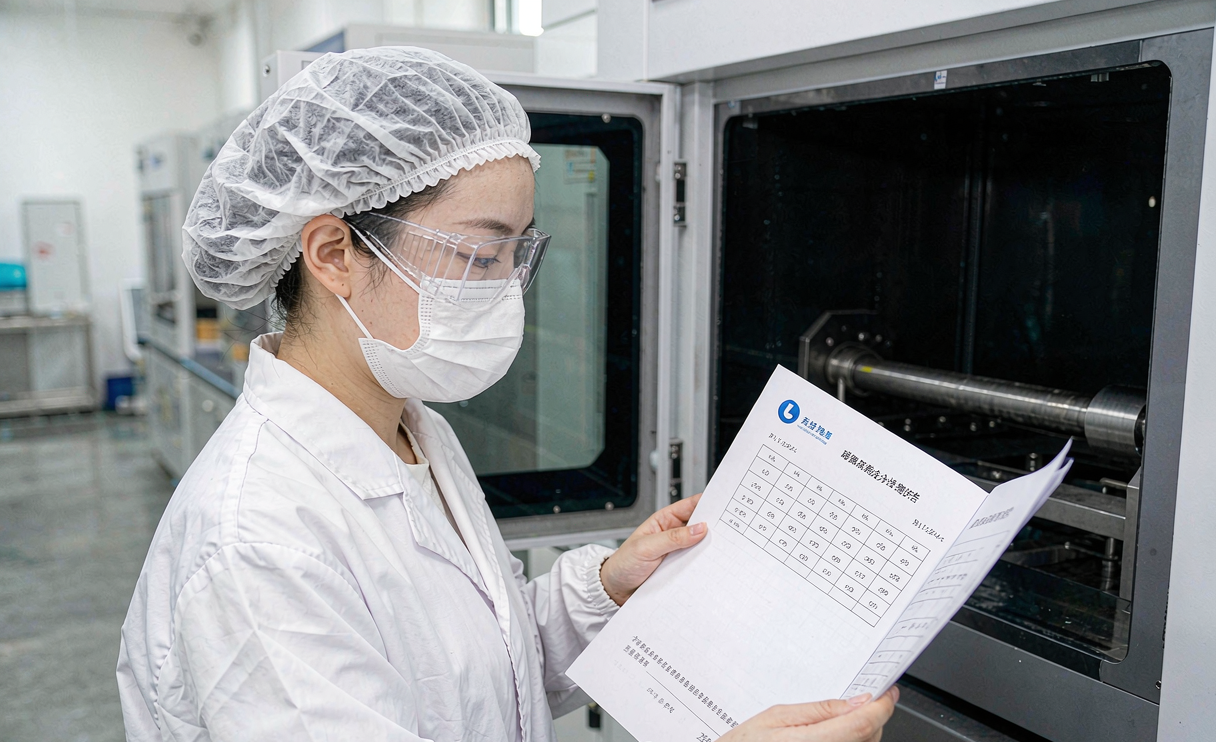
Mechanical-property requirements dictate whether a tube can withstand the design pressure and thermal stress cycles of boiler operation. All three grades require longitudinal tensile testing on every heat lot, but the target strength bands differ.
| Property | A210 Grade A1 | A210 Grade C | A192 |
|---|---|---|---|
| Tensile strength, min (MPa) | 255 | 275 | 325 |
| Yield strength, min (MPa) | 185 | 205 | 180 |
| Elongation in 2 in. min (%) | 30 | 30 | 35 |
| Hardness HRB max | 79 | 89 | 77 |
A192 demands the highest tensile strength (325 MPa minimum) but the lowest yield-to-tensile ratio, which gives it excellent plastic reserve before rupture — a critical safety margin in high-pressure drum boilers. A210 Grade C trades some ductility for higher yield strength (205 MPa), making it suitable for water-wall panels where tubes are supported at close intervals and deflection is constrained.
Hardness limits are enforced to guarantee that the microstructure remains predominantly ferrite-pearlite and has not been inadvertently transformed to untempered martensite by poor cooling control after final rolling. If a tube batch arrives with HRB readings above the maximum, reject the lot or demand a normalising heat treatment with re-test.
4. Heat Treatment and Microstructure
ASTM A210 tubes are typically supplied in the as-rolled or cold-drawn condition without mandatory normalising, provided the mechanical tests pass. However, many Chinese mills normalise A210 tubes as a matter of standard practice to ensure uniform ferrite-pearlite microstructure and to avoid banding. If tubes will be used in ASME BPVC Section I construction, specify normalising in the purchase order because the Code requires a homogeneous microstructure for cyclic-service approval.
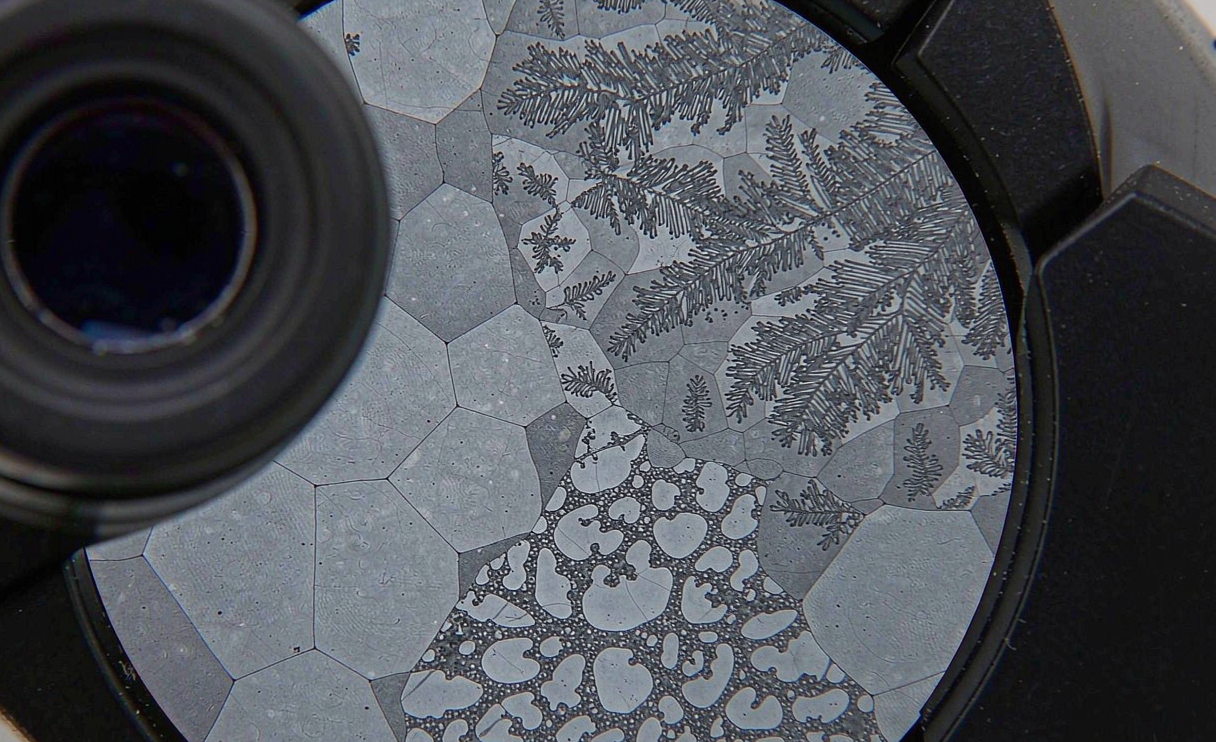
ASTM A192 tubes must be hot-finished or cold-finished and heat-treated. The standard permits normalising, full annealing or stress relieving as the final thermal cycle. In practice, most A192 tubes are normalised after cold drawing to refine grain size and to meet the 325 MPa tensile minimum consistently. Normalised A192 tubes exhibit an average ASTM grain size of 7–8, which is finer than as-rolled A210 and contributes to better creep rupture life above 500°C.
Buyers should request a metallographic report showing grain-size distribution and ferrite/pearlite ratio when sourcing A192 for supercritical boilers. A ferrite content below 15 % or pearlite banding thicker than 0.5 mm can indicate inadequate soaking time during normalising and may lead to premature creep failure.
5. Dimensional Tolerances and Wall Thickness Ranges
Both A210 and A192 cover outside diameters from 1/2 in. (12.7 mm) to 5 in. (127 mm) NPS, but the typical wall-thickness distributions differ by application. A210 is more commonly ordered in lighter walls (2.0–6.0 mm) for water-wall and economiser tubing, while A192 is frequently required in heavier walls (4.0–12.7 mm) for steam drums and high-pressure headers.
Standard dimensional tolerances per ASTM A450 / A450M (the general requirements specification referenced by both A210 and A192) are:
- Outside diameter (OD): ±0.40 mm for OD ≤ 38.1 mm; ±1 % for OD > 38.1 mm
- Wall thickness: ±10 % of nominal (but not less than ±0.20 mm)
- Length: ±6 mm for cut lengths up to 7.3 m; ±12 mm for lengths above 7.3 m
- Straightness: 1.5 mm per metre max (3 mm over 2 m)
For boiler retrofit projects where tubes must be threaded into existing tube sheets, specify OD tolerance class B (±0.25 mm) in the purchase order. Tighter tolerances add roughly 5–8 % to the tube cost but eliminate field reaming and reduce assembly time by 30–40 %.
6. Hydrostatic Test and Non-Destructive Examination
Every tube must pass a hydrostatic pressure test or be subjected to non-destructive examination (NDE) in lieu of hydrotest. The standard hydrotest pressure is calculated as:
P = 2 × S × t / D
where S is the allowable stress at test temperature (usually 50 % of specified minimum yield strength), t is the nominal wall thickness and D is the nominal outside diameter. For A192 tubes in 50.8 mm OD × 5.5 mm wall, the test pressure is typically 20–22 MPa (2,900–3,200 psi), held for minimum 5 seconds with no leakage or visible deformation.
Buyers can opt for eddy-current testing (ECT) or ultrasonic testing (UT) instead of hydrotest, provided the NDE method detects flaws equivalent to a 5 % wall-thickness notch. For supercritical boiler tubes, specify 100 % UT plus 100 % ECT dual coverage; the additional cost is approximately $120–$180 per metric ton but reduces the risk of in-service leak by two orders of magnitude according to EPRI failure databases.
7. Procurement Best Practices and Common Pitfalls
Sourcing A210 and A192 tubes from Chinese mills requires attention to certification authenticity, heat-treatment documentation and third-party inspection scope. Here are seven practical rules our procurement team applies to every boiler-tube order:
- Rule 1 — Specify the edition year. ASTM A210-19 and A192-17 are the current active editions. Older editions (A210-11, A192-02) lack the tightened sulfur and phosphorus limits introduced after 2015.
- Rule 2 — Demand MTC 3.2 for supercritical service. EN 10204 3.2 mill test certificates with mill+inspection-body dual signature are mandatory for tubes used in drum pressures above 18 MPa.
- Rule 3 — Confirm ASME II-D listing. Not every Chinese mill has ASME “S” stamp authorisation for A192. Verify the mill’s ASME certificate scope on the National Board website before placing the order.
- Rule 4 — Require cold-bend test reports. Boiler tubes are often bent to form water-wall panels. A 180° guided-bend test with a mandrel diameter of 2×t should show no cracks in the outer fibre.
- Rule 5 — Specify end finish. Plain-end tubes are cheaper but require field bevelling. Specify 30° V-bevel with 1.6 mm land for automatic TIG root welding.
- Rule 6 — Pack for sea humidity. Boiler tubes stored in tropical ports for 3–4 weeks before customs clearance can develop superficial rust. Require VCI film wrapping plus desiccant packs inside each bundle.
- Rule 7 — Order 5 % excess. Boiler-tube installation involves field cutting, sample extraction for lab verification and occasional handling damage. A 5 % extra quantity avoids expensive air-freight top-up shipments.
8. FAQ
Q1: Can A210 Grade C replace A192 in a high-pressure boiler?
No. A192 has a higher minimum tensile strength (325 MPa vs 275 MPa) and is the only grade listed in ASME II-D for design stresses above 12 MPa at 540°C. Substituting A210 Grade C would violate the Boiler and Pressure Vessel Code and invalidate insurance coverage.
Q2: Is normalising mandatory for A210 Grade A1?
ASTM A210 does not mandate normalising, but ASME BPVC Section I does for tubes in cyclic service. If the tubes will experience daily start-stop cycles, specify normalising and include a microstructure verification clause in the purchase order.
Q3: What is the price difference between A210 and A192?
A192 typically costs 8–15 % more than A210 Grade A1 and 5–10 % more than A210 Grade C, mainly because of the tighter chemistry control, mandatory heat treatment and higher non-destructive testing coverage. For a 50-tonne order, the premium is usually $8,000–$15,000.
Q4: Can A192 tubes be welded to A210 headers?
Yes, provided the welding procedure qualification (WPS/PQR) covers the carbon range of both grades and preheat of 150°C–200°C is applied. Post-weld heat treatment (PWHT) at 620°C–680°C for 1 hour per 25 mm wall is recommended to relieve residual stresses in the dissimilar-carbon joint.
Q5: How do I verify the mill certificate is genuine?
Cross-check the mill’s ISO 9001 registration on the certification body’s website (SGS, BV, TÜV). Verify the heat number against the mill’s production log via a third-party inspector. Request a photocopy of the original inspection report with the mill’s quality stamp — not a re-typed PDF.
Conclusion
ASTM A210 Grade A1, A210 Grade C and ASTM A192 serve distinct niches in the boiler-tube market. A210 Grade A1 is the economical choice for low-to-moderate pressure water-walls. A210 Grade C offers higher strength for economisers and low-temperature superheaters. A192 is the only rational choice for high-pressure, high-temperature drum boilers and supercritical units where tensile strength and creep resistance are non-negotiable.
At Huaxia-Steel, we supply A210 and A192 seamless boiler tubes from ASME-certified mills with full MTC 3.1/3.2 documentation, 100 % hydrostatic or UT testing, and optional normalising heat treatment. Contact our engineering team today for a material-selection review and competitive quotation tailored to your boiler design code and operating conditions.