ASTM A210 Gr A-1 Carbon Steel Boiler Tube — Seamless Supplier | Huaxia-Steel
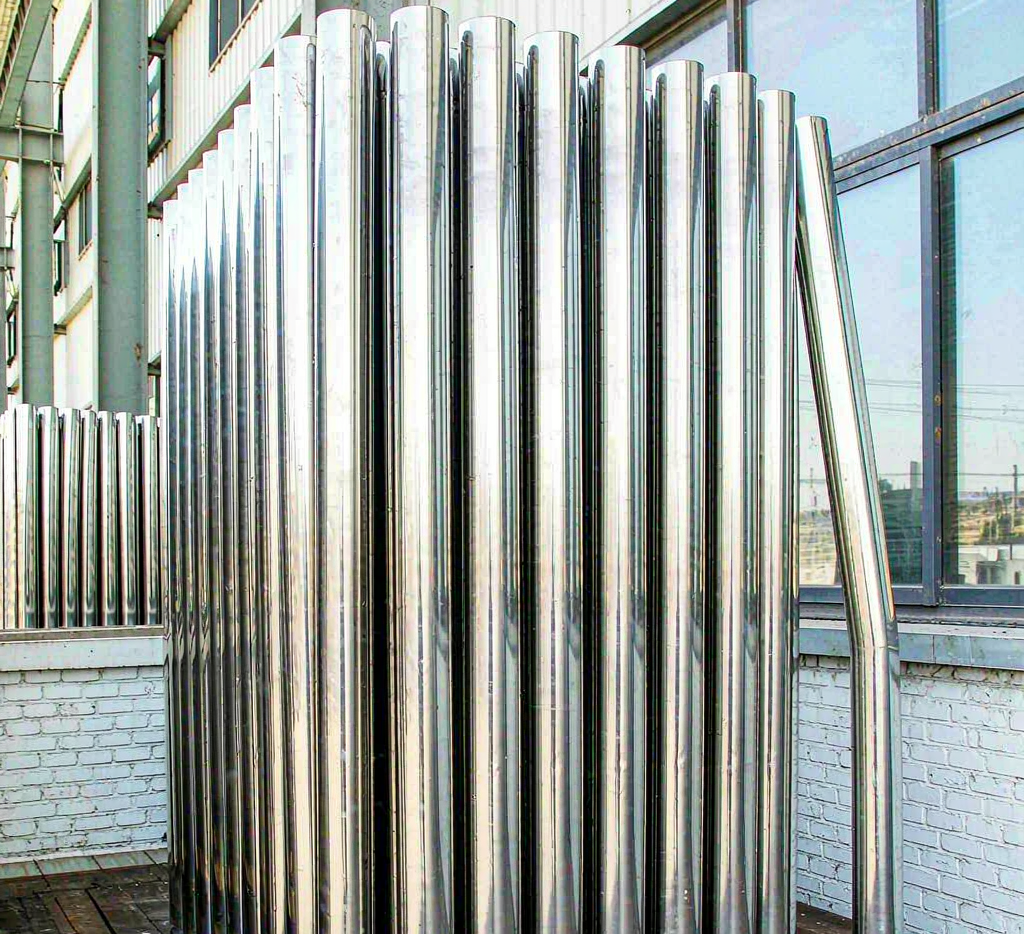
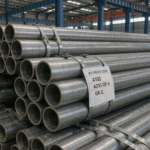
Huaxia-Steel supplies ASTM A210 Grade A-1 seamless medium-carbon steel boiler tubes for superheaters, economizers, boilers and pressure piping where elevated-temperature strength and clean bore are critical. Our tubes are seamless drawn or cold-finished, hydrostatically tested, and delivered with EN 10204 3.1 mill test certificates so your ASME stamped job passes inspection first time. We support power-plant maintenance, EPC contractors and equipment manufacturers with both stock and made-to-order sizes.
Product Overview
A210 Gr A-1 is a seamless carbon steel tube grade intended for minimum-wall-thickness boiler and superheater tubes. It offers good strength up to about 450 °C and is favoured where a smooth, defect-free internal surface matters for steam and feedwater service. We stock and roll sizes from 12.7 mm to 114 mm outside diameter in straight lengths and U-bends, and we can supply tight-tolerance bright-annealed tube for heat-exchanger fabrication.
Specification Table
| Parameter | Range / value |
|---|---|
| Standard | ASTM A210 / ASME SA-210 |
| Grade | A-1 (seamless) |
| OD | 12.7 – 114 mm (1/2″ – 4″) |
| Wall | 1.5 – 12 mm |
| Length | Up to 12 m, or U-bent to drawing |
| Tolerance | Per A450 / customer spec |
| Finish | Black, pickled, or bright annealed |
Wall tolerance follows ASTM A450 for boiler tubes; if your design requires closer control we can supply to a customer-specific minus tolerance at the cost of a slightly higher reject rate in production. Tell us the design pressure and we will confirm the minimum wall you need and the tolerance we can hold.
Mechanical Properties
| Property | A-1 requirement |
|---|---|
| Tensile strength | ≥ 415 MPa (60 ksi) |
| Yield strength | ≥ 255 MPa (37 ksi) |
| Elongation | ≥ 30% (longitudinal) |
| Flattening | Per A450 |
| Flaring | Per A450 |
Available Grades and Alternatives
Within A210 only Grade A-1 is current; for higher temperature or alloy service we also supply ASTM A179 (low-carbon exchanger tube), A192 (high-pressure boiler tube) and A213 T11/T22 alloy tubes. Tell us the design temperature and we will match the grade — moving to an alloy tube only when carbon steel cannot meet the service temperature protects your budget.
Manufacturing Standards and Tests
- Seamless hot-finished or cold-drawn per A210.
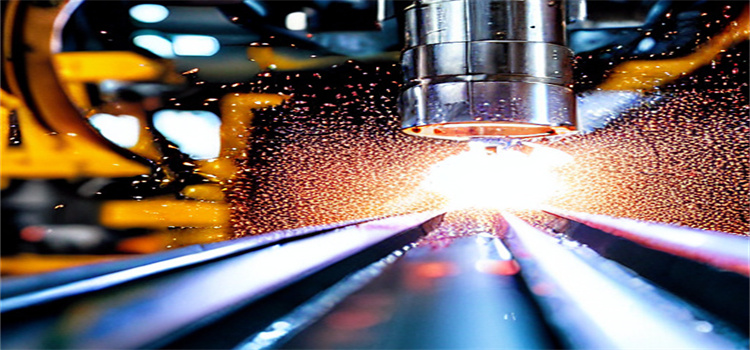
- Hydrostatic or eddy-current test on every tube.
- Flattening, flaring and reverse-flare as specified.
- Charpy impact on request for low-temperature service.
- MTC to EN 10204 3.1 with full chemistry and mechanicals.
Every tube is identified by heat and lot so a single failed test can be traced to its cast. For critical superheater work we recommend eddy-current over hydrostatic testing, because eddy current finds longitudinal seams and laps that a pressure test can miss. We can perform both on request and record the results on the MTC.
Typical Applications
- Boiler superheater and reheater tubes.
- Economizer and feedwater heater tubing.
- Power plant pressure piping.
- Industrial steam headers and U-tube coils.
Quality Assurance
Each heat is traceable from billet to tube. We offer third-party inspection (SGS, BV, TUV) and retain test coupons. Surface is inspected for laps, seams and od scoring; the bore is air-tested for cleanliness. For U-bends we dye-check the bend radius and can stress-relieve to remove springback before shipment.
Packing and Shipping
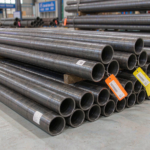
Tubes are bundled, end-capped, and wrapped in woven cloth with steel strapping; U-bends are crated to protect the bend radius. We handle FOB, CIF and CFR to any main port and prepare export marking per your template, including heat numbers on every bundle tag for site traceability.
FAQ
A210 Gr A-1 vs A179?
A179 is low-carbon for heat exchangers at lower temperature; A210 Gr A-1 is medium-carbon for higher-pressure boiler service with greater strength.
Do you supply U-bends?
Yes, we cold-bend to your radius and template, stress-relieve if required, and dye-check the bend.
What certificate comes with the tube?
EN 10204 3.1 mill test certificate with chemistry, mechanicals and test results as standard.
Scheduling and Lead Time
Stock sizes of A210 Gr A-1 typically ship within a week; made-to-order diameters, tight tolerances or U-bends run on a mill schedule of several weeks. Tell us the required on-site date and we will quote the fastest route — often a partial stock shipment to keep your outage window open while the balance is rolled. For planned maintenance, releasing the order six to eight weeks ahead removes most lead-time risk.
End Preparation Options
We can supply plain ends, bevelled ends for welding, or threaded ends with protectors, and we countersink or chamfer the bore where your process needs it. For U-bends we match the bend radius and leg length to your drawing and can stress-relieve the bend to remove springback. Send the end detail with the order so the tube arrives ready for the bench rather than needing shop preparation that delays the job.
Third-Party Inspection
For critical boiler work we welcome SGS, BV or TUV witnessed testing at the mill, including witnessing the hydrostatic or eddy-current test and reviewing the MTC before release. We can also perform positive material identification (PMI) on a sample and retain the test coupon. Inspection at source is cheaper than rejecting a tube already installed in a header, so we recommend it for first orders and high-pressure service.
Reverse Logistics and Claims
If a tube fails incoming inspection, photograph the mark and the defect, note the heat number from the bundle tag, and hold the piece. We trace it to the cast from the MTC and arrange replacement or credit under the mill’s quality terms. Keep the test coupon we retain so the failure can be compared against the original results — a clean claim file speeds the resolution and protects your outage schedule.
How to Send an Enquiry
Give us the standard and grade, outside diameter and wall, quantity and length (or bend drawing), the test requirement, the finish, and the incoterm and destination port. With those, we return a firm quote with lead time and the exact certificate scope, usually within one working day. The more precise the enquiry, the tighter the price we can offer.
Common Failure Modes
Boiler tube failures usually trace to one of three causes: erosion at the bend from carryover, fouling that causes local over-temperature, or a seam or lap missed at test. Correct specification, clean operation and good inspection each address one of these, which is why we pair the right grade with eddy-current testing and a clean bore. Tell us the failure history of your plant and we will bias the specification toward preventing the mode you actually see.
Cleaning and Preservation
Store tubes off the ground, capped and wrapped so the bore stays clean and dry; a contaminated bore drives corrosion and fouling once in service. For long storage we can supply vapour-corrosion-inhibitor protection or a temporary oil. Good preservation at receipt is the cheapest insurance for a long, clean service life.
Sourcing Strategy
For plants with repeat outage cycles, we recommend a framework agreement that holds key sizes in stock and locks lead time, so a forced outage does not become a procurement emergency. A standing relationship also lets us keep your MTC format and test scope consistent across orders, which simplifies your records and your surveys.
Why Buy Direct
Buying A210 Gr A-1 tube direct from a mill-linked supplier removes a layer of trading margin and gives you a single accountable party for the MTC, the test and the delivery. For maintenance stocks especially, a direct relationship means faster answers on a failed tube and a consistent certificate format your inspectors already know how to read, which speeds every future receipt.
Dimensional Inspection
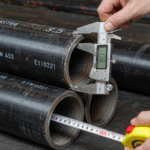
At receipt, check outside diameter, wall thickness and length against the order and the A450 tolerance, and confirm the heat number on the bundle tag matches the MTC. A quick ultrasonic wall check on a sample catches the occasional thin spot before the tube goes into a header, where a failure is far more expensive to fix.
Tube Bundling Standards
We bundle tubes with end caps and woven wrapping and tag each bundle with the heat and size so the site can identify it without breaking the wrap. For export, bundles are strapped to skids or into cages that survive handling and keep the bores clear of dirt. Tell us your offload method and we will pack to suit it.
Common Inspection Points
Beyond wall and length, check the bore for cleanliness, the ends for damage during cutting, and the heat mark for legibility, because all three affect whether the tube goes straight into service or back to the supplier. A dirty bore drives fouling; a damaged end leaks; an unreadable mark breaks traceability.
For U-bends, dye-check the bend radius for cracks, since the bend is where residual stress concentrates and where a flaw is most likely to start. A quick penetrant check at receipt catches a bad bend before it is fitted into a header, where removal is expensive.
A five-minute incoming check catches most issues before the tube enters service, and it creates the record you need if you must claim against the mill. Make it a standing step for every lot rather than a reaction to a failure, and your outage stays on schedule.
Get a Quote from Huaxia-Steel
Factory-direct carbon steel with MTC, third-party inspection, and fast export shipping. Tell us your grade, size, quantity and destination — we return a firm quote within 24 hours.