ASTM A350 LF2 vs LF6 Low Temperature Carbon Steel Forgings Comparison
ASTM A350 LF2 vs LF6 Low Temperature Carbon Steel Forgings Comparison
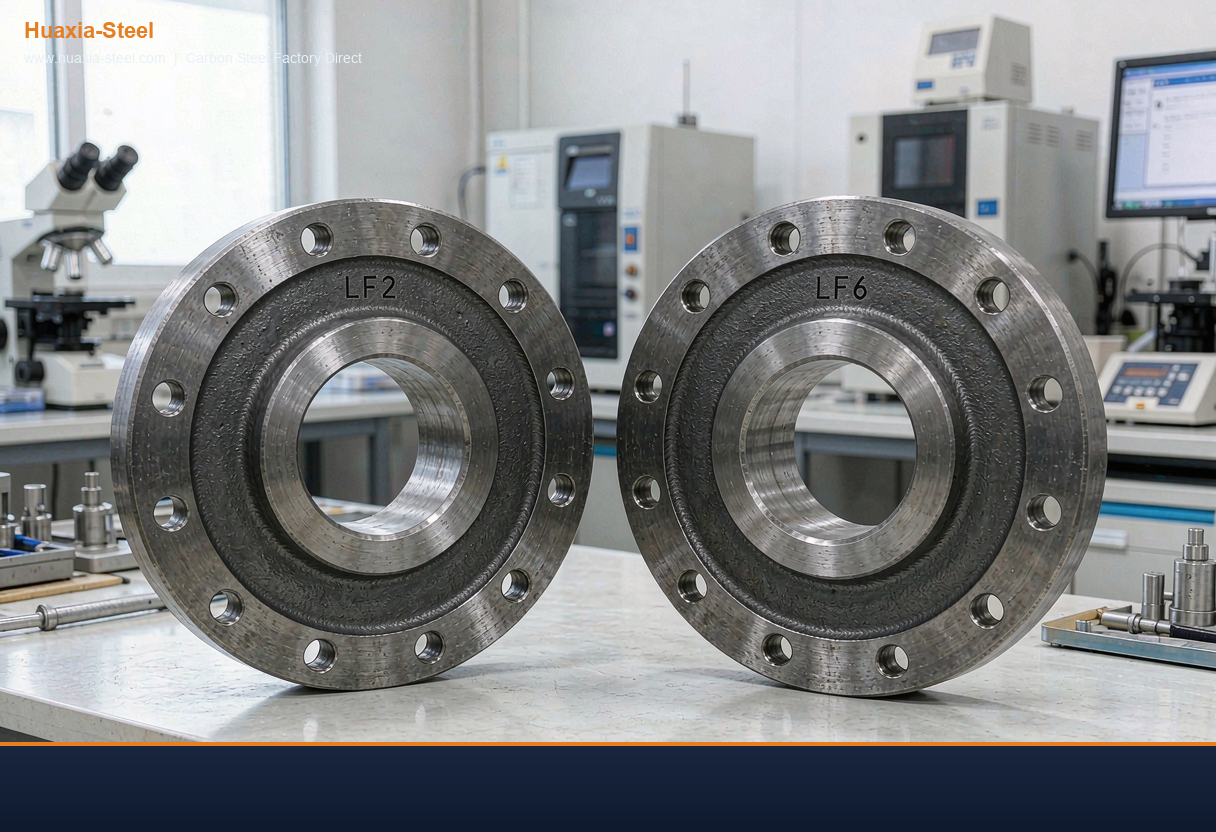
When piping components must operate reliably at sub-zero service temperatures, ordinary ASTM A105 carbon steel forgings risk brittle fracture. ASTM A350 Grade LF2 and Grade LF6 are the two carbon-steel forging grades engineered for low-temperature impact toughness, with distinct chemistry, heat-treatment and minimum-temperature envelopes. Specifying the wrong grade costs the project either in over-priced material or in service failures during cold-start or depressurisation events.
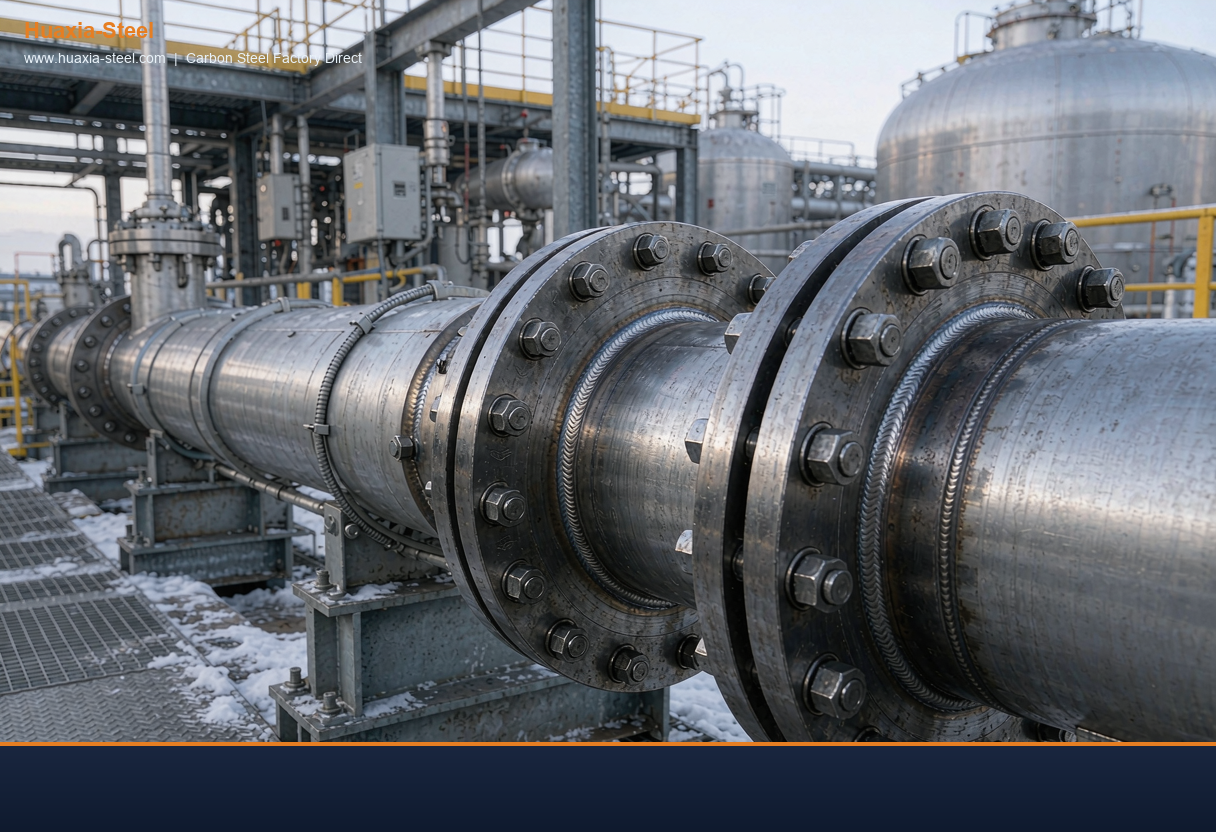
This guide compares LF2 and LF6 head-to-head on scope, chemistry, mechanical and impact requirements, heat treatment, weldability, common product forms and project applications. Whether you are sourcing flanges, fittings, valves, nozzles or branch connections for LNG, ethylene, LPG or arctic process service, the same rule applies: pick the grade with the lowest Charpy test temperature equal to or below your lowest design metal temperature (LDMT).
1. Scope and Purpose of ASTM A350
ASTM A350 / A350M specifies for carbon and low-alloy steel forgings requiring notch toughness testing for low-temperature service. The standard covers nine grades: LF1, LF2, LF3, LF4, LF5, LF6, LF787, LF9 and LF11. Each grade has its own impact-test temperature and chemistry limits.
The most widely procured grades for general low-temperature service are LF2 and LF6. LF2 is the workhorse grade for -50°F (-46°C) service used in petrochemical, refinery and offshore projects. LF6 is the higher-impact grade for -60°F (-51°C) and below, used in LNG pre-cooling, ethylene and ammonia plants.
2. Chemical Composition Comparison
Both LF2 and LF6 are carbon-manganese steels with controlled residual levels. The differences lie in carbon maximum, silicon minimum, and the addition of nickel in LF6 for better sub-zero toughness.
Element
LF2 (%)
LF6 (%)
Carbon (C), max
0.30
0.20
Manganese (Mn)
0.60 – 1.35
1.20 – 1.65
Phosphorus (P), max
0.035
0.030
Sulfur (S), max
0.040
0.030
Silicon (Si), min
0.15
0.15
Nickel (Ni)
≤ 0.40 (residual)
0.30 – 0.70
Chromium (Cr), max
0.30 (residual)
0.30
Molybdenum (Mo), max
0.12 (residual)
0.12
Copper (Cu), max
0.40 (residual)
0.40
LF6 contains 0.30–0.70% nickel, which significantly improves notch toughness at sub-zero temperatures. The lower carbon maximum (0.20 vs 0.30 in LF2) also helps by reducing carbide formation in the heat-affected zone after welding.
3. Mechanical and Impact Requirements
The mechanical property tables highlight the critical difference between LF2 and LF6: the impact test temperature and the absorbed energy.
Property
LF2
LF6
Tensile strength, min
60 – 85 ksi (415 – 585 MPa)
66 – 91 ksi (455 – 625 MPa)
Yield strength, min (1.5 in. and under)
36 ksi (250 MPa)
52 ksi (360 MPa)
Elongation in 2 in., min
22%
22%
Reduction of area, min
30%
35%
Charpy test temperature
−50°F (−46°C)
−60°F (−51°C)
Charpy min avg energy (3 specimens)
15 ft·lbf (20 J)
15 ft·lbf (20 J)
Charpy min single specimen
12 ft·lbf (16 J)
12 ft·lbf (16 J)
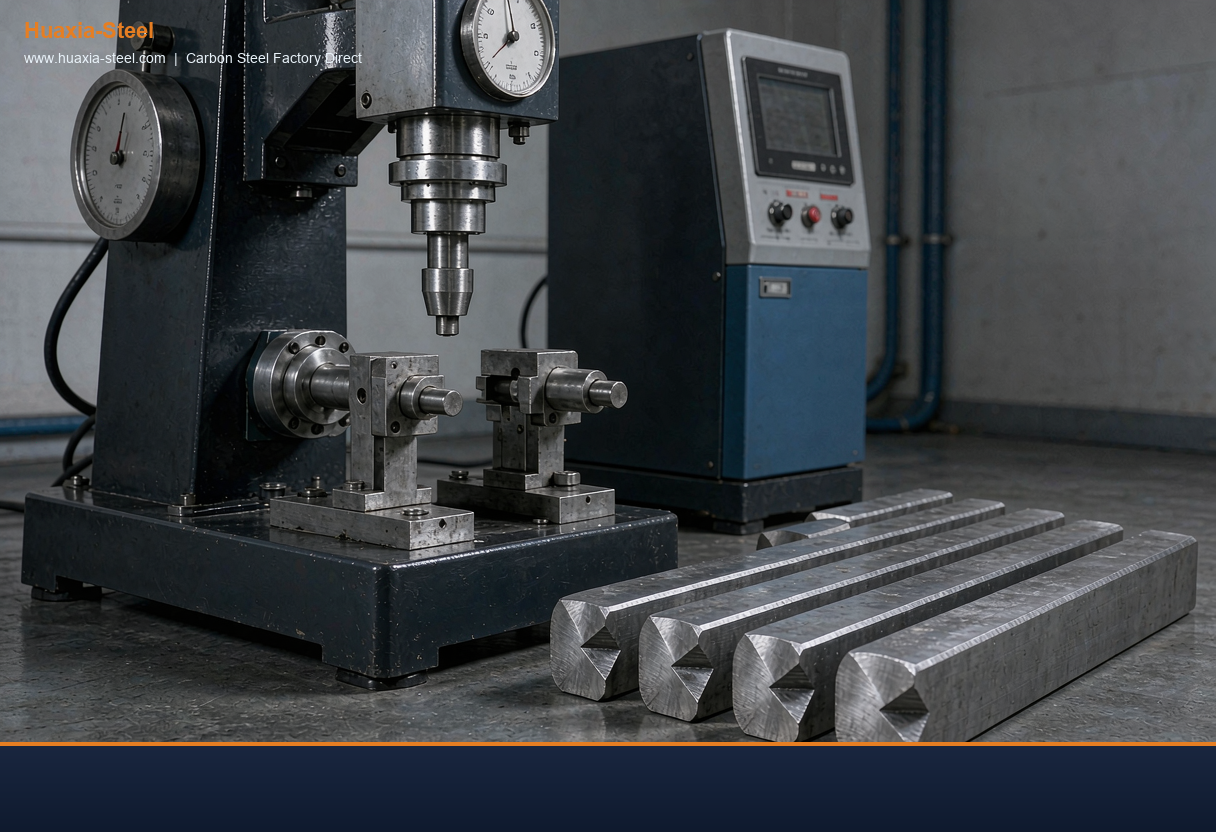
The 10°F lower test temperature of LF6 plus the higher minimum yield strength (52 ksi vs 36 ksi) makes LF6 the stronger, tougher grade for more demanding low-temperature service. The 35% minimum reduction of area (vs 30% for LF2) further improves ductility under sudden load.
4. Heat Treatment Requirements
Both LF2 and LF6 must be supplied in the normalised or normalised-and-tempered condition to develop the required grain structure and Charpy toughness. Normalising is performed at 1550–1700°F (845–925°C) followed by air cooling. For thicker sections or heavier forgings, a tempering cycle at 1100–1250°F (595–675°C) refines the microstructure and relieves residual stress.
The normalised condition is mandatory because the forging cooling rate from hot-working cannot guarantee sufficient toughness without controlled re-austenitising and grain refinement. A quenched-and-tempered condition is permitted only by supplementary requirement; for most projects the normalised condition is the standard supply.
5. Common Product Forms and Sizes
ASTM A350 LF2 and LF6 forgings cover a wide range of piping components. The most common products are:
For sour service (NACE MR0175), the maximum hardness limit of 22 HRC applies to both grades. Verify the forging mill offers NACE-qualified LF2 / LF6 stock with full SSC test report.
6. Welding and Fabrication
LF2 and LF6 are both readily weldable using standard SMAW, GMAW, FCAW and GTAW processes. For LF2, low-hydrogen welding consumables such as E7018 stick electrodes are recommended for heavier sections. For LF6, low-hydrogen consumables matched to the nickel content (e.g., E8018-C2 or E7018-C2L) help preserve notch toughness in the weld zone.
Preheat to 250°F (120°C) minimum is recommended for LF6 above 1 inch thickness to drive off moisture and slow the cooling rate through the brittle temperature range. For LF2, preheat is generally not required below 0.75 inch wall but should be specified for thicker sections per ASME B31.3.
Post-weld heat treatment (PWHT) is generally not required for low-temperature carbon steel and may actually reduce notch toughness if the soak temperature is too high. For critical service, follow ASME B31.3 and the project-specific WPS qualified per ASME Section IX.
7. Applications and Selection Guide
Use the table below to select the correct grade for your service temperature range:
For most projects operating between -20°F and -50°F, LF2 is the cost-effective choice. When LDMT drops below -50°F, LF6 delivers the required toughness with a small premium. Below -60°F, consider A350 LF3 with 3.5% nickel, which is the standard for LNG primary service.
8. Inspection and Certification
Always procure LF2 / LF6 forgings with EN 10204 Type 3.1 or 3.2 mill test certificate. The certificate must include:
Heat analysis with actual C, Mn, P, S, Si, Ni, Cr, Mo values
Product analysis for at least C, Mn, P, S
Tensile test results (per ASTM A370)
Charpy V-notch test at the required temperature with full-size specimen energy
Hardness test on the forging surface and per project NACE requirements
Heat-treatment record confirming normalising temperature and soak time
For critical service, request witnessed testing by SGS, BV, TUV or Intertek. Third-party inspectors verify Charpy specimen location, sub-size correction factors, and acceptance per ASTM A350 Table 1.
9. Frequently Asked Questions
Can A350 LF2 be used for LNG service?
For LNG pre-cooling or auxiliary systems operating between -50°F and -100°F, LF6 is the better choice. For primary LNG piping at -260°F, use A350 LF5 (5%Ni) or austenitic stainless steel (304L/316L).
Is LF6 more expensive than LF2?
Yes, typically 15–25% higher because of the tighter chemistry control, mandatory nickel addition, and more demanding Charpy test. The premium is justified for sub-zero service where LF2 toughness margins are inadequate.
Can LF2 and LF6 be welded together?
Yes, using a low-hydrogen consumable matched to the higher-nickel grade (typically LF6 chemistry). The weld procedure must be qualified for the dissimilar joint per ASME Section IX. For dissimilar welds, request a weld-procedure qualification record (PQR) at the project-required impact temperature.
Does A350 LF2 / LF6 require NACE MR0175 for sour service?
Yes, for sour service (H2S-containing environments), both grades must meet NACE MR0175 hardness limit of 22 HRC. Specify the NACE requirement at the time of enquiry to ensure the mill delivers appropriately heat-treated material.
10. Cost and Lead Time Considerations
A350 LF2 / LF6 forging pricing depends on the component type, weight, class, quantity and delivery destination. As a rule of thumb:
LF2 flanges (ASME B16.5) are typically 5–10% more expensive than A105 flanges
LF6 flanges are typically 15–25% more expensive than LF2 because of nickel addition
LF2 fittings (ASME B16.9) are typically 8–12% more expensive than A234 WPB fittings
LF2 / LF6 valves are typically 20–35% more expensive than standard carbon steel valves
NACE MR0175 sour service adds 5–10% for hardness control and documentation
EN 10204 3.2 adds 3–5% over 3.1 for witnessed inspection
Standard lead time is 30–60 days for mill-run orders. Smaller quantities of standard components can be sourced from distributors in 5–15 days. Custom-engineered components (special flanges, branch connections, valve bodies) require 60–90 days for forging pattern production and heat treatment.
11. Design Tips for Low-Temperature Piping
For piping operating at sub-zero service temperatures, the following design practices reduce the risk of brittle fracture:
Specify LDMT (lowest design metal temperature) on every line class. Use 5–10°F margin below the lowest operating temperature to account for transient excursions.
Use integral flanges (weld neck or socket weld) rather than threaded or slip-on for critical low-temp service. Threaded joints introduce stress concentrations.
Avoid heavy branch connections on small-diameter headers. Reinforced branch connections (weldolet, sockolet) distribute stress better than unreinforced tees.
Specify Charpy at the LDMT — not just at the standard −50°F for LF2. For LDMT < −50°F, request LF6 or upgrade to LF3.
Minimize weld metal volume in critical low-temp sections. Thicker welds reduce toughness.
Use low-hydrogen welding consumables (E7018-C2L for LF6, E7018 for LF2) to avoid hydrogen-induced cracking.
Specify hardness testing on completed welds for verification of weld zone toughness, especially for sour service.
Following these design tips reduces the risk of brittle fracture during cold start-up, depressurisation, or accidental over-cooling events.
Need A350 LF2 or LF6 flanges, fittings or valves for a low-temperature project? Huaxia Steel supplies A350 LF2 / LF6 forgings in ASME B16.5 flanges, B16.9 fittings, valve bodies and branch connections with EN 10204 3.1 / 3.2 certification and SGS / BV / TUV inspection. Email [email protected] with your component drawing, grade, size, quantity and lowest design temperature, and we will reply with a mill-direct quotation within 24 hours.
If you require further information about our metal sheet products or architectural projects, please don’t hesitate to leave your contact details and message here.
Our team of experts will respond within 24 hours to continue the discussion and provide you with any additional information you requires.