Introduction: The Mill Test Certificate Is Your Quality Contract
When a container of carbon steel arrives at your factory, the only document that proves the material inside matches what you ordered is the mill test certificate (MTC), also called a mill test report or material certificate. It is not a marketing sheet — it is a legally traceable record of chemical composition, mechanical testing, and heat treatment that links each piece of steel back to the furnace where it was made.
This guide explains how to read an MTC, what the different certificate types mean (EN 10204 3.1 vs 3.2), which fields matter most for carbon steel buyers, and the red flags that should trigger a rejection or third-party verification.
What Is a Mill Test Certificate (MTC)?
An MTC is a document issued by the manufacturer (or an authorized inspector at the manufacturer’s plant) that records:
- The heat or lot number of the steel
- Chemical composition from the ladle analysis
- Mechanical test results (tensile, hardness, impact where required)
- Heat treatment condition and temperatures (if applicable)
- Dimensional conformance statement
- Standard(s) to which the material was produced and tested
For carbon steel, the MTC is your primary defense against grade substitution, chemistry out-of-spec, and unapproved process shortcuts.
EN 10204 Certificate Types: 2.1, 2.2, 3.1, and 3.2
European buyers frequently reference EN 10204. The four types differ in who certifies and how much testing is done:
| Type | Statement | Testing | Signer | Use Case |
|---|---|---|---|---|
| 2.1 | Declaration of compliance | No test results | Manufacturer | Non-critical commercial goods |
| 2.2 | Test report | Test results from same method/grade | Manufacturer | General engineering, less critical |
| 3.1 | Inspection certificate | Specific tests on the supplied product | Manufacturer’s authorized inspector | Standard for carbon steel exports |
| 3.2 | Inspection certificate | Specific tests witnessed by external party | Manufacturer’s inspector + independent inspector | Pressure equipment, nuclear, high-risk |
For carbon steel B2B buyers, 3.1 is the standard requirement. It guarantees the test results on the certificate come from the actual heat numbers in your shipment, not from a reference library. 3.2 adds an independent inspector’s witness signature and is required for pressure equipment under the Pressure Equipment Directive (PED) and for some nuclear or offshore projects.
How to Read the Chemistry Section
The chemistry table is the first place to check for grade verification. Compare each element against the standard’s limits for the ordered grade:
| Element | Why It Matters | Red Flag |
|---|---|---|
| Carbon (C) | Drives strength and hardness | > 0.05% outside grade spec; missing microalloys on HSLA grades |
| Manganese (Mn) | Strength and hardenability | Too low on Q345/S355 — suggests Q235 substitution |
| Phosphorus (P) | Cold brittleness | Above 0.045% on structural grades |
| Sulfur (S) | Machinability vs toughness trade-off | Above 0.050% without ordering free-machining grade |
| V, Nb, Ti | Microalloying on HSLA grades | Absent on a Q345/Q355 certificate |
Practical tip: if you ordered Q345B and the certificate shows carbon 0.18%, manganese 0.55%, and no vanadium or niobium, you are looking at a Q235B chemistry dressed up as Q345. Reject it.
How to Read the Mechanical Test Section
Typical fields on a carbon steel MTC:
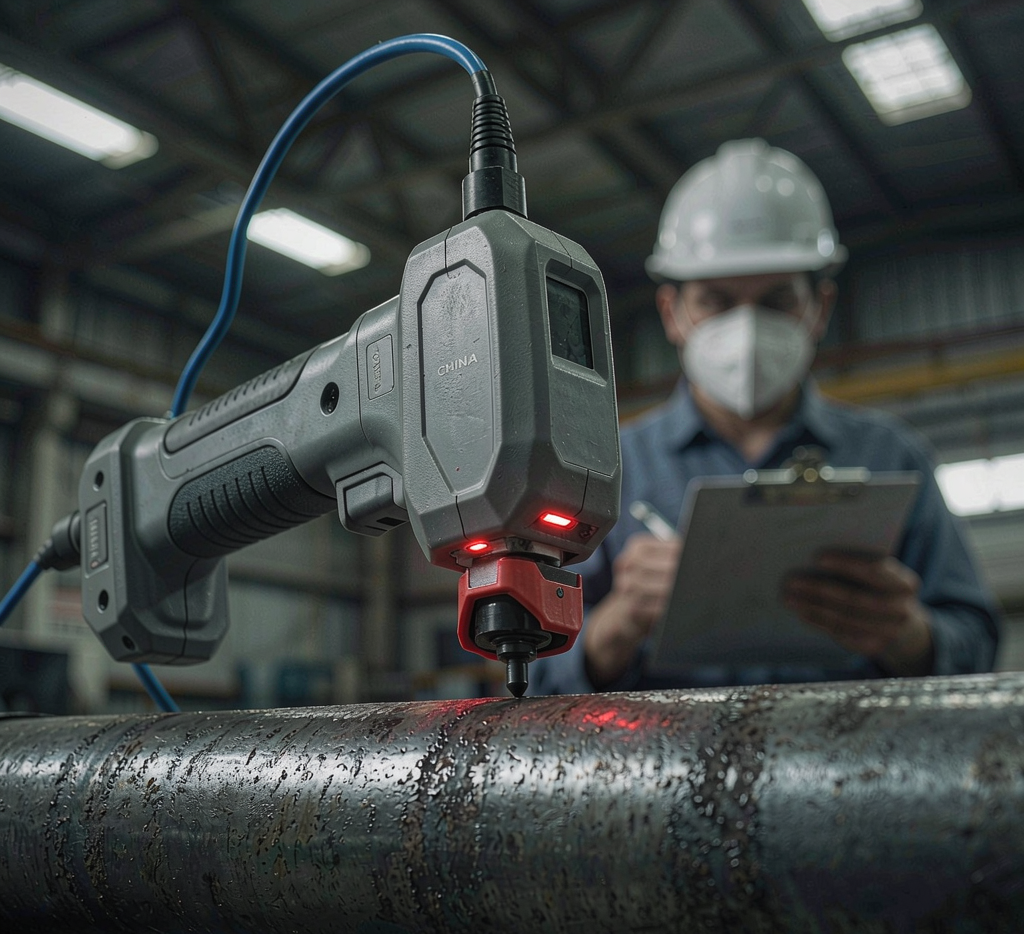
- Yield strength (ReH or Rp0.2): must meet or exceed the standard’s minimum for the grade and thickness.
- Tensile strength (Rm): must fall within the standard’s range. Values below minimum suggest under-strength material; above maximum can indicate excessive hardness or brittle microstructure.
- Elongation (A5 or A50): measures ductility. Low elongation on a grade known for high ductility (e.g., Q235) may indicate improper rolling or heat treatment.
- Impact energy (KV2): required for grades with quality suffixes B, C, D. Check the test temperature: +20°C for B, 0°C for C, −20°C for D. A “B” grade tested only at +20°C is not suitable for sub-zero service.
- Hardness (HB or HRC): verify against the delivery condition. Annealed 1045 at 230 HB is too hard; normalized Q235 at 120 HB is suspiciously soft.
Heat Treatment and Condition Verification
If you ordered heat-treated material, the MTC should state:
- The delivery condition (+A, +N, +QT, etc.)
- For +QT: the austenitizing temperature, quenchant (water/oil/polymer), and tempering temperature
- The resulting hardness range
Cross-check: if the certificate says “quenched and tempered” but lists no tempering temperature, treat the claim as unverified. Some mills list only “heat treated” without details — push back and request the full thermal cycle.
Dimensional and Surface Statements
Most MTCs include a line stating “dimensions checked and conform to [standard].” This is usually a general statement, not piece-by-piece data. For critical orders, request a separate dimensional report with actual measurements on sampled pieces, or specify third-party dimensional inspection before shipment.
Red Flags: When to Reject or Investigate
- No heat number on the certificate. Without a heat number, traceability is broken. Reject.
- Heat numbers on the certificate do not match markings on the material. Indicates certificate swapping. Reject.
- Chemistry is “typical” rather than actual ladle analysis. Typical values are averages, not guarantees. Demand actual heat analysis.
- Missing mandatory tests for the grade. Q345B without impact results, or S45C Q&T without hardness, means the certificate is incomplete.
- Impossible combinations. A certificate claiming “annealed” with hardness 250 HB, or “normalized” with yield 800 MPa, is internally inconsistent.
- Certificate dated before the material was produced. Check dates for logical consistency.
Third-Party Inspection: When to Require It
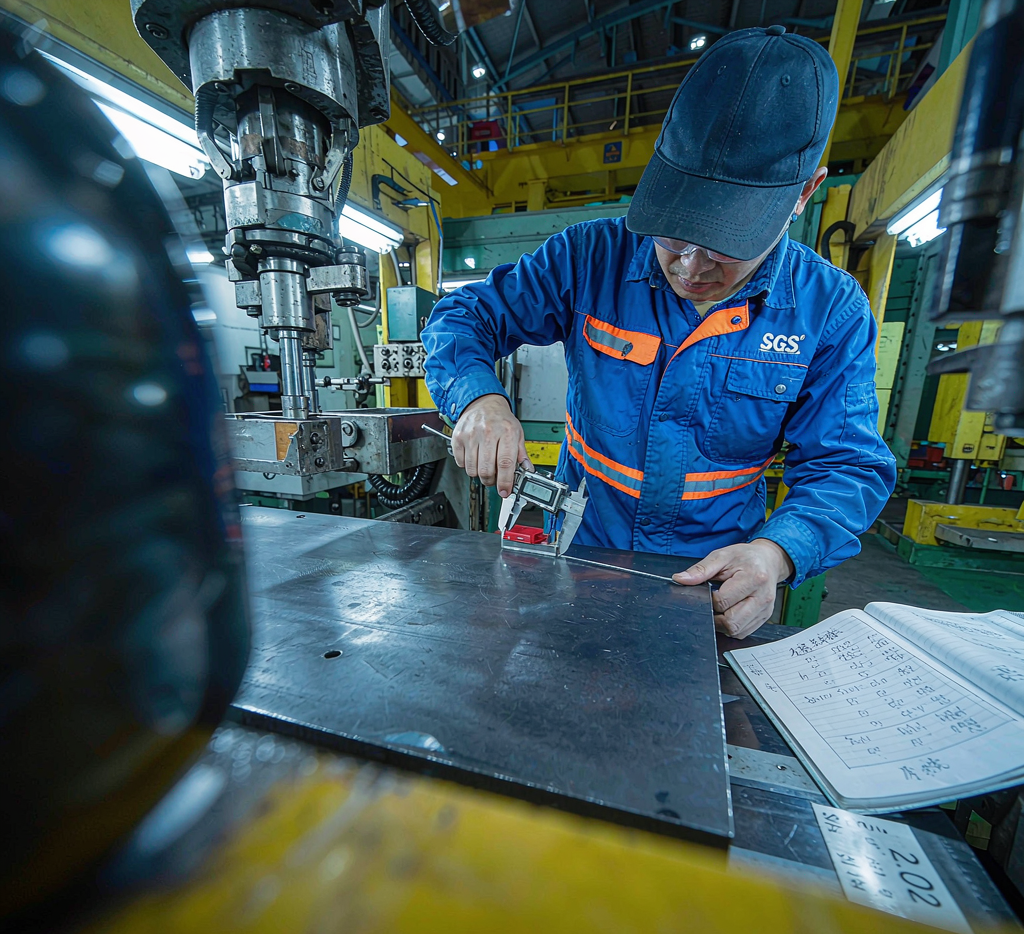
For first-time suppliers, orders over 50 tonnes, or grades with a history of substitution (Q345/Q235, S45C/1045), require third-party inspection by SGS, Bureau Veritas, TÜV, or Intertek. The inspector should witness:
- Sampling and labeling of test specimens
- Chemical analysis by spectrometry
- Mechanical testing (tensile, impact, hardness)
- Dimensional check on a statistical sample
- Marking and packing verification
The cost is typically 0.3 – 1.0% of order value — cheap insurance against a rejected container.
Frequently Asked Questions
1. Is a 3.1 certificate enough for ASTM A36 material?
EN 10204 3.1 and ASTM material standards are separate systems. A Chinese mill can issue an EN 10204 3.1 certificate for material produced to ASTM A36. What matters is that the test results on the certificate satisfy ASTM A36’s requirements. Check chemistry and tensile against ASTM limits, not just the certificate header.
2. Can I trust a PDF MTC sent by email?
Verify the issuer’s letterhead, signature, and stamp. For large orders, request the original or a digitally signed PDF with certificate authentication. Fraudulent MTCs are rare but not unknown; cross-checking heat numbers with the mill directly is the safest verification.
3. What if the MTC is in Chinese?
Request an English version for export orders. Most mills that serve international buyers provide bilingual certificates. If only Chinese is available, have a translator verify the key fields (heat number, chemistry, mechanicals) against the standard.
4. Does every piece need its own certificate?
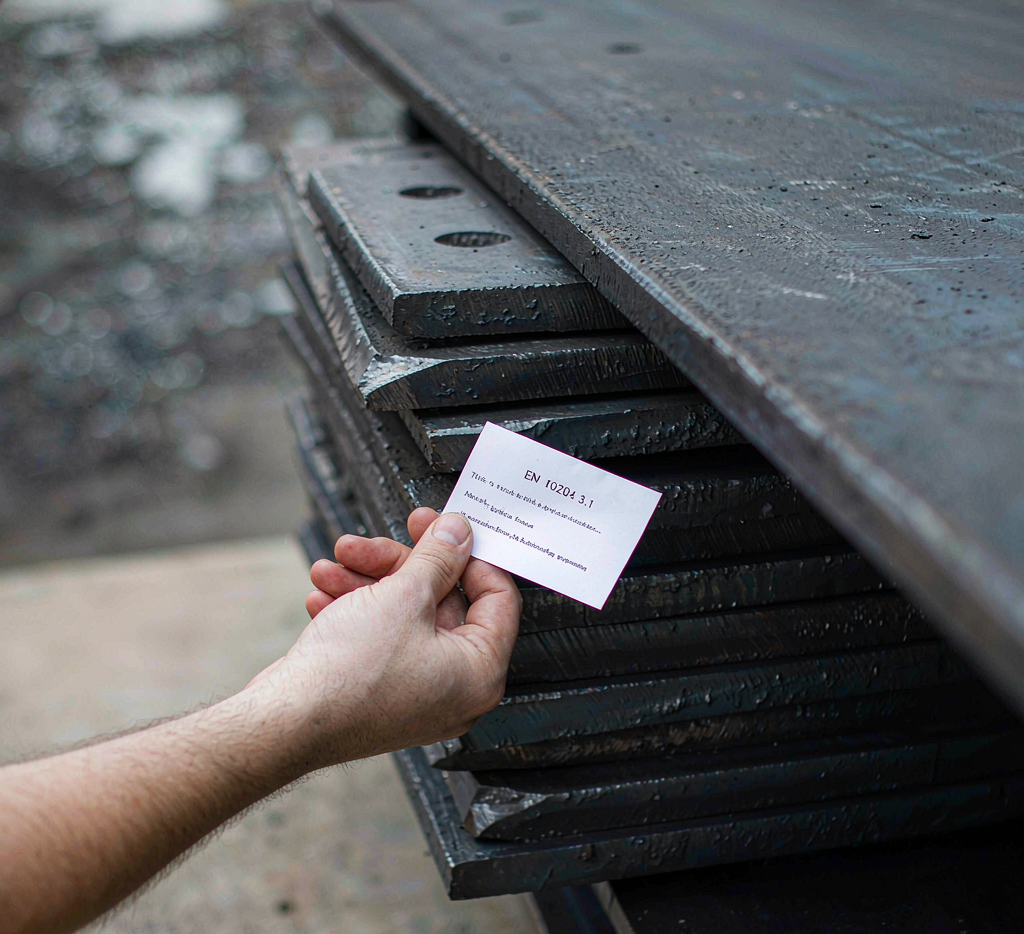
No. One certificate covers one heat number, and one heat may produce hundreds of tonnes. The material marking (stencil or tag) links each bundle to the heat. Verify that the marking on your bundles appears on the certificate.
5. What is the difference between a ladle analysis and a product analysis?
Ladle analysis is taken from the molten steel before casting and reported on the MTC. Product analysis is taken from the finished bar or plate and may show slight deviations due to segregation. Standards allow a tolerance band for product analysis; if your inspection shows values outside that band, escalate.
Conclusion
The mill test certificate is not paperwork — it is the only objective evidence that the steel in your warehouse matches the steel on your drawing. Learning to read it, spot red flags, and demand the right certificate type is one of the highest-return skills a carbon steel buyer can develop.
Huaxia-Steel supplies carbon steel with full EN 10204 3.1 mill test certificates, heat-number traceability, and optional third-party inspection by SGS, BV, or TÜV. Request a sample certificate or send us your specification for a quotation within 24 hours.