Carbon Steel Pipe Threading Process: NPT vs BSP Threading Guide
Threaded carbon steel pipe is still the default connection method for low- to medium-pressure piping in oil, gas, water, fire protection, and mechanical systems. Buyers ordering threaded pipe or threaded nipples from Chinese mills often discover too late that “threaded” covers a wide range of quality levels: cut threads, rolled threads, NPT, BSPP, BSPT, taper vs parallel, class A vs class B, and phosphate-coated vs bare. A poorly specified thread order leads to leaks, cracked fittings, extra site rework, and rejected shipments. This guide explains the carbon steel pipe threading process from blank pipe to finished thread, compares NPT and BSP systems, and gives you a practical specification checklist for your purchase order.
1. Why Threading Still Matters in Carbon Steel Piping
Threaded joints are simple, field-repairable, and do not require welding equipment. They dominate in:
- Fire sprinkler and standpipe systems (ASTM A795, A53 threaded ends)
- Low-pressure oil and gas distribution
- Steam tracing, instrument air, and compressed-air lines
- Pipe nipples, couplings, and small-bore valve connections
- Temporary construction piping and utility headers
The two dominant thread standards are NPT (National Pipe Thread) and BSP (British Standard Pipe). They are not interchangeable. NPT is the North American standard; BSP is common in the UK, Europe, Middle East, and Asia. The first step in ordering is to state clearly which standard applies.
2. NPT vs BSP: The Critical Differences
NPT and BSP threads differ in thread form, pitch, taper angle, and sealing method. A mismatch will either not assemble or will leak under pressure:
| Feature | NPT | BSPP (parallel) | BSPT (taper) |
|---|---|---|---|
| Standard | ASME B1.20.1 | BS EN 10226 / ISO 228 | BS EN 10226 / ISO 7 |
| Thread form | 60° V-thread | 55° Whitworth | 55° Whitworth |
| Taper | 1:16 (3/4 in./ft) | Parallel | 1:16 |
| Sealing | Metal-to-metal taper seal | Gasket/washer seal on face | Metal-to-metal taper seal |
| Common sizes | 1/8″–24″ | 1/8″–6″ | 1/8″–6″ |
| Typical use | North America, Middle East, parts of Asia | Europe, Commonwealth | Europe, Commonwealth |
Never mix NPT and BSP. The thread pitches are close on some sizes but not identical. Forcing them together damages the crests and produces a path for leakage. If your stock is NPT and your fittings are BSP, order adapters or convert the whole run to one system.
3. The Carbon Steel Pipe Threading Process Step by Step
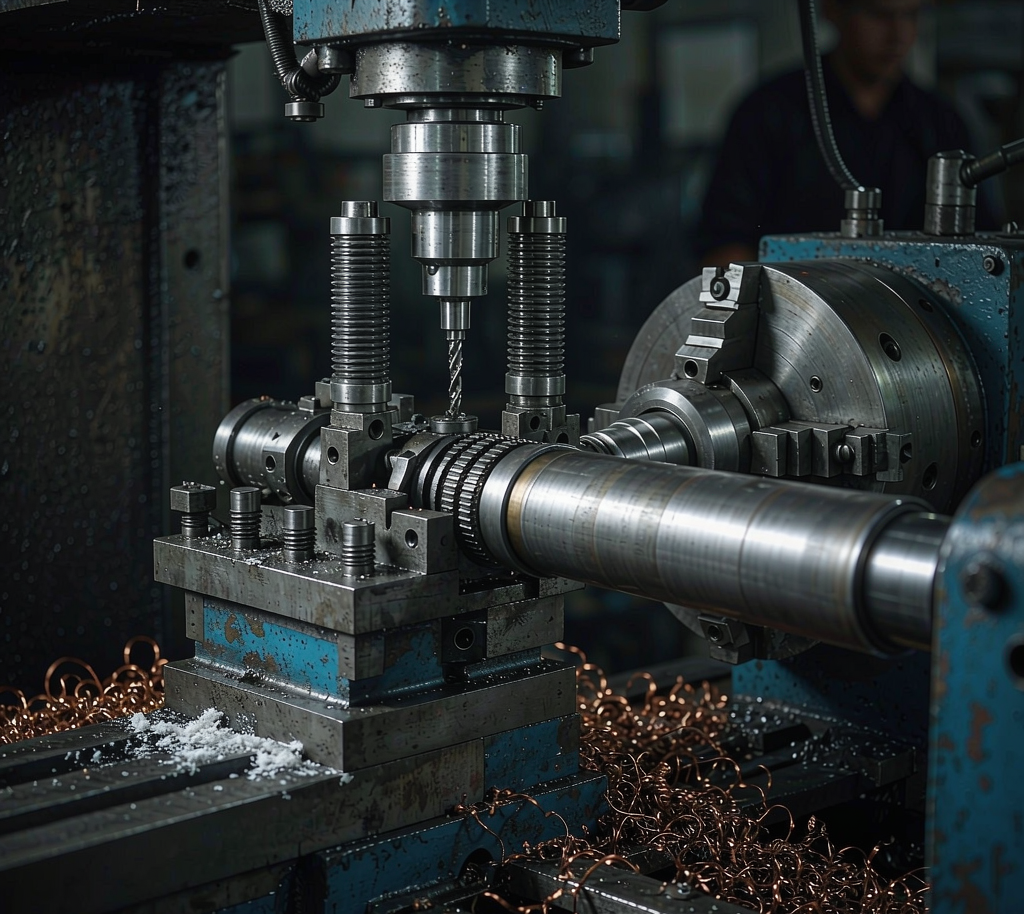
Carbon steel pipe is threaded in four main stages: pipe preparation, chamfering, thread cutting or rolling, and finishing/inspection.
- Step 1 — Pipe preparation: Cut the pipe to length with a square, burr-free end. The cut tolerance is typically ±1 mm for threaded pipe. Remove internal and external burrs to protect the threading die and the gasket face.
- Step 2 — Chamfering: A small chamfer (usually 0.5–1.5 mm) is cut on the pipe end. This guides the die or roll head and reduces galling during assembly.
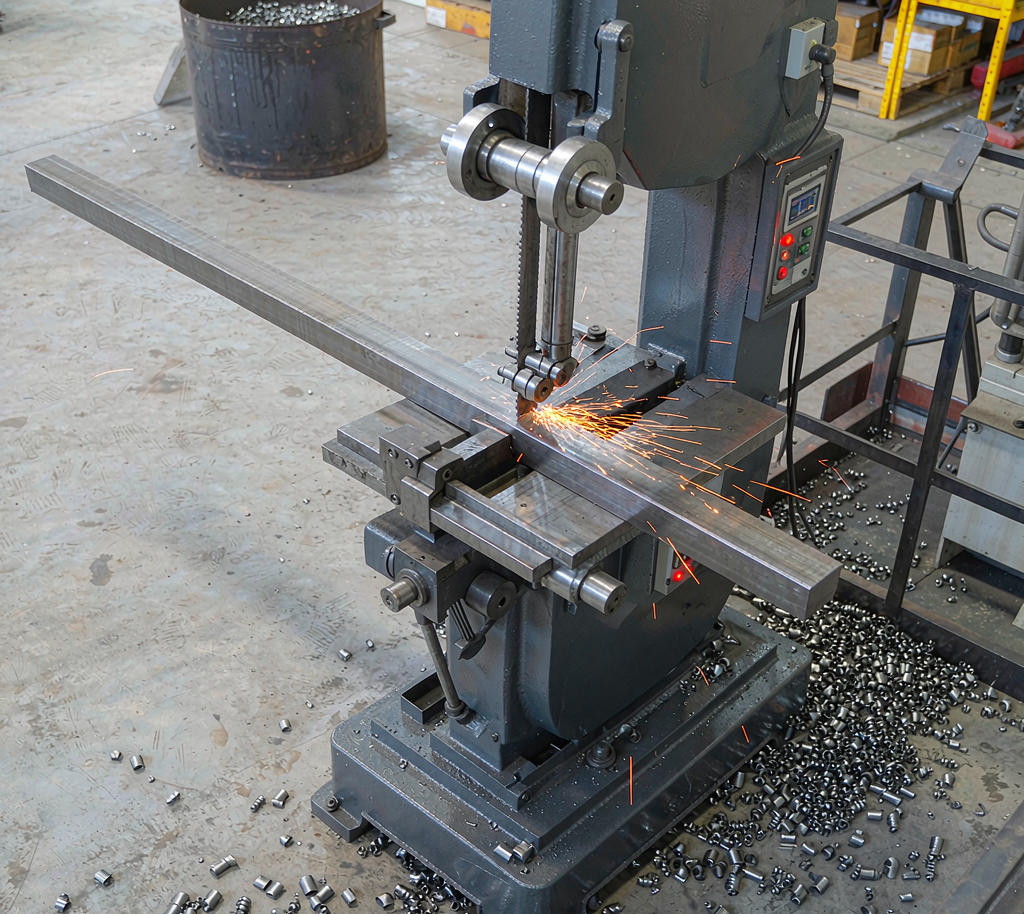
- Step 3 — Thread cutting: A cutting die removes material to form the thread. Cut threads are precise and work on hard materials, but they reduce wall thickness at the thread root and create stress concentrators.
- Step 4 — Thread rolling: A rolling head displaces material without cutting. Rolled threads have a smoother surface, higher fatigue life, and no loss of wall thickness. Rolling is preferred for high-pressure and dynamic applications but requires sufficient ductility in the pipe.
- Step 5 — Finishing: Threads are cleaned, oiled, and sometimes phosphate-coated or galvanized. A thread protector is installed before bundling.
- Step 6 — Inspection: Use ring gauges, plug gauges, and thread micrometers to verify pitch diameter, thread length, and taper. Visual inspection checks for torn threads, burrs, and cracks.
4. Cut Threads vs Rolled Threads
| Property | Cut threads | Rolled threads |
|---|---|---|
| Material removal | Yes — chips produced | No — material displaced |
| Wall thickness | Reduced at root | Effectively maintained |
| Surface finish | Rougher, sharper roots | Smoother, work-hardened |
| Fatigue life | Lower | Higher |
| Cost | Lower | Higher |
| Best for | Static, low-pressure | High-pressure, vibration |
For fire protection, plumbing, and standard utility piping, cut threads are acceptable and economical. For oilfield, hydraulic, and cyclic-load systems, specify rolled threads and add a surface-finish requirement.
5. Tolerances and Inspection Requirements
Thread quality is checked with gauges. A “go/no-go” ring gauge checks the pitch diameter; a plug gauge checks internal threads. In production, mills often sample 5–10% of threaded ends. For critical orders, buyers can specify 100% gauging:
- Thread length: Must meet ASME B1.20.1 or ISO 7 minimum engagement length. Common NPT thread lengths are L1 + L2 gauge dimensions.
- Taper: For NPT, the gage notch must fall within ±1 turn of the reference plane on the fitting.
- Burr-free: Threads must be free of burrs, chips, and oil slag that can damage gaskets or block orifices.
- Coating integrity: Galvanized threaded pipe must have threads touched up with zinc-rich paint after cutting to protect the bare root.
6. Common Defects and How to Avoid Them
| Defect | Cause | Prevention |
|---|---|---|
| Stripped / torn threads | Dull die, hard pipe, no chamfer | Replace dies, anneal if needed, chamfer ends |
| Oval threads | Pipe not held concentrically | Use steady rests and proper chucking |
| Leakage at assembly | NPT/BSP mismatch, under-tightening, damaged threads | Specify standard, use thread sealant correctly |
| Cracks at thread root | Excessive cutting speed, brittle material | Reduce speed, normalize hard pipe |
| Gauge rejection | Worn tooling or setup drift | Calibrate and inspect tooling per shift |
7. Purchase Order Specification Checklist
- Thread standard: NPT, BSPP, or BSPT with reference document (ASME B1.20.1 / ISO 7 / ISO 228)
- Pipe material and standard: ASTM A53 Gr. B, ASTM A106 Gr. B, EN 10255, etc.
- Thread type: cut or rolled
- Surface finish: bare, black, galvanized, or phosphate-coated
- Thread protector type: plastic or metal, closed or open end
- Inspection level: sampling or 100% gauge inspection
- Dimensional tolerance: pipe length, thread length, end squareness
- Certification: MTC to EN 10204 2.1 or 3.1
8. FAQ
Can I thread already-galvanized carbon steel pipe?
Yes, but the cut exposes bare steel at the roots. Specify zinc-rich touch-up paint and a salt-spray test if corrosion resistance is critical.
What is the maximum pressure for threaded carbon steel pipe?
For NPT Class 3000 fittings, working pressure is around 3,000 psi at ambient temperature for small sizes. Ratings drop with size and temperature. Always use the pressure rating of the weakest component, usually the fitting.
Is Teflon tape enough for threaded steel pipe?
Teflon tape is common for water and air. For fuel, oil, and gas, use a compatible thread sealant paste. Never rely on tape alone for high-pressure hydrocarbon service.
Does Huaxia-Steel supply threaded pipe and nipples?
Yes. We cut and roll NPT, BSPP, and BSPT threads on ASTM A53, A106, and EN 10255 pipe, with full gauging and thread protectors.
Need threaded carbon steel pipe with certified NPT or BSP threads? Tell us the standard, size, and thread type. Huaxia-Steel will quote mill-direct with full inspection.