Carbon Steel Pre-Shipment Inspection Checklist: A Buyer’s Field Guide
Carbon Steel Pre-Shipment Inspection Checklist: A Buyer’s Field Guide
A pre-shipment inspection (PSI) is the last opportunity to catch quality issues before a container of carbon steel leaves the mill. Once the material is loaded and the bill of lading is issued, disputes become expensive: return shipping, demurrage, rework at the destination, and lost production time can erase any savings from a low unit price. A well-planned PSI for carbon steel covers dimensions, visual condition, chemical composition, mechanical properties, documentation, marking, packing, and loading. This guide provides a practical checklist that buyers can hand to their inspector or use themselves during a final random check at the supplier’s yard.
1. When and Where to Inspect
The inspection should take place after final production and packing but before the cargo is loaded into the container. The ideal location is the supplier’s finished-goods yard or the port consolidation warehouse. If access is limited, request a live video inspection with close-ups of critical checks. The inspector should arrive with the purchase order, drawings, material specification, and a calibrated measuring kit:
Timing: At least 3–5 working days before the intended loading date
Location: Supplier’s yard or designated loading point
Reference documents: PO, drawings, mill certificates, specification, packing list
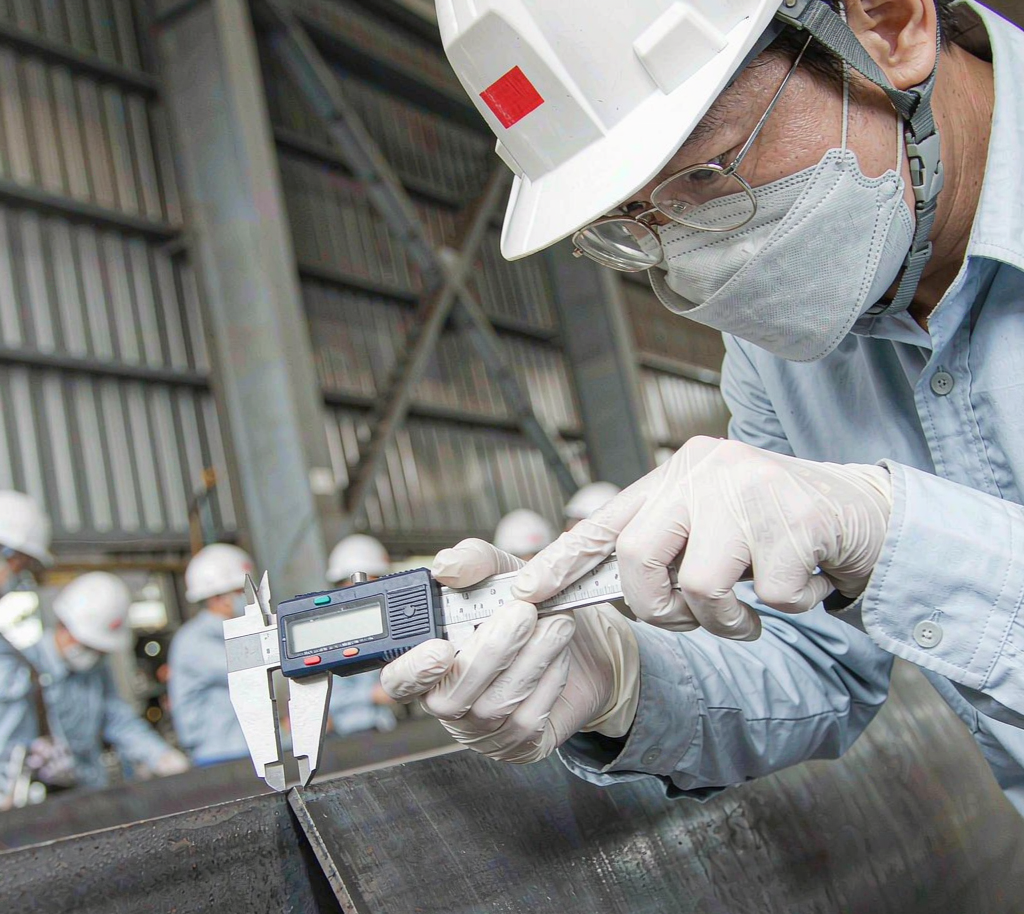
Most carbon steel disputes start with dimensions. A tolerance band that looks generous on paper becomes a problem when plates arrive 2 mm thinner than required or bars are out of straightness. The inspector should measure a representative sample, not just one piece:
Check
Method
Acceptance guidance
Thickness / diameter
Digital caliper or micrometer at 3 points
Within specified tolerance, typically ±0.1–0.5 mm
Width / length
Tape measure
Per PO; length tolerance often +50/-0 mm
Straightness
Straightedge and feeler gauge
1–2 mm per meter, or per ASTM A6
Wall thickness (tube)
Ultrasonic wall gauge or caliper
Min wall within spec; no localized thinning
Surface defects
Visual, 600 mm distance
No cracks, rolled-in scale, deep pits, lamination
Edge condition
Visual and touch with glove
Clean edges, no burrs, no excessive bevel variation
For surface-sensitive applications, request that the inspector photograph representative defects at full resolution and compare them against the acceptance standard stated in the PO.
3. Chemical and Mechanical Verification
The mill test certificate (MTC) is not enough. A good PSI confirms that the material on the truck matches the certificate. For critical orders, perform independent testing:
Chemical analysis: Verify carbon, manganese, sulfur, phosphorus, and alloying elements against the specification. Use a portable XRF analyzer or send a sample to a third-party lab.
Hardness test: A quick Brinell or Rockwell check on random pieces gives confidence that the heat-treatment condition matches the MTC.
Tensile test: For high-value orders, cut a witness sample and perform an independent tensile test at an accredited lab.
Impact test: If Charpy toughness is specified, verify that the MTC contains the correct test temperature and absorbed energy values.
4. Documentation and Marking Checks
Document / marking
What to verify
Mill test certificate
Heat number, grade, chemical values, mechanical values, standard, mill stamp
Certificate type
EN 10204 2.1, 2.2, 3.1, or 3.2 as specified
Packing list
Total pieces, net/gross weight, dimensions, container numbers
Heat number marking
Stenciled or labeled on each bundle; matches MTC
Grade / standard marking
ASTM, EN, JIS, or DIN reference visible
Country of origin
On MTC and packing list if required by customs
One common issue is a mismatch between the heat number on the MTC and the heat number stenciled on the bundles. Photograph the bundle labels and cross-check against the MTC before signing off.
5. Packing and Loading Inspection
Even perfect steel can arrive damaged if packing or loading is wrong. The inspector should verify the following before the container doors close:
Bundling: Steel strapped with enough bands; wooden separators between layers; no loose pieces.
Protection: Ends protected with caps or boards; vulnerable edges wrapped; anti-corrosion oil applied if specified.
Weather protection: Plastic or kraft wrapping for sea freight; desiccants inside if required.
Container condition: Dry, clean, no holes, no odors; floor suitable for heavy steel weight.
Lashing and dunnage: Chocks, timbers, or lashings prevent shifting during transit. Heavy bundles should not rest directly on the container floor without load spreaders.
Loading photos: Front, sides, and back of each loaded container with container number visible.
Who pays for the pre-shipment inspection? Usually the buyer, either directly or through an inspection company like SGS, Bureau Veritas, or TÜV. Some suppliers include it in the price if negotiated upfront.
How many pieces should the inspector sample? Follow ANSI/ASQ Z1.4 or the AQL agreed in the contract. A common starting point is General Inspection Level II with AQL 1.0 or 2.5.
Can I skip the PSI if I trust the supplier? Even trusted mills make mistakes. For first orders or large shipments, a PSI is cheap insurance. For repeat orders, reduce sampling but do not eliminate documentation review.
Does Huaxia-Steel support third-party PSI? Yes. We welcome buyer-appointed inspectors or independent labs at our mills and loading yards. We also provide full MTC, photos, and loading reports before shipment.
Planning a carbon steel order from China? Ask Huaxia-Steel about our pre-shipment inspection support, certified MTC, and export packing standards.
If you require further information about our metal sheet products or architectural projects, please don’t hesitate to leave your contact details and message here.
Our team of experts will respond within 24 hours to continue the discussion and provide you with any additional information you requires.