Introduction: Why the Seam Question Decides Your Pipe Order
Every carbon steel pipe on the market is made one of two ways: welded from strip (ERW — electric resistance welded) or pierced from solid billet (seamless). The manufacturing route changes the price by 20 – 60%, the available size range, the pressure integrity, and the standards you can certify to. Yet purchase orders still arrive saying just “carbon steel pipe” — leaving the factory to supply whichever route is cheaper that week.
This guide explains exactly how each process works, how the resulting products differ in weld seam integrity, dimensions, tolerances, and cost, and gives buyers a decision framework tied to real service conditions — plus the certificate lines to check so you get what you ordered.

How ERW Pipe Is Made
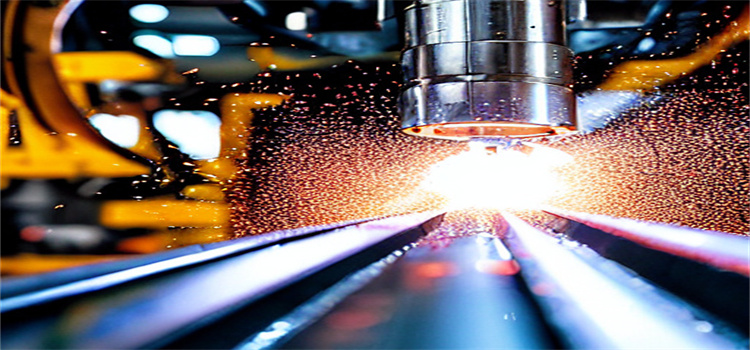
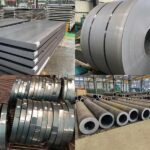
ERW (electric resistance welding) starts from a hot-rolled steel strip coil — typically 1.8 – 25 mm thick. The strip is uncoiled, edge-milled, and progressively cold-formed through a train of rolls into a round open seam. High-frequency current (usually 100 – 800 kHz) is then applied through sliding contacts or induction coils, resistance-heating the adjoining edges to 1,200 – 1,400°C in milliseconds, and squeeze rolls forge the edges together — no filler metal, no arcs.
Downstream: the weld flash is trimmed (ID/OD), the weld zone is typically seam-annealed (normalized at ~900°C) to restore toughness, then the pipe is sized, straightened, hydrostatically tested, and cut to length. Modern ERW lines run at 30 – 120 m/min — the speed advantage that makes ERW cheap.
How Seamless Pipe Is Made
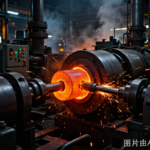
Seamless starts from a solid round billet heated to ~1,200°C and pierced on a rotary piercer (Mannesmann process): two obliquely set rolls rotate and advance the billet over a pointed mandrel, opening a cavity that becomes the bore. The rough shell then passes through mandrel mills, plug mills, or cross-rolling to set the outside diameter and wall, followed by stretch-reducing to final size, heat treatment (normalized, or quenched-and-tempered for high grades), and testing.
No melting of a seam means no weld ever existed — the wall is continuous around the circumference. That is the entire metallurgical argument for seamless: there is no weld zone to contain inhomogeneity, and pressure integrity is uniform in every direction.

Head-to-Head Comparison
| Feature | ERW | Seamless |
|---|---|---|
| Raw material | HR strip coil | Solid round billet |
| Size range (OD) | 1/2″ – 24″ (DN15 – DN600) | 1/8″ – 48″+ (DN6 – DN1200+) |
| Wall thickness | Thin-medium (Sch 5 – 80 typical) | Full range incl. XXS |
| Weld seam | Present (HF-forged, usually annealed) | None |
| OD tolerance | Tighter (cold-formed, ± 0.5% typical) | Hot-formed, looser (± 0.75 – 1%) |
| Wall uniformity | Excellent (strip gauge control) | Eccentricity 5 – 10% possible on hot-finished |
| Surface finish | Smooth as-rolled strip | Mill scale, hot-formed texture |
| Relative price (same size) | Baseline | +20 – 60% |
| Production speed | Very high (continuous) | Lower (batch-based) |
Two quiet quality points buyers miss: first, ERW’s cold-formed strip gives tighter OD tolerance and better wall uniformity than hot seamless — for tubes destined for machining or chromium plating, ERW can be the better product. Second, seamless eccentricity means the minimum wall can sit 5 – 10% below nominal at one clock position — wall-thickness acceptance must account for this, and cheap “seamless” priced like ERW often hides exactly this problem.
Weld Seam Integrity: What the Standards Actually Require
The historical prejudice against ERW dates to low-frequency DC welding (pre-1970s), where cold welds and hook cracks were real failure modes. Modern high-frequency ERW, properly heat-treated, produces seam integrity comparable to base metal:
- ASTM A135 / A53 Type E: standard ERW pipe — hydro test every length, weld ductility bend tests.
- ASTM A53 Type E with “NDE”: full-length eddy-current or UT examination of the weld per supplementary requirements.
- API 5L PSL2 welded pipe: mandates 100% weld-seam NDE, CVN impact testing, and CTOD where specified — ERW is qualified for sour and pipeline service to X70.
- Heat-affected-zone normalization: specifiable (“seam normalized” / “weld annealed”) — ask for it on any ERW order for dynamic or low-temperature service.
Where ERW is NOT accepted: most high-temperature pressure codes restrict or exclude welded pipe above certain temperatures/pressures — ASTM A106 (high-temp seamless) exists precisely because ASME B31.1/B31.3 designers wanted a seamless-only option for steam. Check your design code before substituting.

Cost: Where the Money Goes
| Cost Driver | ERW | Seamless |
|---|---|---|
| Raw material (per tonne of pipe) | Strip coil (high yield, ~95% conversion) | Billet (lower yield, ~85% conversion) + billet premium |
| Energy | Low (cold forming + HF heating of seam only) | High (whole billet reheated to 1,200°C) |
| Speed / capacity | Continuous, 30 – 120 m/min | Batch, slower |
| Testing intensity | Standard: hydro per length | Often + UT/RT, tensile per lot |
Net effect: for common structural and low-pressure sizes (NPS 1/2″ – 12″, Sch 10 – 40), ERW typically prices 20 – 40% below seamless. Above NPS 24, large ERW lines exist, but thick-wall big-bore remains seamless territory.
Decision Framework for Buyers
| Service | Recommended | Reason |
|---|---|---|
| Structural columns, scaffolding, piling | ERW (A500/A53) | Cost, tight dimensions, adequate strength |
| Mechanical tubes, plating, precision parts | ERW (A513) | Superior wall uniformity and finish |
| Water, fire protection, low-pressure lines | ERW (A53 S/E, A135) | Code-accepted, lowest cost |
| Steam, boiler, high-temp process | Seamless (A106, A192, A210) | Code requirement, no weld at temperature |
| Oil & gas transmission | Either (API 5L PSL2) | Both qualified — choose by size/cost |
| Thick wall (Sch 160/XXS), big bore | Seamless | ERW wall capability limited |
| Low temperature (below −29°C) | Seamless or seam-normalized ERW | HAZ toughness at low temp |
Ordering and Certificate Checklist
- Write the manufacturing type explicitly: “seamless” or “ERW” — never just “pipe.”
- For ERW: state “seam normalized” if service involves fatigue, low temperature, or code torsion limits.
- Certificate check: ASTM A53 lists Type (E/S), ASTM A106 is seamless-only; API 5L PSM (manufacturing process) code on the MTC.
- For ERW with NDE: UT/EC examination report per length, notch-calibrated, referenced on MTC.
- Hydro test pressure recorded per length — both types require it; demand the readings, not just “tested.”
- Wall thickness: verify minimum wall at multiple clock positions (seamless eccentricity), especially on hot-finished seamless.
Frequently Asked Questions
1. Is ERW pipe weaker than seamless?
No, not inherently. A properly made, seam-annealed ERW weld achieves base-metal strength, and API 5L PSL2 qualifies ERW to X70 for gas pipelines. Weak ERW is a manufacturing-quality problem, not a process property — which is why supplier qualification and weld NDE matter more than the process label.
2. Why is ASTM A106 seamless-only?
Because A106 is written for high-temperature service where codes historically preferred no weld seam at temperature, and the silicon-bearing chemistry plus mandatory heat treatment target creep performance. Designers use A106 for steam and hot process lines; A53 (ERW or seamless) covers ambient mechanical and pressure service.
3. Can ERW pipe be used for pressure vessels?
Generally no for the pressure boundary of coded vessels (ASME VIII limits welded pipe applications); it is widely used for vessel internals, jackets, and non-coded equipment. Always confirm against the applicable code case and the client’s specification.
4. How do I verify a pipe is actually seamless as ordered?
Three checks: visual bore inspection (ERW shows an internal weld bead trim line), the MTC (must state “seamless” / A106 / API 5L PSM=S), and cross-cutting one sample — a seam line in the macro structure proves welded manufacture. The third check is worth performing on first orders from a new supplier.
5. Which is cheaper for the same schedule?
ERW, typically 20 – 40% less for common sizes. The gap narrows at large OD, thick wall, and for grades requiring special chemistry — where billet availability drives seamless cost up but ERW capability runs out.
Conclusion
ERW and seamless are complementary products, not competing quality tiers: ERW wins on cost, dimensional precision, and thin-wall efficiency; seamless wins on code acceptance at temperature, thick walls, and the psychological (and sometimes regulatory) comfort of no weld. The expensive mistake is leaving the manufacturing route unspecified — write it on the purchase order, demand the right certificate lines, and inspect the weld seam if seamless was what you paid for.
Huaxia-Steel supplies both ERW (ASTM A53 E, A135, A500, A513) and seamless carbon steel pipe (A106, A179, API 5L) from certified Chinese mills — with EN 10204 3.1, hydro records, and weld NDE on request. Send us your pipe list with service conditions — we will confirm the right manufacturing route and quote within 24 hours.