Introduction: Two Routes from the Same Slab
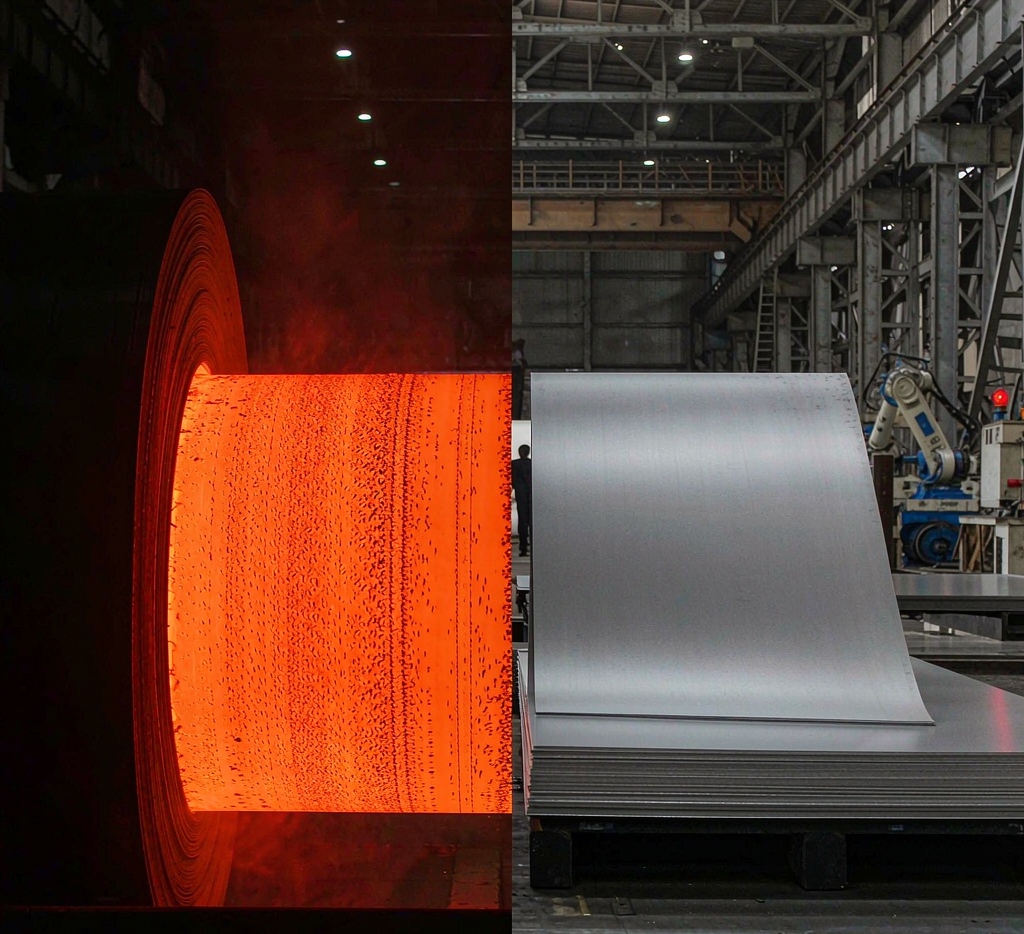
Every flat carbon steel product starts as a slab, but it reaches the buyer through one of two paths: hot rolling or cold rolling. Hot rolled steel is shaped at high temperature, above the steel’s recrystallization point. Cold rolled steel is hot-rolled sheet that has been pickled, cleaned, and then reduced in thickness at room temperature.
The choice between hot rolled and cold rolled carbon steel affects surface finish, dimensional tolerance, mechanical properties, and price. Buyers who order “mild steel sheet” without specifying the route often receive hot rolled material when they needed cold rolled, or pay cold-rolled prices for applications where hot rolled would have worked. This guide explains how the two products differ and when to choose each.
1. How Hot Rolling Works
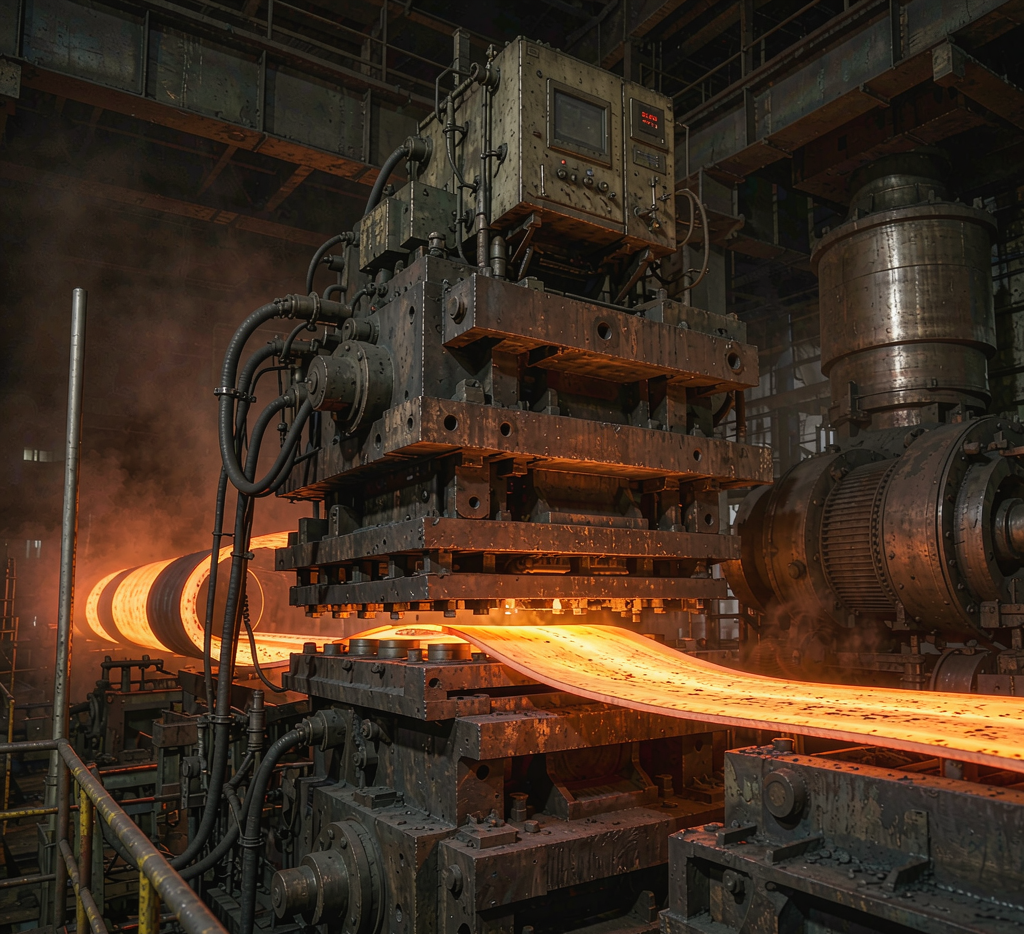
Hot rolling begins with a slab reheated to approximately 1,200°C. The slab passes through a roughing mill and then a finishing train of rolls while the steel remains above its recrystallization temperature. Because the steel is soft and deformable, large reductions are possible with relatively low force.
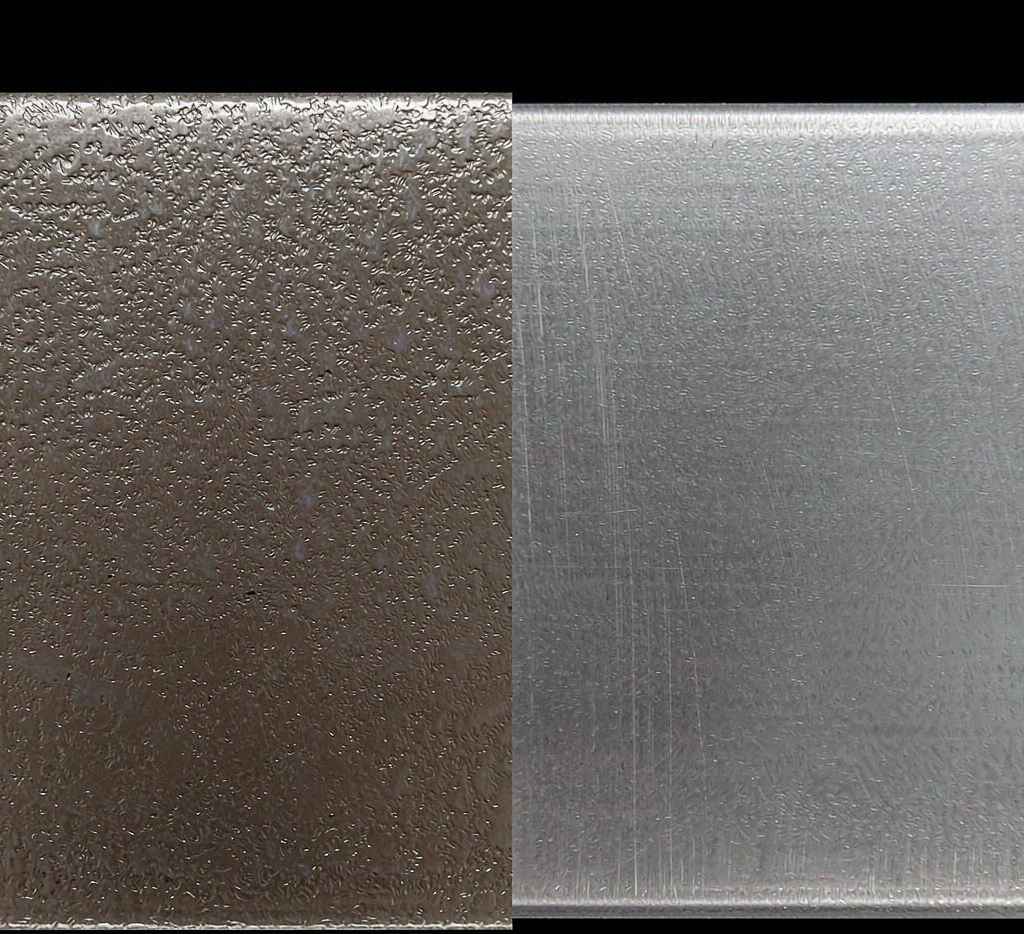
After rolling, the strip is coiled while still hot. The surface cools in air, forming a layer of mill scale — a dark iron oxide coating. The hot rolling process sets the grain structure, removes casting defects, and produces a tough, ductile product with characteristic scaled surface.
2. How Cold Rolling Works
Cold rolling starts from hot-rolled coil that has been pickled in acid to remove mill scale. The clean strip is then passed through a series of cold reduction stands at or near room temperature. Because the steel is no longer hot and soft, the rolling forces are much higher, and the strip elongates and work-hardens.
Cold-rolled sheets are typically supplied with annealed temper to restore ductility, and often receive a final skin pass to improve surface flatness. The result is a smooth, bright surface with tight thickness tolerance and higher yield strength than the starting hot-rolled material.
3. Visual and Dimensional Differences
| Feature | Hot Rolled | Cold Rolled |
|---|---|---|
| Surface finish | Dark mill scale, rough texture | Smooth, bright, oil-coated |
| Thickness tolerance | Looser (± 0.3 – 0.5 mm typical) | Tighter (± 0.05 – 0.1 mm typical) |
| Flatness | Some crown and edge wave | Excellent, often skin-passed |
| Thickness range | 1.2 – 25.4 mm common | 0.15 – 3.0 mm common |
| Edges | Mill edge, some scale | Clean, trimmed edge |
4. Mechanical Properties Comparison
| Property | Hot Rolled S235JR / Q235B | Cold Rolled SPCC / DC01 |
|---|---|---|
| Yield strength | 235 MPa typical | 240 – 280 MPa (work-hardened) |
| Tensile strength | 360 – 510 MPa | 270 – 410 MPa |
| Elongation | ≥ 24% | ≥ 28 – 34% (annealed) |
| Hardness | ~110 – 140 HB | ~50 – 65 HRB |
| Formability | Good | Excellent for deep drawing |
Cold rolling increases strength through work hardening, which is why cold-rolled automotive and appliance panels can be made thinner while still carrying the required load. Hot rolling keeps the material softer and more ductile, with lower strength but better toughness and weldability.
5. Cost Breakdown
| Cost Driver | Hot Rolled | Cold Rolled |
|---|---|---|
| Energy input | High (reheating slab) | Lower per pass, but more passes |
| Yield loss | Scale loss ~2 – 3% | Pickling, trimming, annealing |
| Surface treatment | Often none | Oil coating required |
| Relative price | Baseline | +10 – 25% typical |
For structural and general fabrication applications where surface appearance is not critical, hot rolled is almost always the cheaper choice. Cold rolled pays for itself when tight tolerances, smooth finish, or superior formability reduce downstream processing cost.
6. Selection Decision Table
| Application | Recommended Product | Why |
|---|---|---|
| Structural beams, columns, frames | Hot rolled | Lower cost, adequate strength |
| Automotive body panels, appliances | Cold rolled | Surface, tight tolerance, formability |
| Tube and pipe forming | Hot rolled coil or cold rolled | HR for ERW structural, CR for precision |
| Steel storage racks, shelving | Hot rolled | Cost, acceptable tolerance |
| Precision stampings, brackets | Cold rolled | Consistent thickness and surface |
| Outdoor structures with painting | Hot rolled + shot blast | Scale must be removed before coating |
7. Common Buyer Mistakes
- Ordering by weight only: the same weight of hot rolled and cold rolled steel can have very different thickness and yield, changing part fit-up.
- Painting hot rolled without blasting: mill scale is not a reliable anchor for paint; it flakes and causes corrosion.
- Using cold rolled for welded structures: cold rolling introduces work hardening and residual stresses that can distort during welding unless stress-relieved.
- Ignoring tolerances: specify whether the thickness tolerance must meet a commercial standard or a tighter process requirement.
Frequently Asked Questions
1. Is cold rolled steel stronger than hot rolled?
Cold rolled steel usually has higher yield strength due to work hardening, but its tensile strength can be lower than hot rolled equivalents. For structural loads governed by tensile strength, hot rolled grades such as S275JR or A36 may still outperform cold rolled commercial-quality sheet.
2. Can hot rolled steel be used for painting?
Yes, but the mill scale must be removed by shot blasting, pickling, or grinding before painting. Painting directly over scale leads to flaking and rust creep.
3. Why does cold rolled steel cost more?
Cold rolling requires extra steps: pickling to remove scale, multiple reduction passes, annealing to restore ductility, and often a skin pass. These steps improve surface and tolerance but add cost.
4. Which is better for welding?
Hot rolled is generally better for welding because it has lower residual stress and a more forgiving tolerance. Cold rolled can be welded, but distortion control and stress relief may be needed.
5. What is the standard thickness tolerance for hot rolled sheet?
Common standards include EN 10051, ASTM A635, and GB/T 709. Tolerance depends on the nominal thickness and the class specified. For precision work, always state the standard and tolerance class on the order.
Conclusion
Hot rolled and cold rolled carbon steel serve different parts of the market. Hot rolled is the workhorse for structural and general fabrication where cost and toughness matter. Cold rolled is the precision choice when surface, tolerance, and formability drive value. Match the product to the downstream process, not just to the lowest price.
Huaxia-Steel supplies hot rolled and cold rolled carbon steel coil, sheet, and strip in Q195, Q235B, Q345B, S235JR, S275JR, S355JR, ASTM A1011, and commercial cold-rolled grades. Send us your specification and destination port for a quotation with delivery schedule.