JIS G3131 SPHC Steel: Grades, Properties and Uses
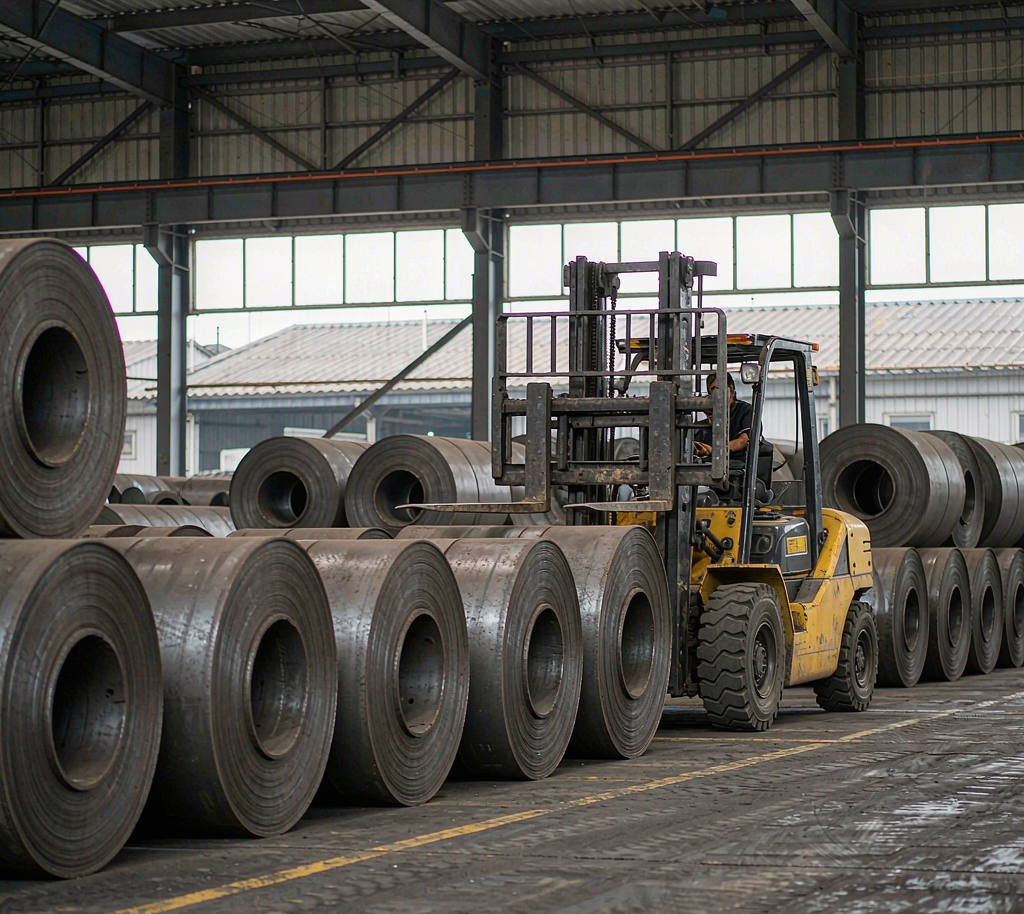
JIS G3131 is the Japanese standard that sits behind a huge share of the hot rolled steel coil moving through Asian and global trade, and SPHC is its most quoted grade. If you have ever bought a coil described as “pickled and oiled”, “commercial quality hot rolled” or simply “SPHC”, you have met this standard. Yet SPHC is frequently confused with structural grades like SS400 or Chinese Q235, and buyers who treat them as interchangeable sometimes get coil that forms poorly, welds differently or fails a drawing requirement.
This guide explains what JIS G3131 covers, how the three main grades — SPHC, SPHD and SPHE — differ, the chemistry and mechanical requirements behind the numbers, how the standard positions against SS400 and Q235B, what surface and edge conditions mean for coil buyers, and how to read a JIS G3131 mill certificate. It is written for procurement staff and engineers who buy hot rolled coil for forming, stamping, welding and general fabrication.
What JIS G3131 Covers
JIS G3131 is the Japanese Industrial Standard for hot rolled mild steel strip and coil for general structural and forming use. It covers hot rolled sheet and coil in the thickness range commonly supplied from about 1.2 mm up to around 25 mm, intended for applications where moderate strength, good formability and weldability matter more than high strength. Its defining feature is a family of grades classified by formability rather than by minimum yield strength, which is the opposite of how structural standards like SS400 are organized.
That classification by formability is the key to reading the standard correctly. SPHC, SPHD and SPHE are not simply increasing strength grades — they are increasing drawability grades, with tighter chemistry and cleaner steel as you move up. A buyer who specifies SPHC expecting SS400-level strength, or SPHE expecting a cheap substitute, has misread the logic of the standard.
The Three Grades: SPHC, SPHD and SPHE
SPHC is the base commercial-quality grade, suitable for general bending, welding and light forming. SPHD adds a drawing quality designation with tighter carbon and manganese limits and lower impurities, giving better ductility for moderate drawing. SPHE is deep-drawing quality, with the tightest chemistry control and the highest elongation, used where the part must stretch significantly without cracking. The letters track formability, not strength.
| Grade | Quality | Formability | Typical use |
|---|---|---|---|
| SPHC | Commercial | General bending, light forming | Brackets, panels, general fabrication |
| SPHD | Drawing | Moderate drawing | Stampings, enclosures, moderately formed parts |
| SPHE | Deep drawing | Deep drawing | Complex stampings, automotive-type panels |
Because formability rises while strength requirements stay modest, the higher grades are not “stronger” in the way a structural grade would be. They are cleaner and more ductile. A part that needs strength should specify a structural grade or a higher-strength hot rolled grade, not SPHE. A part that needs to stretch in a press should specify SPHD or SPHE, not SS400.
Chemical Composition Requirements
JIS G3131 controls chemistry tightly enough to guarantee formability but loosely enough to allow efficient mill practice. Carbon is the dominant variable: SPHC sits around 0.12% maximum carbon, SPHD tightens toward 0.10%, and SPHE goes lower again, with manganese and impurity limits adjusted alongside. Phosphorus and sulfur are held low, and the higher grades add controls on residual elements that would otherwise hurt ductility.
| Element | SPHC | SPHD | SPHE |
|---|---|---|---|
| Carbon (C) | ≤0.12% | ≤0.10% | ≤0.08% |
| Manganese (Mn) | ≤0.50% | ≤0.40% | ≤0.35% |
| Phosphorus (P) | ≤0.040% | ≤0.030% | ≤0.025% |
| Sulfur (S) | ≤0.040% | ≤0.030% | ≤0.025% |
These are indicative bands based on common mill practice and should be confirmed against the edition of JIS G3131 named on the purchase order, because limits have been revised over time. The trend is clear: as the grade letter climbs from C to D to E, carbon and impurities fall and ductility rises. That is why a mill will sometimes offer a higher grade as a substitute when the lower one is out of stock — it is safe for forming, though it may be softer than the drawing assumed.
Mechanical Properties and Test Requirements
JIS G3131 specifies tensile strength, yield point and elongation, with the requirements loosening as formability rises because a more ductile steel naturally shows lower strength and higher elongation. SPHC typically shows tensile strength around 270–410 MPa with elongation of about 27% minimum; SPHD and SPHE show progressively higher elongation requirements to guarantee drawing performance. Exact values depend on thickness and grade.
| Property | SPHC | SPHD | SPHE |
|---|---|---|---|
| Tensile strength | 270–410 MPa | 270–400 MPa | 270–380 MPa |
| Yield point | ≥205 MPa | ≥185 MPa | ≥165 MPa |
| Elongation (min) | ~27% | ~29% | ~31% |
| Test frequency | Per lot | Per lot | Per lot |
Mechanical tests are taken per lot as defined by the standard, and the mill certificate reports the actual results against the grade minimums. For forming-critical applications, buyers should also ask for the grain structure or a forming trial, because two coils that both meet the letter of SPHD can still differ in press performance depending on rolling and cooling practice.
SPHC vs SS400 vs Q235B: What Actually Differs
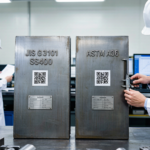
The most common confusion in the trade is treating SPHC, SS400 and Q235B as the same material because they are all “mild steel”. They are not organized the same way. SS400 (JIS G3101) is a structural grade defined by minimum tensile strength (400 MPa class) for structural use, with chemistry left relatively free. Q235B (GB/T 700) is the Chinese structural grade defined by minimum yield (235 MPa) with a carbon cap for weldability. SPHC is a forming grade focused on ductility at modest strength.
| Attribute | SPHC (JIS G3131) | SS400 (JIS G3101) | Q235B (GB/T 700) |
|---|---|---|---|
| Purpose | Forming / general | Structural | Structural |
| Defined by | Formability grade | Tensile 400 MPa class | Yield 235 MPa min |
| Carbon | ≤0.12% | Not tightly specified | ≤0.20% |
| Best for | Bending, stamping | Frames, structures | General structures |
In practice SPHC often has lower strength than SS400 and is more ductile, so substituting SPHC for SS400 in a load-bearing structure is a downgrade that should never be done silently. The reverse — using SS400 where SPHC was intended — may be stronger but can form poorly and crack in tight bends. The right grade is the one that matches the duty: forming parts get a forming grade, structural parts get a structural grade.
Surface Quality, Edge Condition and Coil Form
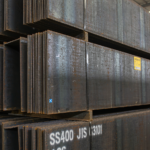
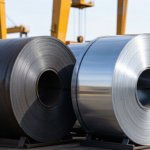
Hot rolled coil from JIS G3131 supply carries the usual hot rolled surface: mill scale unless pickled, possible light scratches, and edge condition that depends on whether the coil is mill edge or trimmed edge. For forming and coating, scale is a problem, so SPHC is frequently supplied pickled and oiled (P&O), which removes scale and applies a thin oil film to prevent rust during storage and shipping.
Coil buyers should specify internal diameter, coil weight, edge condition and whether pickled and oiled supply is required. Unpickled black coil is cheaper but unsuitable for many forming and all coating processes without additional descaling. Edge condition matters for slitting and for parts where the coil edge becomes a visible or functional surface. These details belong on the purchase order, because “SPHC coil” alone leaves the mill free to ship whichever form is convenient.
Typical Applications: Drawing, Forming and Welding
SPHC and its higher grades are the raw material behind an enormous range of products: brackets, panels, enclosures, furniture frames, shelving, ducts, drums, general stampings, welded tube and pipe, and countless fabricated parts. SPHD and SPHE extend the range into moderate and deep drawn components where the metal must flow significantly in a press. The common thread is that the part is formed and welded rather than loaded as a structure.
SPHC welds easily because of its low carbon content: no preheat, no special filler, no cracking risk in normal sections. That weldability is a large part of why the grade dominates fabrication supply. It also takes coatings, paint and galvanizing well once the surface is properly prepared, which is why it feeds the appliance, automotive and construction-products industries.
Pickling, Oiling and Delivery Condition
Delivery condition is a commercial decision that affects both price and usability. Black (unpickled) coil is the cheapest and suits applications where scale is acceptable or will be removed later. Pickled and oiled coil costs more but gives a clean surface ready for forming, welding and coating, and the oil film buys storage time before rust appears. Pickled, oiled and trimmed coil adds edge quality for precision slitting.
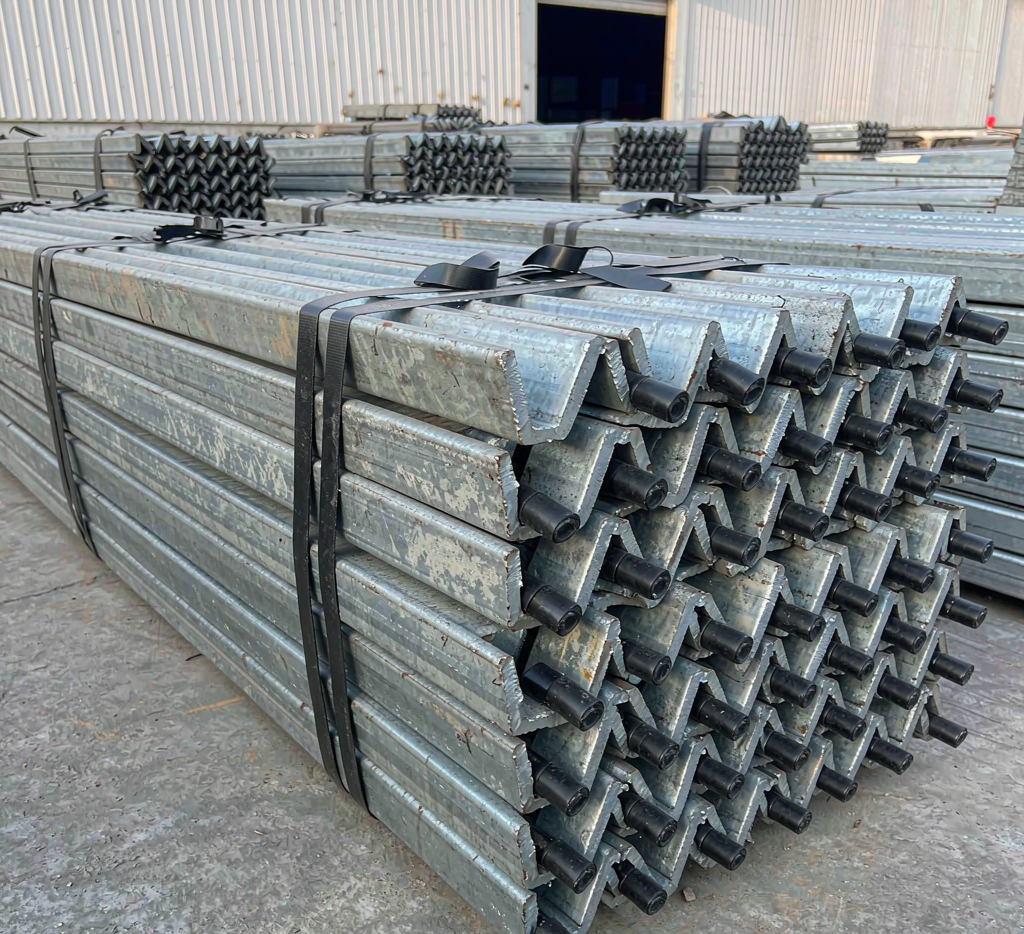
For export shipments, the oil film and packaging deserve attention: moisture during ocean transit is the enemy of pickled coil, and a coil that arrives with rust blooms has effectively lost its surface premium. Specify the oil type and quantity, the wrapping (VCI paper, plastic, strapping), and the coil eye orientation for container loading. These are small line items that decide whether the buyer receives usable material or a claim.
Tolerances and Coil Dimensions
JIS G3131 sets thickness and width tolerances that tighten as thickness decreases, and buyers of precision parts should confirm the tolerance class rather than assume the default. Coil weight and inside diameter affect the customer’s decoiler and press line, so they belong in the specification. A coil that is dimensionally correct but wound to the wrong inside diameter can stop a production line just as surely as off-grade chemistry.
Where the coil will be slit or cut to length, the buyer should also agree who owns the yield loss and how edge camber and coil set are handled. These are standard commercial points in coil trade, but they are routinely left vague, and vagueness is where disputes begin. A clear purchase order with tolerances, coil dimensions and edge condition removes most of the ambiguity.
Reading a JIS G3131 Mill Certificate
A proper JIS G3131 certificate shows the heat or coil number, the grade, the heat chemistry against the standard bands, the tensile and yield results, elongation, and a statement of conformity. Cross three things: that the chemistry sits inside the named grade’s band, that the mechanical results exceed the grade minimums, and that the certificate’s grade and edition match the purchase order. A certificate that reports SS400 results against an SPHC order is a red flag, not a convenience.
For higher-value orders, pair the mill certificate with a third-party inspection that checks thickness, width, coil weight, surface condition and edge quality before shipment. Coil rarely fails mechanical testing in practice; the recurring problems are dimensional tolerance, surface rust and edge damage, none of which a mill certificate describes.
Ordering Checklist
- State the grade explicitly (SPHC, SPHD or SPHE) and the governing JIS G3131 edition.
- Specify delivery condition: black, pickled and oiled, or pickled-oiled-trimmed.
- Define thickness, width and tolerance class, plus coil ID and weight range.
- State edge condition (mill edge or trimmed) and any slitting requirements.
- Require a mill test certificate with actual chemistry and mechanical results.
- Confirm export packing, oil type and moisture protection for ocean transit.
Frequently Asked Questions
Is SPHC the same as SS400?
No. SPHC is a forming grade defined by formability with carbon around 0.12% max, while SS400 is a structural grade defined by a 400 MPa tensile class. SPHC is generally softer and more ductile; SS400 is used for load-bearing structures.
What does the H in SPHC stand for?
In JIS G3131 the letter sequence denotes hot rolled mild steel for general use, and the final letter indicates the quality level (C commercial, D drawing, E deep drawing). The designation is about formability, not strength.
Should I buy pickled and oiled coil?
Buy P&O if the coil will be formed, welded or coated and needs a scale-free surface, or if it must survive ocean transit without rust. Black coil is cheaper and fine where scale is acceptable or will be removed later.
Can SPHC be welded?
Yes, easily. Its low carbon content means no preheat and no special filler are needed in normal sections. It is one of the most weldable hot rolled grades, which is why it dominates general fabrication supply.
Coil Handling and Storage Best Practice
Hot rolled coil is robust but not indestructible, and poor handling quietly converts good material into a claim. Coils should be lifted with a proper C-hook or coil grab, never with wire rope through the eye that can crush the wrap. Stacking should respect the coil weight and eye orientation: standing coils on their edge on a flat, dry surface prevents ovality and flat spots, while stacking on the flat risks deformation of the lower coils under load.
Storage environment matters most for pickled and oiled coil, which will rust if moisture reaches the surface. Keep P&O coil under cover, off the ground, with air circulation and away from sources of condensation. Black coil tolerates outdoor storage better but still suffers edge rust that can become a problem at slitting. For long storage or humid climates, VCI wrapping and desiccant inside the wrap preserve the surface that the oil film alone cannot protect indefinitely.
- Lift with C-hook or coil grab; never crush the wrap with wire rope.
- Store on edge on a flat, dry, drained surface to avoid ovality and flat spots.
- Keep pickled and oiled coil under cover, off the ground, with ventilation.
- Use VCI wrapping and desiccant for long storage or humid destinations.
- Rotate stock on a first-in-first-out basis to limit rust exposure time.
Common Defects in Hot Rolled Coil
The defects most often found at incoming inspection are scale, edge damage, coil breaks and camber. Mill scale is normal on black coil and is removed by pickling; on P&O coil any scale indicates a pickling problem and should be rejected. Edge damage — dents, nicks, rolled-in edges — propagates into slitting yield loss and should be assessed against the agreed edge condition.
Coil breaks are transverse kinks or Lüders bands that appear during uncoiling; they indicate yield-point extension and often signal a coil that was stored or handled badly or a grade with insufficient temper-rolling. Camber is a sideways curve along the coil length that wastes material at slitting. Both are visible before processing, so a short inspection at goods-in saves the downstream cost of running defective coil through a press or slitter.
Why SPHC Remains the Default Forming Grade
Despite the spread of higher-strength and coated products, SPHC remains the default hot rolled forming grade for a simple reason: it does what most forming jobs need at the lowest cost. It bends, it welds, it takes coating and it is available everywhere in a wide thickness range. For parts that do not require deep drawing or structural strength, specifying anything more sophisticated adds cost without adding value.
The grade also has the deepest supply base of any JIS hot rolled product, which means short lead times, competitive pricing and wide availability of pickled and oiled stock. For buyers running repeat programs, that reliability matters as much as the material properties. Where a part genuinely needs deep drawing, SPHD or SPHE earns the premium; where it does not, SPHC is the rational default that keeps cost and lead time down.
Get a Quote from Huaxia-Steel
Factory-direct carbon steel with MTC, third-party inspection, and fast export shipping. Tell us your grade, size, quantity and destination — we return a firm quote within 24 hours.