Laser Cutting vs Plasma Cutting Carbon Steel: A Fabricator’s Buying Guide
If you are outsourcing plate cutting or buying a cutting machine, the laser vs plasma question decides your cost per part, your edge quality, and your rework rate. Both processes cut carbon steel well, but they occupy different economic zones: fiber laser dominates thin-to-medium plate with precision, while plasma wins on thick sections and low capital budgets. This guide compares cut quality, thickness range, speed, cost structure, heat-affected zone, and downstream effects so you can route each job to the right process — and write RFQs that get you accurate quotes.
1. Quick Comparison at a Glance
| Factor | Fiber Laser | Plasma |
|---|---|---|
| Practical thickness (mild steel) | 0.5–25 mm (up to 40 mm with edge start) | 1–50 mm (best 6–30 mm) |
| Edge quality ≤12 mm | Excellent — smooth, square, dross-free | Good — slight bevel, needs cleanup |
| Edge quality ≥25 mm | Marginal — slower, striations | Good — squareness better than laser |
| Hole quality (small holes) | Holes down to ~0.5× thickness | Holes limited to ~1.5–2× thickness |
| HAZ | Very narrow (0.05–0.2 mm) | Wider (0.5–2 mm) |
| Slitting speed at 6 mm | 3–6 m/min | 2.5–4 m/min |
| Capital cost (machine) | US$80k–600k | US$30k–200k |
| Running cost | Lower power, assist gas is main cost | Higher power and consumables |
| Operator skill | Moderate | Moderate, faster to learn |
2. How Each Process Works — and Why It Matters to You
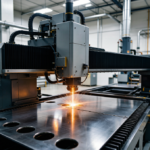
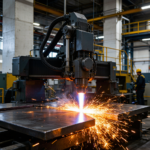
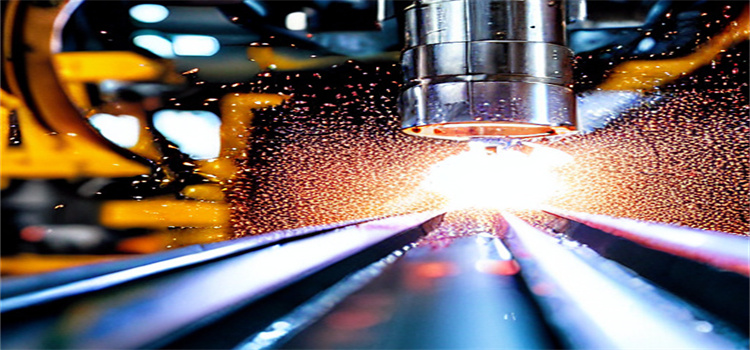
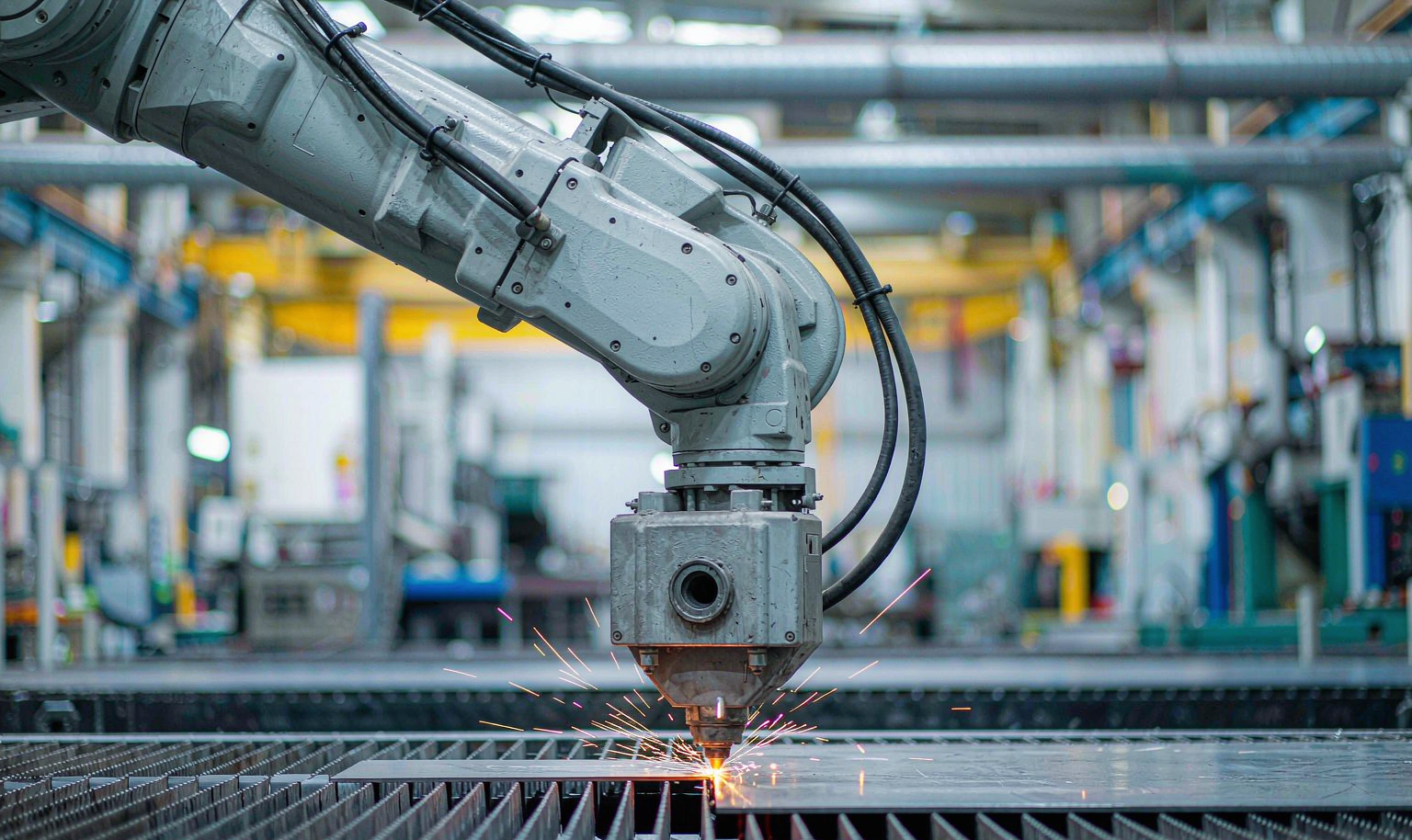
Fiber laser focuses a 3–30 kW solid-state beam to a 0.1–0.3 mm spot, melting a narrow kerf that oxygen (for carbon steel) or nitrogen blows through. Because the energy density is extreme, the cut is precise and the heat-affected zone is hairline. Plasma ionizes gas into an electrically conductive arc at 20,000°C+, melting a wider channel that the gas jet evacuates. The physics explains every practical difference that follows: laser = narrow, precise, slower in thick metal; plasma = wide, fast, tolerant, cheaper per kW.
3. Cut Quality: Where Money Is Actually Made or Lost
Edge quality is not cosmetic — it drives deburring labor, fit-up for welding, and machining allowance:
- Dimensional accuracy: laser holds ±0.05–0.1 mm on 10 mm plate; plasma holds ±0.3–0.5 mm on the same. If your drawing carries ±0.1 mm tolerances on cut edges, plasma is out of the running without post-machining.
- Kerf and nesting: laser kerf is 0.1–0.3 mm vs plasma 1.5–3 mm. Tighter kerf means better nesting and 2–5% material savings on dense nests — significant on 20 mm+ plate where a sheet costs hundreds of dollars.
- Small holes: laser cuts a 6 mm hole in 20 mm plate; plasma generally cannot cut holes smaller than ~2× plate thickness with acceptable roundness. Part designs with many bolt holes strongly favor laser.
- Bevel: plasma cuts carry a 2–5° edge bevel that matters on thick sections and mating surfaces; laser edges are square within a fraction of a degree on mid-range thickness.
- Dross: modern plasma (with oxygen for carbon steel) can cut low-carbon plate largely dross-free up to ~20 mm; laser with oxygen is dross-free across its range but nitrogen-assisted cutting of thick plate can re-weld dross.
4. Speed and Thickness: The Crossover Zone
The honest answer on speed: below ~12 mm, a modern fiber laser is faster than plasma on most contour work and dramatically faster on fine features. In the 15–25 mm band, a 12–15 kW laser keeps pace on straight lines but plasma closes the gap. Above 30 mm, high-amperage plasma (200–400 A) wins on productivity, and laser becomes edge-start-only territory. Rough cutting-speed ranges for mild steel:
| Thickness | Fiber laser (6–12 kW) | Plasma (130–260 A) |
|---|---|---|
| 3 mm | 4.5–8 m/min | 3–5 m/min |
| 6 mm | 3–5.5 m/min | 2.5–4 m/min |
| 12 mm | 1.5–3 m/min | 1.8–3 m/min |
| 20 mm | 0.8–1.5 m/min | 1–1.8 m/min |
| 30 mm | Edge start / 0.3–0.6 m/min | 0.6–1.2 m/min |
| 40 mm+ | Not practical | 0.4–0.8 m/min |
Real-world productivity depends more on piercing time, rapid traverse, and setup than on raw cut speed. Laser pierces in 0.2–1 s on thin plate but 5–15 s on 25 mm; plasma pierces in 1–2 s at any thickness. On nests with hundreds of piercings, this dominates the cycle.
5. Cost Structure: Capital, Consumables, and Cost per Part
Capital: a 6 kW fiber laser cell costs 2–4× a comparable plasma table. But Chinese-made fiber lasers have collapsed entry prices, and many export fabricators now run 6–12 kW lasers as standard.
Consumables: plasma electrodes and nozzles last 1–4 hours of arc time and cost US$8–25 per set; torch rebuilds add more. Laser consumables (protective glass, nozzles, ceramic bodies) cost less per hour and last far longer. Over a year of two-shift cutting, plasma consumable spend typically runs 3–6× laser.
Energy: laser converts power to the cut more efficiently; plasma draws 30–80 kW at full amperage. For 10 mm carbon steel, laser cost per meter of cut is commonly 30–50% lower when assist gas (oxygen) is cheap.
Buyer’s rule of thumb when outsourcing: if your parts are under 20 mm and tolerance-sensitive, laser quotes may actually come in cheaper than plasma once plasma vendors price in the extra machining and deburring. Ask for both processes on the same RFQ and compare landed cost, not just cut price.
6. Heat-Affected Zone and Material Performance
For structural parts and weldments, HAZ width decides how much edge prep you need. Laser HAZ on carbon steel is typically under 0.2 mm; plasma runs 0.5–2 mm with a visible oxide layer. For most welded fabrication, both are acceptable as-cut. The exceptions:
- Parts subsequently machined to final dimension — either process works, leave 1–3 mm machining stock.
- High-hardness or wear plate (e.g., NM400) — wider plasma HAZ can locally soften the edge; laser’s narrow HAZ preserves more of the as-quenched hardness.
- Fatigue-critical edges — laser-cut edges show better fatigue performance due to lower roughness (Ra ~1–3 µm vs plasma ~5–15 µm).
7. Which Process for Which Job?
| Application | Recommended Process | Why |
|---|---|---|
| Precision brackets, machine parts ≤12 mm | Fiber laser | Accuracy, hole quality, no secondary ops |
| Structural gussets, base plates 15–30 mm | Either — quote both | Cost/performance crossover zone |
| Thick flanges, rings 30–50 mm | Plasma (or laser+machining) | Plasma productivity, squareness acceptable |
| Wear plate liners | Fiber laser | Narrow HAZ, hole quality for countersinks |
| Signage, decorative panels | Fiber laser | Edge finish, fine detail |
| Ship panel parts, low-tolerance bulk | Plasma | Lowest cost per ton |
8. What to Specify When Ordering Cut Parts
- State the process explicitly (fiber laser / plasma) and edge-quality class if it matters — e.g., “laser cut, no dross, edges suitable for welding as-cut.”
- Give material grade and standard (e.g., S355JR to EN 10025-2, not just “mild steel”) so the vendor picks the right plate.
- Specify machining allowance on bores and faces that will be finished later — 2–3 mm is typical for plasma-cut blanks.
- For wear plate, require cutting parameter records (no preheat, max HAZ) to avoid edge softening.
- Ask for a first-article measurement report on critical holes and profiles before approving the batch.
FAQ
Is laser cutting cheaper than plasma for thin plate?
Usually yes at the part level. Machine time is comparable or faster for laser, and you save on deburring and rework. Plasma only becomes cheaper for thick, simple, low-tolerance parts.
Can plasma cut 50 mm carbon steel?
Yes — high-amperage systems (300–400 A) cut 50 mm comfortably and even to 80 mm with edge starts and reduced quality. Lasers over 25–30 mm become impractical for production.
Does laser cutting harden the edge of carbon steel?
Oxygen-assisted laser cutting of medium/high-carbon plate can leave a thin hardened layer, but it is far narrower than flame cutting. For wear plate, fiber laser is actually the gentlest thermal process.
What tolerances can I expect from outsourced plasma cutting?
Plan on ±0.8–1.5 mm for parts over 1 m and ±0.3–0.5 mm on small parts. Anything tighter should be laser cut or machined after cutting.
Which process causes more distortion?
Plasma inputs more total heat, so thin parts (<6 mm) distort noticeably more. On long, narrow parts, ask the vendor about cutting sequence and micro-joint strategy regardless of process.
Need Laser or Plasma Cut Carbon Steel Parts?
Huaxia-Steel supplies laser/plasma cut blanks and finished parts from S235JR to NM400 wear plate — DXF-based nesting, first-article inspection, and worldwide export.
Send your DXF or drawing for a fast quote: Contact our sales team.