Quenching vs Austempering vs Martempering Carbon Steel
Quenching vs Austempering vs Martempering Carbon Steel
Three heat-treatment processes dominate carbon steel hardening: quenching-and-tempering, austempering, and martempering. Each transforms austenite into a different microstructure at a different cooling rate, and each delivers a unique combination of hardness, toughness, dimensional accuracy and cost. Choosing the wrong process leads to distortion, cracking, or under-performing parts that fail in service.
This guide compares the three processes head-to-head on cooling rate, microstructure, hardness range, distortion control, cycle time, equipment cost and typical applications. Whether you heat-treat springs, gears, axles, hand tools, chains or wear plates, the same selection rule applies: pick the lowest-cost process that delivers the required hardness, toughness and dimensional tolerance.
1. Why Heat Treatment Process Selection Matters
Carbon steel hardness depends almost entirely on the cooling path from austenitising temperature. Faster cooling produces harder but more brittle microstructures (martensite), while slower cooling produces tougher but softer microstructures (pearlite, ferrite, bainite). The art of heat-treatment is choosing a cooling path that delivers the right balance for the application while keeping distortion and residual stress within tolerance.
For medium- and high-carbon steel parts, the three most common hardening routes are conventional quenching-and-tempering (QT), austempering and martempering. The terms "austempering" and "martempering" are often confused — they sound similar but produce very different results.
2. Conventional Quenching-and-Tempering (QT)
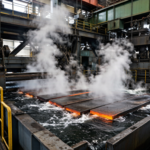
QT is the most widely used carbon-steel hardening process. The part is heated to austenitising temperature (typically 1450–1600°F / 790–870°C), soaked to dissolve carbides, then rapidly quenched in oil, water, brine or polymer to form martensite. After quenching, the part is brittle and highly stressed — it must be tempered by reheating to 300–1200°F (150–650°C) for one or two hours to convert some martensite to tempered martensite and relieve stress.
Hardness range: 35–65 HRC depending on carbon content
Distortion: high — uneven cooling causes warping and residual stress
Risk of cracking: highest of the three processes, especially for high-carbon grades
Equipment cost: lowest — standard quench tank and temper furnace
QT is the workhorse process for through-hardened carbon steel parts in the 0.30–0.80% C range — axles, shafts, bolts, hand tools, springs and wear plates. It is cheap, fast and well understood. The downside is distortion, which forces post-heat-treatment straightening, grinding or machining.
3. Martempering (also called Marquenching)
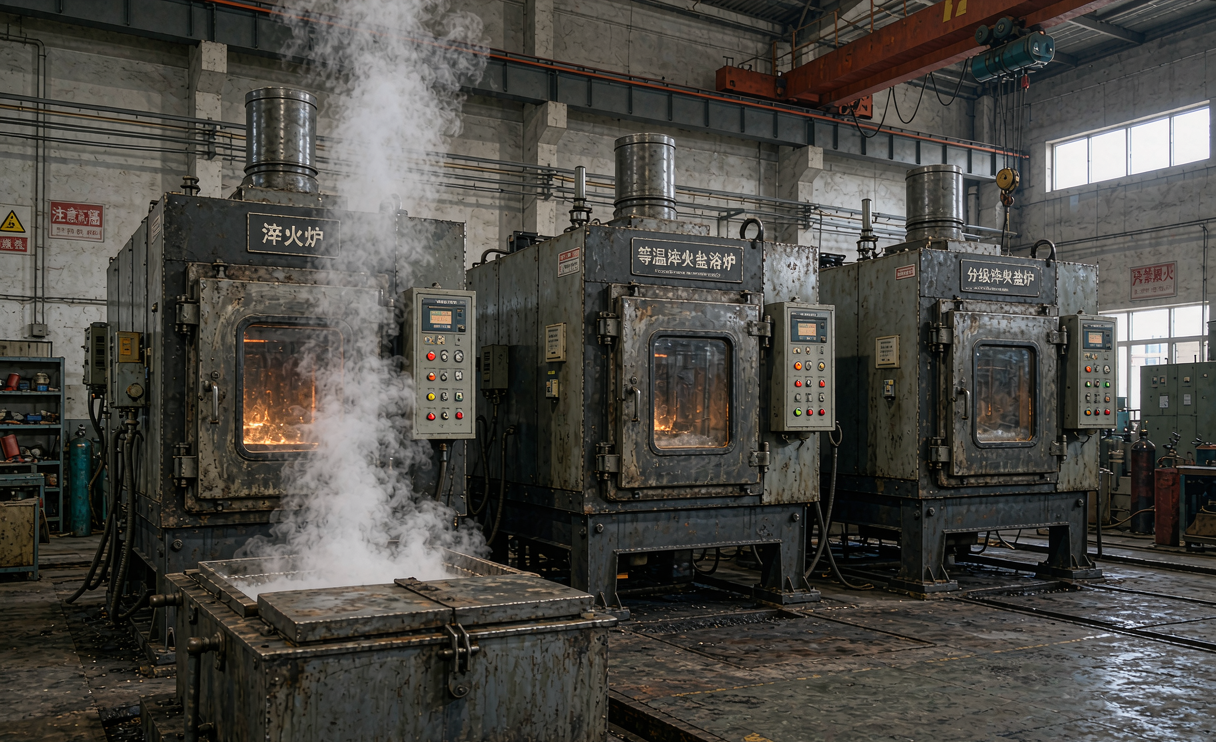
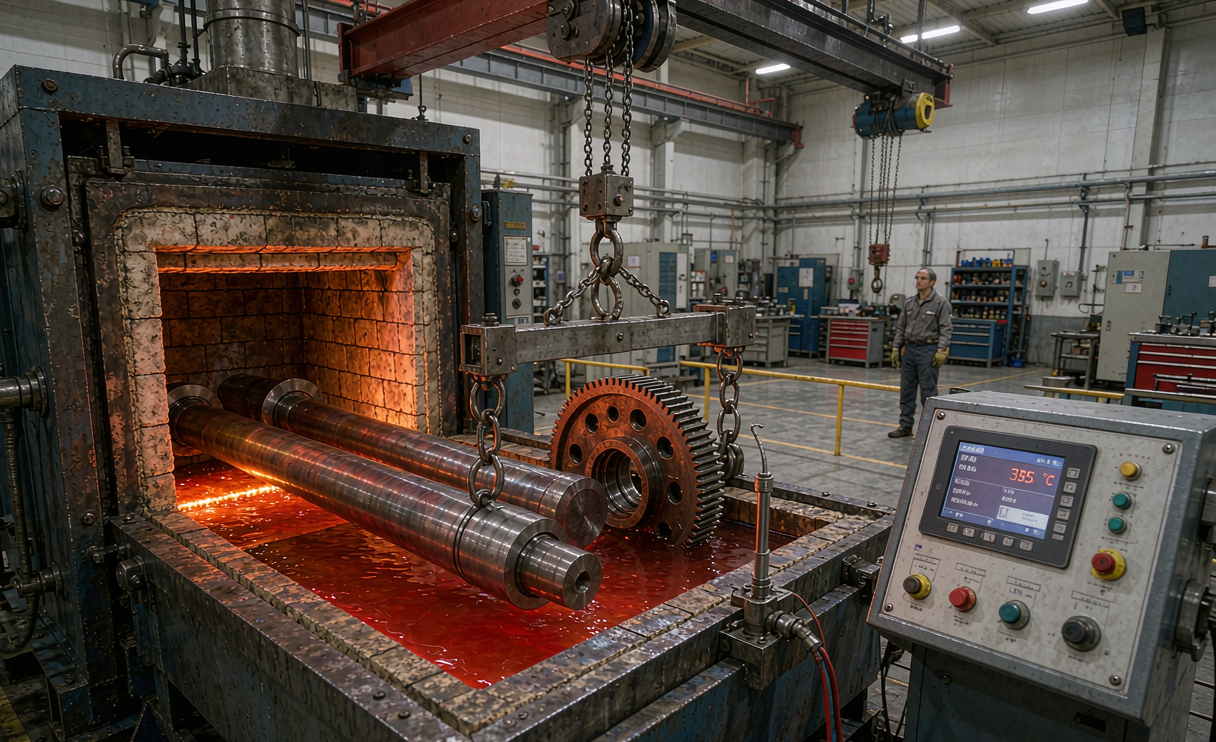
Martempering reduces distortion by interrupting the rapid quench before the part fully cools. The part is first quenched into a salt bath or hot oil held at 350–500°F (175–260°C), held long enough for the cross-section to reach a uniform temperature, then air cooled to room temperature. This produces martensite, but the transformation occurs evenly throughout the cross-section, which dramatically reduces residual stress and distortion.
After martempering, the part is tempered in the usual way to reach the desired hardness / toughness balance. The final microstructure and hardness are nearly identical to conventional QT — the only difference is dimensional accuracy.
Cooling rate: fast but interrupted at 350–500°F
Resulting microstructure: martensite (same as QT)
Hardness range: 35–65 HRC (same as QT)
Distortion: 50–80% lower than QT
Risk of cracking: significantly lower than QT
Equipment cost: moderate — salt bath or hot oil tank at 350–500°F
Cycle time: slightly longer than QT due to salt bath hold time
Martempering is preferred for geometrically complex parts or parts with tight dimensional tolerances — gear shafts, splined hubs, thin-walled rings, knives and cutting tools. It is also the safer choice for high-carbon tool steels (1.0% C and above) that are prone to quench cracking.
4. Austempering
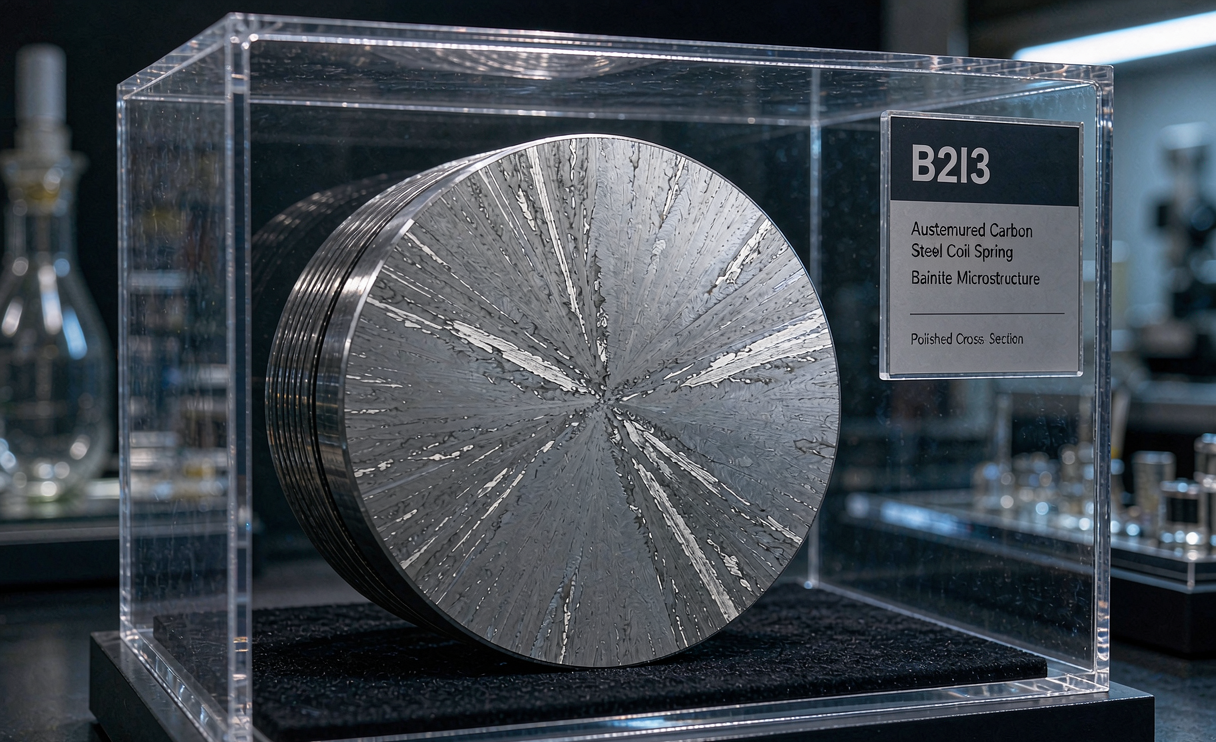
Austempering takes the interrupted-quench idea further. The part is quenched into a salt bath held at 460–750°F (240–400°C) and held for 30 minutes to 4 hours to allow isothermal transformation of austenite to bainite. No further tempering is needed because bainite is tough as-quenched.
Because the part never goes through the martensite region, austempered parts have the lowest distortion of the three processes. The trade-off is a hardness ceiling — austempered carbon steel typically reaches 40–55 HRC, well below the 60+ HRC achievable with QT for high-carbon grades.
Cooling rate: fast to bath, then isothermal hold
Resulting microstructure: bainite (no martensite)
Hardness range: 40–55 HRC (lower ceiling than QT)
Distortion: lowest of the three — minimal warping
Risk of cracking: very low
Equipment cost: moderate — salt bath held at 460–750°F
Cycle time: longest (30 minutes to 4 hours isothermal hold)
Austempering is widely used for carbon steel springs, security chains, agricultural components and thin section parts that need toughness without the distortion of QT. It is also used for ductile iron and certain alloy steels.
5. Side-by-Side Comparison
Feature
QT
Martempering
Austempering
Hardness ceiling (1080 steel)
~62 HRC
~62 HRC
~50 HRC
Toughness
Good (after tempering)
Good (after tempering)
Excellent (bainite)
Distortion
High
Moderate
Lowest
Cracking risk
Highest
Moderate
Lowest
Post-process tempering
Required
Required
Not required
Cycle time
Short
Moderate
Longest
Equipment cost
Low
Moderate
Moderate
Best suited for
Bulk parts, simple geometry
Complex geometry, tight tolerance
Springs, chains, thin parts
6. Selection Guide by Application
Hand tools, chisels, punches: QT in oil or water (high hardness required)
Heavy axles, shafts, wear plates: QT in oil (cost-effective, distortion manageable)
Knife blades (mass production): Martempering or austempering
High-carbon tool steel (1.0%+ C): Martempering to avoid quench cracking
7. Frequently Asked Questions
Can austempering replace quenching-and-tempering for springs?
For carbon and low-alloy spring steels, austempering is an excellent replacement that delivers equal or better toughness with much lower distortion. For high-carbon steels above 0.80% C where hardness above 55 HRC is required, conventional QT is still preferred because austempering cannot reach that hardness.
Why is martempering more expensive than conventional quenching?
Martempering requires a salt bath or hot oil tank held at 350–500°F plus precise timing. The salt bath adds equipment cost, salt consumption and floor space. In return, you save on post-quench straightening, scrap from cracking, and grinding to correct distortion.
What carbon content is needed for austempering?
Austempering works best for steels with 0.40–0.80% carbon. Below 0.40% C, the hardness ceiling is too low to be useful. Above 0.80% C, the isothermal transformation time becomes impractically long.
Is water quenching ever a good idea for carbon steel?
Water quenching is reserved for low-carbon steels (0.20–0.30% C) and simple shapes where distortion and cracking risk are low. For medium and high-carbon steels, oil or polymer quenching is the default to avoid cracking. Martempering is the safer choice when maximum hardness is needed without distortion penalties.
Need a heat-treatment partner for your carbon steel parts? Huaxia Steel offers austempering, martempering and conventional quenching-and-tempering through our partner network, with full hardness mapping, Charpy verification and metallographic examination. Send your drawing, quantity and target hardness to [email protected] for a process recommendation and quotation within 24 hours.
If you require further information about our metal sheet products or architectural projects, please don’t hesitate to leave your contact details and message here.
Our team of experts will respond within 24 hours to continue the discussion and provide you with any additional information you requires.