4130 Chrome Moly Round Bar — Factory Direct Supplier | Huaxia-Steel
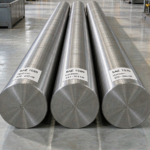
4130 chrome moly round bar — AISI/SAE 4130, DIN 25CrMo4, GB 30CrMo — is the alloy steel most buyers reach for when a part must combine strength, toughness and weldability in one grade. Supplied hot rolled, cold drawn, peeled, or quenched and tempered, it bridges the gap between plain carbon steel and the high-nickel alloy grades: roughly 50% higher tensile strength than 1045, at a fraction of the cost of 4340. We supply 4130 bars direct from Chinese mills in round, and can also provide forged shafts and cut-to-length blanks machined to drawing.
Product Overview
4130 is a low-alloy chromium-molybdenum steel (Cr 0.80-1.10%, Mo 0.15-0.25%) with carbon around 0.30%. That composition delivers three practical advantages: it hardens deeper than any plain carbon steel of the same carbon level, it retains adequate weldability with proper preheat, and it responds predictably to both Q&T and induction hardening. Bars are produced by EAF/LF/VD steelmaking with continuous casting or ingot route, then rolled or drawn. Because 4130 is frequently used in safety-relevant parts — aircraft tubular structures, roll cages, oilfield tool joints, bicycle and motorcycle frames — cleanliness and traceability matter more than on commodity bar; every order ships with a heat-specific mill test certificate.
Specifications, Sizes and Tolerances
Item
Range / Value
Grade
AISI / SAE 4130, ASTM A29/A829, DIN 25CrMo4 (1.7218), GB 30CrMo, JIS SCM430
Diameter (round bar)
10 mm – 400 mm hot rolled; 10 mm – 120 mm cold drawn / peeled
Length
3 m – 12 m standard; random or fixed; cut-to-length ±0.5 mm available
Tolerance (hot rolled)
JIS/GB/ASTM standard rolling tolerance (e.g. ±0.4 mm at 16–25 mm)
Tolerance (cold drawn)
h9 – h11 per ISO 286, or ±0.05 mm for ground finish
≤ 1 mm per meter (precision bars ≤ 0.5 mm/m by agreement)
UT testing
SEP 1921 Class C/c or D/d, EN 10308, or GB/T 4162 by agreement
Weight per meter
0.617 kg/m at 10 mm; 9.86 kg/m at 40 mm; 98.6 kg/m at 126 mm (density 7.85 g/cm³)
Weight calculation follows the standard round bar formula: kg/m = 0.00617 × D² (D in mm). For a 50 mm bar that gives 15.4 kg/m — useful for estimating container loads: a 20-foot container at 22-ton payload carries roughly 1,400 meters of 50 mm bar, or about 460 bars at 6 meters.
Delivery Conditions and Available Grades
Condition
Symbol
Typical hardness
Best for
Hot rolled / as rolled
+AR
~200 HB
Re-rolling stock, forging blanks
Annealed
+A
≤ 217 HB
Heavy machining before customer heat treatment
Normalized
+N
200–240 HB
Dimensional stability, moderate strength parts
Quenched & tempered
+QT
28–34 HRC (typical); up to 38 HRC by spec
Shafts, gears, tool joints — full strength
Pre-hardened
+QT
30–36 HRC
Direct machining, no further heat treatment
Where 4130 is not enough, we also supply adjacent grades: 4140 (DIN 42CrMo4 / SCM440) for higher strength at 50-120 mm sections, 4340 (34CrNiMo6) for deep-hardening heavy sections, 4135 and 4142 for intermediate strength, and SCM430 for Japanese-standard projects. If your drawing permits, we can also quote resulfurized variants for machining-heavy production.
Mechanical Properties (Typical, Q&T at 25 mm)
Property
4130 annealed
4130 Q&T (870 °C OQ, 540 °C temper)
Tensile strength
560–700 MPa
850–1,030 MPa
Yield strength (0.2%)
360–460 MPa
700–860 MPa
Elongation in 50 mm
22–28%
16–20%
Reduction of area
55–65%
50–60%
Hardness
≤ 217 HB
28–34 HRC
Charpy V-notch, room temp
70–100 J
70–110 J
Machinability (B1112 = 100%)
~65%
~55% after Q&T
Manufacturing and Inspection Standards
Chemistry and tolerances: SAE J404 / AISI, ASTM A29 for hot rolled bars, ASTM A829 for alloy bars, EN 10083-3 (25CrMo4), GB/T 3077 (30CrMo).
Ultrasonic testing: EN 10308 or SEP 1921 quality class C/c for forging-quality bars; 100% UT on request.
Grain size and cleanliness: ASTM E112 grain size, inclusion rating per ASTM E45 or DIN 50602 by agreement.
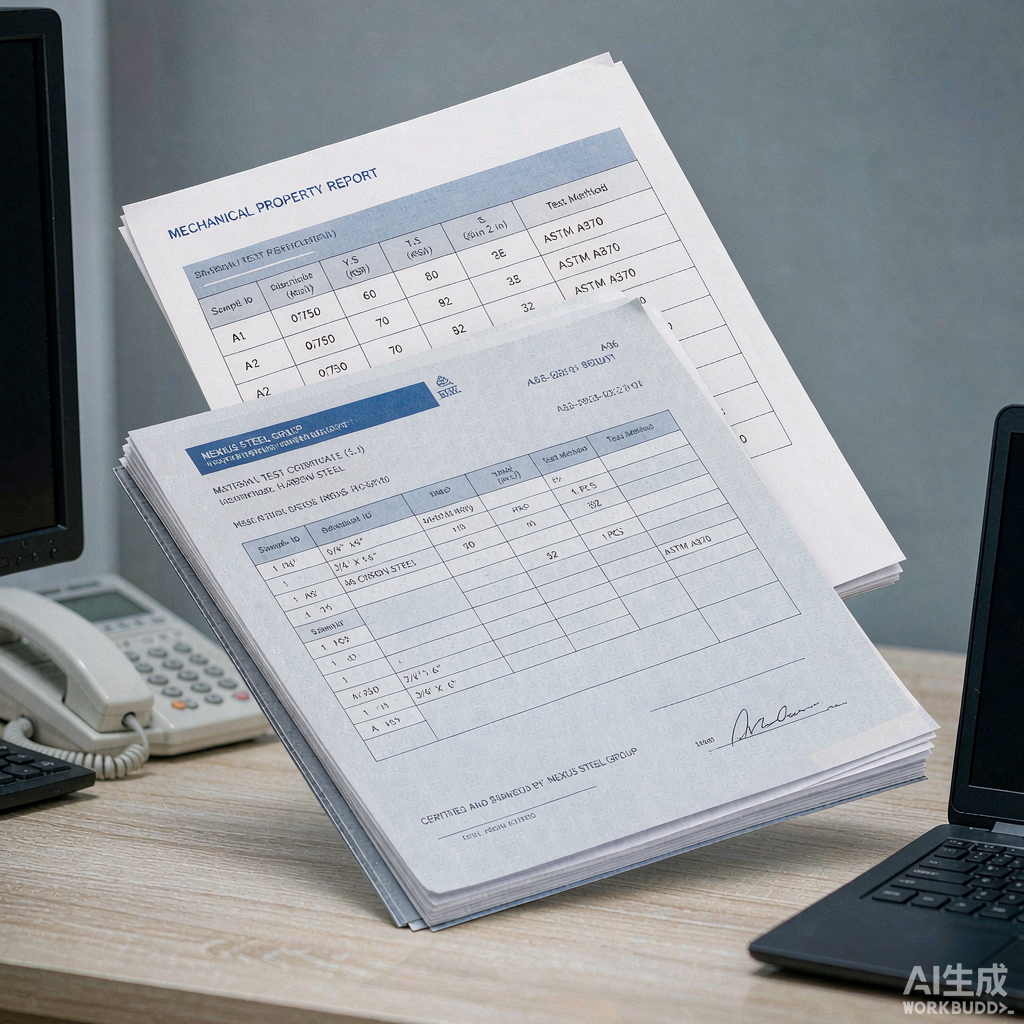
Documentation: EN 10204 3.1 MTC per heat with chemistry, mechanical results, heat treatment record and heat number traceable to bar stencils.
Applications
4130 round bar is machined into: aircraft and motorsport tubular structures (as tube stock), bicycle and motorcycle frame components, hydraulic shafts and pins, oilfield tool joints and subs, gears, sprockets, arbors, spindles, high-strength fasteners, gun parts, and pressure-containing machined components. Designers choose it when a part needs yield strength above 650 MPa with weldability and good impact toughness — the combination that pushes 1045 out of range but does not justify the nickel premium of 4340.
Machining, Welding and Heat Treatment Guidance
Machine 4130 in the annealed or normalized state where possible (roughing speeds 30-50 m/min with carbide), then heat treat and finish-grind; after Q&T at 30+ HRC, reduce speeds by 25-35% and expect higher tool wear. Welding: preheat 200-260 °C, use low-hydrogen consumables (E7018, ER80S-D2), maintain interpass temperature, and stress relieve at 600-650 °C for restrained joints. For Q&T cycles we recommend austenitizing 845-870 °C, oil quench, temper 540-650 °C depending on target hardness; tempering below 480 °C risks temper embrittlement in some heats, so specify the range you need and we will certify the actual tempering record.
Quality Assurance
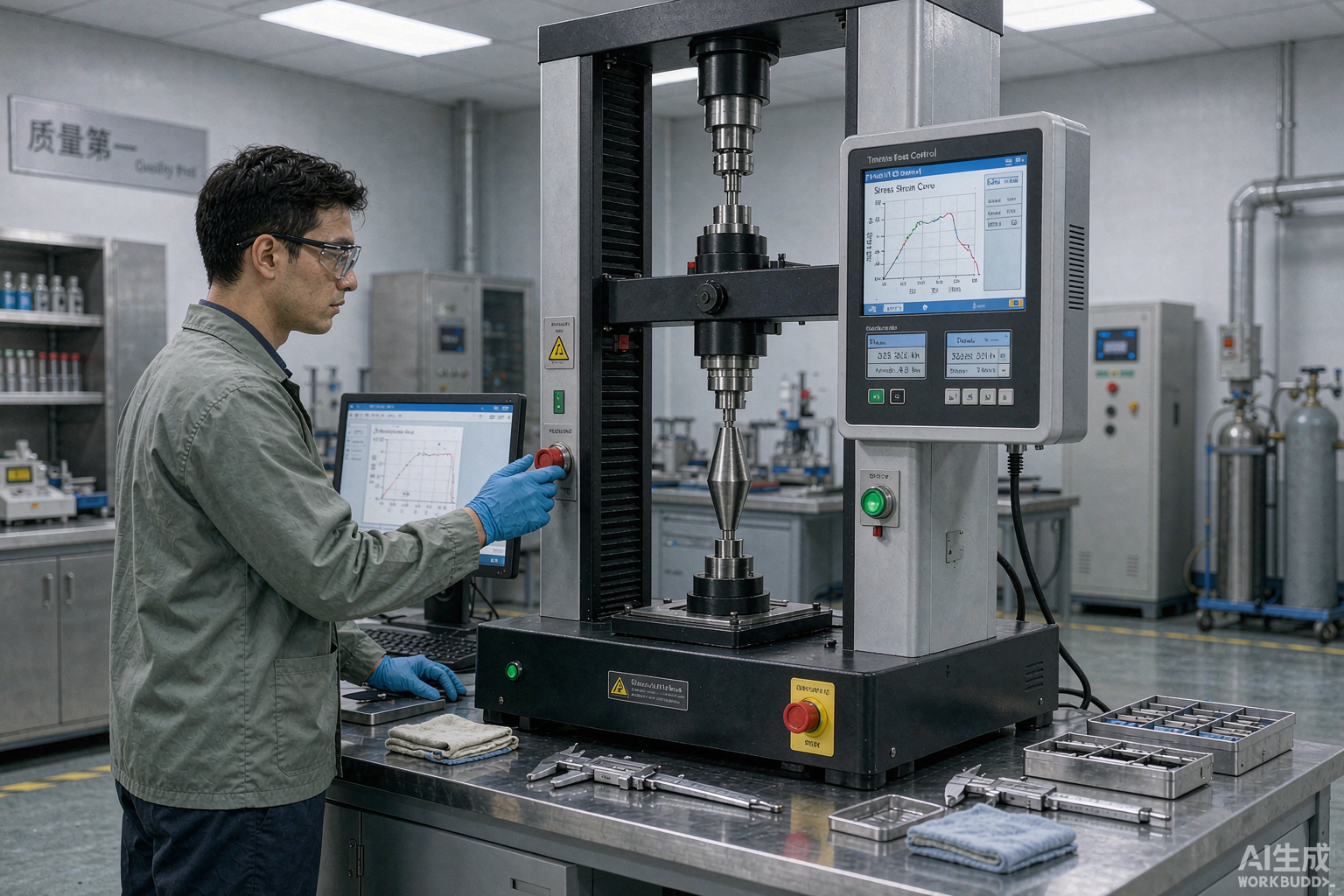
Every heat is produced under an ISO 9001 quality system with full traceability: heat number → bar bundle → certificate. Standard inspection covers chemistry verification by spectrometer, dimensional check per ordered tolerance class, surface inspection, hardness testing, and tensile testing per heat. Optional: ultrasonic testing, Charpy impact testing, grain size and inclusion rating, and independent third-party inspection (SGS, BV, TUV, Intertek) with witnessed testing and pre-shipment quantity verification. We provide MTC samples before order confirmation so your engineering team can validate the format against your own QA procedures.
Packaging and Shipping
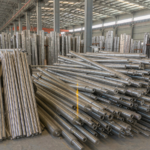
Bars are bundled with steel strapping (typically 1-3 tons per bundle), end-protected, and either packed loose or wrapped in woven/PP bags depending on finish — peeled and ground bars receive individual sleeve or paper wrapping to protect surface. Bundles are loaded with dunnage and lashing; containers are floor-loaded with moisture absorbers and VCI protection on request. Standard export packing is seaworthy for 20’/40′ containers; break-bulk and open-top loading available for oversized diameters or long lengths. Typical lead time: 15-25 days from confirmed order for stock sizes, 25-35 days for Q&T or machined-to-drawing production. MOQ: 1 ton per size from stockists, 3-5 tons per heat for mill-direct production.
Applications by Industry and Typical Orders
Motorsport and aerospace fabrication: 4130 tube and bar for roll cages, chassis members and engine mounts, ordered normalized for bending and welding, then stress relieved. Oil and gas: 4130 bar machined into tool joints, subs, pups and valve bodies, ordered Q&T to 28-34 HRC with full traceability and UT. General engineering: shafts, arbors, spindles, gears and high-strength fasteners, ordered annealed for machining then heat treated by the customer. Hydraulics: piston rods and cylinder components, ordered peeled and polished before chrome plating or nitriding. Bicycle and motorcycle: frame tubes and machined lugs, ordered normalized with tight wall and straightness control. Typical orders we ship: 20 mm cold drawn normalized bar 6 m lengths, 10-ton lots; 80 mm hot rolled Q&T bar, 25-ton lots with UT per EN 10308; 150 mm forged rounds, 5-ton lots with SEP 1921 class C/c.
What to Send Us for a Quotation
To quote accurately and quickly, send: grade and standard (4130, ASTM A29, EN 25CrMo4 or GB 30CrMo); diameter and length; tolerance and surface finish required; delivery condition (+A, +N, +QT with target hardness); quantity in tons or pieces; any supplementary testing (UT class, Charpy, grain size, inclusion rating); destination port; and whether third-party inspection is required. If you have a drawing, send it — our engineering team confirms machinability and heat treat response before quoting, and flags any specification that 4130 cannot meet at the requested section size. We also supply matching 4140 and 4340 from the same mill group when your drawing changes grade, keeping documentation consistent across orders.
Pricing Factors and How to Control Them
4130 bar pricing is driven by four variables beyond market steel index: alloy surcharge (chromium and molybdenum additions, typically 8-15% of base price and variable with ferro-alloy markets), size (small cold drawn sizes carry 10-20% conversion premium over hot rolled; large diameters above 200 mm price on forging or limited rolling availability), condition (Q&T adds USD 60-120 per ton depending on section and hardness target), and testing scope (UT, Charpy and inclusion ratings each add cost). Quantity matters as well — orders below 5 tons per size typically price at stockist rates, while mill-direct heats start around 3-5 tons per size. To control cost: consolidate sizes into standard mill production diameters, order full heat multiples where programme volume allows, accept standard tolerance classes unless precision is genuinely needed, and lock alloy surcharges for the contract period rather than accepting monthly indexation on long programmes. A further lever is condition: buying annealed bar and heat treating in your own or a local shop is often cheaper than importing Q&T bar when volumes are small, while large programmes benefit from mill Q&T where the mill’s furnace utilisation beats any job-shop rate.
Send us your 4130 bar diameter, length, quantity and required condition for a firm quotation within 24 hours — factory direct, with MTC, optional third-party inspection and worldwide shipping.
If you require further information about our metal sheet products or architectural projects, please don’t hesitate to leave your contact details and message here.
Our team of experts will respond within 24 hours to continue the discussion and provide you with any additional information you requires.