Q195 vs Q215 vs Q235 Carbon Steel: Grade Comparison Guide
Choosing the right Chinese carbon steel grade can make or break a procurement contract. Q195, Q215 and Q235 are three of the most commonly specified grades in global trade, yet buyers frequently confuse their mechanical limits, chemical envelopes and ideal end-use cases. This guide delivers a side-by-side comparison of Q195 vs Q215 vs Q235 carbon steel so you can specify the correct material, control cost and avoid rejected shipments.
1. What Do Q195, Q215 and Q235 Designations Mean?
The “Q” prefix stands for qu fu dian (yield point) in Chinese GB/T standards. The number that follows is the nominal minimum yield strength in MPa. Consequently:
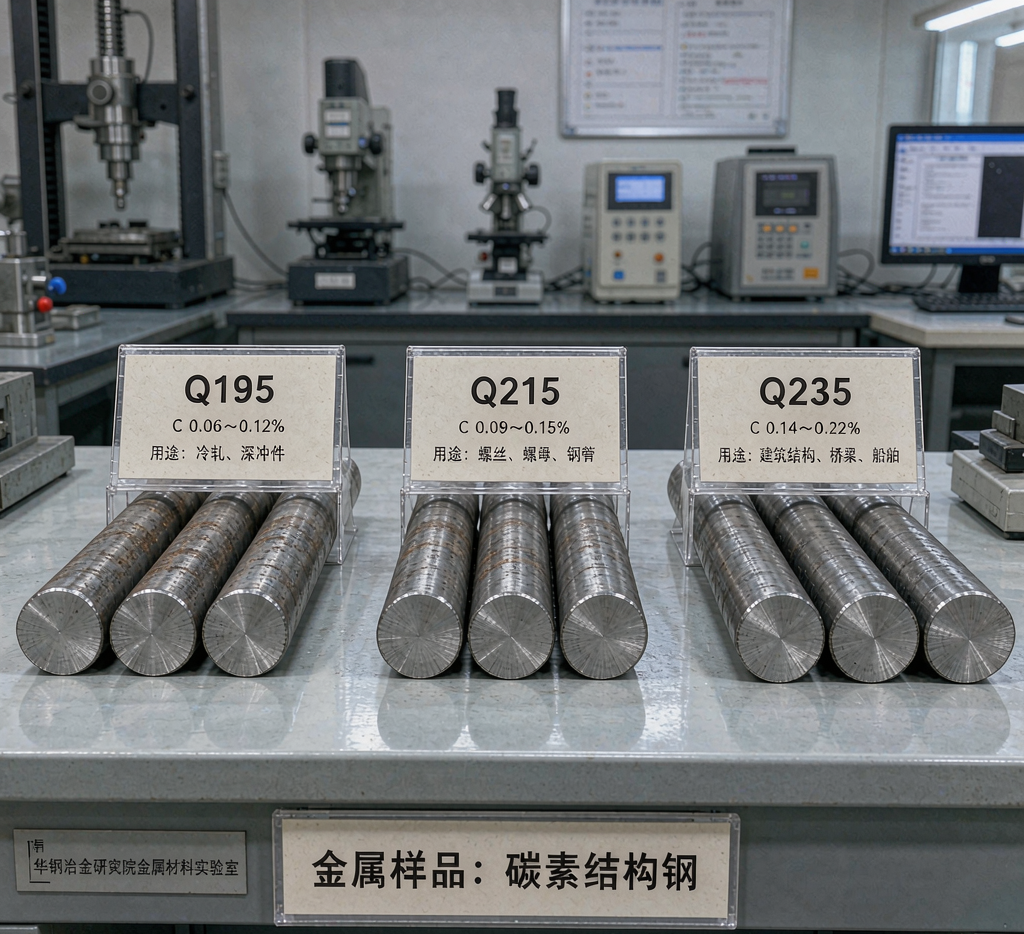
Q195 – minimum yield strength 195 MPa
Q215 – minimum yield strength 215 MPa
Q235 – minimum yield strength 235 MPa
All three are general-purpose carbon structural steels defined in GB/T 700. They are produced as hot-rolled plates, coils, bars, sections and tubes. Despite looking similar on mill certificates, their chemistry and mechanical ceilings diverge enough to affect weldability, forming severity and load-bearing capacity.
2. Chemical Composition Comparison
The carbon and manganese content increase from Q195 to Q235, which directly influences strength, hardness and weldability.
Element
Q195 (GB/T 700)
Q215 (GB/T 700)
Q235 (GB/T 700)
C (max)
0.12%
0.15%
0.22%
Si (max)
0.30%
0.35%
0.35%
Mn (max)
0.50%
1.20%
1.40%
P (max)
0.035%
0.045%
0.045%
S (max)
0.040%
0.050%
0.050%
Key takeaway: Q195 is the lowest carbon variant, offering the best cold-forming response and the softest bend radius. Q235 carries the highest carbon and manganese, delivering superior strength but requiring slightly more attention during welding.
3. Mechanical Properties at Room Temperature
Property
Q195
Q215
Q235
Yield strength (MPa)
≥ 195
≥ 215
≥ 235
Tensile strength (MPa)
315 – 430
335 – 450
370 – 500
Elongation (%)
≥ 33
≥ 31
≥ 26
Impact test temp.
+20 °C
+20 °C
+20 °C (A), 0 °C (B), –20 °C (C/D)
The elongation gap is significant: Q195 stretches roughly 25% more than Q235 before fracture. That makes Q195 the better choice for deep-drawing operations such as producing corrugated roofing sheets or simple stamping parts.
4. Q195 vs Q215 vs Q235: Application Mapping
Q195 – light structural sections, wire rods, nails, rivets, roofing sheets, sign posts, furniture tubing and low-stress welded pipes where surface finish and formability matter more than load.
Q215 – general machinery frames, brackets, agricultural equipment, scaffold tubes and medium-duty structural parts that need a modest strength upgrade over Q195 without the cost of Q235.
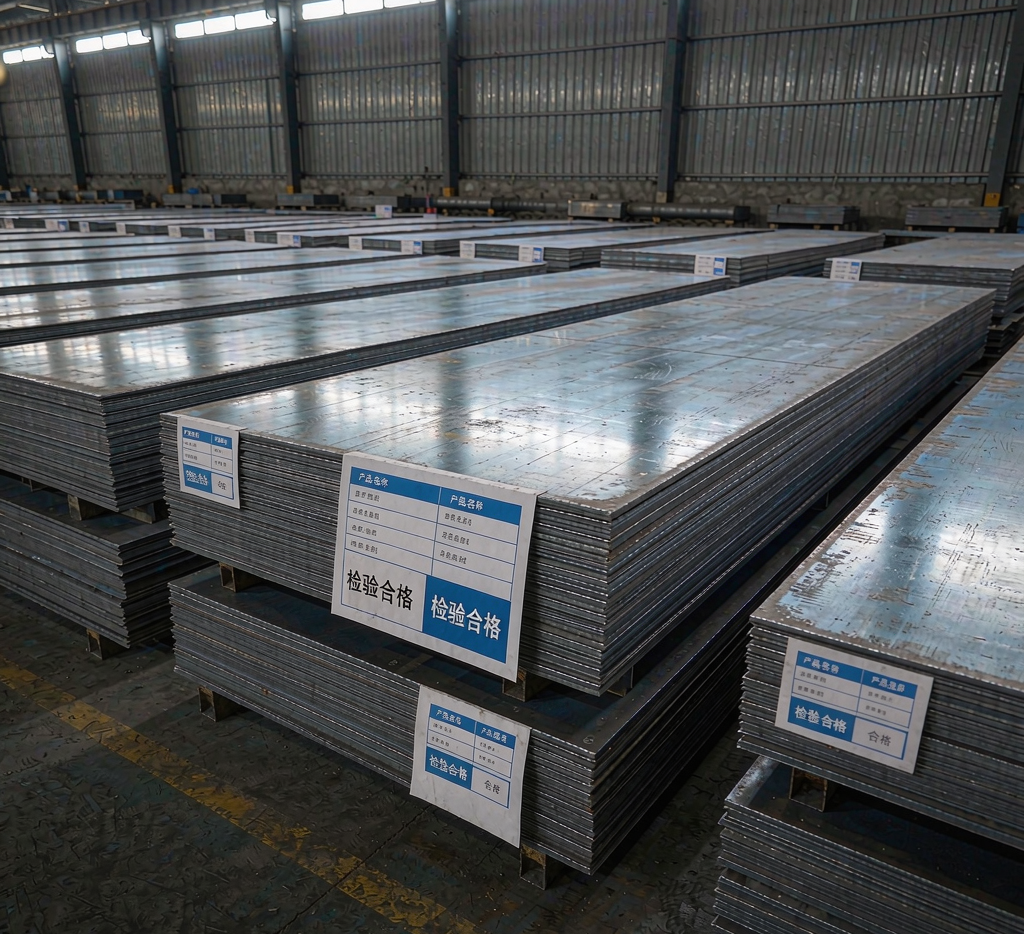
Q235 – bridges, building frameworks, pressure vessels (when normalized), shipbuilding, automotive chassis, transmission towers and general-purpose steel structures. Q235B is the default grade for most Chinese export structural steel.
5. Weldability and Formability Ranking
Because carbon equivalent rises with grade, weldability falls in the same order:
Q195 – excellent weldability, preheat rarely required under 25 mm thickness
Q215 – very good weldability, preheat optional for thick sections in cold ambient conditions
Q235 – good weldability, but preheat to 75 – 100 °C is advisable when plate thickness exceeds 25 mm or when ambient temperature drops below 5 °C
For forming, the ranking is identical: Q195 > Q215 > Q235. If your part involves tight radius bends, deep draws or roll-forming of thin sections, Q195 or Q215 will reduce crack incidence and die wear.
6. International Cross-Reference Table
GB/T 700
ASTM
EN 10025
JIS G3101
DIN 17100
Q195
–
S185
SS330
St33
Q215A
A283 Gr. C (near)
S235JR (lower)
SS330 / SS400 (lower)
St37-2 (lower)
Q235B
A36 (near)
S235JR
SS400
St37-2
Note: Exact equivalence is never perfect because chemistry tolerances and delivery conditions differ. Always verify the specific sub-grade (A, B, C or D) when matching Q235 to an overseas standard.
7. Price and Availability Considerations
In domestic Chinese mills, the price ladder is roughly:
Q195 – baseline, lowest cost per ton
Q215 – 2 – 4% premium over Q195
Q235 – 5 – 8% premium over Q195
Availability is highest for Q235B in plate and coil form. Q195 is more common as wire rod and thin strip. If you are sourcing from a trading company rather than a mill, lead times for Q215 can occasionally be longer because mill volume is lower.
8. Procurement Tips: Specifying the Right Grade
State the sub-grade – Q235A, Q235B, Q235C or Q235D. B is the most common export grade; C and D offer better impact toughness at lower temperatures.
Request EN 10204 3.1 or 3.2 MTC – chemistry and mechanical results must match GB/T 700 tables, not just mill nominal values.
Check dimensional tolerances – reference GB/T 709 for plate thickness tolerance or agree on EN 10029 / ASTM A6 equivalents.
Clarify surface condition – hot-rolled pickled, as-rolled, shot-blasted or oiled. Surface finish affects downstream painting and corrosion resistance.
Define inspection protocol – ultrasonic testing (UT) for thickness > 20 mm is prudent for Q235 structural plate.
FAQ
Can I substitute Q235B with ASTM A36?
For many structural applications, yes. Q235B and A36 are close in yield strength (235 MPa vs 250 MPa) and chemistry. However, always confirm impact test requirements, delivery condition and code approval with your end client before substituting.
Is Q195 suitable for welded pipe?
Yes, for low-pressure fluid pipe, furniture tubing and decorative sections. It is not recommended for pressure piping or load-bearing structural tubes where Q235B or higher is preferred.
What is the difference between Q235A and Q235B?
Q235B has a guaranteed impact test at +20 °C and tighter chemistry control (especially carbon and sulfur). Q235A has no mandatory impact requirement. For export and structural use, always specify Q235B or better.
Does Q215 have an exact EN equivalent?
No exact equivalent exists. Q215 sits between S185 and S235JR in strength. Engineers typically map it to the lower-bound of S235JR or use it as a cost-reduced alternative when design margins allow.
Which grade offers the best corrosion resistance?
None of these grades are corrosion-resistant by design. They are plain carbon steels. If corrosion is a concern, specify hot-dip galvanizing, painting, or upgrade to weathering steel such as Q355NH.
Conclusion
Q195, Q215 and Q235 form a logical strength ladder within Chinese GB/T 700. Q195 wins on formability and cost, Q235 wins on strength and structural acceptance, and Q215 occupies the middle ground for medium-duty machinery. By matching the grade to the application’s stress level, forming severity and welding schedule, buyers can optimize both performance and procurement cost.
Need a mill test certificate or a tailored quote for Q195, Q215 or Q235 carbon steel? Contact Huaxia-Steel today with your grade, dimension and quantity requirements.
If you require further information about our metal sheet products or architectural projects, please don’t hesitate to leave your contact details and message here.
Our team of experts will respond within 24 hours to continue the discussion and provide you with any additional information you requires.