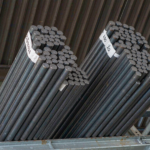
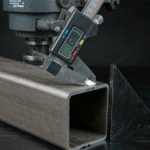
SCM440 and 42CrMo4 sit at the top of the medium-carbon chromium-molybdenum steel family, and buyers ask about them constantly because the two designations describe what is, in metallurgical terms, essentially the same steel. SCM440 is the JIS G4105 designation used across Japan, Korea and much of Asian supply; 42CrMo4 is the EN 10083-3 designation used across Europe and in most international project specifications. Both are 0.40 percent carbon, 1 percent chromium, 0.20 percent molybdenum quenched-and-tempered steels used for shafts, gears, bolts, axles and high-strength machine parts. Yet the two standards are not word-for-word identical, and the differences that do exist — in chemistry tolerances, tempering temperatures, hardenability jominy requirements and test rules — matter when an MTC must satisfy a European design office or when a Japanese-spec drawing lands on a Chinese mill desk. This guide compares SCM440 vs 42CrMo4 line by line: chemistry, mechanical properties, heat treatment practice, hardenability testing, equivalence rules, price logic and a practical MTC checklist for export buyers.
Quick Answer: Are They the Same Steel?
In practical terms, yes — a heat of steel melted to SCM440 chemistry will nearly always satisfy 42CrMo4 chemistry, and the reverse is also true. Cross-standard equivalences published by steel libraries and mill catalogs list SCM440 ≈ 42CrMo4 ≈ AISI 4140 ≈ DIN 42CrMo4 (old designation) ≈ GB 42CrMo. The steels share the same base composition and the same heat treatment response: quench from 840–860 °C in oil, temper at 540–680 °C, with the molybdenum suppressing temper embrittlement and the chromium adding hardenability.
But “nearly always” is not “always,” and the gaps sit in the details of each standard. The table below shows the nominal composition both standards target — nearly identical — followed by the real differences that matter in Section 2.
| Element | SCM440 (JIS G4105) % | 42CrMo4 (EN 10083-3) % |
|---|---|---|
| C | 0.38 – 0.43 | 0.38 – 0.45 |
| Si | 0.15 – 0.35 | ≤ 0.40 |
| Mn | 0.60 – 0.90 | 0.60 – 0.90 |
| Cr | 0.90 – 1.20 | 0.90 – 1.20 |
| Mo | 0.15 – 0.30 | 0.15 – 0.30 |
| P | ≤ 0.030 | ≤ 0.025 (0.035 for CC) |
| S | ≤ 0.030 | ≤ 0.025 (0.035 for CC) |
| Ni max / Cu max | — (residuals by agreement) | 0.25 / 0.25 typical limits |
| Cr+Mo+Ni sum (EN rule) | not specified | controlled for weldability calc |
The chemistry bands overlap almost completely. The carbon band is slightly wider in EN; the silicon band is expressed differently but converges in practice; phosphorus and sulfur limits are marginally tighter in the EN standard for continuously cast product at 0.035 max and 0.025 max for ingot route — details that only matter for borderline heats. For more than 95 percent of heats, one MTC satisfies both standards.
The Real Differences That Matter
The differences between the two designations are procedural rather than metallurgical, and they cluster in five areas:
- Standard structure and product scope. JIS G4105 covers hot-rolled and forged bars for machine structural use, primarily in the quenched-and-tempered (QT) condition. EN 10083-3 covers QT steels delivered as bright or hot-rolled bars, and pairs with EN 10083-1 for general requirements — meaning the EN system carries more obligatory general clauses on delivery condition, surface finish and test frequency.
- Hardenability (Jominy) testing. EN 10083-3 specifies jominy end-quench hardenability limits for 42CrMo4 as a standard requirement option, with defined H-band limits. JIS G4105 treats hardenability as a supplementary agreement unless the buyer specifies an “H” band — so an SCM440 MTC without jominy data may be incomplete for a European buyer expecting hardenability control.
- Tempering temperature rules. EN 10083-3 states a minimum tempering temperature of 540 °C for 42CrMo4 to guarantee the published mechanical property table. JIS G4105 lists a typical second tempering around 550–650 °C but frames it as guidance; the mechanical values are confirmed by test regardless. In practice both are tempered 540–680 °C, but only the EN route has the number written into the standard.
- Impact testing. EN 10083-3 publishes Charpy V-notch values (typically 35 J minimum at room temperature for the QT condition in a 16 mm sample, subject to size rules). JIS G4105 includes impact testing only when the order calls for it (Shore/JIS 3 or 4 test pieces). A project with mandatory CVN needs the requirement written into the SCM440 order.
- Surface and delivery condition conventions. European machine shops frequently order 42CrMo4 as peeled, ground or cold-drawn bright bar with h9/h10 tolerance per EN 10278; JIS supply convention is more often black bar or machined bar with JIS B tolerances. The same steel arrives in different dressed conditions depending on which standard vocabulary the order used.
None of these differences changes what the steel can do. They change what the paperwork must say — and paperwork is where cross-standard substitutions get rejected.
Mechanical Properties Compared
Both steels deliver the same class of properties after quench and temper. The values below compare the published minimums for a typical 16–40 mm diameter sample in the QT condition.
| Property (QT, 16–40 mm) | SCM440 (JIS G4105) | 42CrMo4 (EN 10083-3) |
|---|---|---|
| Tensile strength | ≥ 980 MPa (typ. 1000–1150) | 1000–1200 MPa range by size |
| Yield strength (0.2% proof) | ≥ 835 MPa | ≥ 750–900 MPa by diameter band |
| Elongation | ≥ 12% | ≥ 11–12% |
| Reduction of area | ≥ 45% | ≥ 40–45% |
| Hardness (QT) | 285–352 HB typical delivery | ≤ 269 HB soft annealed; 285–352 HB QT by size |
| Charpy V-notch | on request (typ. ≥ 35 J) | ≥ 35 J at RT standard |
The practical read: for a shaft specified “UTS 1000–1200 MPa, yield ≥ 800 MPa, CVN ≥ 35 J at room temperature,” either designation fills the slot when heat treated correctly. Where the specification calls hardness or strength at the top of the band, the mill adjusts tempering temperature downward; where toughness dominates, tempering rises toward 640–680 °C. This is identical metallurgy in both standards — the mill’s Q&T recipe, not the designation, sets the final numbers.
Heat Treatment Practice
Both grades use the same thermal cycle, and a shop that treats one can treat the other without changing a single setpoint:
- Normalizing (optional, for grain refinement before machining): 850–880 °C, air cool.
- Soft annealing (for machinability): 680–720 °C slow cool, target hardness ≤ 241 HB for heavy turning.
- Austenitizing: 840–860 °C, soak 30 min per 25 mm section.
- Quenching: oil for sections to about 60 mm; polymer or water for larger sections only with crack-risk assessment, since 42CrMo4-class steels are crack sensitive in water.
- Tempering: 540–680 °C per the property target; minimum 540 °C where EN mechanical minimums apply; double tempering customary for critical shafts.
Hardenability is where the Cr-Mo system earns its keep: the ideal critical diameter in oil reaches roughly 60–90 mm depending on the jominy position, so full property development through a 50 mm shaft is routine. Molybdenum’s second job — suppressing temper embrittlement — is why this family tempered above 540 °C keeps impact energy high, unlike plain-chromium steels of similar carbon.
Cross-Standard Equivalence and Substitution Rules
The full equivalence family looks like this:
| Standard | Designation | Notes |
|---|---|---|
| JIS G4105 | SCM440 | Japan, Korea; base for most Asian supply |
| EN 10083-3 | 42CrMo4 (1.7225) | Europe; international projects |
| AISI/SAE | 4140 | US; chemistry same, test rules differ |
| GB/T 3077 | 42CrMo | China; close match, CVN conventions differ |
| Old DIN 17200 | 42CrMo4 | withdrawn but still quoted |
| ISO 683-2 | 42CrMo4 | international harmonized |
Substitution logic for export buyers follows three rules. First, designate by the standard your contract names, and ask the mill to certify to that standard explicitly — a “SCM440 or equivalent” MTC will fail a European review. Second, when a 42CrMo4 order is filled from an SCM440-labeled heat, require the mill to add the missing EN clauses on the certificate: jominy data if the spec has an H-band, CVN values if impact is required, and the EN tempering minimum note. Third, never substitute downward on documentation alone — AISI 4140 with no impact test cannot automatically cover 42CrMo4 where the project demands CVN, even though the chemistry is the same.
Price and Availability in Export Trade
Because the chemistry is identical, ex-mill prices for SCM440 and 42CrMo4 from Chinese and Korean mills are effectively the same — quotes vary by delivery condition (black bar, peeled, bright), diameter, and test scope, not by which designation you name. Expect bright cold-drawn bar to carry a 15–30 percent premium over black hot-rolled bar, and add 3–6 percent for jominy plus CVN testing scope. Availability is deeper in the 20–120 mm diameter range; large forged sections above 300 mm are quoted per heat with longer lead times regardless of designation.
One cost trap deserves its own warning: ordering “SCM440” and then submitting the parts into a European CE-marked or OEM-qualified supply chain usually triggers a re-certification cycle, where the buyer pays for re-testing to EN rules. If the end market is Europe or a European OEM, order 42CrMo4 from the start and let the mill certify to EN 10083-3 with the 1.7225 material number on the certificate. The premium, if any, is smaller than the retest.
Buyer’s MTC Checklist: Which Standard Is the Certificate Written For?
Before accepting an MTC on either designation, verify these eight items — the same list works as a pre-order checklist sent to the supplier:
- Standard and version named: “JIS G4105 SCM440” or “EN 10083-3 / 42CrMo4 / 1.7225” — not just “SCM440/42CrMo4”.
- Heat number matches the bar markings on the physical goods, not just the certificate.
- Full ladle chemistry including residuals (Ni, Cu, and where relevant Sn, As) against the named standard’s limits.
- Delivery condition stated: Q&T, normalized, soft annealed, or bright cold drawn — with actual hardness.
- Mechanical results against the size-appropriate band of the named standard, not the 16 mm table.
- Jominy hardenability if the order references an H-band (standard EN option; supplementary in JIS).
- CVN test temperature and values if the project requires impact — stated, not assumed.
- Tempering temperature reported (EN buyers: confirm ≥ 540 °C).
Mills that routinely export to both markets issue dual-certificates naming both standards — ask for one if your project straddles JIS and EN reviewers. It costs nothing extra from a mill that controls its chemistry bands and test scope correctly.
Which Should You Order? Decision Guide
- Specification is Japanese/Korean (JIS drawings, Toyota/Nissan-tier supply chains): order SCM440, certify to JIS G4105, add CVN and jominy as order requirements if downstream needs them.
- Specification is European or international (EN drawings, CE, ISO OEM): order 42CrMo4 (1.7225), full EN 10083-3 scope.
- Specification is US: order AISI 4140 per SAE J404 or ASTM A29, and confirm the project accepts 42CrMo4-class certificates — most do.
- Buyer has freedom of choice (spare parts, jobbing, trading stock): buy whichever designation the local mill stocks in your diameter; the metal is identical. Ask for dual-standard MTCs so the stock stays re-sellable to both markets.
The engineering truth about SCM440 vs 42CrMo4 is simple: same steel, different paperwork systems. Choose the designation that matches your contract language, make the certificate carry the standard’s full test scope, and the two are interchangeable without a single metallurgical risk.
Section Size, Hardenability and the 100 mm Question
One question decides more SCM440/42CrMo4 orders than chemistry ever does: what section size can this bar carry the full property table through? The answer is governed by hardenability, and it is where jominy data earns its place on the certificate. The Cr-Mo composition gives the grade a deep hardening response, but not unlimited depth: in oil quenching, the standard composition achieves near-full martensite at the surface of bars to roughly 60 mm diameter, retains QT property-class strength through about 90–100 mm, and needs polymer or forced-air quenching discipline above that if the drawing demands the top of the strength band through the core.
| Bar diameter (oil quench) | Core response | Practical guidance |
|---|---|---|
| ≤ 30 mm | through-hardened to near-martensite | full property table both standards, tight scatter |
| 30–60 mm | ≥ 90% martensite at core after full austenitize | full table; verify with core hardness check on sample bar |
| 60–100 mm | mixed structure, property class maintained | strength still within band; impact scatter widens — buy jominy limits |
| 100–150 mm | bainite in core, surface martensitic | expect yield 5–10% under thin-bar table; specify size-band values |
| > 150 mm forged | water/polymer or spray quench, controlled | order forged + UT + actual core test coupons |
The buyer’s takeaway: when the drawing states properties for a 40 mm shaft, either designation meets it from stock with a standard Q&T cycle. When the drawing states the same numbers for a 130 mm forged rotor, the risk is no longer the standard you chose — it is the quench. That is the order where you pay for jominy bands, core-test coupons and, on critical parts, a witness heat treatment. Budget the extra testing on the large sections from the start; retrofitting test data after a rejection costs multiples.
Machining economics also shift with section size. Large SCM440/42CrMo4 sections arrive soft-annealed at ≤ 241 HB for heavy rough turning, then get re-hardened and finished — a two-pass material flow that jobbing shops know well. Small sections in bright cold-drawn bar arrive at final tolerance and skip the rough-turn entirely. Deciding the delivery condition (soft annealed black bar versus finished bright bar) is a machining-cost decision, not a metallurgy one, and it changes the quoted price per ton by 15–30 percent. Send the machining shop’s requirements with the material inquiry, not after it.
Finally, keep the timeline in mind: heat treatment and straightening after QT add 3–7 working days on large sections, and jominy testing adds one more day to the certificate release. Quoted lead times that ignore the test scope routinely slip — state the scope at inquiry and the delivery date you receive will be the one the mill keeps. On repeat programs, the cleanest structure is a frame agreement that fixes the chemistry band, the test scope and the delivery condition once, then releases diameters against monthly call-offs; every batch then ships against the same agreed rules, and neither side renegotiates paperwork order by order.
FAQ
Is SCM440 equivalent to 42CrMo4?
Metallurgically yes — the chemistry bands and property class are the same, and cross-reference tables list them as equivalents. Procedurally, equivalence must be claimed on paper: an SCM440 MTC with jominy and CVN added, and tempering temperature stated, will satisfy nearly all 42CrMo4 requirements.
Can 42CrMo4 replace AISI 4140?
Yes in both directions for chemistry and mechanical class. The differences are test conventions — SAE grades quote different sampling rules and hardness scales — so the substitution should be recorded with the project engineer’s approval and an MTC covering the required tests.
What hardness should I expect on delivered QT bar?
Standard Q&T delivery for both designations lands at 285–352 HB for bar in the 16–100 mm range. Soft-annealed bar for heavy machining arrives at ≤ 241 HB. If your drawing specifies HRC, 285–352 HB corresponds roughly to 30–38 HRC.
Does 42CrMo4 weld well?
Weldable with precautions: preheat 200–300 °C for sections above 20 mm, low-hydrogen electrodes, slow cool and re-temper welded assemblies near 550–600 °C to restore the heat-affected zone. The carbon equivalent (around 0.78) makes it a preheat-mandatory steel — plan the welding sequence before fabricating.
Which is cheaper, SCM440 or 42CrMo4?
Neither, meaningfully. Ex-mill prices from the same mill are within 1–2 percent because the chemistry is identical. Total cost differences come from delivery condition and test scope — bright bar and full EN test scope cost more than black bar with basic testing, regardless of designation.
Need SCM440 or 42CrMo4 round bars, forgings or bright bar with dual-standard EN 10204 3.1 certificates, jominy and CVN data? Send your diameter range, delivery condition and destination port — Huaxia-Steel replies with stock, per-ton pricing and MTC samples within 24 hours.