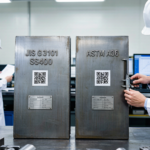
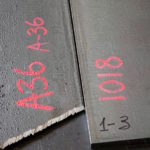
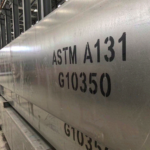
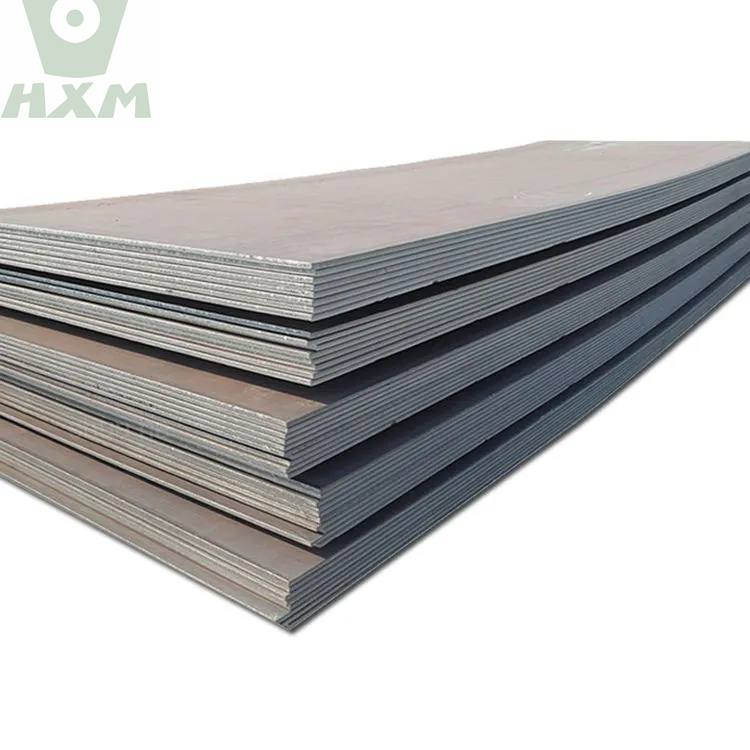
A36 carbon steel round bar is the most widely stocked structural and general fabrication bar grade in the world: ASTM A36 chemistry with a 250 MPa minimum yield and 400–550 MPa tensile, produced hot rolled in diameters from 6 mm to 350 mm and used everywhere from anchor rods and clevis pins to structural braces, brackets, shafts under light load and general blacksmith and machine work. We supply A36 round bar factory direct in random lengths of 6 m and 12 m, cut-to-length bars, and bolted bundles for export, with EN 10204 3.1 mill certificates, Galvanizing-ready surface options and dual certification to S235JR / SS400 / Q235B where drawings mix standards.
Product Overview
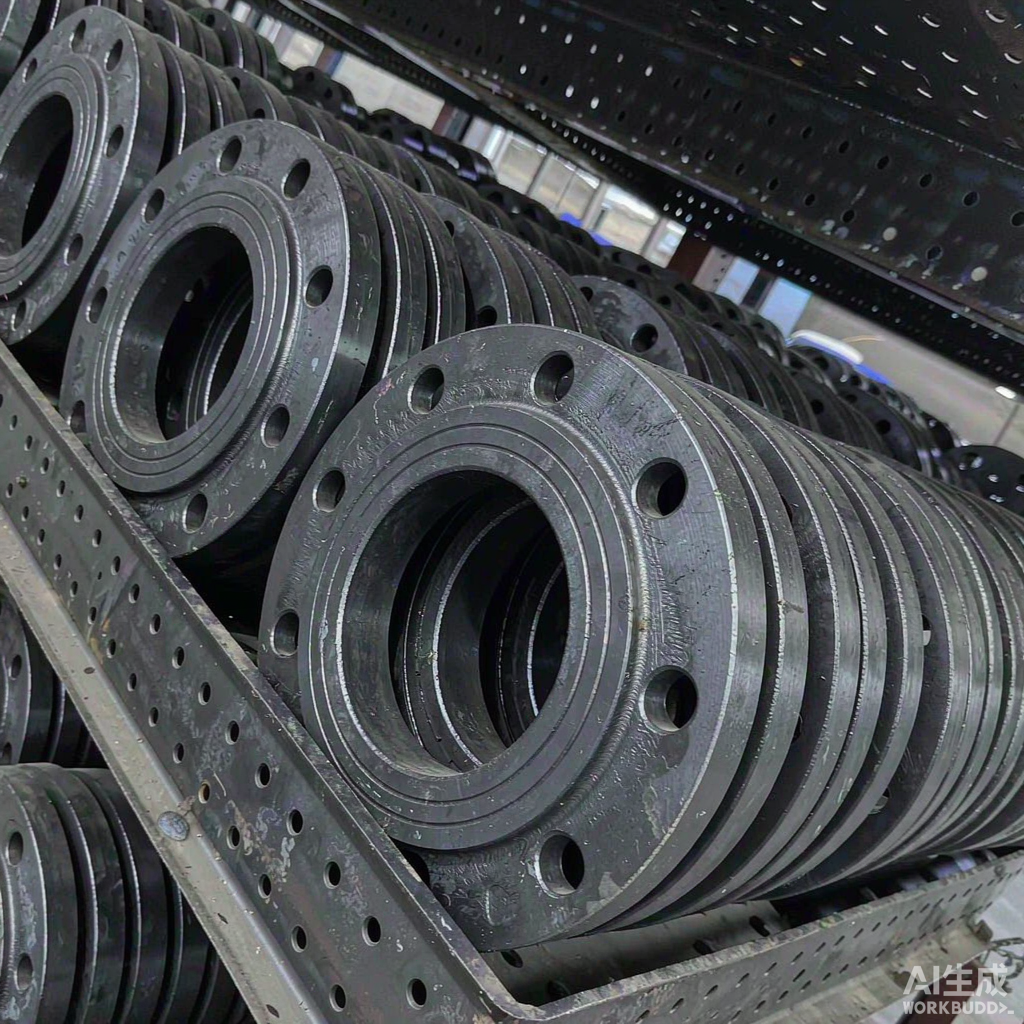
A36 round bar sits at the bottom of the carbon ladder — roughly 0.25 % carbon maximum, 0.80–1.20 % manganese where required — and earns its place through availability, weldability and price rather than strength. The bar is rolled from continuous cast billets on bar mills, delivered as-rolled with the characteristic blue-grey mill scale, and it cuts, drills, bends, threads and welds without preheat in normal sections. Because A36 controls tensile and yield as acceptance criteria while leaving chemistry deliberately loose, actual properties run comfortably above the minimums, and the grade cross-certifies routinely to S235JR, SS400 and Q235B — a flexibility no other bar grade matches, and the reason fabricators who serve international drawings keep A36 as their default bar stock.
One clarification prevents most misunderstandings: A36 round bar is a structural/general-purpose product, not a shafting grade. For machined shafts with tight diameter tolerance and finish requirements, cold drawn 1018 or medium carbon 1045/C45 is the correct product; A36 hot rolled bar carries rolling tolerance and is meant for fabrication, welding and load-carrying hardware. We say this on quotations when the application suggests it, because the 20 % saving on the wrong grade is never worth the machining problem it creates.
Specifications
| Parameter | Range / value |
|---|---|
| Standard | ASTM A36/A36M (bar); general requirements ASTM A6 where applicable |
| Diameter | 6 – 350 mm (6–100 mm stocked; 100 mm+ by rolling or forging) |
| Length | 6,000 / 12,000 mm random; cut to length ±1 mm on request |
| Carbon, max | 0.26 % (sections ≤ 20 mm), 0.25 % shapes; Mn to 1.20 % where carbon exceeds 0.26 % by agreement |
| Yield strength, min | 250 MPa |
| Tensile strength | 400 – 550 MPa |
| Elongation, min | 20 % in 200 mm / 23 % in 50 mm |
| Dimensional tolerance | Hot rolled bar: per W. Beall / mill standard, typically ±0.4–0.8 % of diameter by size band |
| Straightness | ≤ 3 mm/m typical; straightened bars available |
| Surface | As-rolled with mill scale; shot blasted or peeled on request |
| Dual certification | S235JR / SS400 / Q235B available with impact options (S235JR +N 27 J at 0 °C etc.) |
| Certificate | EN 10204 3.1 standard; 3.2 on request |
Size and Weight Reference
Round bar weight is diameter squared times 0.00617 kg/m (d in mm), the number every fabricator checks against the bundle label:
| Diameter (mm) | Weight (kg/m) | 6 m bar (kg) | 12 m bar (kg) |
|---|---|---|---|
| 12 | 0.89 | 5.3 | 10.7 |
| 16 | 1.58 | 9.5 | 19.0 |
| 20 | 2.47 | 14.8 | 29.6 |
| 25 | 3.85 | 23.1 | 46.2 |
| 32 | 6.31 | 37.9 | 75.8 |
| 50 | 15.41 | 92.5 | 185.0 |
| 75 | 34.68 | 208.1 | 416.2 |
| 100 | 61.65 | 369.9 | 739.9 |
Grade Options and Dual Certification
A36 bar’s chemistry window overlaps the other global mild steel grades, which makes dual certification the cheapest way to satisfy mixed-standard projects. The practical mapping:
| Grade | Standard | Key difference vs A36 | Dual cert availability |
|---|---|---|---|
| S235JR | EN 10025-2 | Impact test 27 J at +20 °C (JR); tighter P/S 0.035–0.045 | Yes, most heats; state at order |
| S235J0/J2 | EN 10025-2 | Impact at 0 °C / −20 °C; J2 needs fine grain/killed practice | J0 routine; J2 on selected heats |
| SS400 | JIS G3101 | Tensile 400–510 MPa, no yield floor at 250 exactly, no impact | Yes, routine |
| Q235B | GB/T 700 | Impact 27 J at +20 °C; C max 0.22 % tighter than A36 | Yes on low-carbon heats |
| Grades 36 [250] | ASTM A572-like routes | Not applicable; A36 is its own grade | — |
If the drawing calls S235JR and the stockyard has A36, a dual-certified heat resolves it with zero premium in most cases. If the drawing calls Q235B, check the heat carbon — A36’s 0.26 % ceiling exceeds Q235B’s 0.22 %, so not every A36 heat is eligible; the MTC decides, and we check it before offering.
Manufacturing Standards
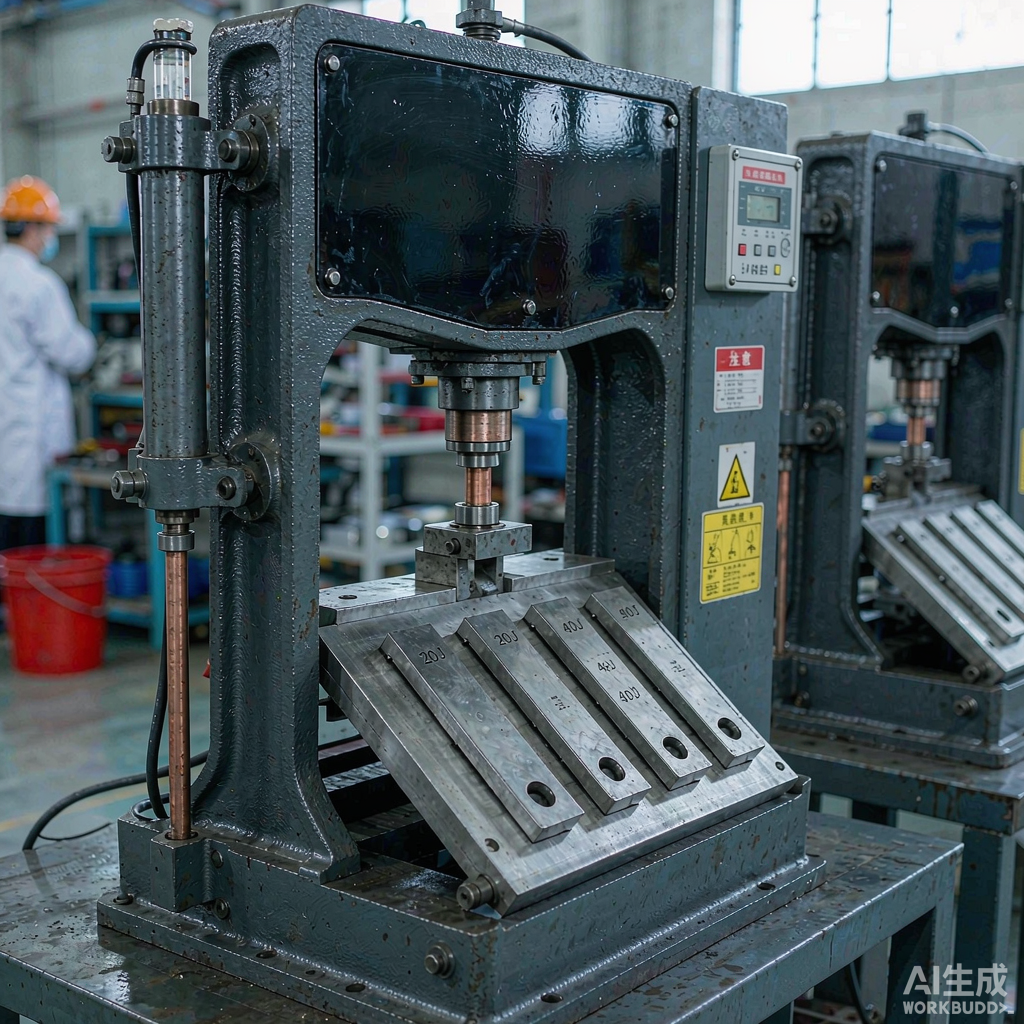
Bars are rolled from continuous cast billets, sheared to length and (for straightened or cut-to-length supply) passed through straightening rolls. Testing frequency follows the mill’s A6-aligned practice: tension test per heat per size. Where orders require S235JR dual certification with impact testing, charpy specimens are taken per heat at the stated temperature and the results printed on the MTC. Options include peeled and polished bar for visible applications, shot blasting for galvanizing or painting, and chamfered ends for insertion into couplers and sockets. Cold drawn A36-family bar (1018 route) is available for tighter tolerance and better surface — quoted separately because it is a different product with different tolerances (h9–h11 achievable) and price.
Applications
- Structural hardware: anchor bolts and anchor rods, hold-down studs, bracing rods, tie rods and truss members.
- Fabrication pins: clevis pins, hitch pins, pivot pins, hinge pins and shear pins with drilling and cotter slots.
- Rerolling and machining feedstock: billet for small forges, and feedstock for turned fittings, bushings and rollers under light load.
- Handrails and fencing: baluster bars, gate frames and grille work where the bar is bent and welded.
- General blacksmith work: brackets, hooks, eyes, latches and agricultural repairs.
- Construction embedment: lifting loops (with proper grade verification), dowels and sleeve feedstock.
Grade selection guidance: specify A36 when the part is welded, bent or load-bearing at modest stress and surface finish does not matter; move to 1018 cold drawn for turned parts needing dimensional accuracy; move to 1045/C45 when the part needs heat treatment; and move to Q345B/S355JR when the design needs a 345–355 MPa yield floor. Keep one bar stock and dual certificates instead of four separate inventories, and your warehouse stops being the bottleneck between drawing revisions.
Quality Assurance
- EN 10204 3.1 certificate per heat with ladle chemistry and tension test results.
- Yield/tensile/elongation acceptance per ASTM A36; test frequency per heat per size.
- Dimensional and straightness checks per bundle; visible surface inspection before packing.
- Impact testing and fine-grain practice where dual certification requires it.
- Marking: heat number on each bundle with grade, size, length and standard stenciled or tagged.
- Third-party inspection (SGS, BV, TUV) and EN 10204 3.2 available; witness of tension tests arranged.
Packaging and Shipping
Bars ship in hexagonal-profile bundles banded with steel strapping, nominal bundle weights 2–3 tonnes for small diameters and single-bar handling above 75 mm. Cut-to-length bars are bundled by length with tag cards per bundle. Packing timber is ISPM 15 heat-treated for export. We ship FOB, CFR and CIF from Shanghai and Tianjin; stock sizes 12–75 mm in 6 m/12 m lengths usually dispatch within 7–15 days, cut-to-length and large diameters 20–35 days. Container-friendly bundling for 6 m bars and break-bulk or flat-rack arrangements for 12 m lengths are both routine.
FAQ
How straight is hot rolled A36 bar? Mill standard straightness is about 3 mm per metre, which suits fabrication but not precision shafting. For parts that run in bearings or seals, either order straightened and cut-to-length bar, or move to cold drawn bar, whose straightness and diameter tolerance (h9–h11 achievable) remove the machining allowance problem entirely.
Hot rolled or cold drawn for my turned parts? Cold drawn. Hot rolled A36 bar rolls with diameter tolerance around ±0.5 % and mill scale, so a turned part from hot rolled bar starts by removing the scale layer and fighting ovality. Cold drawn A36-family bar (1018 route) is sized accurately, machines cleaner and costs 15–25 % more — cheaper than the scrappage it prevents on volume turning.
Does A36 bar need preheat before welding? No, in normal sections. At 0.26 % carbon maximum the carbon equivalent is low enough for welding without preheat up to typical thicknesses; heavy sections above about 50 mm and cold environments justify modest preheat (50–100 °C) and low hydrogen practice as general prudence.
Can A36 bar be galvanized? Yes, and it is a common route for outdoor hardware: anchor rods, pins and handrail bars galvanized after fabrication. Mill scale must be removed (the galvanizer pickles or shot blasts), and the coating builds slightly thicker on high-silicon heats — not a defect, but worth knowing when the finished size matters.
What is the difference between A36 round bar and rebar? Everything except the round shape: rebar (deformed bar) is a concrete reinforcement with ribs for bond and no machining or pin applications; A36 round bar is a smooth engineering bar for fabricated hardware. They are not interchangeable, and prices differ because the production routes and standards differ.
What lengths and bundle configurations ship by container? 6 m bars fit standard containers in bundle form; 12 m bars ship by break-bulk or flat rack for diameters above 25 mm, or in open-top containers for smaller sizes. Bundle weight targets 2–3 tonnes so port cranes and warehouse forklifts handle them without special gear — tell us your receiving constraint and we will configure the bundles to it.
Request a Quotation
Send us the diameter, length, quantity and any dual-certification or cutting requirements, and we will confirm stock, certify the grade your drawing cites and quote freight by container or break-bulk. If your project mixes A36 with S235JR/SS400 drawings, tell us — the dual-certificate route is the fastest way to keep one bar stock for all of them. Email our export team for a quotation within one working day.