Carbon Steel Phosphating: Process, Types and When to Specify It
Carbon Steel Phosphating: Process, Types and When to Specify It
Phosphating is one of the oldest and most cost-effective surface treatments for carbon steel, yet it is frequently confused with galvanizing or black oxide. A phosphate conversion coating does not deposit a thick metallic layer; instead it grows a crystalline phosphate film on the steel surface that improves corrosion resistance, boosts paint and powder-coat adhesion, and provides a clean, oil-retentive base for parts in storage or transit. This article explains the chemistry, the main process types and how to specify phosphating so your supplier delivers a consistent result that passes your incoming inspection.
For buyers, the practical question is not “should I phosphate?” but “which phosphate, to what weight, and with what final protection?” Get those three answers right and phosphating is a reliable, low-cost finish. Get them wrong and you will see white rust in the warehouse or paint that flakes in the field. The sections below turn those choices into a short specification you can put on a purchase order.
What Phosphating Actually Does to the Surface
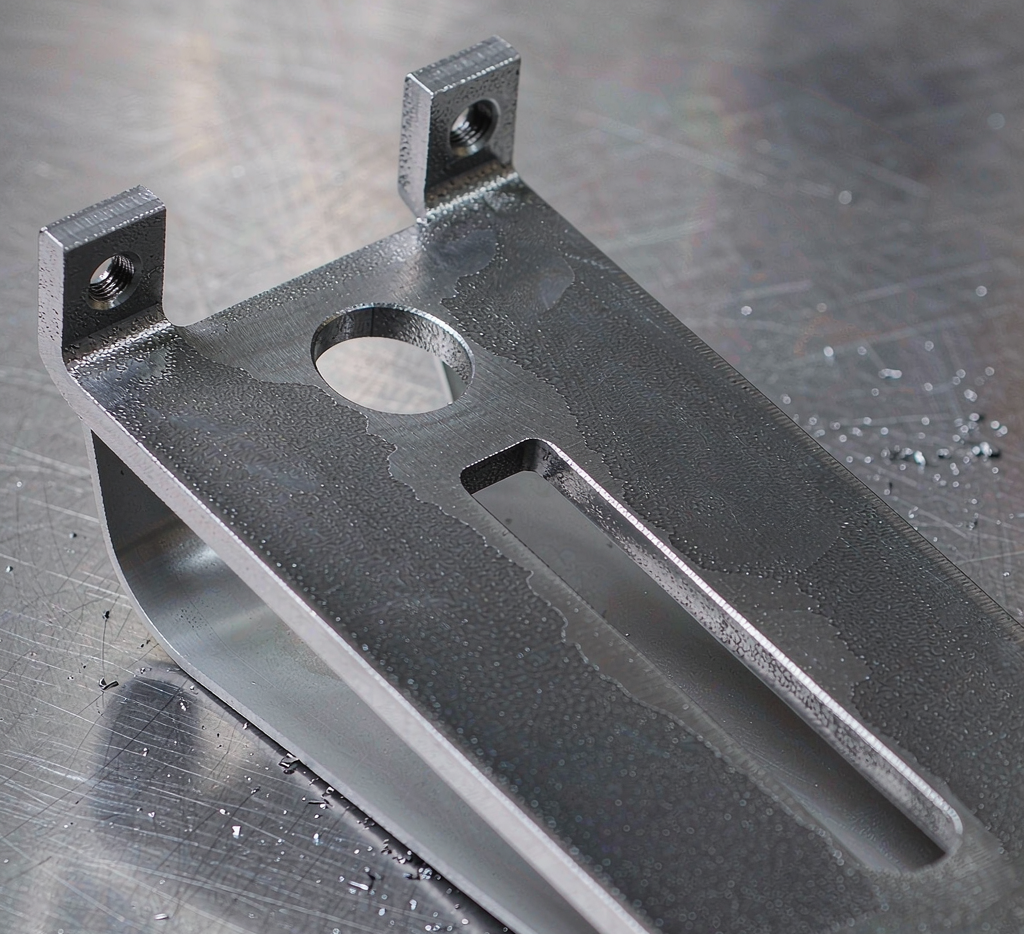
In a phosphate bath, the acid gently attacks the steel while dissolved metal phosphates precipitate and crystallise on the surface, forming a fine, adherent layer of iron, zinc or manganese phosphate. The coating is micro-porous, which is exactly why it grips paint and holds preservation oil. It is thin (1–15 µm) and does not change dimensions, so phosphated parts keep tight tolerances — a key reason it is preferred over galvanizing for machined and threaded components.
The crystalline structure matters more than thickness alone. A fine, dense crystal gives the best paint key and the least loose powder; a coarse, heavy crystal wastes chemical and can powder off in handling. That is why a modern line adds an activation step before phosphating — it seeds thousands of tiny nucleation sites so the coating grows fine and uniform rather than in a few large, weak crystals.
The Three Main Phosphate Types
Type
Coating weight
Typical use
Corrosion resistance
Iron phosphate
0.3–1.0 g/m²
Paint pre-treatment, light parts
Low (with paint)
Zinc phosphate
1–10 g/m²
Automotive, appliances, fasteners
Medium
Manganese phosphate
5–20 g/m²
Bearings, gears, wear parts
Medium-high + lubrication
Zinc phosphate is the all-rounder for painted carbon steel. Manganese phosphate is chosen when the part must retain oil and resist galling — think gears, firearm components and hydraulic spools. Iron phosphate is the lightest pre-paint treatment for thin or formed parts where a heavy coating would bridge details or add unwanted weight.
Step-by-Step Process Sequence
Degreasing — alkaline or solvent clean to remove drawing oil and shop soil.
Rinsing — typically two cascade rinses to avoid carry-over.
Phosphating — immersion or spray at 35–95 °C depending on type.
Rinse and optional seal — chromate-free passivation or rinse aid.
Final protection — oil, lacquer or immediate paint / powder coat.
Cleaning is the step that fails most often, and when it fails the phosphate looks fine for a day and then spots out. The part must be chemically clean, not just visually clean — residual drawing compound or stamped lubricant blocks crystal growth and leaves bare steel. A good supplier validates the cleaner and tests the rinse water, not just the bath.
Immersion vs Spray Application
Immersion gives the most uniform coating on complex or welded assemblies and is standard for batches of fasteners, brackets and tubular parts. Spray phosphating is faster and suits continuous lines for sheets and stamped bodies, but it can under-treat recesses. For most carbon steel procurement, immersion zinc or manganese phosphate is the reliable default because it reaches inside tubes and welded boxes that spray misses.
Coating Weight and How to Specify It
The single most important spec is coating weight (g/m²) because it controls both corrosion protection and paint keying. Require your supplier to report it from a weight-gain or solution-titration test, not just a visual check. A typical painted-component spec is zinc phosphate 3–6 g/m² with a final corrosion-inhibiting oil. For wear parts you would call for manganese phosphate 10–15 g/m² with a heavy lubricating oil.
Property to control
How it is measured
Acceptable range
Coating weight
Weight gain / titration
Per type above
Crystal size
Microscopy
Fine, uniform
Salt spray (with paint)
ASTM B117
≥ 240 h to red rust
Oil retention
Visual / wipe
No bare spots
Phosphate vs Black Oxide vs Galvanizing
Black oxide is thinner and mainly decorative plus mildly corrosion-resistant; it offers little paint key. Hot-dip galvanizing gives far higher corrosion life but adds thickness and can distort thin parts. Phosphating sits in the middle: excellent as a paint base and for oiled storage, economical, dimensionally stable. Choose phosphate when you will paint or oil the part; choose galvanizing when you need decades of bare corrosion life.
Common Defects and How to Avoid Them
Bare spots — caused by poor cleaning; fix the pre-treatment stage, not the bath.
Coarse heavy crystals — skip activation or bath too hot; add activator and control temperature.
White rust after storage — insufficient final oil or sealing; increase oil density.
Powdering — over-phosphated; reduce time or concentration.
Most field complaints trace back to the final oil, not the phosphate. A correctly phosphated part that is under-oiled will stain in humid storage within weeks, and the buyer blames the phosphate when the real fault is the preservation step. Specify the oil type and density, and ask for a wipe test at incoming inspection.
Procurement Checklist
State the phosphate type (zinc / manganese / iron) and coating weight.
State the finish (oil, lacquer, or paint-ready).
Reference a test method (e.g. ASTM B117 for painted salt spray).
Ask for a coating-weight test report, not only a visual pass.
Confirm part cleanliness and packaging for oiled storage.
Sampling and Acceptance Testing
For production lots, sample coating weight by stripping a representative panel and weighing before and after, or by titrating the phosphate bath and relating it to deposit. Pair that with a salt-spray panel painted with your actual topcoat; the panel, not the bath chemistry, is what the field sees. Keep one panel from each coating run so a later complaint can be compared against the original.
Audit the line rather than only the parts. A supplier whose cleaner concentration, bath temperature and activation step are logged and controlled will deliver consistent phosphate far more reliably than one who only inspects finished goods. Ask to see the process records for the week your lot was run — it is the best predictor of whether the next lot will match.
Storage and Handling After Phosphating
Oiled phosphated parts should be kept under cover and off bare concrete, which wicks moisture and drives white rust at the contact line. Use vapour-corrosion-inhibitor (VCI) paper or stretch wrap for long sea voyages, and avoid stacking wet parts. If the oil is the only protection, treat the package as the finish and inspect it as carefully as the coating.
Cost Drivers You Can Control
Phosphate cost is driven by coating weight, bath life and reject rate. A heavier-than-needed manganese coating wastes chemical and can powder; a lighter-than-specified zinc coating fails salt spray. Tighten the spec to what the service requires and you usually cut both cost and rejects. Extending bath life through good housekeeping is the second biggest saving after correct specification.
When Not to Phosphate
Do not phosphate parts that will be welded across the whole joint without local removal — the fumes and porosity are a problem. Do not phosphate where a thick barrier coating is needed for decades of bare exposure; galvanizing or a heavy organic lining is the right call there. Phosphate earns its place as a paint base and an oiled-storage finish, not as standalone heavy corrosion protection.
FAQ
Does phosphating rust?
The phosphate layer alone is not a heavy corrosion barrier. With a corrosion-inhibiting oil or a paint / powder topcoat it performs well; bare phosphated steel will stain in humid storage, so always specify the final protection.
Will phosphating change my dimensions?
No. Coatings are 1–15 µm and grow into the surface, so machined tolerances are preserved — unlike galvanizing, which adds measurable thickness.
Zinc or manganese phosphate for fasteners?
Zinc phosphate for general painted or oiled fasteners; manganese phosphate when the fastener must resist galling and hold lubrication under load, such as in assemblies subject to vibration.
Can phosphated parts be welded?
Yes, but the coating and oil emit fumes when welded, so clean the joint area and ventilate. For structural welds, specify the coating to be removed at the weld prep zone.
Iron Phosphate in Detail
Iron phosphate is the lightest treatment, applied as a spray or immersion pre-paint film of roughly 0.3–1.0 g/m². It is valued for thin stamped parts, appliance bodies and anything where a heavy coating would bridge details or add weight. On its own it gives little corrosion resistance, so its job is purely to key the paint; the paint system carries the durability.
Because it is cheap and fast, iron phosphate dominates high-volume painting lines. The trade-off is that any break in the topcoat exposes bare steel quickly, so it is wrong for parts that will see outdoor exposure with only a thin coating. Specify iron phosphate when the part lives indoors or under a robust finish.
Zinc Phosphate in Detail
Zinc phosphate at 1–10 g/m² is the general-purpose workhorse. The zinc in the film gives a modest sacrificial effect and excellent paint adhesion, which is why it is the default for automotive bodies, appliances and structural components that will be painted. A 3–6 g/m² coating with a corrosion-inhibiting oil is the most common specification we see for export parts.
Zinc phosphate also tolerates a wider range of topcoats than iron phosphate, from powder to liquid epoxy, because the crystal structure is more robust. If you are unsure which to specify, zinc phosphate is the safe default for anything that will be painted and see real environment.
Manganese Phosphate in Detail
Manganese phosphate at 5–20 g/m² is the heavyweight for wear and lubrication. Its porous, oil-holding structure is why it appears on gears, firearm actions, hydraulic spools and bearing seats where the surface must retain lubricant and resist galling under load. It is usually finished with a heavy preserving oil rather than paint.
The thicker coating means manganese phosphate is not for tight-tolerance bores unless you account for the thickness; it is applied where the function is lubrication and wear, not appearance. Specify the coating weight and the oil density together so the part arrives with the right film.
Accelerators and Bath Chemistry
Modern phosphate baths use accelerators (nitrite, chlorate or nitrate-based) to speed the reaction and refine the crystal. The accelerator level and the free-acid / total-acid ratio decide whether you get a fine uniform coating or a coarse heavy one. A supplier who monitors these daily will hold a consistent finish; one who only dumps chemical when the bath looks tired will give you variable results batch to batch.
Rinsing and Sealing
After phosphating, a cascade rinse removes dragged-out chemical that would otherwise stain or powder. A chromate-free seal or rinse aid then stabilises the coating and slows white rust in storage. Skipping the seal to save a step is a false economy — the part may look fine leaving the line and bloom with white rust in the warehouse a week later.
Troubleshooting Powdering
Powdering — a loose grey dust on the surface — means over-phosphating: too long, too hot or too concentrated. Reduce time or concentration and confirm the activator is present so the coating grows fine rather than as a thick weak crust. A quick tape test at the line catches powdering before parts are packed.
Environmental and Waste Treatment
Phosphate lines generate sludge and zinc- or phosphate-bearing rinse water that must be treated before discharge. A responsible supplier runs coagulation and filtration and tracks sludge disposal. When you audit a coater, the effluent permit and the sludge record are as important as the coating quality, because a failed environmental audit can halt your supply without warning.
Quality Audit Questions
When you qualify a phosphating supplier, ask four things: what coating weight do you hold and how is it measured, what is your salt-spray result with our topcoat, can I see the bath and activation records for the week, and what is your reject rate on first article. A supplier who answers all four with data is lower risk than one who only shows a photo of a finished part.
Phosphate vs Primer
Phosphate is not a primer; it is the surface the primer or powder adheres to. The pair works together — the phosphate gives the key and the corrosion pocket, the primer gives the barrier. Specifying phosphate without naming the topcoat leaves the result to chance, so always specify the full system: substrate, phosphate type and weight, primer, and topcoat, as one linked requirement.
Surface Profile Measurement
Coating uniformity is judged by surface profile and crystal size, not by eye alone. A simple weighting test before and after stripping gives the coating weight, while a microscope check confirms the crystal is fine and dense. Require both on the report; a visual “looks grey” pass tells you nothing about whether the paint will actually key.
For painted components, the proof is the salt-spray panel, not the bath. Run a panel with your real topcoat to the required hours (commonly 240 h or more to red rust) and keep it on file. When a field failure appears, the panel is your evidence that the process, not the specification, was at fault.
When to Re-Process
Re-process rather than ship when you see bare spots, heavy powdering or a failed salt-spray panel, because all three reproduce in the field. A light cosmetic stain from handling is usually recoverable by cleaning and re-oiling, but a genuine coating defect is not — shipping it just moves the rejection from your dock to the customer’s receiving bay.
Set the re-process trigger in the purchase order: for example, any bare spot larger than a defined area, any powdering on the tape test, or any panel below the salt-spray hour target. A written trigger removes argument and keeps the line honest about what it releases.
Phosphate for Fasteners
Fasteners are a special case because the thread must stay functional and the coating must not plug the gauge. Zinc phosphate with a light oil is the default for general fasteners; manganese phosphate where the joint sees vibration and must resist galling. Specify that threads are not coated shut, and request a go/no-go gauge check after coating so the fastener still assembles.
Phosphate and Paint Adhesion Testing
Adhesion is the real point of phosphating: a cross-cut or pull-off test confirms the paint stuck to the phosphate layer, not just dried on top of it. A coating that passes a visual check but fails a cross-cut will flake in the field, so the adhesion test is the proof the process worked.
Test a panel taken from the actual line and topcoat, not a separate lab sample, because line speed and temperature vary through the day and the panel must represent what you ship. Keep the result with the batch record so a later field complaint can be compared against the original.
When paint fails in service, the adhesion panel settles whether the fault was the phosphate or the topcoat. That distinction decides who corrects the problem and whether the rest of the batch is at risk, which is why the small test panel earns its place in every shipment file.
Get a Quote from Huaxia-Steel
Factory-direct carbon steel with MTC, third-party inspection, and fast export shipping. Tell us your grade, size, quantity and destination — we return a firm quote within 24 hours.
If you require further information about our metal sheet products or architectural projects, please don’t hesitate to leave your contact details and message here.
Our team of experts will respond within 24 hours to continue the discussion and provide you with any additional information you requires.