AISI 1020 vs A36 Steel: Composition, Strength & Best Uses
AISI 1020 vs A36 Steel: Composition, Strength & Best Uses
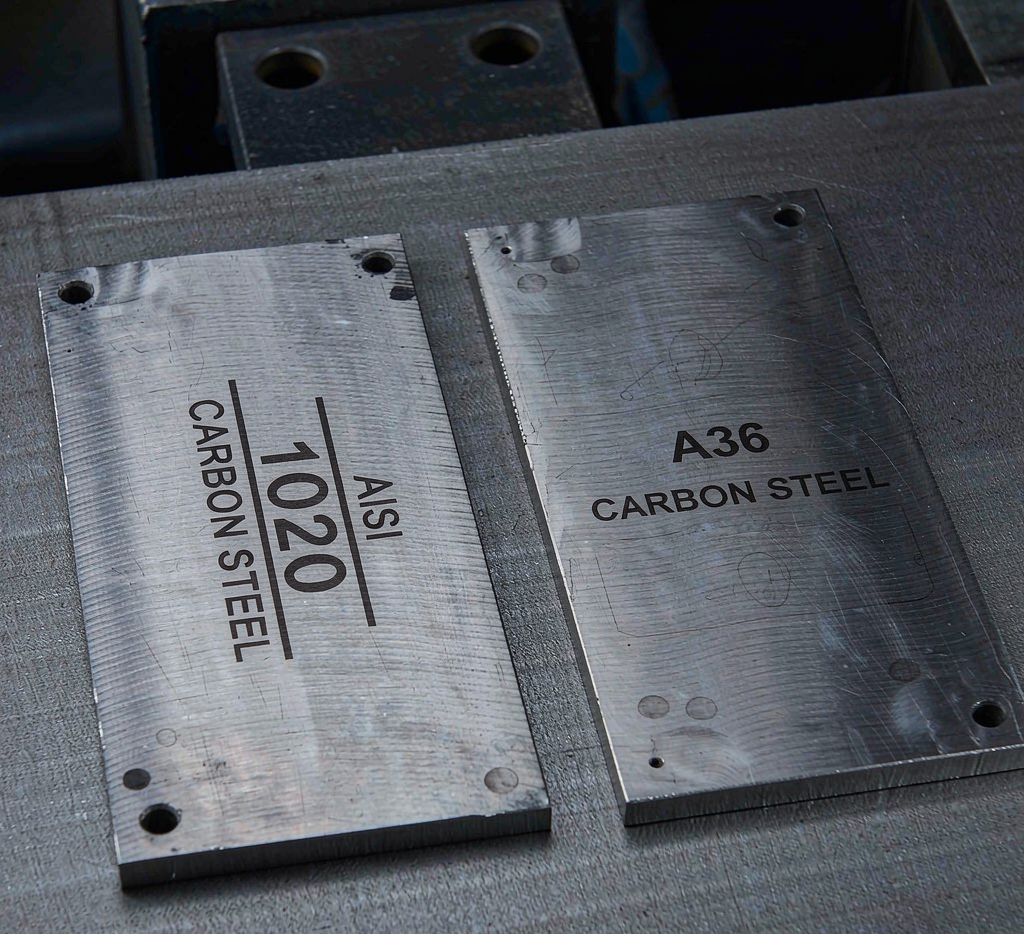
For procurement engineers, fabricators, and product designers specifying carbon steel, the question of AISI 1020 vs A36 steel comes up constantly. Both are low-carbon steels, both are inexpensive, and both are available in huge volumes worldwide — yet they serve very different jobs. AISI 1020 is a low-carbon, low-manganese wrought grade built for machining, carburizing, and light forming. A36, by contrast, is a structural grade whose defining property is not chemistry precision but a guaranteed minimum yield strength of 36 ksi (250 MPa), making it the default choice for beams, plates, and welded frames. This guide breaks down both grades by chemistry, mechanical properties, machinability, weldability, cost, and real-world applications so you can specify the right material with confidence.
Chemical Composition Comparison
The single biggest difference between AISI 1020 vs A36 steel is how each grade is specified. AISI 1020 is defined by a precise chemical recipe under ASTM A29/A29M and SAE J403. A36 is specified primarily by its mechanical minimums under ASTM A36/A36M; its chemistry is given only as maximums, and mills are permitted wide latitude in residual elements. That matters: with A36 you are buying a strength performance, not a locked-in recipe.
Below are typical production values. AISI 1020 values are typical “as-rolled” ranges; A36 values are the ASTM maximum limits plus the iron-balanced remainder. Note that A36 permits up to 0.40% copper when specified as “cuprous,” which 1020 chemistry does not address.
Element
AISI 1020 (typical wt%)
A36 (ASTM max / typical wt%)
What it controls
Carbon (C)
0.18 – 0.23
0.26 max (typ. 0.20 – 0.25)
Hardness, weldability, strength
Manganese (Mn)
0.30 – 0.60
0.80 – 1.20
Strength, deoxidation, toughness
Silicon (Si)
0.15 – 0.35 (killed)
0.40 max
Deoxidation, surface quality
Phosphorus (P)
0.040 max
0.040 max
Brittleness (kept low)
Sulfur (S)
0.050 max
0.050 max
Machinability vs. cleanliness
Copper (Cu)
0.20 max (residual)
0.20 max; 0.40 max if Cu specified
Atmospheric corrosion resistance
Iron (Fe)
Balance (~99.0)
Balance (~98.0 – 98.5)
Base matrix
A key takeaway when comparing AISI 1020 vs A36 steel: A36 carries roughly double the manganese ceiling (1.20% vs 0.60%). Higher manganese raises strength and improves the steel’s response to welding, but it also increases the risk of hard, brittle martensite in the heat-affected zone if cooling is too fast — a factor we return to under weldability.
Why the chemistry ranges differ
AISI 1020 is produced to tight compositional limits so that heat-treaters and machinists get repeatable results. A36 is produced to a property specification. A mill can legally make A36 with 0.18% carbon or 0.26% carbon as long as the finished plate still delivers 36 ksi yield. This is why two A36 plates from different heats can machine and weld differently even though both carry the same grade stamp.
The standards themselves reinforce this split. AISI 1020 falls under SAE J403 (chemical composition of carbon steels) and is most often ordered to ASTM A29/A29M for hot-rolled and cold-finished bars. Its identity is its recipe. A36, governed by ASTM A36/A36M, lists chemistry only as maximums and instead anchors the specification on tensile and yield minimums plus elongation. For buyers writing purchase orders, this means a 1020 PO should cite the exact heat analysis; an A36 PO should cite the required mechanical test report. Understanding this prevents the common error of assuming “low carbon steel” is one interchangeable commodity — it is not.
Mechanical Properties
Mechanical behavior is where buyers most often feel the AISI 1020 vs A36 steel distinction. A36 is guaranteed to a minimum yield; AISI 1020 is quoted in typical ranges because its strength depends heavily on section size, rolling condition (hot-rolled vs cold-drawn), and any subsequent heat treatment.
Property
AISI 1020 (hot-rolled)
AISI 1020 (cold-drawn)
A36 (as-rolled plate)
Yield strength
30 ksi (207 MPa)
51 ksi (352 MPa)
36 ksi min (250 MPa)
Tensile strength
55 ksi (380 MPa)
68 ksi (469 MPa)
58 – 80 ksi (400 – 550 MPa)
Elongation in 2 in.
25 %
15 %
20 – 23 %
Brinell hardness (HBW)
111 – 131
170 – 210
119 – 159
Modulus of elasticity
29 × 10⁶ psi (200 GPa)
29 × 10⁶ psi (200 GPa)
29 × 10⁶ psi (200 GPa)
Density
0.284 lb/in³ (7.87 g/cm³)
0.284 lb/in³ (7.87 g/cm³)
0.284 lb/in³ (7.87 g/cm³)
Reading the strength numbers
Cold-drawing AISI 1020 raises its yield from about 30 ksi to over 51 ksi — a 70% gain — by strain hardening the bar. That makes cold-drawn 1020 competitive with, and sometimes stronger than, A36 in yield, while staying easier to machine than higher-carbon grades. A36’s tensile band of 58–80 ksi reflects its chemistry latitude: a plate at the high-manganese end of the A36 range sits near the top of that band.
Hardness and wear
Neither grade is engineered for wear resistance in the as-rolled condition. AISI 1020 at 111–131 HBW and A36 at 119–159 HBW are both soft enough to machine with standard tooling. Where surface wear matters, AISI 1020 is usually case-hardened (carburized) to a surface hardness of 55–62 HRC while keeping a tough core — a route that does not exist for A36 because A36’s higher residual alloy content and carbon ceiling make predictable case depth harder to control.
Charpy impact behavior further separates the two. In the as-rolled condition, A36 plate typically absorbs 20–40 ft-lb at room temperature and retains useful toughness down to about 0°F (-18°C) when specified to a Charpy requirement, which is why it is accepted for exposed structural service. AISI 1020, supplied primarily as bar, is not normally Charpy-tested, but its fine-grain killed versions perform well in light dynamic loading. For designers, the practical point is that A36 carries a documented toughness pedigree for structures, whereas 1020’s toughness is assumed from its low-carbon nature rather than certified per heat.
Machinability & Weldability
The practical verdict in the AISI 1020 vs A36 steel debate is simple: 1020 machines better, A36 welds more predictably in structural assembly. Both weld well, but the reasons differ.
Machinability
AISI 1020 is rated at about 65% of the machinability of the free-machining benchmark B1112 steel (which is set at 100%). Its low carbon and low manganese keep cutting forces modest, produce short, manageable chips, and allow high surface finish. A36 is not assigned a formal machinability percentage because its properties vary by heat, but in shop practice it cuts roughly 10–20% slower than 1020 on average, and its wider manganese range occasionally produces harder spots that accelerate tool wear.
Recommended cutting speed for 1020 (turning): 90–140 ft/min with uncoated carbide, up to 200 ft/min with coated grades.
Recommended cutting speed for A36 (turning): 70–120 ft/min; reduce feeds on hard inclusions.
Tool life: 1020 typically gives 1.3–1.5× the tool life of A36 in identical operations.
Both grades are low-carbon and thus readily weldable by SMAW, GMAW, FCAW, and SAW without preheat in normal ambient conditions. The differences are in process control:
AISI 1020: Excellent weldability; carbon equivalent (CE) of roughly 0.20–0.25 means essentially no preheat needed below 1 in. thickness. Post-weld stress relief at 1100–1250°F (590–680°C) is optional.
A36: Also readily weldable, but its higher manganese and variable carbon push CE toward 0.35–0.45 on thicker sections. For plates above 1 in. (25 mm) or in cold weather, preheat to 150–200°F (65–95°C) controls hydrogen cracking.
Heat-affected zone: A36’s slightly higher carbon can form localized hardness up to 200–250 HBW in the HAZ if cooled too quickly; 1020 stays softer and more ductile in the HAZ.
For fabrication shops running high-volume welded structures, A36’s guaranteed yield is worth more than 1020’s machinability. For machine shops cutting thousands of precision parts, 1020’s consistent, free-machining behavior wins. That division of labor is the heart of the AISI 1020 vs A36 steel choice.
A useful way to quantify the welding decision is the carbon equivalent formula. Using the common IIW expression CE = C + Mn/6 + (Cr+Mo+V)/5 + (Ni+Cu)/15, a typical AISI 1020 (0.20 C, 0.45 Mn) yields CE ≈ 0.275, while a high-range A36 (0.25 C, 1.10 Mn) yields CE ≈ 0.43. Below 0.35, preheat is generally unnecessary in normal thicknesses; above 0.40, many welding procedures call for preheat to control hydrogen-assisted cracking. This is why the same weld wire and the same welder can produce flawless results on 1020 but require procedure discipline on thick A36.
Cost & Availability
Both grades are commodity steels, but pricing follows different drivers. AISI 1020 is sold mostly as bar, rod, and tube in both hot-rolled and cold-drawn forms, with cold-drawn carrying a premium of roughly 8–15% over hot-rolled because of the extra drawing passes. A36 is sold by the ton as plate, wide-flange beam, angle, channel, and flat bar, and its price is tightly indexed to structural steel demand in construction.
Relative base cost: A36 plate typically trades within ±5% of AISI 1020 hot-rolled bar on a per-pound basis in steady markets.
Cold-drawn 1020 premium: +8 to +15% versus hot-rolled 1020.
Lead time: A36 plate is stocked in depth at service centers (1–2 week delivery common); 1020 cold-drawn bar in unusual sizes may run 3–6 weeks.
Minimum order: A36 is often available in small plate cuts; 1020 is economical in bar lengths of 12–20 ft but also cuttable to billet.
Neither grade carries a meaningful raw-material scarcity risk. The cost difference buyers actually feel comes from processing: if you must machine A36 heavily, the slower cutting and shorter tool life erase its small per-pound saving. If you must weld and paint 1020 structure, you give up A36’s certified yield and may need extra section thickness.
Total cost of ownership should also include finishing. A36 plate ships with a layer of dark mill scale that must be removed by blasting or pickling before coating; that adds $0.03–$0.08 per pound in pretreatment. Cold-drawn 1020 arrives brighter and may need only a light oil removal, reducing finishing cost on machined components. On the other hand, A36’s scale actually provides short-term atmospheric protection during storage, while bare 1020 bar can develop light surface rust within days in humid yards if not oiled. Factoring freight, a full truckload of A36 plate (roughly 20–25 tons) often ships at a lower per-pound freight rate than smaller bar bundles, nudging large structural projects further toward A36.
When to Choose 1020 vs A36 — Decision Checklist
Use this checklist to settle the AISI 1020 vs A36 steel question for your next project. Score each criterion:
Is the part machined to tight tolerances or threads? Choose AISI 1020 (cold-drawn). Its consistent chemistry and low hardness give predictable dimensions and long tool life.
Does the part need a guaranteed 36 ksi yield structural rating? Choose A36. Building codes and structural drawings frequently specify A36 by name.
Will the component be welded into a load-bearing frame? Either works, but A36 is the default for beams/plates; 1020 is fine for lighter welded assemblies and brackets.
Is surface hardening (carburizing) required? Choose AISI 1020. Its low carbon core and case-hardening response are ideal for gears, pins, and bushings.
Is the section thick (over 1 in.) and weld-critical? Choose A36 with controlled preheat; its chemistry is tuned for structural welding.
Is the part cold-formed or bent sharply? A36’s higher ductility and 20–23% elongation make it forgiving in bending; 1020 cold-drawn should be bent with care or annealed first.
Is cosmetic surface finish important? Choose cold-drawn 1020 for a brighter, smoother bar; A36 arrives with mill scale unless pickled or blasted.
Rule of thumb: if a drawing says “structural steel,” use A36; if it says “machined part” or “pin/shaft/bushing,” use AISI 1020. The AISI 1020 vs A36 steel overlap only appears in light, non-critical fabricated brackets where either could serve.
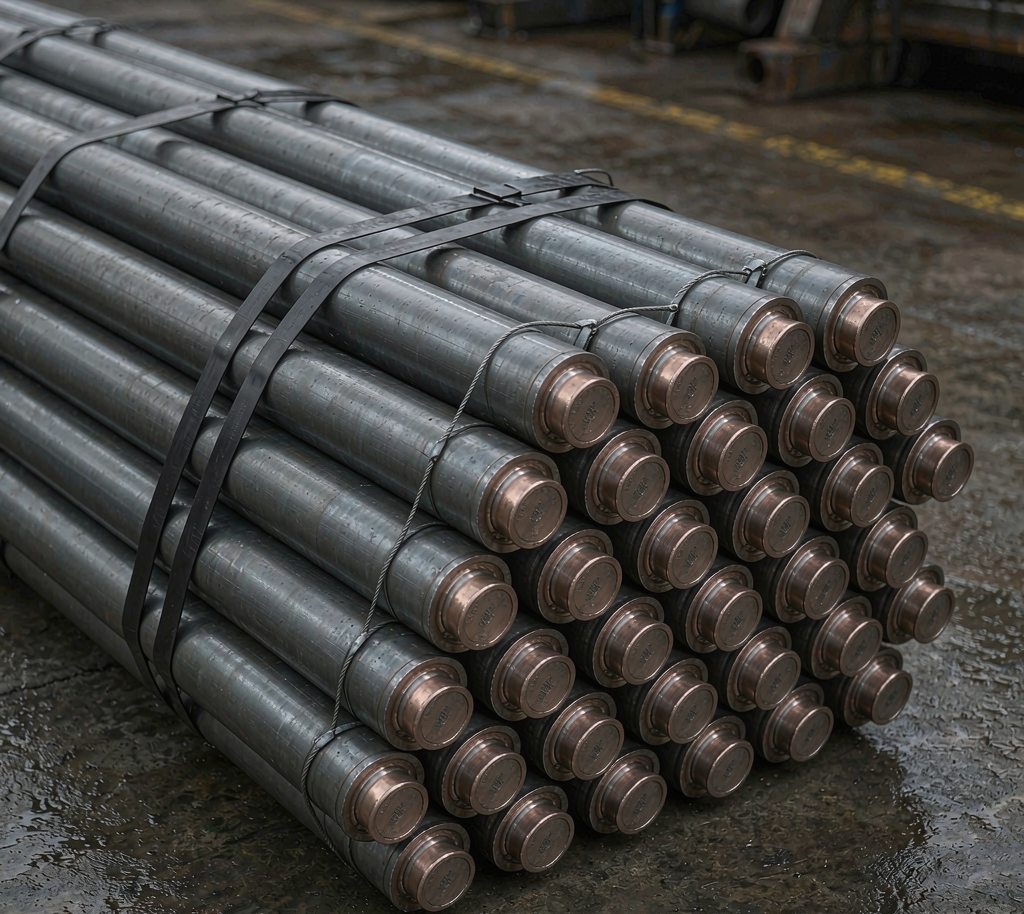
One more practical filter is section shape. AISI 1020 is predominantly a bar and tube material — rounds, hexes, squares, and drawn tubing — so it excels when the starting form is already close to the finished part, minimizing machining stock. A36 is predominantly a plate and shape material — flats, angles, channels, and wide-flange beams — so it excels when the part is built up by cutting and welding rather than turned from solid. If your process is subtractive (CNC turning, milling), lean 1020; if it is additive-assembly (cut, fit, weld), lean A36. Matching the grade to the process, not just the property, is what keeps both material and labor costs low.
Typical Applications
The clearest way to internalize the AISI 1020 vs A36 steel split is to look at where each grade actually ends up.
AISI 1020 common uses
Carburized gears, pinions, and sprockets in automotive and agricultural equipment.
Shafts, axles, and spindles where a smooth machined surface is required.
Bushings, collars, and precision spacers.
Hydraulic cylinder rods and tie rods (often cold-drawn then chrome-plated).
Fasteners, studs, and lightly stressed bolting.
Jigs, fixtures, and machine tool components.
Low-stress structural membros for machinery bases and frames.
A36 common uses
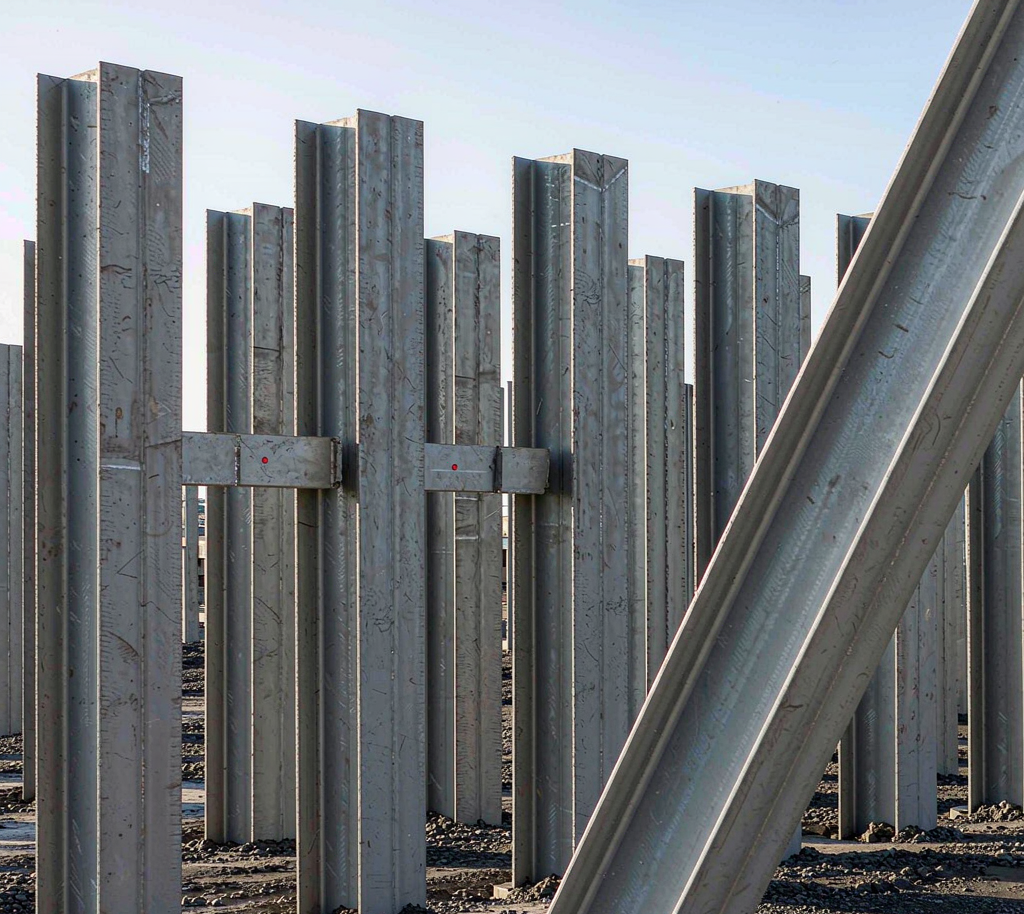
Structural beams, columns, and bracing in buildings and bridges.
Steel plate for tanks, bins, and material-handling hoppers.
Trailer frames, chassis, and heavy equipment undercarriages.
Angle, channel, and flat bar for general fabrication and welding.
Base plates, gussets, and connection plates.
Walkways, platforms, and stair stringers.
Non-critical architectural and ornamental steelwork.
Notice the absence of overlap in those lists. The AISI 1020 vs A36 steel question is rarely “which is better steel” but “which is the right form and process match.” A gear will never be made from A36 plate, and a bridge beam will never be turned from 1020 bar. The gray zone is the fabricated bracket, the machine base, and the light frame — exactly the parts where a careful cost and performance comparison pays off.
FAQ
Can A36 steel be hardened?
Only mildly. A36 has a maximum carbon of 0.26% and lacks sufficient hardenability for through-hardening. You can flame- or induction-harden thin surfaces to about 35–45 HRC locally, but you cannot quench-and-temper A36 to high strength like a 1045 or 4140. For a hardened part, switch to AISI 1020 (case-hardened) or a medium-carbon grade.
Is AISI 1020 stronger than A36?
It depends on condition. Hot-rolled AISI 1020 has a 30 ksi yield versus A36’s 36 ksi minimum, so A36 is stronger in yield as-rolled. Cold-drawn AISI 1020 jumps to about 51 ksi yield, making it stronger than A36 in that form. In tensile terms, A36’s 58–80 ksi band overlaps 1020’s 55–68 ksi range, so neither is universally “stronger.”
Which is better for welding?
Both weld readily, but for structural welding A36 is the safer default because it is specified and certified for welded load paths. AISI 1020 welds just as easily at low carbon but is not a structural-grade designation, so engineers specify it for welded parts only when the weld is non-critical or the part is machined afterward. Thick A36 sections need modest preheat; 1020 rarely does.
Can AISI 1020 replace A36 in a structural drawing?
Not by substitution alone. If the design calls for A36’s 36 ksi yield, you must verify that the 1020 condition you supply meets that yield — cold-drawn 1020 does, hot-rolled 1020 does not. Always confirm with the engineer and request a material certificate before substituting grades.
Does A36 rust faster than 1020?
No meaningful difference. Both are plain carbon steels with similar iron matrices and will corrode at comparable rates in the same environment (roughly 0.002–0.006 in/year unprotected in industrial atmospheres). A36’s optional 0.40% copper version offers slightly better atmospheric corrosion resistance, but neither grade is a weathering or stainless substitute. Use primer, galvanizing, or coating for outdoor service.
Contact Huaxia-Steel for Mill-Direct Quotes
Choosing between AISI 1020 vs A36 steel comes down to your part’s function: machine it, case-harden it, and hold tight tolerances with AISI 1020; weld it, frame it, and certify it as structural with A36. Huaxia-Steel supplies both grades as hot-rolled and cold-drawn bar, plate, and structural shapes, cut to length and packaged for export. Our sales team provides mill-direct pricing, full material certificates (MTC) to ASTM A29 and ASTM A36, and technical assistance on grade selection, heat treatment, and machining parameters. Reach out to Huaxia-Steel’s sales team today for a competitive mill-direct quote and to confirm material certifications for your next carbon steel order.
If you require further information about our metal sheet products or architectural projects, please don’t hesitate to leave your contact details and message here.
Our team of experts will respond within 24 hours to continue the discussion and provide you with any additional information you requires.