Carbon Steel Export Marking and Labeling Requirements
Clear and accurate marking is one of the most overlooked steps in steel exports. A missing heat number, wrong standard mark or absent country-of-origin label can delay customs clearance, cause rejection at the port or trigger a quality claim. This guide covers carbon steel export marking and labeling requirements for bundles, plates, pipes and bars, including standards, stencils, tags and shipping documents.
Export steel bundles with stenciled markings and tags
1. Why Export Marking Matters
Marking links the physical goods to the mill test certificate, customs declaration and purchase order. When customs, inspectors or the buyer checks a bundle, the mark must immediately tell them what the material is, where it came from and where it is going.
Traceability: every bundle must be traceable to a heat or lot number.
Customs clearance: HS code, origin and net/gross weight are required on shipping papers and often on the package.
Quality assurance: standard, grade, dimension and condition must match the certificate.
Safety: handling marks such as weight, lifting points and sling locations prevent accidents during loading.
2. Required Information on Steel Packages
Most buyers and standards require the following information to appear on each package, bundle or individual piece. Large items such as plates may carry the mark directly on the surface; smaller pieces use metal tags or labels.
Item
Purpose
Heat / lot number
Unique mill reference for traceability
Grade / standard
e.g., ASTM A106 Gr B, EN 10025 S355J2, JIS G3101 SS400
Dimensions
OD × WT for pipe; thickness × width × length for plate/bar
Quantity / piece count
Number of pieces and total length or weight
Country of origin
Required by customs and many buyer specifications
Manufacturer name / logo
Mill or exporter identification
Order / contract number
Links package to customer PO
Handling marks
Sling points, weight, fragile faces, keep dry
Metal tag with heat number and grade attached to steel bundle
3. Marking Methods
The method depends on the product type, surface condition and customer preference. Common methods include stenciling, die stamping, etching and tags.
Paint stenciling: fast and cheap for bundles; must use weather-resistant paint for sea shipment.
Die stamping / embossing: permanent; common on large forgings, bars and flanges.
Electro-etching: clean and precise; used on polished or coated surfaces.
Metal tags / labels: attached with wire; ideal for small pieces and mixed bundles.
Barcode / QR code tags: increasingly used for automated warehouse and customs scanning.
4. Standard-Specific Marking Rules
Several product standards include their own marking requirements. Exporters must follow the strictest set of rules that applies to a given order.
Standard
Key Marking Requirement
ASTM A53 / A106
Grade, ASTM designation, heat number, name or mark of manufacturer
ASTM A500 / A513
Grade letter, name or brand of manufacturer, heat number when required
EN 10025-2
Manufacturer, steel name/number, cast/heat number, dimensions and origin
EN 10210-1
Same as EN 10025 plus S235JRH, S355J0H etc. grade mark
JIS G3101 / G3445
Grade symbol, heat number, mill mark and dimensions
API 5L
PSL level, grade, heat number, pipe manufacturer, process and month/year
5. Export Packing and Protection
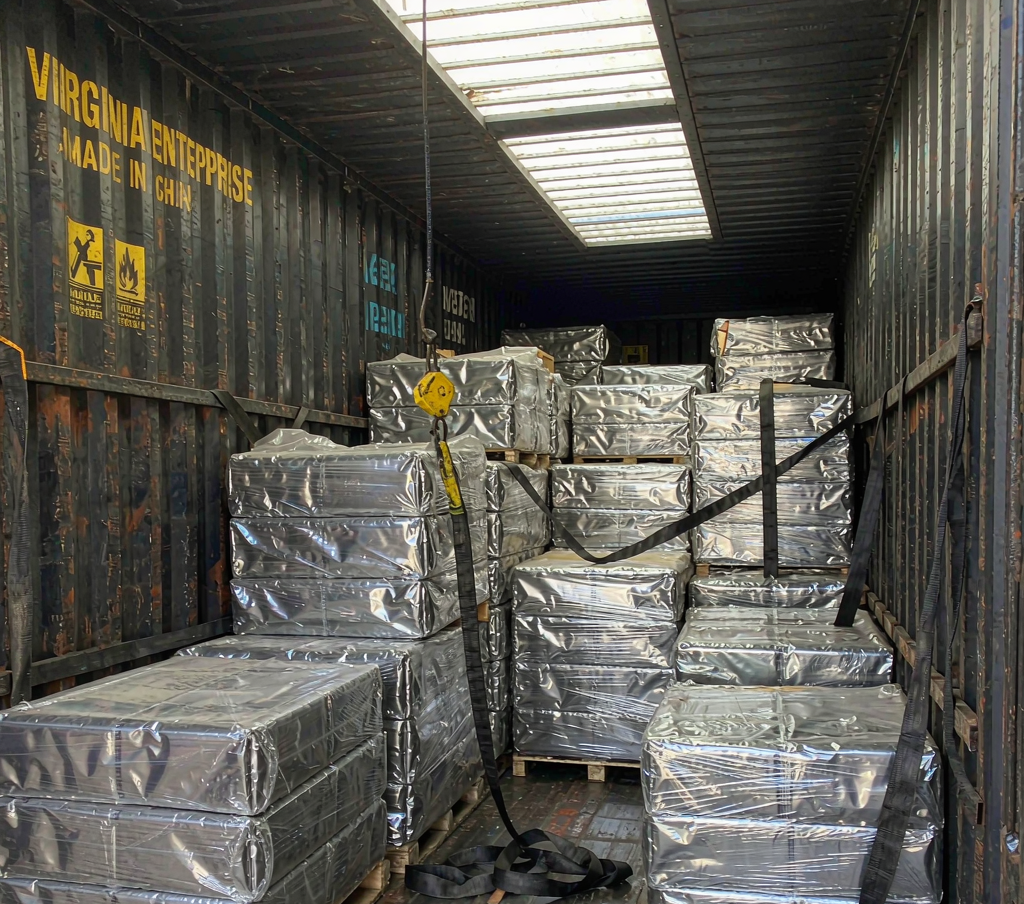
Good packing protects both the steel and its marking. Marks that fade or fall off during the voyage create problems at destination.
Bundles are strapped with steel bands and separated by wooden or plastic spacers.
Pipe ends are capped to prevent moisture ingress and mechanical damage.
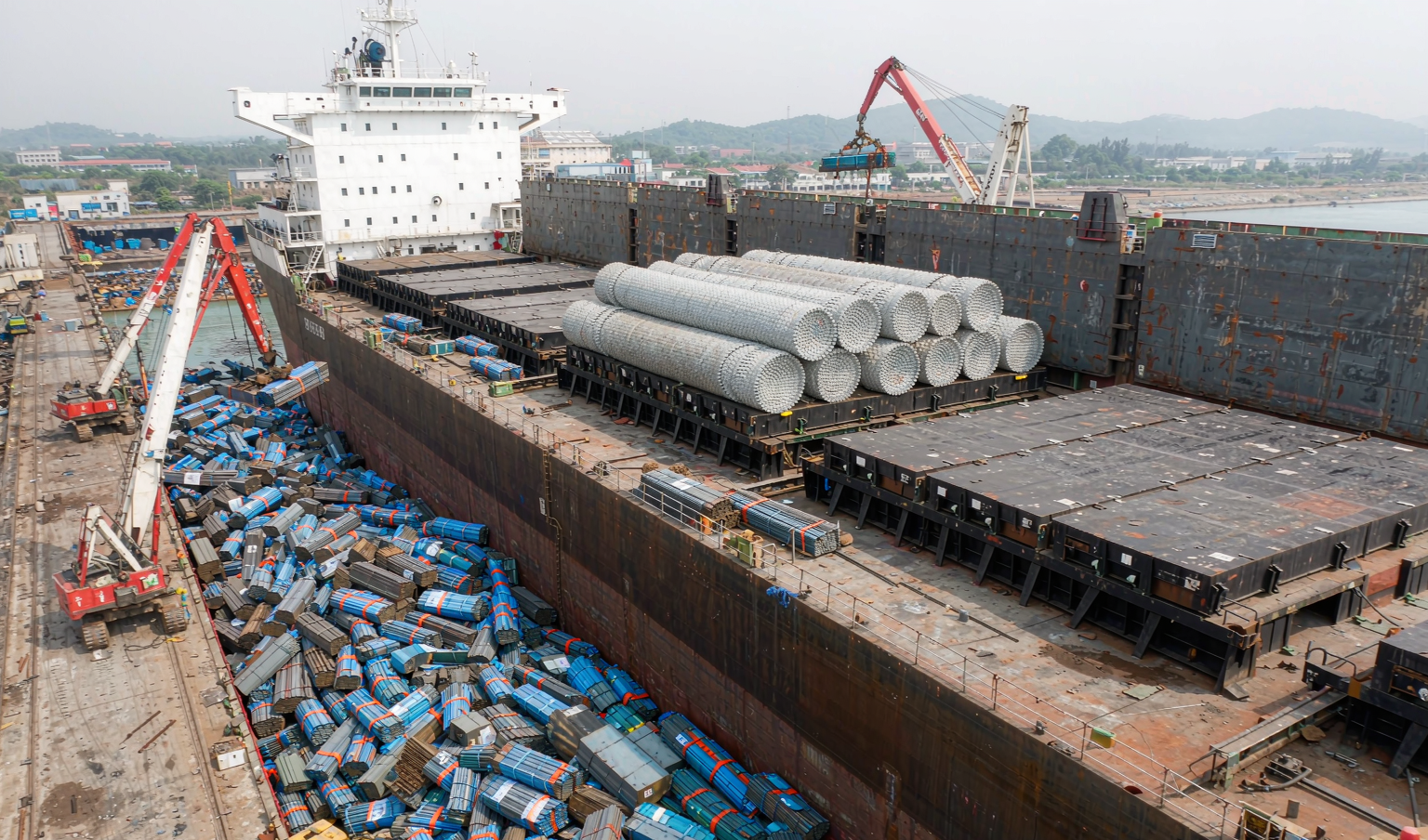
Plates are loaded on flat racks with edge protection and moisture barriers.
Tags should be made of weather-resistant metal or laminated plastic and secured with stainless steel wire.
Desiccants and VCI film may be added for long sea voyages to prevent rust that could obscure marks.
Steel plates loaded on flat rack with edge protection
6. Common Mistakes to Avoid
Using chalk or water-soluble ink that disappears before arrival.
Mixing heats in one bundle without a detailed packing list.
Forgetting to mark the country of origin on the package or bill of lading.
Using tags that are not fixed securely and fall off during handling.
Writing dimensions in only metric when the buyer expects imperial, or vice versa.
7. FAQ
Does every piece need a heat number mark?
Not always. Individual marking is required for some standards and large pieces. Bundles can share a heat number if all pieces in the bundle belong to the same heat and the packing list confirms it.
Can markings be removed after customs clearance?
Some buyers request that mill markings remain visible for traceability. Removing marks may void quality claims or create customs issues if reinspection occurs.
What should be on a steel export packing list?
Packing list should show heat number, grade, dimensions, piece count, net/gross weight, package number and total quantity per package.
Are barcode labels accepted by customs?
Many ports accept barcode labels as supplementary identification, but human-readable grade, origin and heat number marks are still mandatory in most cases.
8. Summary
Carbon steel export marking is a compliance and risk-management step, not just decoration. Exporters should confirm the required marks with the buyer and the destination customs authority before shipment, use durable marking methods and keep a clear link between physical marks and shipping documents.
Need a reliable carbon steel supplier for your next project? Huaxia-Steel supplies mill-certified carbon steel bars, plates, pipes, flanges and fittings with full inspection, export packing and fast delivery. Request a quote today and our team will reply within 24 hours.
If you require further information about our metal sheet products or architectural projects, please don’t hesitate to leave your contact details and message here.
Our team of experts will respond within 24 hours to continue the discussion and provide you with any additional information you requires.