Introduction: Why Pipe End Beveling Matters
Carbon steel pipe ends are rarely delivered ready to weld. Before two pipes or a pipe and a fitting can be joined by butt welding, the ends must be prepared to the correct bevel angle, root face, and land dimension. Poor bevel preparation is one of the leading causes of incomplete penetration, slag inclusions, and weld rejections in piping and pressure-vessel work.
This guide explains carbon steel pipe end beveling: the common bevel types, the standards that define them, how wall thickness influences the angle, the machining methods used in mills and shops, and the quality checks buyers should request before shipment.
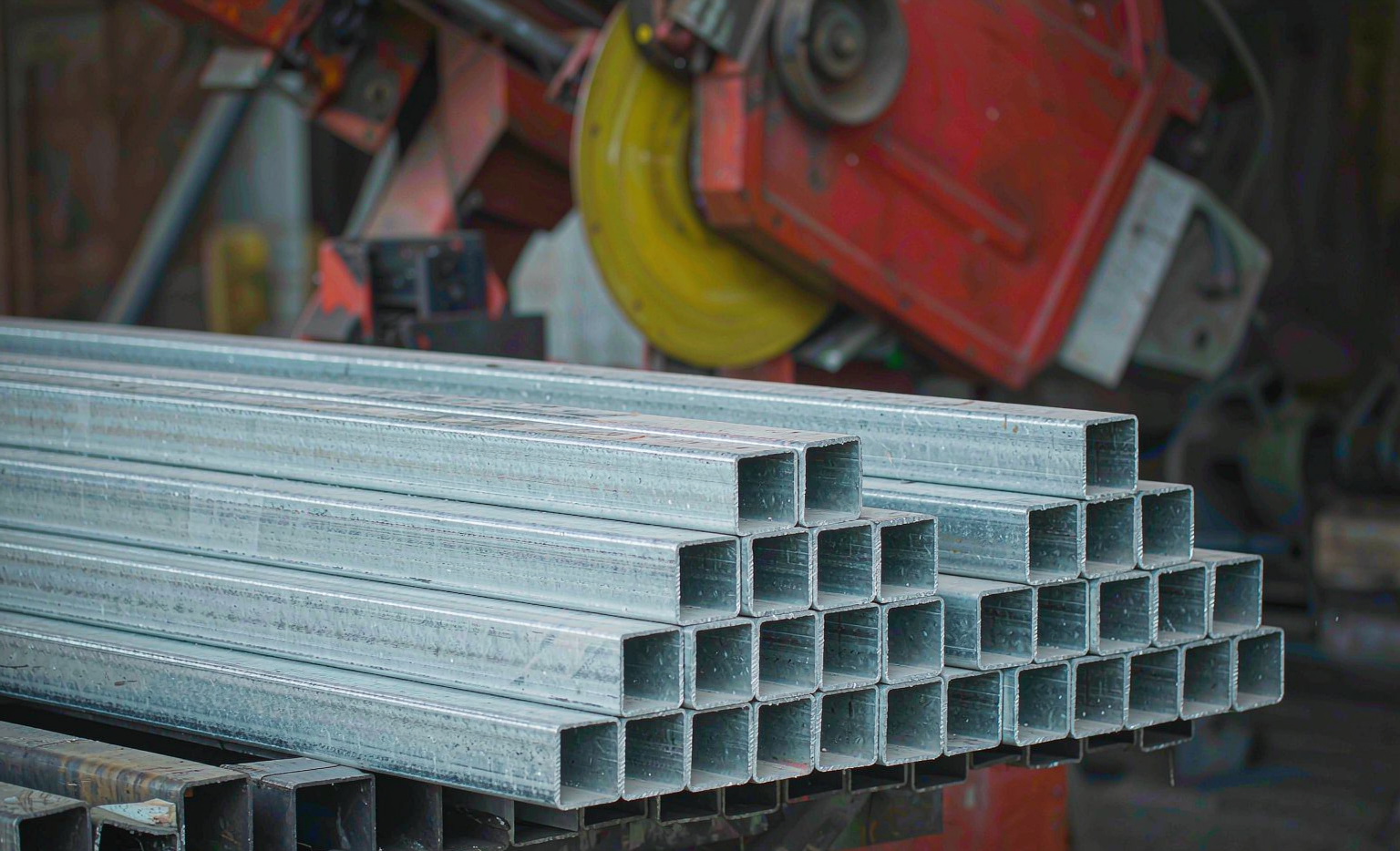
1. Common Bevel Types and Applications
| Bevel Type | Angle / Shape | Typical Use |
|---|---|---|
| V-bevel | 30° – 37.5° included angle | General butt welding of pipe and fittings |
| U-bevel (J-bevel) | Curved root radius | Thick-wall pipe, limited root access |
| Compound bevel | Variable angle for thick wall | Heavy-wall process piping |
| Square cut | 90° end | Slip-on flanges, socket welds, mechanical joints |
| Counterbore | Stepped bore | Composite lined pipe, precise fit-ups |
The V-bevel with a 37.5° bevel angle (30° land + 0.8 – 2.4 mm root face) is the default for ASME B16.25 butt-welding pipe ends. U-bevels reduce filler metal and distortion on thick walls but require more complex machining.
2. Standard References for Pipe End Preparation
- ASME B16.25: butt-welding ends for piping, fittings and flanges — bevel angle, root face, inside diameter tolerance.
- ASME B31.3 / B31.1: process and power piping codes; references B16.25 for end preparation.
- API 5L: line pipe bevel requirements at mill ends; typically 30° angle unless otherwise specified.
- EN 10253-2: European butt-welding pipe fittings; bevel geometry per type A or B.
- ISO 9692-1: welding joint preparation for steel; bevel design and tolerances.
When ordering pipe or fittings, state the controlling standard on the purchase order. A default “beveled end” from one supplier may not match another supplier’s interpretation.
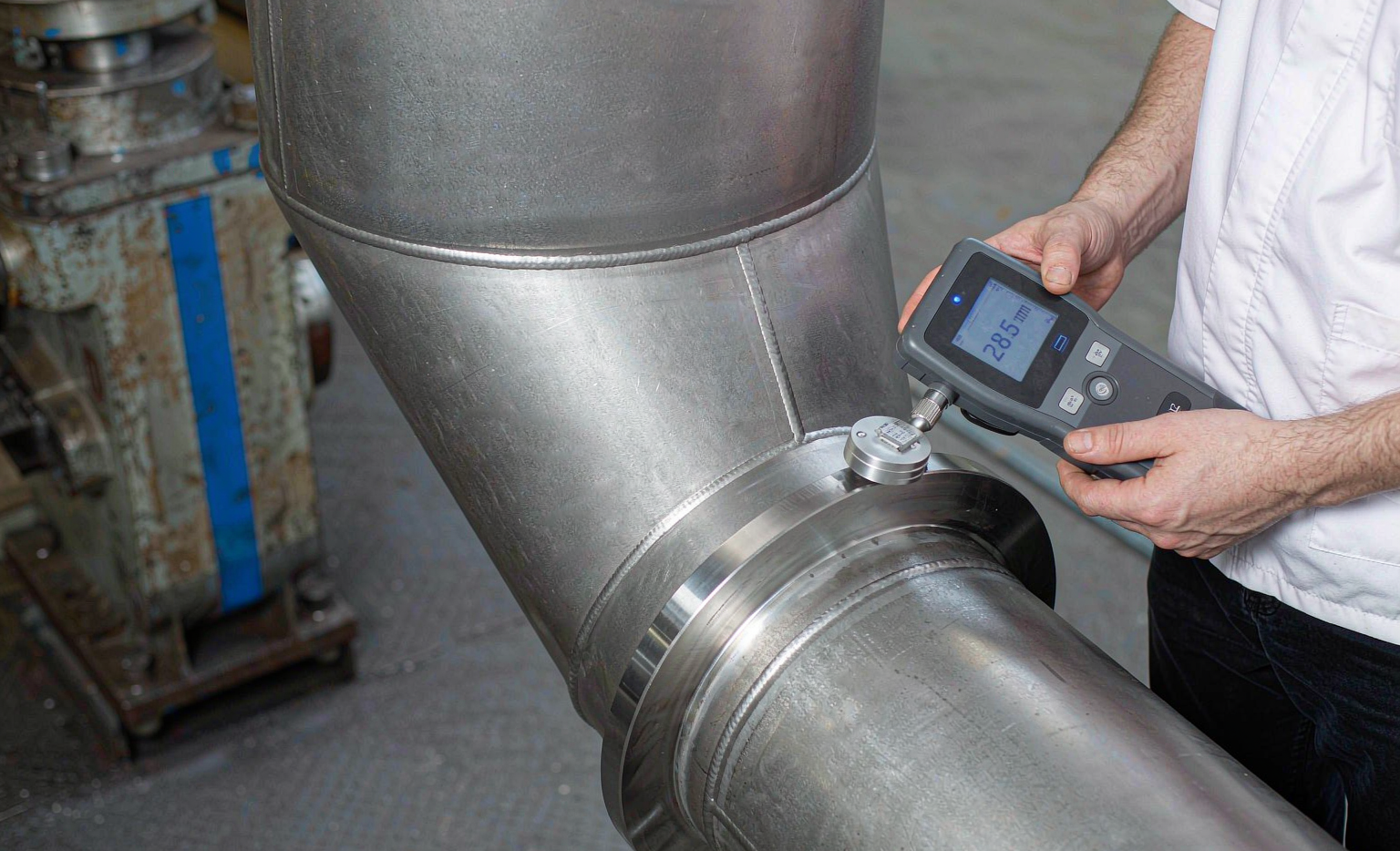
3. How Wall Thickness Dictates Bevel Geometry
| Wall Thickness (T) | Bevel Angle | Root Face | Land Width |
|---|---|---|---|
| T ≤ 6 mm | 35° – 40° | 0.8 – 1.6 mm | 1.0 – 2.0 mm |
| 6 mm < T ≤ 12 mm | 35° – 37.5° | 1.2 – 2.0 mm | 1.5 – 2.5 mm |
| 12 mm < T ≤ 25 mm | 30° – 37.5° | 1.6 – 3.2 mm | 2.0 – 3.0 mm |
| T > 25 mm | Compound or U-bevel | 2.0 – 4.0 mm | Per WPS |
Thicker walls need slower cooling and less included angle at the root to avoid incomplete fusion. For heavy process piping, the welding procedure specification (WPS) overrides the standard table because it is written for the specific joint design, process, and heat input.
4. Beveling Methods in Production
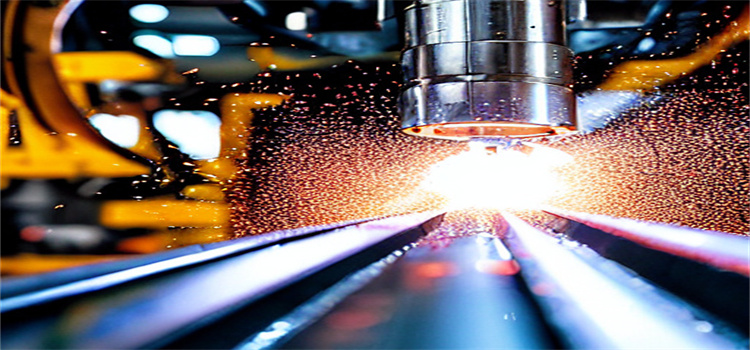
- Cold cutting (pipe cutter / band saw): clean, no HAZ, suitable for shop work; slow for high volume.
- Oxygen-fuel cutting: fast and cheap; leaves an oxide layer and rough edge; requires grinding before welding for critical joints.
- Plasma cutting: faster than oxy-fuel on thinner walls; good edge quality with less cleanup.
- Beveling machine / facing tool: repeatable angle and root face; preferred for ASME and API work.
- CNC pipe profiling: complex compound bevels, J-bevels, and counterbores; highest accuracy for spooling.
For ASME B16.25 bevels on carbon steel line pipe, most mills use a dedicated pipe-end beveling machine after cutting to length. The machine indexes the pipe and removes the chamfer in one pass, giving consistent land and angle.
5. Surface and Fit-Up Requirements
Before welding, the beveled area must be clean and dry:
- Remove mill scale, rust, oil, and moisture within 10 – 15 mm of the weld edge.
- Grind oxy-cut surfaces smooth to bright metal.
- Check alignment: internal misalignment should not exceed 1.5 mm or 0.5T, whichever is smaller, for B31.3.
- Match root openings per WPS; typical is 2 – 4 mm for V-bevels on schedule pipe.
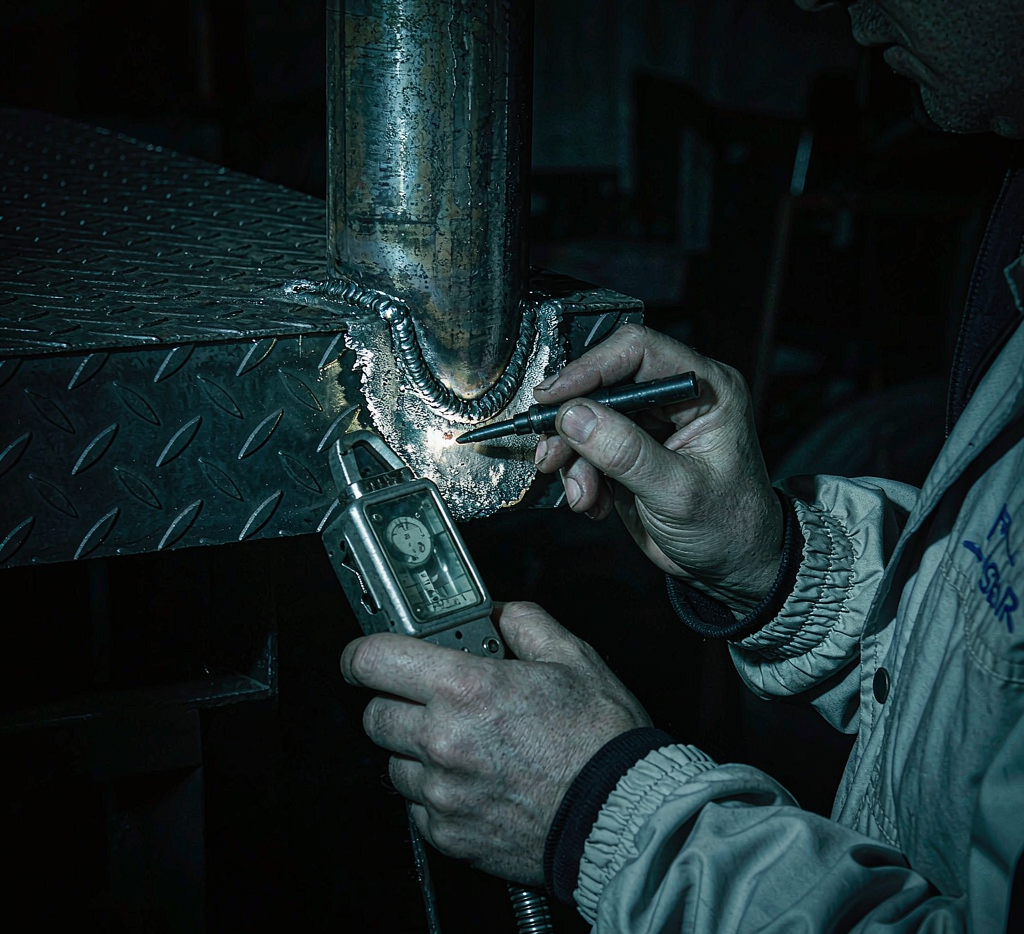
6. Quality Checks and Acceptance Criteria
| Check | Method | Acceptance |
|---|---|---|
| Bevel angle | Bevel gauge or protractor | ± 2.5° of specified angle |
| Root face / land | Vernier caliper | Per drawing or B16.25 |
| Inside diameter | Pipe pi tape / ID gauge | +0.4 / −0.8 mm typical for B16.25 |
| Surface finish | Visual | No scale, cracks, or gouges |
| Dimensional report | Inspection record | Sample or 100% per order |
Buyers should request a dimensional report for the first article and agree on an AQL for production inspections. For critical spools or pressure piping, 100% end inspection and fit-up mock-up may be justified.
7. Common Bevel Defects to Reject
- Excessive root face: causes incomplete root penetration.
- Land width out of tolerance: changes heat input and fusion profile.
- Ovality at pipe end: prevents proper fit-up and alignment.
- Burns or hardened edge from oxy-cutting: creates crack initiation sites.
- Contaminated surface: oil, grease, or moisture cause porosity.
Frequently Asked Questions
1. What is the standard bevel angle for carbon steel pipe?
ASME B16.25 specifies a 37.5° bevel angle for most butt-welding pipe ends, with a root face of about 1.6 mm. API 5L line pipe commonly uses a 30° bevel unless the purchase order states otherwise.
2. Can carbon steel pipe be beveled after galvanizing?
Yes, but the zinc layer must be removed back from the weld edge to avoid zinc-induced porosity and brittle weld metal. Re-galvanize or repair the coating after welding.
3. How much root face is acceptable?
For ASME B16.25, the typical root face is 0.8 – 1.6 mm for standard wall pipe. Your WPS or project specification may call for a different dimension; always follow the governing document.
4. Should I request 100% end inspection?
For standard commercial pipe, random sampling is usually enough. For pressure piping, offshore, or high-reliability projects, require 100% bevel inspection and a first-article fit-up check.
5. What is the difference between V-bevel and U-bevel?
A V-bevel has straight sloping sides meeting at a root face; a U-bevel has a curved root radius. U-bevels reduce weld metal volume on thick walls and improve access for the root pass.
Conclusion
Carbon steel pipe end beveling is a small detail with an outsized impact on weld quality. Specifying the right bevel angle, root face, and surface condition up front — and verifying them on delivery — prevents rework, delays, and weld rejection during fabrication.
Huaxia-Steel supplies beveled-end carbon steel pipe, fittings, and flanges to ASME B16.25, API 5L, and EN 10253-2, with end preparation reports and full MTC documentation. Send us your pipe size, wall, standard, and bevel requirement for a factory-direct quotation.