S45C vs S50C vs S55C Carbon Steel Comparison Guide
When buyers source medium-carbon steel for shafts, gears, molds and machine parts, three Japanese grades appear again and again: S45C, S50C and S55C. All three are covered by JIS G4051 — Carbon Steels for Machine Structural Use — yet the small difference in carbon content creates meaningful gaps in hardness, strength, machinability and price. Pick the wrong grade and you may either pay for performance you do not need or accept parts that wear too quickly under load.
This guide compares S45C, S50C and S55C side by side. We look at chemistry, mechanical properties, heat treatment response, typical applications and unit cost so you can select the most economical grade that still meets your engineering requirements.
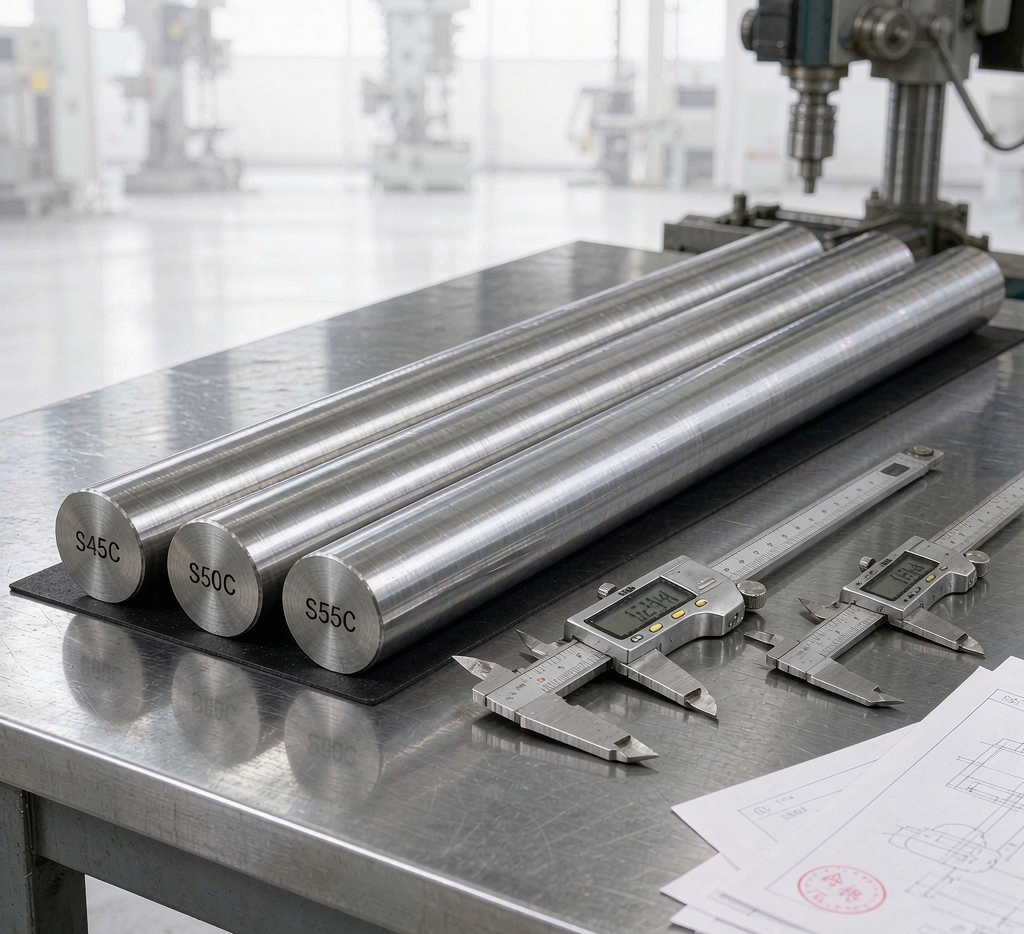
1. What Are S45C, S50C and S55C?
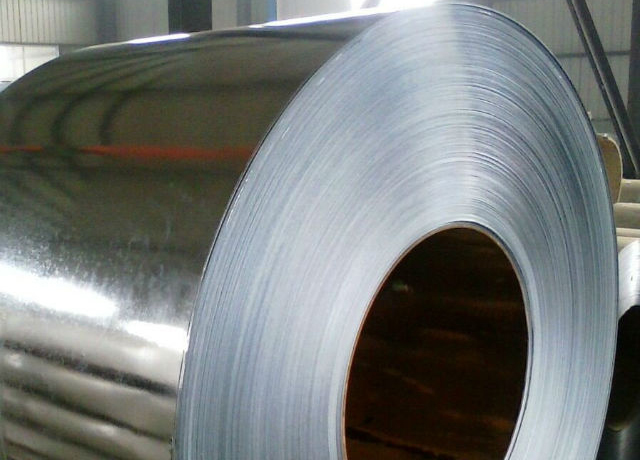
S45C, S50C and S55C are normalized or hot-rolled medium-carbon steels produced mainly in Japan, South Korea, Taiwan and China. They are direct equivalents to AISI/SAE 1045, 1050 and 1055, and they are delivered as round bars, flat bars, plates and forgings. Engineers choose them when a part needs higher strength than low-carbon grades such as SS400 or A36, but does not require the cost and complexity of alloy steel.
The defining difference is carbon content. Higher carbon raises tensile strength and hardness after heat treatment, but it also reduces weldability and machinability. The following table shows the typical JIS G4051 composition ranges.
| Grade | C (%) | Si (%) | Mn (%) | P ≤ | S ≤ | AISI Equivalent |
|---|---|---|---|---|---|---|
| S45C | 0.42 – 0.48 | 0.15 – 0.35 | 0.60 – 0.90 | 0.030 | 0.035 | 1045 |
| S50C | 0.47 – 0.53 | 0.15 – 0.35 | 0.60 – 0.90 | 0.030 | 0.035 | 1050 |
| S55C | 0.52 – 0.58 | 0.15 – 0.35 | 0.60 – 0.90 | 0.030 | 0.035 | 1055 |
2. Mechanical Properties Comparison
The values below are typical for hot-rolled or normalized bar. Actual results vary with section size, heat treatment and mill practice, so always request a mill test certificate before accepting a shipment.
| Grade | Tensile Strength (MPa) | Yield Strength (MPa) | Elongation (%) | Hardness (HB) |
|---|---|---|---|---|
| S45C | 570 – 700 | ≥ 345 | ≥ 17 | 170 – 210 |
| S50C | 610 – 750 | ≥ 375 | ≥ 15 | 180 – 230 |
| S55C | 650 – 800 | ≥ 400 | ≥ 13 | 200 – 250 |
As carbon rises from S45C to S55C, tensile strength increases by roughly 80–100 MPa and hardness climbs. Ductility falls slightly, so S55C is less suitable for parts that require extensive cold forming or severe bending.
3. Heat Treatment Response
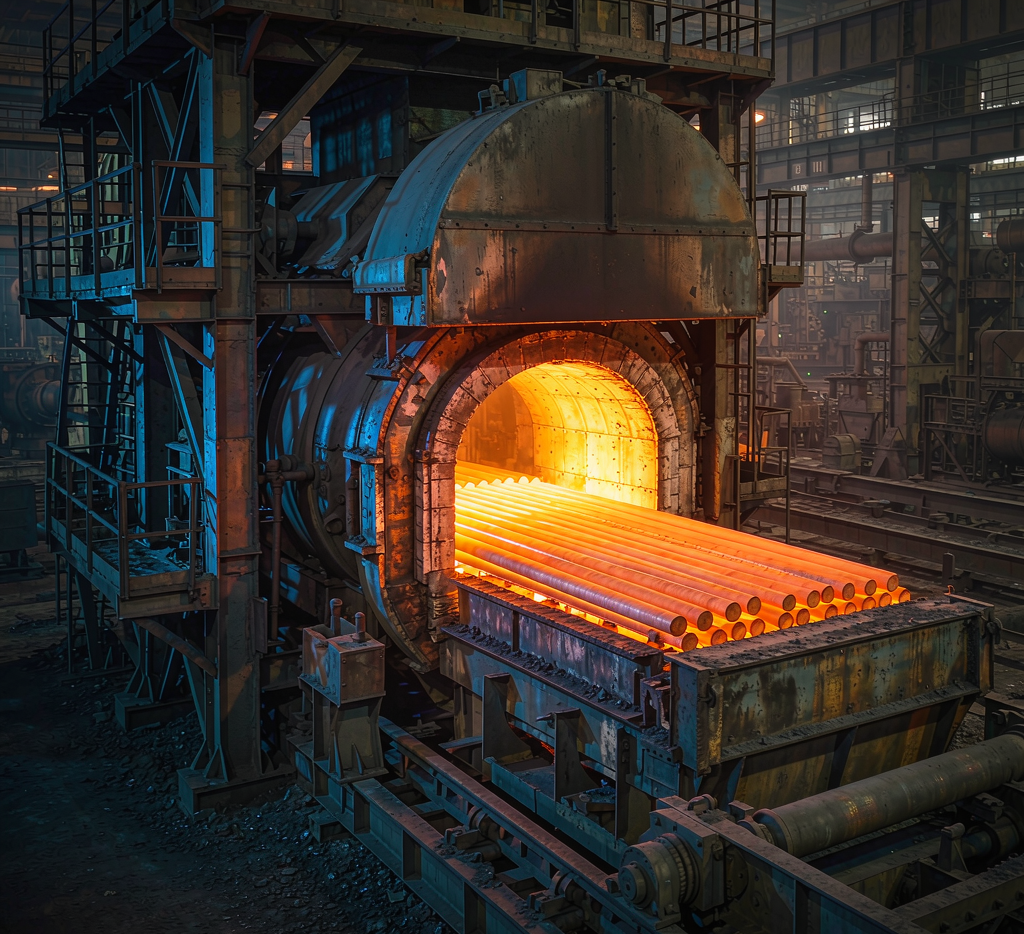
All three grades respond well to normalizing, annealing, quenching and tempering. The higher the carbon, the greater the hardness potential after quenching and tempering. The table below shows approximate hardness values after a standard Q&T cycle.
| Grade | Normalized (HB) | Annealed (HB) | Q&T HRC (typical) |
|---|---|---|---|
| S45C | 170 – 200 | ≤ 163 | 28 – 34 |
| S50C | 180 – 210 | ≤ 174 | 30 – 36 |
| S55C | 200 – 230 | ≤ 183 | 32 – 38 |
For injection molds and die plates, S50C is often supplied pre-hardened to 28–32 HRC because it offers a good balance of machinability and wear resistance. For high-load gears and axles, S55C can be induction or through-hardened to higher surface hardness.
4. Typical Applications by Grade
- S45C — General machine shafts, crankshafts, connecting rods, pins, bolts, studs, light-duty gears and automotive components where cost and machinability matter more than maximum strength.
- S50C — Plastic injection molds, mold bases, die sets, medium-strength gears, cams, machine tool beds and structural parts that need moderate hardness and good dimensional stability.
- S55C — Heavy-duty gears, axles, leaf springs, agricultural tools, high-strength fasteners, railway parts and wear-resistant components where hardness and fatigue resistance are critical.
5. Machinability and Weldability
S45C machines more easily than S50C and S55C. Its lower carbon content produces shorter chips, lower tool wear and better surface finish during turning, milling and drilling. S55C requires slower speeds, sharper carbide or coated inserts and more rigid setups.
Weldability decreases as carbon increases. S45C can be welded with standard electrodes if preheated to 150–200 °C and post-weld stress relieved. S50C and especially S55C require higher preheat (200–300 °C), low-hydrogen electrodes and controlled cooling to avoid hydrogen cracking. For welded structures, low-carbon grades such as SS400 or S235JR are usually preferred.
6. Price and Availability
S45C is the most widely produced grade and therefore the cheapest per kilogram. S50C carries a small premium because it is used in mold-making and often requires tighter sulfur/phosphorus limits. S55C is the least common of the three and commands the highest price, particularly in thick plate or forged bar.
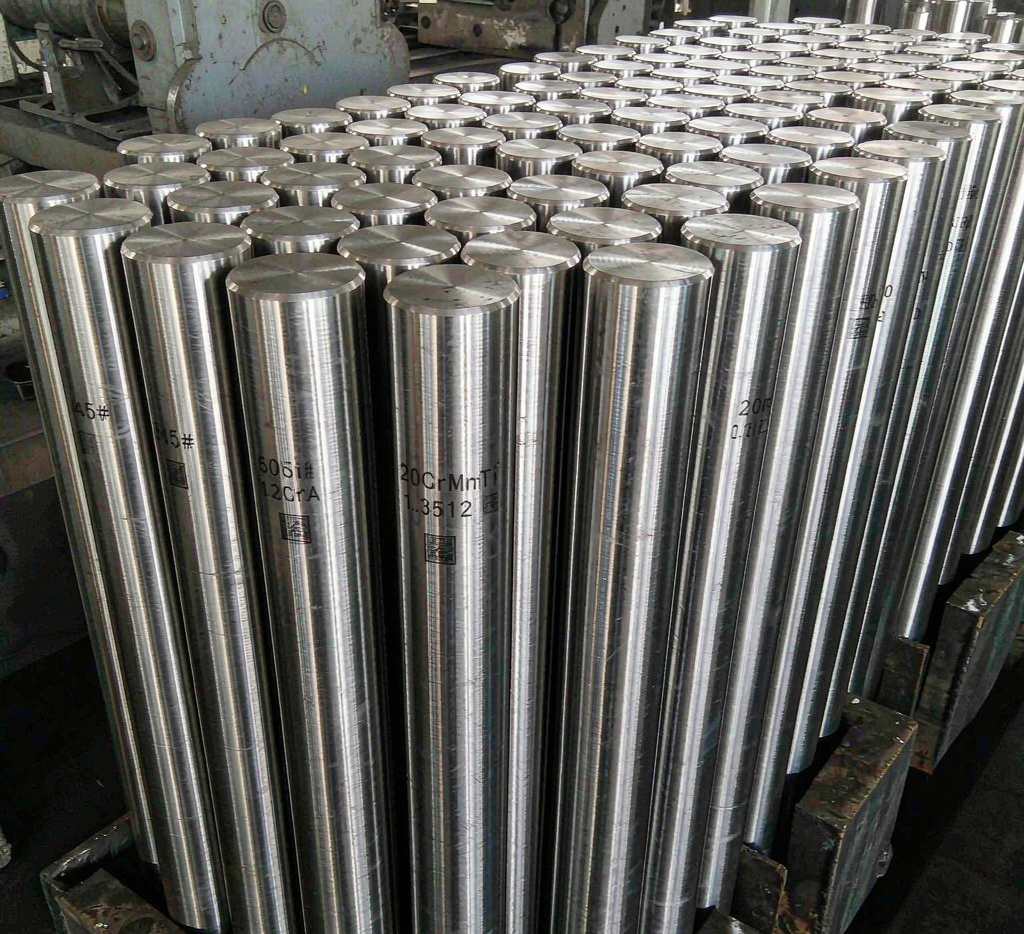
Round bar is available in diameters from about 6 mm to 300 mm. Plate is available from 6 mm to 200 mm thick. If you need a specific size, lead times can vary by two to four weeks depending on the mill and current rolling schedule.
7. How to Choose the Right Grade
| Requirement | Recommended Grade | Reason |
|---|---|---|
| Lowest cost, good machinability | S45C | Cheapest, easiest to machine and weld |
| Pre-hardened mold base | S50C | Good hardness/stability after Q&T |
| Maximum strength and wear resistance | S55C | Highest carbon and hardness potential |
| Welded fabrication | Avoid S55C; prefer S45C or low-carbon grade | Higher carbon increases crack risk |
8. Frequently Asked Questions
8.1 Is S45C the same as AISI 1045?
Yes, S45C is essentially the Japanese JIS equivalent of AISI/SAE 1045. Chemical ranges overlap closely, and the mechanical properties are similar when both are supplied in the normalized condition.
8.2 Which grade is best for mold bases?
S50C is the most common choice for mold bases and die sets. It can be pre-hardened to 28–32 HRC, machines cleanly and provides enough strength to support cavity inserts without distortion.
8.3 Can S55C be welded?
S55C can be welded, but it requires preheating to 200–300 °C, low-hydrogen electrodes and post-weld heat treatment to relieve stress. For critical welds, consider a lower-carbon grade or alloy steel designed for welding.
8.4 What certification should I request?
Request a mill test certificate (MTC) to EN 10204 3.1 or 3.2, depending on your project requirements. The MTC should show heat number, chemical composition, mechanical test results and dimensional tolerances.
9. Source S45C, S50C and S55C from Huaxia-Steel
Huaxia-Steel supplies S45C, S50C and S55C round bars, flat bars and plates with full MTCs, tight tolerances and reliable export packing. Whether you need a single trial order or a long-term supply contract, our team can recommend the right grade and heat treatment for your application. Request a quote today and receive pricing, lead time and a material certificate sample within one working day.
Browse our carbon steel catalog or contact our sales team for grade selection support.