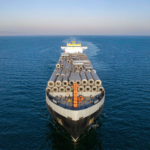
A well-executed steel export container loading plan is the difference between cargo that arrives clean and a claim file. Steel is dense — a single 20-foot container can legally carry only about 26–28 tonnes even though its volume would hold 40+ tonnes of bundled bars — so every export shipment is a puzzle of weight limits, load distribution, securing force and unloading logic. This guide gives exporters and buyers a practical container loading plan framework for carbon steel products: choosing the right container, calculating payloads, dunnage and securing methods per CTU packing rules, VGM compliance, and the inspection points that prevent damage claims.
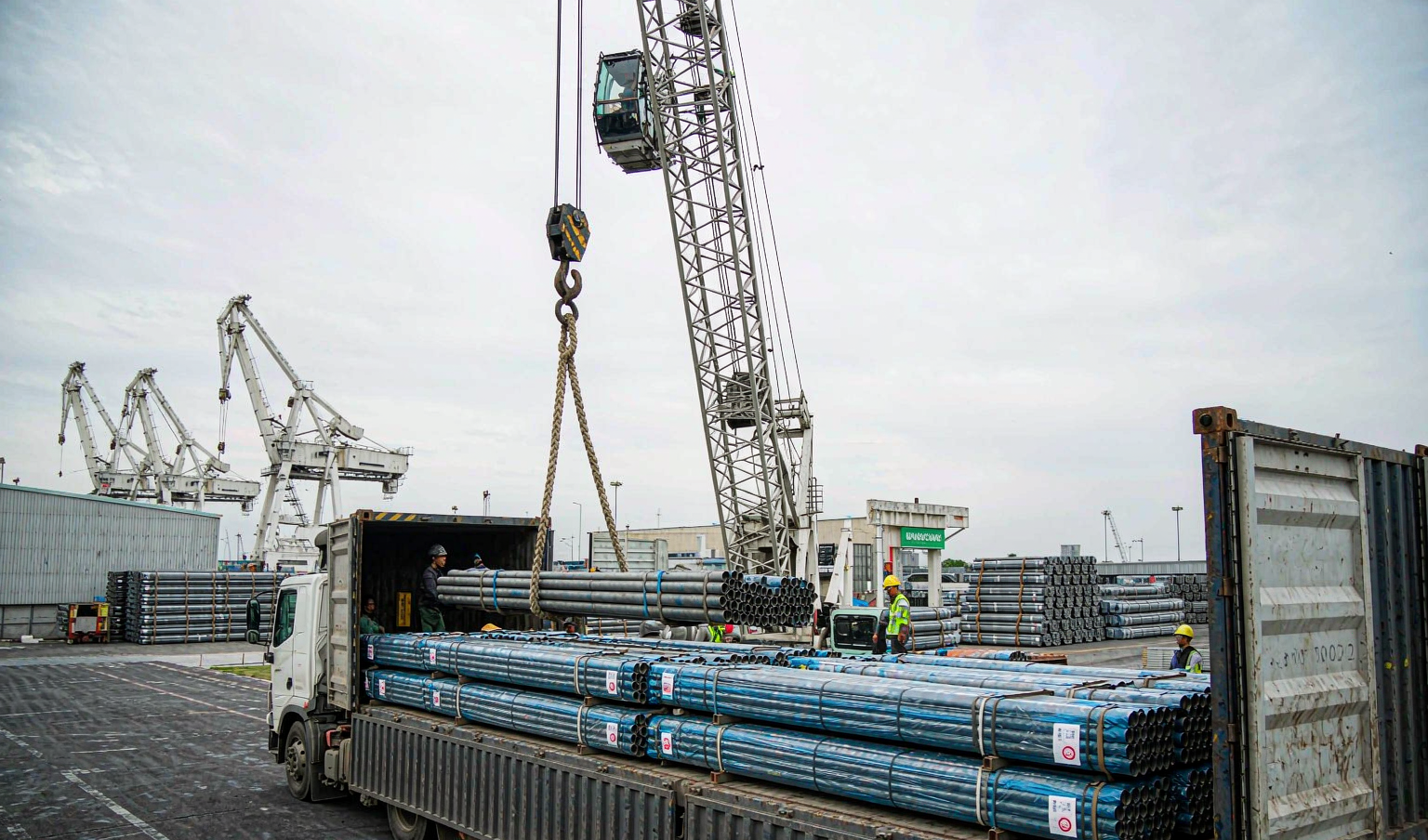
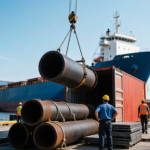
Bundled carbon steel pipes loaded into a 40 ft container at port
Step 1: Choose the Right Container Type
Steel products have payload-to-volume ratios far above general cargo, so container selection starts with weight, not space. The standard options and their realistic steel payloads:
Container
Internal L×W×H (mm)
Door aperture (mm)
Max payload*
Typical steel load
20 ft GP
5,898 × 2,352 × 2,393
2,343 × 2,280
~28,200 kg
24–27 t
40 ft GP
12,032 × 2,352 × 2,393
2,343 × 2,280
~26,500 kg
24–26 t (volume-limited)
40 ft HC
12,032 × 2,352 × 2,698
2,343 × 2,585
~26,500 kg
24–26 t
40 ft open top
12,032 × 2,352 × 2,339
roof opening
~26,500 kg
long bars/pipes loaded by crane
40 ft flat rack
12,180 × 2,438 (deck)
open sides
~26–40 t (rating dependent)
oversized bundles, machines
*Payload varies by container tare and the shipping line’s stacking limits; the numbers above are typical. The decisive legal limit is usually the road weight limit at destination, not the container rating: China export commonly caps at 26 t gross per 20 ft (cargo + container + chassis), EU roads cap near 40 t total truck weight (≈25–27 t of cargo in a 40 ft), and US rules often restrict 20 ft loads to under 19–20 t cargo. Always confirm the destination road limit before maximizing the load — over-height payload that cannot be trucked creates demurrage and re-packing costs at destination.
Step 2: Calculate the Load Plan (Weight and Space)
Build the plan in three numbers: cargo weight, floor area consumed, and axle/center-of-gravity position. For bundled bars at 7.0–7.85 t/m³ of steel, a 20 ft container’s 33 m³ of internal volume is weight-limited long before it fills. Worked example for hot rolled round bar bundles:
Bundle size: 6 m × 1.2 m × 1.0 m, each weighing ~3.2 t (bundle density ≈ 0.44 accounting for voids).
20 ft container usable floor: 5.9 m × 2.35 m — bundles are cut to 5.8 m length so they clear the door frame.
Layout: 2 bundles side by side per layer × 2 layers = 4 bundles… but weight is 12.8 t — under the limit, so switch to denser packing: 6 m bars cut to 5.8 m, bundled at 1.5 × 0.8 m, ~2.9 t each, loaded 2×2×2 = 8 bundles = 23.2 t. Legal in most destinations.
Center of gravity: keep the cargo CG within ±0.6 m of container center lengthwise and below 50 % of height — an eccentric load triggers the CTU rule on weight distribution and can be refused at gate-in.
For plates, sheets and coils the same logic applies with different constraints: coils must sit in cradles with coil stops or on timber skids, plates load flat on pallets or timber bearers, and slitted coils standing on edge need dunnage between tiers. Long products over 5.9 m do not fit standard containers — they move on open top with over-length sections, on flat racks (up to ~12 m), or by breakbulk/barge.
Step 3: Dunnage and Load Securing Per the CTU Code
The IMO/ILO/UNECE Code of Practice for Packing of Cargo Transport Units (CTU Code) is the governing reference, and European consignees increasingly audit against it. Core requirements for steel:
Floor load spread: container floors accept ~4.5 t per running metre of centerline (varies by CSC plate). Timber bearers under bundles distribute point loads and keep steel off the plywood floor.
Friction and blocking: steel-on-steel friction is unreliable; use anti-slip rubber mats (friction ≥ 0.3) between tiers and against walls, plus timber wedges nailed to bearers to block each bundle row.
Longitudinal securing: each bundle must resist 1 g forward (0.8 g aft in practice for rail/sea combined). Wooden braces from bundle ends to container corner posts, or lashing to lashing rings (each rated and typically 2,000–5,000 daN with 1.5× safety factor) — lashing alone is never sufficient for heavy steel; combine with direct blocking.
Vertical securing: tiered bundles need interlayer anti-slip mats and, for open top loads, top lashing. Empty upper space in 40 ft loads must be braced with airbags (steel-rated, typically 2 layers of 0.5 mm polywoven) or timber frames to prevent load shifting.
Rust protection during transit: VCI paper between bright surfaces, desiccant bags (200 g per 2–3 m³), and interior lining film for ocean transits longer than 30 days or through humid routes.
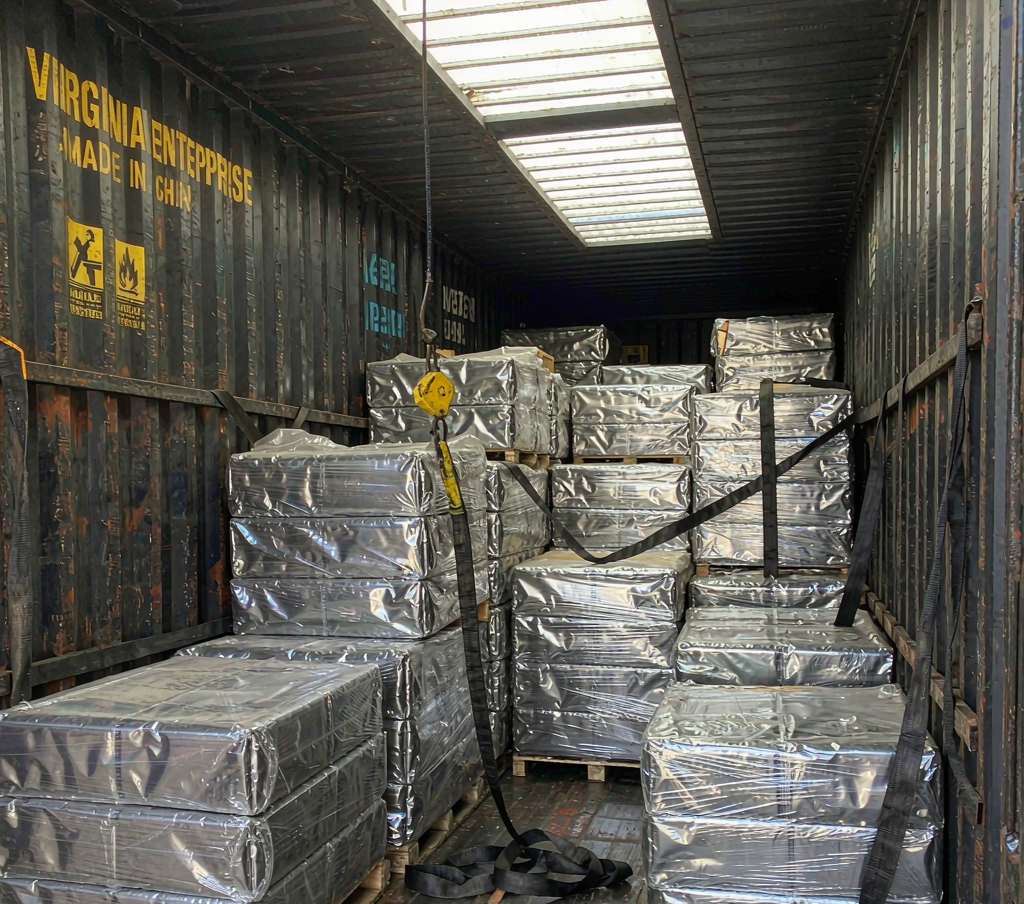
Steel bundles blocked and secured inside a container
Step 4: VGM and Documentation Compliance
SOLAS VGM (Verified Gross Mass) requires the packed container’s total weight to be verified before the carrier’s cut-off, by method 1 (weighbridge) or method 2 (sum of cargo + dunnage + tare with a signed calculation). For dense steel, method 2 rounding errors matter — a 200 kg under-declaration can push a container overweight at the destination scale. Reputable exporters weigh every steel container at gate-in and match the scale ticket to the VGM declaration; buyers should confirm this practice, because an overweight box discovered at destination means offloading cargo in a foreign port at ten times the original freight savings.
Documentation that should accompany every steel container: packing list with bundle-level weights and heat numbers, the load plan sketch showing bundle positions and securing method, mill certificates per heat, and photographs of the loading sequence (empty floor, mid-fill, final securing, closed doors). The photo set is the single most effective claim-prevention tool — it takes two minutes and settles disputes that would otherwise hang on ambiguous B/L terms.
Step 5: Pre-Loading Inspection Points
Container survey: check floor integrity (no soft plywood), wall buckles, rust perforation, door seals, and CSC plate validity. A hole in the floor is a water-ingress and load-shift hazard.
Bundle condition: strapping tight, tags showing grade/heat/size, no heavy rust on bright bar, end caps on pipe and tube.
Weight verification: bundle weights from the scale, not from theoretical calculation, before the plan is finalized.
Weather and timing: load under cover or in dry weather; loading wet steel then closing the box for 30 days guarantees condensation rust.
Securing hardware: verify lashing ring ratings and use certified shackles; improvised rebar hooks fail under load.
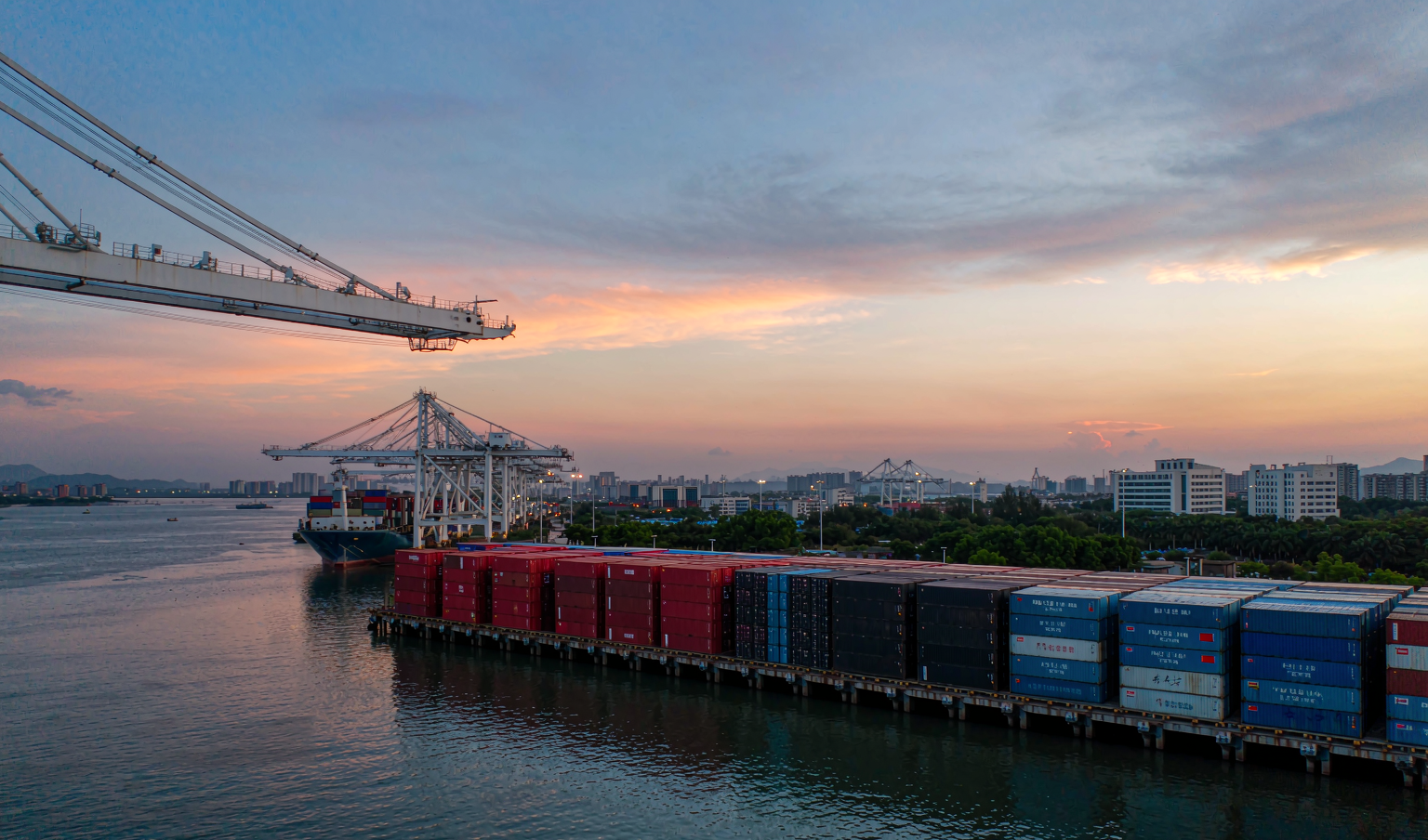
Steel bundles loaded and secured for delivery to port
Loading Sequence Playbook by Product Type
Each steel product family has its own loading logic. The sequences below reflect the practice of mills that consistently pass destination inspections:
Bundled bars and pipes (5.8 m): lay two rows of timber bearers lengthwise → load the bottom tier in the door-first direction, tight against the front wall → insert anti-slip mats → load the second tier into the valleys of the first → block each bundle end with nailed wedges → lash the final tier to the container rings → photograph the closed load before sealing.
Coils: build a timber cradle with coil stops welded or nailed to the floor → position coils eye-horizontal (eye-sky is unstable and banned by most lines) → chock each coil against rolling → interleave dunnage between tiers → fill the eye with airbag or timber to prevent telescoping.
Plates and cut pieces: palletize on bearers → load flat, heaviest gauge at the bottom → friction mats between pallets → top tier lashed if free height exceeds 100 mm.
Open top loads (long bars/pipes): load by crane in bundle tiers → secure each tier before the next is placed → top-lash across the full length → close and seal the tarpaulin or hard top with the rope/lock inspection photographed.
Flat rack loads (oversize): position over the deck centerline → weld or bolt stoppers and cradles (nailing is insufficient above 5 t) → direct lash to the rack’s corner posts → obtain the rack’s WLL confirmation in writing before loading.
Insurance, Claims and the Photo Trail
Marine cargo insurance pays for rust, shifting and crush damage only when the packing met the policy’s “seaworthy packing” condition — insurers routinely reject claims on steel that was lashed below standard, loaded wet, or stuffed without blocking. The evidence that wins claims is assembled during loading, not after: time-stamped photos of the empty container, each securing layer, the completed load, the sealed doors and the container number plate. Pair the photos with the load plan sketch and the packing list showing bundle weights, and a destination dispute over “cargo arrived shifted” becomes a ten-minute file review instead of a year of correspondence. Buyers importing steel should make this photo documentation a contractual deliverable — the mills that resist it are the mills that skip the blocking.
Key Takeaways for Exporters and Buyers
Steel is weight-limited, not volume-limited — the destination road limit, not the container rating, sets the payload.
Combine blocking with lashing; lashing alone never secures heavy steel to CTU Code levels.
Weigh bundles, not calculations — VGM errors surface at destination at ten times the cost.
Keep the center of gravity near container center and low; eccentric loads get refused at gate-in.
Protect against transit rust: dry loading, VCI, desiccant, and no wet steel sealed in a box for 30 days.
Photograph the loading sequence — it is the claim evidence that actually wins disputes.
Bundle tags with grade/heat/size plus a bundle-level packing list make destination QC and customs fast.
Heavy single pieces change the plan again. Items above 5 tonnes — large forgings, machined fabrications, thick plate bundles — exceed what container floors and standard lashing are designed for: they need load-spreading steel plates under the piece, direct lashing chains rated to the cargo weight, and often a written approval from the shipping line for the floor loading arrangement. Pieces above 20 tonnes or above 2.6 m in any dimension move on flat racks or breakbulk with lift plans, not containers. The golden rule: the packing plan is engineered like the cargo itself, with loads, ratings and factors of safety written down — a plan that lives only in the stevedore’s head is not a plan, it is a future claim.
Frequently Asked Questions
How many tonnes of steel fit in a 20 ft container?
Legally 24–27 t of cargo in most lanes, constrained by the destination road limit and the container’s CSC payload rating. Physically the box could hold 40 t of steel, which is why 20 ft containers carrying dense steel are the classic overweight-claim scenario.
Can bars longer than 6 meters go in a container?
Not in standard 20/40 ft boxes (internal length 5.9/12.0 m). Options: open top 40 ft with over-length section (up to ~11.8 m with permits), flat rack (up to ~12 m), or cut to 5.8 m. Bars up to 6.0 m fit a 40 ft but not a 20 ft.
Who is responsible for proper container loading under Incoterms?
The seller packs the container under FOB, CFR and CIF; under EXW the buyer usually arranges it. Regardless of terms, the shipper signs the VGM declaration, so the seller carries the legal weight-verification duty in most steel export transactions.
Do I need lashing inspection before my container ships?
For heavy steel it is strongly recommended — either your own QC or a third-party inspector (SGS, BV, TÜV) checks blocking, friction mats and lashing against the load plan before the doors are sealed. Inspection fees run a few hundred dollars and are cheap compared with a single shifted-load claim.
Get Properly Packed Steel From Huaxia-Steel
Huaxia-Steel exports carbon steel bars, pipes, plates and coils with CTU-code-compliant container loading plans, bundle-level packing lists with heat numbers, VGM weighing on every box, and full loading photo documentation. We pack to your destination road limits and offer third-party loading inspection on request. Send your order list for a factory-direct quotation within 24 hours.
If you require further information about our metal sheet products or architectural projects, please don’t hesitate to leave your contact details and message here.
Our team of experts will respond within 24 hours to continue the discussion and provide you with any additional information you requires.